← All universities

Peking University

Beijing, China (Mainland) · Urban

C9 LeaguePublicResearch
Acceptance
12.0%
QS World
#14
Tuition/yr
$3,900
Students
45,000
Founded
1898

Navigating the journey to Peking University requires more than academic excellence — it demands genuine engagement with China, disciplined language preparation, and a compelling academic narrative grounded in research and purpose.

Campus

Peking University — campus in pictures

Real, freely-licensed photographs of the campus (via Wikimedia Commons).
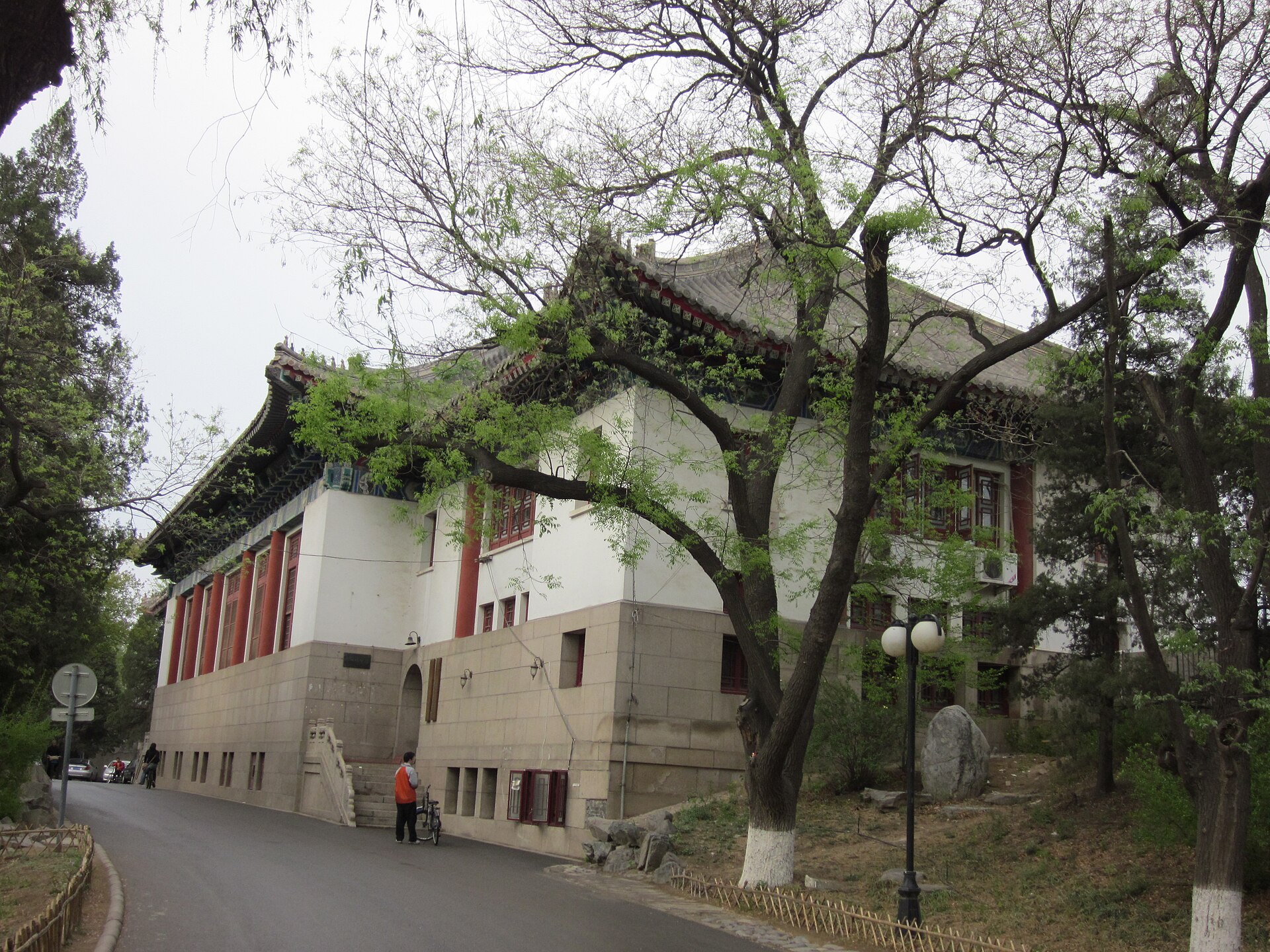
A building in Peking University.
A building in Peking University.Huangdan2060 · CC0 · via Wikimedia Commons
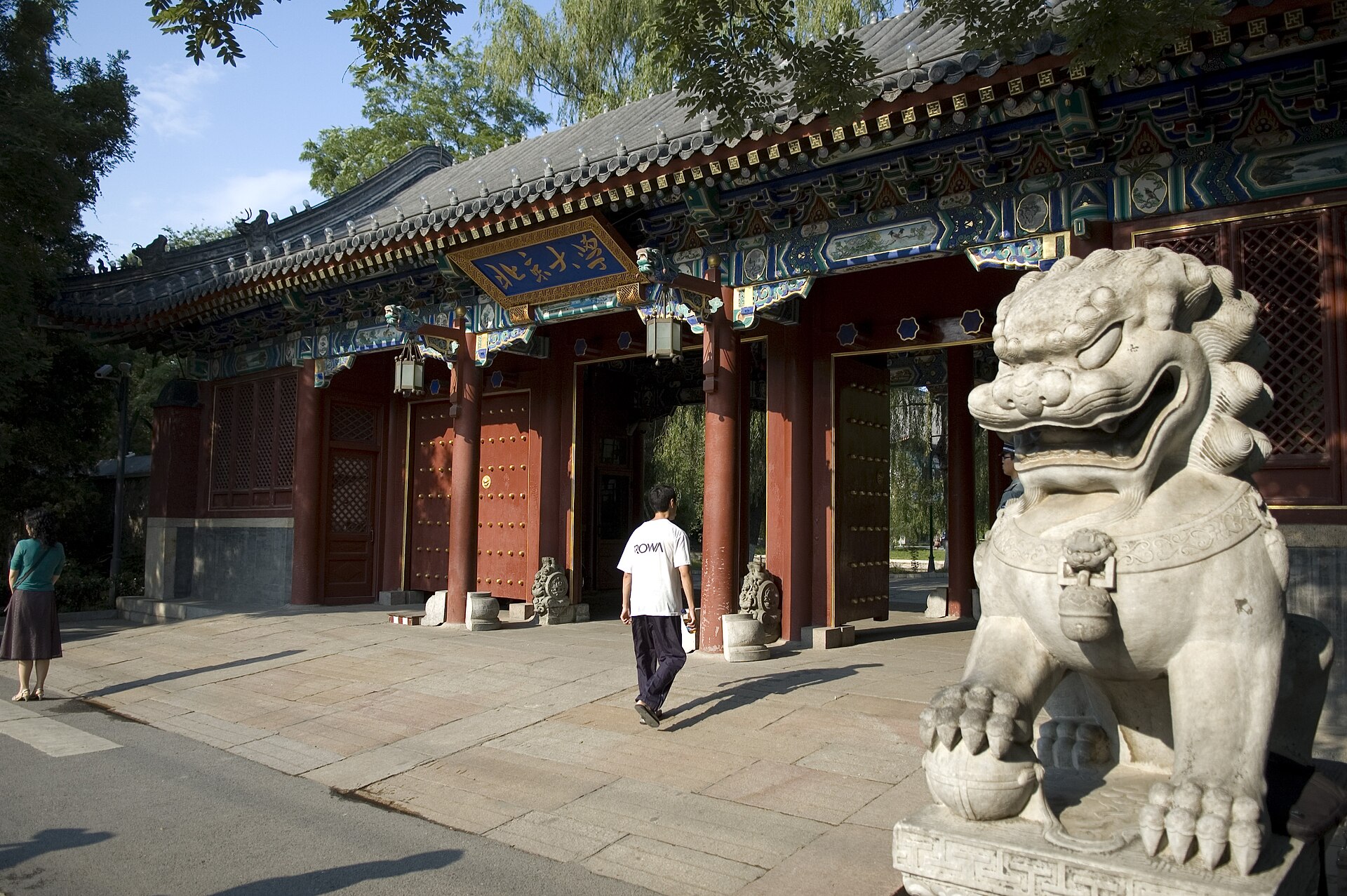
An entrance to the Peking University
An entrance to the Peking Universitygalaygobi · CC BY 2.0 · via Wikimedia Commons
The Peking University campus in Beijing, China.
The Peking University campus in Beijing, China.Peter Mooney · CC BY-SA 2.0 · via Wikimedia Commons

Why Peking University — Prestige, Location & Access to China

Peking University (PKU) is not merely the top-ranked university in mainland China — it is the institution that has shaped China's intellectual and political leadership for over a century. Founded in 1898 as China's first modern national university, PKU sits at the intersection of China's past and its future. For an international student who wants to understand China from the inside — its science, its society, its economy, its culture — there is no better address.

01Global Rankings
#14 in QS and #13 in Times Higher Education — Peking University sits in the world's top 15, the same tier as Imperial College London and ETH Zurich.
02Research Intensity
Dozens of state key laboratories across physics, chemistry, life sciences, and information technology. International students join research groups from Year 1, embedded in projects at the frontier of Chinese and global science.
03Unmatched China Access
Beijing is China's capital of government, diplomacy, finance, and culture. A PKU degree opens doors in government ministries, state enterprises, multinational operations, and the world's most consequential emerging-market economy.
04Affordable Excellence
Annual tuition of approximately USD 3,900 — a fraction of comparable Western universities. With China's government, Beijing city, and PKU's own scholarship programmes, a fully-funded PKU education is a real possibility for strong international candidates.

PKU Acceptance Rate & International Applicant Profile

Stats

14%
International students
45,000
Student population
#14
QS World Rank

Profile Stats

38+
IB Competitive Benchmark
3.5 / 4.0
Minimum GPA
6.5
IELTS Minimum
90
TOEFL iBT Minimum
14%
International Students
92%
Employment Rate
International Applicant Profile — Key Benchmarks
Overall international acceptance rate (varies by programme)

Rea Vs Rd

Rd Label: September Intake (most programmes)
Rd Value: Rolling / May deadline
Rea Label: Overall International Rate
Rea Value: ~12%

PKU Admissions Requirements — Academic Record, Language & Profile

Academic Record
Value: 3.5+ GPA
  • Minimum 3.5 on a 4.0 scale; competitive admits typically exceed this
  • IB competitive benchmark: 38 or above
  • A-Level applicants: A*AA or above in relevant subjects
  • Course rigour and subject match to programme matter significantly
PKU requires a minimum GPA of 3.5 and expects applicants to be near the top of their class. Academic records are read school-by-school, with course rigor evaluated relative to your curriculum system.
Language Proficiency
Value: IELTS 6.5 / TOEFL 90
  • IELTS Academic minimum: 6.5 overall
  • TOEFL iBT minimum: 90
  • Duolingo accepted by some programmes (minimum 120)
  • HSK 6 (180+) required for Chinese-taught undergraduate programmes
Language requirements are non-negotiable. English-taught programmes require IELTS 6.5 or TOEFL 90. Chinese-taught programmes require HSK Level 6 with a score of 180 or above. Some programmes require both.
International Qualifications
Value: Top of Class
  • IB: 38–45, with strong Higher Level scores
  • A-Level: A*AA minimum in relevant subjects
  • AP: 4–5 scores across five or more relevant examinations
  • National board toppers from India, South Korea, Indonesia and other systems
PKU recognises IB, A-Level, AP, and national board examinations. The competitive band for IB is 38+. A*AA or above is expected for A-Level applicants. Strong performance in subjects relevant to your target programme is the key signal.

PKU Application Components — Portal, Documents & Personal Statement

PKU's international application is conducted through its own online portal. Here is every component of a complete international application — required and programme-specific — with strategic notes for each.

01RequiredStudyatPKU Online Application
All international applications go through the StudyatPKU portal (studyatpku.com). PKU does not use Common App, UCAS, or Coalition. Create your account early — the system opens months before the deadline.
02RequiredAcademic Transcripts & Diploma
Official transcripts from all secondary and post-secondary institutions attended, plus your graduation certificate or diploma. Documents not in Chinese or English require certified translation.
03RequiredPersonal Statement / Study Plan
PKU's primary narrative document — called a study plan for undergraduates and a research plan for graduate applicants. This is your single most important written component. Follow PKU's official template and word count.
04RequiredLanguage Proficiency Scores
IELTS, TOEFL, or Duolingo for English-taught programmes; HSK at the appropriate level for Chinese-taught programmes. Non-negotiable — applications without the required scores are ineligible.
05RequiredTwo Academic Recommendations
Signed letters from teachers or professors who know your academic work well. Strong, specific letters from senior educators — those who can describe your intellectual work in detail — carry the most weight.
06RequiredValid Passport Copy
A copy of your current passport's photo page. You must be a foreign national; former Chinese citizens must have lived abroad for at least two consecutive years.
07Programme-SpecificEntrance Exam / Interview
Some undergraduate programmes require PKU's own entrance exam covering Chinese, English, and Mathematics. Graduate programmes may require GRE, GMAT, or a departmental subject exam. Interviews are conducted by individual departments.

PKU Application Statement — Writing the Study Plan & Research Plan

Tips

Write for academics, not admissions officers
PKU's application is reviewed by professors and department committees, not a general office. Write like a serious student addressing serious scholars — substantive, precise, and intellectually engaged. A creative personal narrative written for a US admissions reader will fall flat here.
Be specific about PKU — not China generically
Committees read 'PKU has great research and a beautiful campus' from every applicant. Name specific faculty members, research centres, courses, or lab groups that connect to your work. Generic reasons to study in China do not explain why PKU.
Connect China to your future with credibility
PKU wants students who are choosing China for substantive reasons — language study, research that requires China's data or context, a career in China-related fields. Demonstrate that China is central to your future, not a gap year option or a rankings play.
Follow PKU's template exactly
PKU provides an official study plan template on its application portal. Non-compliance with format or word count raises flags. Download the template at studyatpku.com and structure your statement around its sections.

Prompts

Academic Background
Describe your academic background, qualifications, and the courses most relevant to your intended programme at PKU.
Why PKU & Why China
Explain why you have chosen Peking University and your specific programme. What draws you to study in China?
Study Goals & Future Plans
What are your academic and professional goals? How does studying at PKU fit into your longer-term plans?
China Engagement & Language
Describe your experience with China, Chinese culture, or the Chinese language (for most applicants, required for Chinese-taught programmes).
Research Plan (Graduate Only)
Graduate applicants: State your specific research question, review relevant literature, name potential PKU supervisors, and outline your methodology.
The most common PKU application statement mistake. Writing a US Common App-style personal narrative with an emotional arc instead of the structured academic document PKU expects — and failing to name specific PKU faculty, courses, or research centres.
https://www.china-admissions.com/blog/peking-university-application-guide-2025/

What PKU Admissions Committees Are Looking For

PKU's international admissions uses a holistic but academically-weighted review process. Committees are composed of faculty from relevant departments. Understanding what each type of reviewer is looking for — and why — is the foundation of a strong application strategy.

01Academic Excellence
PKU expects applicants to be near the very top of their academic cohort. A minimum GPA of 3.5 is the floor; competitive admits significantly exceed this. For IB students, the benchmark is 38 or above. Academic performance is the primary selection criterion.
02Language Readiness
Language proficiency is non-negotiable. For English-taught programmes, meeting IELTS or TOEFL minimums is required. For Chinese-taught programmes, HSK 6 is mandatory. Demonstrating advanced Chinese in your application — beyond the minimum — is a meaningful differentiator.
03Clear Academic Purpose
PKU is a research university. Committees want to see that you have a clear reason to be at PKU specifically — particular courses, faculty, research groups, or facilities that align with your academic goals. Vague motivation signals you are applying to PKU as a fallback.
04Genuine China Engagement
Whether through language study, China-focused research, relevant coursework, prior visits, or a career direction tied to the region — demonstrating authentic engagement with China, not merely its prestige, strengthens every application significantly.
05Quality of Written Work
The study plan is the most important document you control. PKU's committees — made up of researchers and professors — assess whether your written statement demonstrates intellectual seriousness, a grasp of your field, and genuine readiness for university-level independent work.
06Research Potential (Graduate)
For graduate applicants, research potential is the dominant selection criterion. A specific, well-framed research plan aligned with PKU's faculty strengths — especially one where a potential supervisor has been identified and engaged — dramatically elevates an application.

PKU Financial Aid & Scholarships for International Students

Peking University does not operate the need-blind aid model of Harvard or MIT. However, the Chinese government, Beijing city government, and PKU itself fund substantial merit-based scholarship programmes that are genuinely accessible to qualified international students. At approximately USD 3,900 per year in tuition — even without scholarship support — PKU is one of the most affordable top-15 global universities in the world.

Tuition and cost figures are estimates based on available data. Scholarship coverage varies by programme and award type. Always verify current figures at isd.pku.edu.cn before applying.

Stats

$3,900
Annual tuition (most programmes)
$9,000
Full cost of attendance
$120
Application fee
Up to 100%
CSC scholarship — eligible cost coverage

Contribution Tiers

NoteRangePercentPercent Value
Chinese Government Scholarship (CSC) — tuition, accommodation, stipend, insuranceFull Scholarship100%100
Beijing Government Scholarship Type A — full or near-full coverageBeijing Gov Scholarship A90%90
PKU Institutional Scholarship — tuition + partial living supportPKU Scholarship70%70
Beijing Government Scholarship Type B/C — partial coverageBeijing Gov Scholarship B/C50%50
Self-funded — tuition only; living on campus and eating at dining hallsSelf-Funded0%0
The PKU Aid Reality. Unlike PKU's domestic students who compete through the gaokao, international students benefit from PKU's scholarship ecosystem. The Chinese Government Scholarship (CSC), Beijing Government Scholarship, and PKU's own institutional awards can cover tuition, accommodation, living allowance, and medical insurance — in some cases fully. A PKU degree funded by CSC scholarship can cost less than a single year at a mid-tier Western university.
https://isd.pku.edu.cn/en/scholarship.php

Key Dates

Health Science / some programmes — Batch 1 deadline
Date: Dec–Jan
Most master's & PhD programmes — application opens
Date: Jan–Feb
English-taught PhD programme deadline
Date: Approx. Feb 28
Undergraduate (most programmes) deadline
Date: Approx. May 15
Academic year begins for all September-intake programmes
Date: Sep

Advantages

  • Earlier submission gives more time for scholarship processing (CSC, Beijing Gov)
  • Demonstrates genuine commitment for graduate applicants seeking supervisor contact
  • Some programmes evaluate on a rolling basis — earlier is better
  • More time to resolve documentation issues before the deadline
  • Scholarship deadlines often precede academic deadlines — apply early to qualify

Disadvantages

  • PKU does not offer Early Decision advantages the way US universities do — there is no binding commitment advantage
  • Applying before HSK or IELTS/TOEFL results are finalised can weaken an application
  • Graduate applicants who rush without a research plan are penalised in department review
  • Scholarship applications often require separately timed documents and embassy coordination
When to Apply — PKU Application Timing. PKU does not operate US-style Early Action or Early Decision rounds. Applications for the September intake are accepted on a rolling or single-deadline basis depending on the programme. There is no binding early commitment — but applying early has practical advantages, especially for scholarship access.
Tychr's PKU Timing Recommendation. Apply as early as your language test scores and documents allow — ideally well before the stated deadline. If you are applying for the Chinese Government Scholarship (CSC), coordinate with your home country's Chinese embassy, whose deadline may be earlier than PKU's academic deadline. Graduate applicants should contact potential supervisors before submitting.
Key Dates (September Intake — Verify at isd.pku.edu.cn)
PKU Application Rounds — How and When to Apply

PKU Interview — Format, Questions & Preparation

Interviews at PKU are conducted by individual departments rather than by a central admissions office. Not all programmes interview; some use them only for competitive shortlisted candidates. Graduate applicants — especially PhD candidates — should expect an interview with their potential supervisor. When an interview is conducted, it carries real weight in the department's final decision.

Meta

Online or in-person with departmental faculty
Format
Professors and department academics, not a general admissions office
Who interviews
Academic knowledge, research readiness, language proficiency, motivation
Evaluates
Required for some programmes; significant when conducted
Weighted

Questions

Why Peking University and why this specific programme?
Tip: Be prepared to name specific PKU faculty, research centres, or courses — generic praise of PKU's ranking is not a satisfactory answer for a departmental interviewer.
Describe your proposed research / study plan.
Tip: For graduate applicants, this is the most important question. Have a clear research question, a specific methodology, and an understanding of the relevant literature. Vague answers reveal lack of preparation.
What is the most significant academic work you have done so far?
Tip: Be specific: a project, paper, dataset, or intellectual problem you engaged with seriously. This is not a personality question — it is an academic depth question.
How is your Chinese / How long have you studied Chinese?
Tip: For Chinese-taught programmes, this question may be asked in Chinese. Be honest about your level. Committees can assess HSK scores — the interview assesses conversational ability.
What do you plan to do after completing your degree at PKU?
Tip: Connect your post-graduation direction to China or PKU's specific strengths. An interviewer who understands your long-term plan will see you as a purposeful candidate.

PKU Residential Life & International Housing

Peking University does not operate a Harvard-style house system with residential academic communities. Instead, international students live in dedicated international student housing — most notably the Zhongguanyuan Global Village — or in postgraduate dormitories depending on their programme level. On-campus housing is available for most international students, particularly in their first year.

Houses

Zhongguanyuan Global Village
Tag: On-campus
Modern international student accommodation with private rooms, common areas, and on-site dining. The primary housing for most international students.
Shao Yuan International Student Dormitory
Tag: On-campus
Traditional dormitory-style housing, centrally located on campus, popular with exchange and language students.
Graduate Student Dormitories
Tag: On-campus
Dedicated blocks for postgraduate students, including international graduate students, with a quieter academic environment.
Haidian District Private Rentals
Tag: Off-campus
Many international students in their second year or later choose private apartments in the surrounding Haidian neighbourhood, offering more independence at a higher cost.

Lottery Steps

  • Applications for housing are submitted through the PKU International Students Division portal alongside the academic application
  • Zhongguanyuan Global Village provides the most modern on-campus accommodation; rooms are allocated based on programme level and availability
  • Undergraduate international students typically share facilities with other international students, creating a self-contained but internationally diverse community
  • Graduate students have access to graduate dormitory blocks with more quiet study space
  • Off-campus housing in Haidian District is popular among continuing students; costs are higher but offer more independence
How International Student Housing Works at PKU

PKU Schools, Faculties & Key Programmes

School of Arts and Sciences
Label: Core Liberal Arts & Sciences
  • {"label":"Key departments","value":"30+"}
  • {"label":"Teaching language","value":"Chinese (primary)"}
  • {"label":"Includes","value":"Physics, Chemistry, Biology, Mathematics, Philosophy, History, Chinese Literature"}
  • {"label":"Research centres","value":"Dozens of state key labs"}
PKU's core academic divisions span the natural sciences, humanities, and social sciences. International students in Chinese-taught arts and science programmes must have HSK 6.
Guanghua School of Management
Label: Business & Economics
  • {"label":"Key programmes","value":"BBA, MBA, Finance, Accounting"}
  • {"label":"Asia ranking","value":"Top 5"}
  • {"label":"Language","value":"Chinese (undergraduate); English/Chinese (MBA)"}
  • {"label":"MBA GMAT","value":"Required for graduate entry"}
One of Asia's leading business schools. The Guanghua MBA programme is among the most prestigious in the Asia-Pacific region and draws a significant international student cohort.
School of International Studies
Label: International Relations & Global Affairs
  • {"label":"Key programme","value":"International Relations, Diplomacy"}
  • {"label":"Taught in","value":"Chinese and English (varies by course)"}
  • {"label":"Career paths","value":"Diplomacy, international organisations, policy"}
  • {"label":"Research focus","value":"China's global role, IR theory, area studies"}
A leading destination for international students interested in China's foreign policy, international organisations, and global governance.
Yenching Academy
Label: China Studies — Fully Funded Master's
  • {"label":"Programme","value":"Master's in China Studies (1 year)"}
  • {"label":"Scholars per cohort","value":"~120"}
  • {"label":"International students","value":"~80%"}
  • {"label":"Funding","value":"Fully funded (tuition + accommodation + stipend + travel)"}
The Yenching Academy is a prestigious, fully funded postgraduate programme at PKU for exceptional global scholars focused on China. Approximately 80% of each cohort is international students.
Source: https://yenchingacademy.pku.edu.cn/
School of Electronics Engineering & Computer Science
Label: EECS
  • {"label":"Key programmes","value":"Computer Science, Electronic Engineering, AI"}
  • {"label":"Industry links","value":"Baidu, ByteDance, Tencent, Huawei"}
  • {"label":"Research","value":"AI, machine learning, semiconductor research"}
  • {"label":"Language","value":"Chinese (undergraduate); bilingual options at postgrad"}
PKU's EECS school has direct pipelines into China's leading technology companies and is at the frontier of AI research in Asia.
Health Science Center
Label: Medical & Life Sciences
  • {"label":"Key programme","value":"Clinical Medicine (MBBS), Pharmacy, Public Health"}
  • {"label":"Teaching hospital","value":"Peking University Hospitals (multiple)"}
  • {"label":"MBBS language","value":"English-taught track available for internationals"}
  • {"label":"Duration","value":"6 years (MBBS)"}
The PKU Health Science Center includes an English-taught MBBS programme that is one of the most competitive medical education pathways in China for international students.

Research & Extracurricular Opportunities at PKU

State Key Laboratories
Category: Cutting-Edge Research
PKU hosts numerous Ministry of Education and National state key laboratories, including in condensed matter physics, protein science, molecular biology, and computational linguistics. International students in science programmes can apply to join research groups from their first year.
International Student Research Projects
Category: Faculty-Led Research
Graduate students at PKU are embedded in faculty research projects from day one. Undergraduates can apply for research apprenticeship positions through individual departments. PKU's 8:1 student-faculty ratio means faculty access is genuinely available.
Yenching Academy China Studies
Category: Elite Graduate Programme
The Yenching Academy's fully funded master's in China Studies brings together approximately 120 scholars per cohort, 80% international, for an intensive interdisciplinary programme with direct access to PKU faculty, government officials, and China's leading think tanks.
Student Clubs & Societies
Category: 400+ Active Organisations
PKU has hundreds of student clubs spanning academic, cultural, arts, sports, and entrepreneurship categories. International students can join Chinese-language debate teams, international relations associations, traditional arts circles (calligraphy, kung fu, guqin), and student-run media organisations.
Scroll right to explore PKU's research programmes and student life opportunities.

Career Outcomes & PKU Alumni Network

A PKU degree carries extraordinary weight in China and increasing recognition in global markets focused on the Asia-Pacific. The university reports a 92% employment rate among graduates, with an average starting salary of approximately USD 25,000 — competitive within the Chinese market. For international graduates, a PKU credential opens doors that are simply unavailable from a Western institution.

Stats

92%
Graduate employment rate
$25,000
Average starting salary (USD)
14%
International students in student body
#14
QS World Ranking
#13
THE World Ranking
#1
National rank in China

Categories

Government & Policy
PKU graduates enter China's government, state enterprises, and policy institutions at the highest levels. For international students with China careers in mind, the PKU alumni network is the most consequential in the country.
Technology
Baidu, ByteDance, Tencent, Alibaba, Huawei — PKU's EECS school has direct pipelines into China's most successful tech companies, which are increasingly global players.
International Careers
International students who speak Chinese and hold a PKU degree occupy a rare position in the global job market: they can operate in both the Chinese and international professional worlds. Roles at multinational corporations' China operations, international NGOs, and think tanks focused on Asia are common outcomes.

Our PKU Admissions Track Record & Student Outcomes

Priya S.
Tychr helped me understand that PKU doesn't read applications the way US universities do. My first draft was a Common App-style personal essay. My Tychr counsellor guided me to write a structured study plan that named three PKU faculty members whose research aligned with my work. The department responded within two weeks.
Country: India
Program: PKU — Economics (Guanghua)
Class Year: Class of 2026
Residential: Zhongguanyuan Global Village
Academic Profile: IB 41 · IELTS 7.5
Miguel R.
The CSC scholarship application was more complex than the academic application itself. Tychr's coordination support — managing the PKU portal, embassy submission, and language requirements simultaneously — was what made the difference. I graduated with zero tuition debt.
Country: Brazil
Program: PKU — International Relations
Class Year: Class of 2025
Residential: Shao Yuan Dormitory
Academic Profile: A*AA A-Levels · TOEFL 102 · HSK 5
Aisha M.
My HSK 6 score was borderline for the programme I wanted. Tychr advised me to contact my potential supervisor first and include his research in my study plan. He confirmed support for my application before submission — that endorsement was decisive.
Country: Nigeria
Program: PKU — Life Sciences (PhD)
Class Year: Class of 2024
Residential: Graduate Dormitory
Academic Profile: MSc distinction · IELTS 6.5 · HSK 6 (192)

Faqs

Do I need to speak Chinese to study at PKU?+

It depends on your programme. Most undergraduate programmes are taught in Chinese and require HSK 6 (180+ points). A growing number of master's and PhD programmes are taught in English — particularly in computer science, international relations, economics, and China studies. Always verify the language of instruction on the programme page before applying.

Is PKU's ~12% acceptance rate for all international applicants?+

The ~12% figure is an overall estimate for international applicants. Acceptance rates vary significantly by programme: the Yenching Academy, for example, is exceptionally competitive, while some language and humanities programmes may have more places. Research your specific programme's competitiveness rather than using the overall figure.

Can I apply to PKU as an IB student?+

Yes. PKU recognises the IB Diploma as an equivalent qualification for undergraduate admission. A score of 38 or above is the competitive benchmark. You will still need to meet language requirements and may need to sit PKU's entrance examination depending on your programme.

How does the Chinese Government Scholarship (CSC) work?+

The CSC scholarship can cover tuition, accommodation, living allowance, and medical insurance. PKU participates in both Type A (applied through PKU first, then the Chinese embassy) and Type B tracks. The process typically begins 6–8 months before the programme start date. Check current cycle deadlines at the PKU ISD and your country's Chinese embassy.

Is there an entrance exam for undergraduate applicants?+

Some undergraduate programmes require PKU's own entrance exam covering Chinese, English, and Mathematics. Graduate programmes may require GRE, GMAT, or departmental exams. Check your specific programme requirements on the ISD website — not all programmes have exam requirements.

What is the Yenching Academy?+

The Yenching Academy is a prestigious postgraduate college at PKU offering a fully funded master's in China Studies. Approximately 120 scholars are admitted annually, with about 80% being international students. The programme covers tuition, accommodation, travel, and a monthly stipend. The application deadline is typically December 1 for partner university nominees.

Can I get a part-time job while studying at PKU?+

Chinese regulations restrict international students on student visas from working off-campus. On-campus opportunities (research assistant, language tutoring, teaching assistant roles) may be available with departmental approval. Always check current visa regulations — these are enforced seriously.

Is Beijing liveable for international students?+

Beijing is generally safe and offers extraordinary cultural richness. The main adjustment challenges are air quality (significant in winter), the language barrier outside the international student community, and internet access — many Western apps and sites are blocked by China's Great Firewall, and a VPN is commonly used. Most international students adapt quickly and find the experience transformative.

Book a Free PKU Admissions Strategy Session

In 60 minutes our PKU admissions specialists will evaluate your academic profile, identify your application strengths and gaps, assess your language readiness, develop your study plan strategy, and map out your scholarship options — including the CSC and Yenching Academy pathways.

  • No commitment required
  • PKU and China admissions specialists
  • Personalised strategy — not generic advice
Getting into PKU as an international student is not about being the best — it is about understanding what PKU actually wants: academic depth, language readiness, and a credible reason to be in China.

PKU Academic Requirements

PKU Academic Requirements — The Honest Breakdown for International Students

What GPA, language scores, and academic qualifications do competitive PKU international applicants actually need — and how does PKU's holistic but academically weighted review process work for students from IB, A-Level, and other international curricula?

38+
IB Competitive Benchmark
Competitive applicant range
3.5
Minimum GPA
On a 4.0 scale; competitive admits exceed this
6.5
IELTS Minimum
English-taught programmes
90
TOEFL iBT Minimum
English-taught programmes
Level 6
HSK for Chinese Programmes
Score 180+ for undergraduate
~12%
International Acceptance Rate
All international applicants

GPA & Academic Standing

PKU and GPA — What the Requirements Actually Mean

The honest picture: PKU sets a minimum GPA of 3.5 on a 4.0 scale. In practice, competitive international admits significantly exceed this floor — especially for the most selective programmes and scholarship tracks.

A 3.5 GPA is the minimum to be considered, not a distinguishing feature. The most competitive PKU international admits combine strong grades with demanding course choices, strong language scores, and a clear research or academic purpose.

3.5
Minimum required GPA on a 4.0 scale
38+
Competitive IB benchmark score
What this means for international qualification systems. International students from systems without a 4.0 GPA scale (IB, UK A-Levels, national board systems from India, South Korea, Indonesia) are evaluated on their grades relative to the expectations for their qualification system. An IB score of 38 is a rough equivalent to a 3.5–3.7 GPA in international terms. The competitive benchmark, however, is higher: aim for 40+ where possible.
Grade trajectory matters. PKU's committees are aware that academic performance can vary across a programme. An upward trajectory — grades improving significantly in the final year — reads positively. However, a single weak year in the middle of an otherwise strong record requires explanation in the personal statement. Early performance dips that are not addressed can raise questions.

Academic Context

How PKU Reads International Academic Records

PKU does not formally rank applicants from different school systems against each other. Instead, committees in each department evaluate academic records in the context of the applicant's specific system, school, and curriculum.

How PKU reads academic context
Every application is read with awareness of the applicant's national education system. An IB 38 from a competitive international school reads differently from a 3.9 GPA at a school with no IB access. PKU's ISD team has experience evaluating qualifications from most countries that send students to China. What matters is your standing within your system — not an absolute cross-system comparison.
What this means practically
PKU expects students to have chosen the most demanding curriculum available to them — not the most strategic one. An applicant who took easier subjects to protect their GPA, rather than challenging themselves in subjects relevant to their programme, sends a signal that works against them in department review.
For students from less common international systems. If your school or national qualification system is less familiar to Chinese universities, include a brief explanation in your study plan — describe your system's grading scale, the subjects you studied, and how your performance ranks within your school or cohort. Do not assume the admissions reader has detailed knowledge of your national system.

SAT (Optional)

SAT at PKU — Optional Supporting Evidence, Not a Requirement

PKU does not publish SAT score ranges for admitted international students and does not require the SAT. If you have strong SAT scores from a US-curriculum background, they can serve as supporting evidence.

LabelScorePercent
SAT — required?No0
Recommended threshold if submitting1450+70
When the SAT Math Score Helps. If you are from a US-curriculum background and have a strong SAT Math score (760+), it provides an internationally comparable quantitative signal. This is most relevant for applicants to STEM, economics, or engineering programmes where quantitative ability is central to the selection criterion.
What to prioritise instead. Preparing for the IELTS or TOEFL — the required language tests — is a much higher-priority use of preparation time for PKU applicants than SAT preparation. If you are already strong in English and your SAT score is at 1450 or above, submit it. Otherwise, focus preparation time on language tests and academic documents.
Strategy for PKU applicants. Submit SAT scores only if your result is genuinely in the upper range (1450+). There is no advantage to submitting average scores under an optional policy. For most international students applying to PKU, language test preparation and the quality of the study plan document are higher-impact uses of preparation time.

ACT (Not Applicable)

ACT at PKU — Not Required, Not Expected

PKU does not require the ACT and does not publish ACT score ranges. The ACT is not a standard part of PKU's international admissions process.

Metrics

ACT — required?
Score: No
Impact if submitted
Score: Minimal

Comparison Cards

What tests actually matter at PKU
For PKU, the relevant tests are language proficiency exams: IELTS, TOEFL, Duolingo (English programmes) or HSK (Chinese programmes). These are required, not optional.
Academic qualification hierarchy
International qualifications (IB, A-Level, national boards) are the primary academic evidence. SAT/ACT are supplementary context for US-curriculum applicants only.
If you have an ACT score. PKU does not have a superscore policy because the SAT and ACT are not standard requirements. If you have a strong ACT score from a US curriculum background, you may include it as supplementary evidence in your application documents, but it will carry minimal weight compared to your academic transcript and language scores.
Tychr's recommendation. Do not prioritise ACT preparation for a PKU application. If you already have a strong score (30+) from another application process, include it as a data point. Otherwise, invest preparation time in IELTS/TOEFL or HSK, and in the quality of your personal statement and recommendation letters.

Test Policy

PKU Test Policy — What Is Optional, What Is Not

PKU's official test policy for SAT and ACT is classified as optional for international applicants. Understanding what 'optional' means at a Chinese research university — and what is emphatically not optional — is important for every PKU candidate.

Submit Items

You have a strong SAT score (1450+) from a US-curriculum background — it adds marginal positive context.
You are applying to a STEM or quantitative programme and your Math sub-score is strong (760+).
Your other academic materials are strong and an additional quantitative signal is useful.

Withhold Items

Your score is below 1400 (SAT) — submitting a weak score adds no value and draws attention to a weak data point.
Your curriculum is not US-based and you sat the SAT purely for PKU — the time is better invested in language test preparation.
Current policy. For SAT and ACT: these are optional. PKU does not require them and does not publish ranges for admitted students. Submitting strong scores is a minor additional data point; not submitting has no penalty. For language proficiency (IELTS/TOEFL/Duolingo for English programmes; HSK for Chinese programmes): these are mandatory and non-waivable. An application without the required language test scores will not be reviewed.
The critical misconception. The biggest misconception about PKU's test policy is treating language tests as 'optional' because standardised tests (SAT/ACT) are optional. They are entirely different categories. IELTS/TOEFL/HSK are required credentials, not optional additions. Missing a language test is grounds for immediate ineligibility.

International Qualifications

A-Levels and IB at PKU — Specific Benchmarks

IB Diploma
Note: What PKU values in IB applicants: strong Higher Level choices in subjects directly relevant to the intended programme. An IB student applying to Physics should have HL Mathematics (AA preferred) and HL Physics. The Extended Essay — if in a relevant subject and graded A or B — is read as supporting evidence of early research capability.
  • {"label":"Competitive range","value":"38–45 points"}
  • {"label":"HL expectations","value":"Strong scores in subjects directly relevant to target programme"}
  • {"label":"Subject rigour","value":"HL Mathematics (Analysis & Approaches preferred for STEM/Economics)"}
  • {"label":"Extended Essay","value":"A or B grade in a relevant subject adds value"}
A-Levels
Note: PKU is familiar with UK A-Level qualifications. Predicted grades carry weight. A*AA or above in three relevant subjects is the expected standard. If you are applying to a science or engineering programme, Mathematics and Physics at A* or A grades are important signals of quantitative preparation.
  • {"label":"Competitive range","value":"A*AA – A*A*A"}
  • {"label":"Subject relevance","value":"Subjects should align closely with your intended PKU programme"}
  • {"label":"Predicted grades","value":"Reviewed alongside any available AS or mock results"}

Advanced Placement

AP Examinations at PKU — Supporting Context for US-Curriculum Students

For students from US-curriculum international schools that offer AP examinations, AP scores can provide supporting academic evidence alongside the transcript. PKU does not have a formal AP credit policy but reads AP scores as signals of academic performance in specific subjects.

What PKU looks for in AP results
AP 5s in subjects relevant to the intended programme — AP Calculus BC, AP Physics C, AP Chemistry, AP Biology, AP Economics, AP Computer Science — signal strong preparation in the core quantitative and scientific areas PKU prioritises. The pattern of AP subject choices showing alignment with the intended programme is what matters.
How many APs?
PKU does not specify an expected AP count. If you have 5s in 3–5 subjects directly relevant to your programme, include them. If AP scores are mixed or not relevant to your programme, focus on other application components.
Grade corroboration
For students in US curriculum international schools, a strong AP score in your key subject corroborates the grade on your transcript. It provides an internationally standardised data point for committees unfamiliar with the specific school's grading culture.
PKU does not publish a standard AP credit transfer policy the way US universities do. Do not assume AP scores will exempt you from introductory courses. Their value is as an admissions signal, not as credit transfer.
Students from non-US curricula should not artificially pursue AP examinations for a PKU application. IB and A-Level qualifications are equally recognised and evaluated in their own context. AP is most relevant for students already in a US-curriculum international school.

Academic Rigour

Course Rigour — PKU's Most Important Academic Signal

PKU's selection committees consistently note that the choice of courses at secondary level — not just grades — signals academic seriousness. A student who selected demanding subjects in areas relevant to their intended programme is a meaningfully stronger candidate than one who optimised for GPA in easier options.

Choosing the most demanding available courses in subjects directly relevant to your target PKU programme — and performing well in them.

Rigour is contextual. Rigour is always read relative to what was available. A student at a school with limited advanced options who took every available challenge is evaluated differently from one at a school with full IB access who avoided Higher Level Mathematics. What matters is maximising your challenge within your specific context.
What rigour means in practice. Taking demanding courses means choosing Higher Level over Standard Level in IB where relevant, taking A-Level Further Mathematics if available and programme-appropriate, or selecting the most rigorous available national board subjects. It does not mean taking the maximum number of courses simultaneously at the cost of academic depth.
What PKU committees look for. A chemistry applicant who chose HL Chemistry, HL Biology, and HL Mathematics simultaneously — even if it cost half a point in final IB score — demonstrates the academic seriousness that PKU's science departments reward. Grade-optimised subject choices, by contrast, leave committees uncertain about a student's actual capability at the university level.

Subject Preparation

Academic Preparation by Field — What PKU Expects

PKU has specific subject preparation expectations for its most competitive international-student programmes. While formal prerequisites vary by department, the following subject preparation signals are consistently valued by PKU's selection committees.

Mathematics
HL Mathematics Analysis & Approaches (IB) or A-Level Mathematics + Further Mathematics is the expected standard for STEM and economics applicants. Olympiad mathematics experience (national or international level), or demonstrable competition results, is a meaningful additional signal for pure mathematics applicants.
Sciences
HL Sciences with strong scores (IB 6–7, or A* at A-Level) in Physics, Chemistry, or Biology depending on specialisation. Research experience — lab-based, computational, or field-based — is the strongest academic differentiator for life sciences and chemistry applicants, where PKU's state key laboratories are world-class.
Computer Science & AI
For computer science applicants: strong mathematics preparation, coding experience beyond school requirements, and familiarity with algorithmic thinking. China's AI and technology sector is particularly competitive — applicants who can demonstrate project-level work or competitive programming achievement stand out.

Language Requirements

Language Requirements at PKU — IELTS, TOEFL, HSK, and Duolingo

Language requirements at PKU divide into two clear categories: requirements for English-taught programmes and requirements for Chinese-taught programmes. Both are mandatory and non-negotiable.

For English-taught programmes, the IELTS or TOEFL score is the language test — but your study plan is also evaluated for English quality. A strong language test score combined with poorly written English in the personal statement creates a contradiction that committees notice. Write your study plan in the clearest, most precise English you can produce.

Test: IELTS Academic
Score: 6.5+
Test: TOEFL iBT
Score: 90+
Test: Duolingo English Test
Score: 120+
Test: HSK (Chinese-taught UG)
Score: Level 6, 180+
Practical guidance. Students from countries where English is the official medium of instruction (UK, Australia, Canada, most Indian schools) may be eligible for a language requirement waiver — confirm with your target department. For Chinese-taught programmes, the HSK requirement is absolute. Applicants who do not yet hold HSK 6 should wait until their test is completed before submitting.

By Programme

Academic Requirements by Programme — What Different Paths Expect

PKU students are admitted to specific programmes and schools, not to a general undergraduate college. Subject preparation should align directly with the programme you are applying to. The table below outlines expected academic signals for the most popular international-student programmes.

SignalsExpectationConcentration
Quantitative competitions; research interest in Chinese economy or global financeHL Maths AA / A-Level Maths + Further Maths; strong EconomicsEconomics (Guanghua)
Coding projects; algorithmic competitions; AI/ML interestHL Maths + strong computing backgroundComputer Science / AI
Physics olympiad; lab research experience; strong quantitative recordHL Maths + HL Physics or A-Level equivalents at A*Physics
Lab research; science fair; HL Biology + Chemistry combinationHL Sciences 6–7; relevant research or fieldworkLife Sciences / Biology
MUN; government policy interest; prior China engagement; geopolitics writingStrong humanities record; IELTS/TOEFL well above minimumInternational Relations
HSK 6 (190+); classical Chinese exposure; literature analysisNear-native Chinese; strong literary analysis in personal statementChinese Language & Literature
MCAT-level sciences; clinical exposure; prior medical courseworkHL Biology + HL Chemistry (7s) or A-Level equivalents at A*Clinical Medicine (MBBS)
China Studies focus; interdisciplinary research; exceptional academic recordTop academic performance; compelling research proposalYenching Academy (China Studies MA)

International Education Systems

How PKU Evaluates International Qualifications — System by System

IB Diploma
Well understood. PKU's ISD team evaluates IB applications regularly. The HL/SL distinction, the Extended Essay, and the overall points score are read in combination. Committees understand that a 38 with strong HL scores in relevant subjects is more compelling than a 42 with easier HL choices.
A-Levels (UK & international schools)
Well understood, particularly for UK applicants. A-Level subject combination and predicted/achieved grades are the primary signals. Schools that provide strong contextual information (predicted grade rationale, school profile) help the committee calibrate the academic evidence.
Indian Boards (CBSE / ISC)
Accepted and evaluated in context. CBSE and ISC are both recognised. High board scores (95%+) in relevant subjects are taken seriously, but are typically expected to be accompanied by strong language test scores and a compelling study plan that demonstrates China engagement.
South Korean CSAT
Well understood — PKU serves many South Korean students and understands the CSAT (Suneung) system. Strong CSAT performance in relevant subjects alongside Korean university transcripts (where applicable) provides a clear academic picture.
Other national board systems
PKU accepts students from a wide range of national qualification systems. If your system is less commonly seen in Chinese admissions, include a brief description of your system's scale and your standing within it. The ISD can advise on specific qualification recognition at isd.pku.edu.cn.

Year-by-Year Roadmap

Building an Academic Profile for PKU — What to Do at Each Stage

Grade 9–10Lay the foundation
Year: Grade 9–10
  • Choose a curriculum that prepares you rigorously: IB, A-Level, or the most demanding version of your national system.
  • If you plan to apply to Chinese-taught programmes, begin Chinese language study now — HSK 6 takes 3–5 years of dedicated study from scratch.
  • Identify genuine academic interests beyond the classroom through independent reading, online courses, or preliminary research engagement.
  • For science and STEM fields, engage with competitions (national Olympiads, science fairs) early.
Grade 10–11The critical academic choices
Year: Grade 10–11
  • For IB students: select Higher Level subjects that align with your intended PKU programme — do not optimise for grades over rigour.
  • Sit IELTS or TOEFL for an early diagnostic. If targeting a Chinese programme, sit HSK 5 this year.
  • Begin research into PKU's specific faculty, courses, and research centres in your field. This research will be essential for your study plan.
  • Pursue an independent research project, extended essay, or structured academic engagement — this evidence matters to PKU's committees.
Grade 11–12Build the evidence
Year: Grade 11–12
  • Complete IELTS or TOEFL. Aim for IELTS 7.0+ or TOEFL 100+ to have a buffer above the minimum.
  • If targeting a Chinese programme, sit HSK 6 this year.
  • Contact potential supervisors for graduate programmes with a professional email describing your research interests.
  • Research and identify scholarship programmes (CSC, Beijing Government, PKU institutional) — note their separate deadlines.
Grade 12 / Final YearApplication year
Year: Grade 12 / Final Year
  • Submit your application through StudyatPKU well before the deadline — not on the day.
  • Coordinate scholarship applications with your home country's Chinese embassy if applying for the CSC.
  • Request recommendation letters from teachers who know your academic work, with at least 4 weeks' notice.
  • Draft, review, and revise your study plan multiple times — this is the most important document in your application.

Common Pitfalls

Academic Mistakes That Cost PKU Applications — And How to Avoid Them

Applying to a Chinese programme without HSK 6
Applying to a Chinese-taught programme without HSK 6 is grounds for immediate ineligibility. No amount of academic excellence compensates for a missing language qualification. Verify the language requirement for your specific programme before applying.
Underestimating the study plan
PKU's study plan is a primary academic document, not a formality. Committees are professors who read your statement for intellectual substance. A generic, vague, or template-copied study plan is the most common reason otherwise strong applications are rejected.
Submitting uncertified translated documents
All documents not in Chinese or English must be accompanied by certified translations. Submitting uncertified or machine-translated documents is a compliance failure that raises immediate concerns about an applicant's seriousness.
Not verifying programme-specific exam requirements
Some undergraduate programmes require PKU's entrance exam; some graduate programmes require GRE, GMAT, or departmental tests. Applying without checking your specific programme's exam requirements and missing an exam deadline eliminates your application.
Applying as if PKU is a US university
PKU's process is document-and-committee based, not the holistic narrative-driven US model. Strong extracurricular activities and personal branding carry far less weight here than at US universities. Academic grades, language scores, and the quality of the study plan are the decisive factors.

Real Outcomes

What Academic Profiles Tychr's PKU-Admitted Students Had

The following profiles represent the academic backgrounds of students Tychr has helped gain admission to Peking University or equivalent outcomes. They illustrate the range of academic preparation that works — and what made each application compelling to PKU's committees.

Profile 1 — Science / STEM
IB 41, including HL Mathematics AA (7), HL Physics (6), HL Economics (7). Participated in a summer research programme in computational physics. Named three specific PKU physics faculty members in her study plan and explained how their research connected to her undergraduate research interests.
Stats: IB 41 · TOEFL 105 · HSK 5
Takeaway: The IB score was strong but not exceptional by top-programme standards. The quality of the research-specific study plan — and the prior contact with a potential supervisor — elevated the application decisively.
Profile 2 — Humanities / International Relations
A*AA in A-Levels (Economics, History, Chinese). HSK 6 score of 214. Had spent a summer at a Beijing language school. His study plan demonstrated detailed knowledge of PKU's International Relations faculty research agenda and proposed a specific research question connecting Belt and Road economics to Southeast Asian development.
Stats: A*AA A-Levels · IELTS 7.5 · HSK 6 (214)
Takeaway: The China engagement was genuine, documented, and credible. His language ability — well above the minimum — and the specificity of his academic purpose were decisive.
Profile 3 — Graduate / Life Sciences (PhD)
BSc distinction in Microbiology from a reputable African university. IELTS 7.0. TOEFL 97. Contacted a PKU life science professor directly before applying; the professor confirmed support for her proposed PhD research on antimicrobial resistance. Received CSC scholarship covering full tuition, accommodation, and stipend.
Stats: BSc Distinction · IELTS 7.0 · CSC Scholarship
Takeaway: The prior supervisor contact was the decisive factor. A well-framed research proposal aligned with an existing PKU lab's research agenda, and a willing supervisor, created a strong institutional pull toward admission.

Faqs

Is a 3.5 GPA enough for PKU?+

A 3.5 GPA meets the minimum threshold. The question is whether your overall profile — language scores, study plan quality, course rigour — is competitive for your specific programme. In most top PKU programmes, successful international applicants significantly exceed the 3.5 minimum.

What IB score do I need for PKU?+

For most competitive PKU programmes among international students, an IB score of 38 or above is the benchmark. Scores of 40–45 with strong HL results in relevant subjects are typical among successful applicants to the most selective programmes (EECS, Clinical Medicine, Economics).

Does PKU's test-optional policy apply to IELTS and TOEFL?+

No — IELTS and TOEFL are different categories from SAT/ACT. Standardised tests (SAT/ACT) are optional at PKU. Language proficiency tests (IELTS minimum 6.5, TOEFL minimum 90) are required for English-taught programmes and cannot be waived.

Does PKU recognise A-Levels?+

Yes, PKU is very familiar with A-Levels. A*AA or above in three relevant subjects is the expected standard. Include your UCAS predicted grades or achieved results. Strong GCSE/IGCSE performance alongside predicted A-Level grades provides useful supporting context.

Should I contact a PKU professor before applying?+

Yes. For graduate applications especially, contacting potential supervisors before submitting is strongly recommended — and sometimes expected. A faculty member who is aware of your application and has expressed interest in your research is a significant advantage. Send a professional email with your CV and a concise description of your proposed research.

Cost & Scholarships

A Top-15 Global Degree for a Fraction of the Western Price — Here's the Full Picture.

At approximately USD 3,900 per year in tuition and USD 9,000 in total cost of attendance, Peking University is one of the most extraordinary value propositions in global higher education. Add the Chinese Government Scholarship and PKU's own awards — and the real cost can be zero.

~$3,900/year Tuition
Among the lowest of any top-15 global university
CSC Full Scholarship
Tuition, housing, stipend, and insurance covered

Cost Transparency

What PKU Actually Costs — The Full Annual Figure

Figures are estimates. Costs vary by programme level, lifestyle, and exchange rates. Always confirm current tuition and fees at isd.pku.edu.cn.

PKU's tuition is fixed by the Chinese government at a subsidised rate for all students, domestic and international. The total cost of attendance — tuition plus living — of approximately USD 9,000 per year is less than one semester of tuition at most US or UK universities. For families comparing the global cost of elite university education, this figure is genuinely remarkable.

Tuition (undergraduate / most programmes)
Cost: ~$3,900
Application fee (one-time, non-refundable)
Cost: ~$120
On-campus housing (Zhongguanyuan Global Village)
Cost: Included in CoA
Living expenses (food, transport, personal — annual estimate)
Cost: ~$7,000
Total estimated cost of attendance
Cost: ~$9,000
With Full CSC Scholarship. ~$0 Net Cost
Total Cost of Attendance. ~$9,000/year
PKU Cost of Attendance — Annual Estimates (USD)
For CSC scholarship recipients, tuition, accommodation, and living expenses are covered in full.
Annual total estimate including tuition, living, and personal expenses.

Financial Support

PKU's Aid Model — Government, City, and University Scholarships

PKU does not operate a need-blind aid model. All funding is primarily merit-based — awarded based on academic performance, research potential, and (in the case of the CSC) the strategic priorities of the Chinese government's international education programme. For strong candidates, the scholarship ecosystem is genuinely generous.

PKU vs. Western Universities — Aid Philosophy. Unlike Harvard, which meets 100% of demonstrated financial need for all admitted students, PKU's financial support is competitive and must be actively applied for. The good news: even without scholarship support, PKU is vastly more affordable than comparable Western institutions. And with scholarship support, a PKU degree can cost nothing.
What Happens at Admission. For undergraduate students: PKU's merit scholarship is considered automatically at the point of admission — no separate application needed. For graduate students: scholarship applications are submitted through the StudyatPKU portal or through the relevant embassy, depending on the scholarship type. Scholarship recipients are notified alongside or shortly after their admission offer.
PKU's scholarship ecosystem includes three main sources: the Chinese Government Scholarship (CSC), the Beijing Municipal Government Scholarship, and PKU's own institutional scholarship for international students. These can be stacked in some cases or are mutually exclusive in others — read the terms of each carefully.
https://isd.pku.edu.cn/en/scholarship.php

Why PKU Is Affordable

Why a PKU Education Can Be So Affordable — The Policy Context

Government Tuition Subsidy
China's government subsidises tuition costs at elite public universities including PKU. Tuition rates are set nationally and are far below market rate. This policy is part of China's strategy to attract top international talent and build its universities' global reputations — which means the subsidy is structural, not temporary.
Subtitle: Policy-Driven Low Tuition
CSC Scholarship Scale
The Chinese Government Scholarship (CSC) programme has been expanded significantly since 2010 as part of China's educational diplomacy. Tens of thousands of international students study in China on full CSC funding annually. For strong candidates, the probability of full funding is higher than at almost any Western university's scholarship programme.
Subtitle: Tens of Thousands Funded Annually
China's Nationally Ranked Top University. Peking University is China's #1 nationally ranked university, the top QS-ranked institution in the country, and a flagship destination for the Chinese Government's international student scholarship programme. Its low-cost, high-quality position in the global market is backed by explicit government policy.
"China warmly welcomes outstanding students from all countries to study in China."

Scholarship Application Process

Applying for PKU Financial Support — Step by Step

PKU scholarships are not automatic for most applicants — they require a deliberate, well-timed parallel application process alongside the academic admission application. Here is the complete step-by-step guide.

01Identify your scholarship eligibility
  • Visit isd.pku.edu.cn/en/scholarship.php to review all available scholarships
  • Check eligibility criteria: some scholarships are nationality-specific, others are open globally
  • Note separate deadlines — scholarship deadlines often precede academic application deadlines
Begin your scholarship research at least 8–10 months before your intended programme start. The CSC deadline in your home country may be significantly earlier than PKU's academic deadline.
02Submit your PKU academic application
  • Create an account at studyatpku.com
  • Complete all required fields: transcripts, personal statement, language scores, recommendations, passport
  • Submit and obtain your PKU application reference number
Your PKU academic application is required before or alongside most scholarship applications. Submit it early to obtain your reference number.
03Apply for CSC through your home country's Chinese embassy
  • Contact your home country's Chinese embassy to request the current-year CSC application package
  • The CSC application runs in parallel with your PKU academic application
  • Submit the CSC application package to the embassy by their stated deadline
The Chinese Government Scholarship (CSC) is the most comprehensive scholarship available. It requires a parallel application through the Chinese embassy in your home country — not through PKU directly.
  • {"date":"Varies by country","label":"CSC — check Chinese embassy in your home country"}
  • {"date":"Approx. Feb–Mar","label":"Typical CSC Type A embassy deadline (many countries)"}
04Apply for Beijing Government and PKU scholarships
  • Beijing Government Scholarship: applied through PKU's portal during the admissions process
  • PKU Institutional Scholarship (undergraduate): automatic consideration at admission — no separate application
  • PKU Institutional Scholarship (graduate): applied through the StudyatPKU portal
The Beijing Government and PKU institutional scholarships are applied through PKU's own system rather than external embassy channels.
05Await scholarship committee review
  • Maintain academic performance and language test scores through the review period
  • Scholarship committees review applications separately from academic admissions committees
  • Undergraduate merit scholarships are typically notified alongside admission offers
Scholarship decisions may come with or after the admission offer. Graduate scholarship decisions can take longer. Respond promptly to any requests for additional documentation.

International Student Aid

Financial Support for International Students at PKU — How It Works

PKU's financial support model for international students is fundamentally different from US need-based aid. Understanding the three-tier system — government, city, university — and which track is right for your situation is essential planning.

The Chinese Government Scholarship (CSC) — the flagship
The CSC is China's most comprehensive scholarship programme for international students. Type A and Type B tracks are available at PKU. Full CSC coverage includes: full tuition waiver, free on-campus accommodation, monthly living allowance (currently approximately RMB 2,500–3,500 for undergraduates, higher for postgraduates), and comprehensive medical insurance. Application is through PKU and the Chinese embassy in the applicant's home country.
The Beijing Government Scholarship — city-funded support
Administered by the Beijing municipal government in Types A, B, and C. Type A provides full or near-full coverage (tuition, accommodation, monthly allowance, insurance). Types B and C provide partial coverage. Applications are submitted through PKU's portal. Not available to students who are simultaneously applying for the CSC.
PKU Institutional Scholarship — university merit awards
PKU's own scholarship covers tuition (full or partial), monthly living stipend, and medical insurance. For undergraduates, consideration is automatic at admission — no separate application required. For graduate students, the application is through the StudyatPKU portal. Annual review is required to maintain the award.
Yenching Academy Scholarship — fully funded China Studies
For applicants to the one-year Yenching Academy master's programme in China Studies. Covers all costs: tuition, on-campus accommodation, round-trip international travel, and a monthly stipend. Only ~120 scholars per year — approximately 80% international. This is the most prestigious fully funded graduate scholarship PKU offers to international students.
https://isd.pku.edu.cn/en/scholarship.php

Scholarship Coverage

What PKU Scholarships Actually Cover — By Award Type

PKU Aid by Scholarship Track (Approximate Annual Costs)

Figures are estimates. Stipend amounts, coverage details, and exchange rates change annually. Confirm current-cycle award amounts at isd.pku.edu.cn and the China Scholarship Council website.

A CSC or Beijing Government Type A scholarship recipient pays approximately nothing to study at one of the world's top-15 universities. Even self-funded PKU students pay less than the cost of one semester at a US Ivy League institution.

GrantIncomeContribution
Full tuition + accommodation + RMB 2,500–3,500/month stipend + insuranceCSC Full Scholarship~$0
Full tuition + accommodation + monthly allowance + insuranceBeijing Gov Scholarship Type A~$0–$500
Full tuition waiver + partial accommodation or stipendPKU Institutional Scholarship (full)~$500–$2,000 (living)
Partial tuition waiver (30–70%)Beijing Gov Scholarship Type B/C~$2,000–$4,000
No scholarshipSelf-funded~$9,000/year
PKU's scholarship system is merit-based and competitive, not formula-calculated based on family income. Strong academic candidates with a compelling study plan and China engagement have meaningful probability of full scholarship funding.

Table Headers

Grant: Typical Scholarship Coverage
Income: Scholarship Track
Contribution: Estimated Annual Student Cost

Merit vs. Need

PKU Scholarships — Who Qualifies and What Exists

PKU does not operate a need-based aid system in the Harvard sense. All PKU scholarship funding is primarily merit-based — awarded to academically strong candidates, not calculated against family financial need. However, the CSC scholarship programme does consider country of origin and some tracks have socioeconomic components.

What this means
A student with exceptional grades (IB 42, IELTS 7.5, strong research plan) from a wealthy family can receive the same full CSC scholarship as an equally qualified student from a low-income background. The primary criterion is academic excellence and the quality of the application, not financial need.
Why merit, not need
PKU's philosophy is to attract the world's most academically capable international students and fund them generously. The scholarship ecosystem is a talent attraction strategy, not a financial access mechanism in the Western sense. This is a structural difference from the Harvard aid model.
Self-funded students
For self-funded international students, PKU's base tuition of approximately USD 3,900 per year already represents extraordinary value for a top-15 global degree. Even without scholarship support, the four-year cost of an undergraduate degree at PKU is less than one year's tuition at most US Ivy League universities.
Departmental research funding
Some PKU departments award additional departmental grants or research stipends to graduate students embedded in active research groups. These are typically negotiated with the supervisor and are in addition to any scholarship funding. PhD students with CSC funding who are embedded in well-funded labs may have additional research resources available.

External Funding

External Scholarships — Additional Funding for PKU Students

Beyond PKU's own three-tier scholarship system and the CSC, a number of external scholarship and fellowship programmes support international students studying at elite Chinese universities including PKU.

Yenching Academy Scholarship
Fully funded one-year master's in China Studies — approximately 120 scholars per year, ~80% international
China Link Scholarship Programme
PKU ISD scholarship available for specific eligible nationalities and programmes — confirm eligibility with ISD
Home country government scholarships
Many governments (India: ICCR, Indonesia: various, African nations: various) fund citizens studying at top Chinese universities — research your home country's overseas study funding
Confucius Institute Scholarships
Available through Hanban/Chinese International Chinese Education Foundation for students with demonstrated Chinese language study — applies to Chinese language and cultural programmes
Tychr's scholarship research: As part of every full PKU admissions programme, Tychr identifies country-specific scholarship opportunities relevant to the student's nationality, intended field, and career goals. Many governments and private foundations offer study-abroad funding for citizens studying at top Asian universities.
Scholarship stacking: The CSC and Beijing Government Scholarships are generally mutually exclusive — you cannot hold both simultaneously. External scholarships from your home country's government or private foundations may be stackable with PKU's institutional scholarship — verify the terms of each award.
Country-specific scholarships: Many governments have bilateral scholarship agreements with China. Research your home country's education ministry and Chinese embassy for current programme details. Tychr maintains awareness of major country-specific scholarship programmes and advises relevant students.
https://isd.pku.edu.cn/en/detail.php?id=22

Loan & Debt Policy

Loans at PKU — What Exists and What Doesn't

PKU does not operate a student loan programme for international students. All financial support is in the form of scholarship grants. Self-funded international students pay tuition and living costs directly — there is no PKU-administered loan facility.

No institutional loans
Unlike many Western universities where financial aid packages include a loan component alongside grants, PKU's scholarship system provides only grants (non-repayable awards). There is no institutional loan offered to international students. Self-funded students pay their costs directly.
Home-country loan options
For self-funded students from countries with home-government education loan programmes (e.g. India's education loan schemes), these home-country loans can be used to fund PKU study. The annual cost of PKU (approximately USD 9,000) is low enough that home-country education loans of any reasonable scale would comfortably cover the full degree.
The practical picture
The combination of PKU's low tuition and the availability of full-funding scholarship programmes means the loan question is less critical here than at Western universities. The strategic focus for PKU applicants should be on scholarship application quality, not loan sourcing.
Scholarship track: zero debt
CSC scholarship recipients have no out-of-pocket educational costs — tuition, accommodation, and a living allowance are all covered. They graduate with zero educational debt. This compares favourably with most US, UK, and Australian graduates who carry significant debt even with partial financial aid.

Student Employment

Working During Your Studies at PKU — What Is and Isn't Possible

Chinese immigration regulations restrict international students on student visas from engaging in off-campus employment. On-campus work opportunities exist in certain formats — primarily academic and research assistant roles — but are not a formal financial aid component in the way US work-study programmes are.

  • Research assistant roles in faculty laboratories (available through departmental application; provides academic experience alongside modest stipend)
  • Teaching assistant roles for Chinese language and cultural courses (available to students with high Chinese proficiency)
  • International student ambassador roles for the ISD (limited positions)
  • Academic tutoring for other students within the university community
On-campus employment at Chinese universities operates through individual departmental arrangements rather than a central student employment office. Research assistant positions are the most common route — negotiated with supervisors or labs. These roles provide academic development value alongside any financial contribution.
On-campus employment is not a primary financial strategy for international students at PKU. The combination of low tuition, campus dining at subsidised prices, and on-campus accommodation costs means the total living costs can be managed within scholarship stipend levels for scholarship recipients.
International students interested in on-campus work should confirm the current regulations with PKU's ISD before making plans — regulations regarding work rights for international students can change, and any off-campus work on a student visa is legally prohibited and carries serious immigration consequences.

Benchmarking

PKU vs. Global Peers — Financial Aid and True Cost Comparison

PolicySchoolNo LoansTypical Cost
Merit-based government + university scholarshipsPeking UniversityN/A (no institutional loans)~$0 (CSC) or ~$9,000 (self-funded)
Need-blind, full-need, no loansHarvard UniversityYes$0–$5,000 (qualifying families)
Need-aware, merit + need scholarshipsNUS SingaporeTuition Grant (service bond)~$8,000–$14,000 with grant
Need-aware for internationalsImperial College LondonLoans common~$35,000–$40,000/year
Limited international aidUC Berkeley (out-of-state)Loans common~$65,000–$75,000/year
Top-up grants + tuitionUniversity of MelbourneLoans common~$35,000–$45,000/year
PKU does not have an early decision mechanism, so there is no comparable risk to applying early. However, scholarship application deadlines can precede academic application deadlines — applying late for scholarships can mean losing funding even if you receive academic admission.
For families for whom cost is a primary concern, PKU's combination of low baseline tuition and high-quality scholarship access makes it genuinely competitive with need-blind US institutions for strong academic candidates. The comparison is especially striking for graduate students on CSC funding.

True Cost Analysis

PKU vs. Global Alternatives — What You Actually Pay Over Four Years

A self-funded international student who does not receive any scholarship pays approximately USD 36,000 for a four-year PKU degree — less than one year of tuition at most Western elite universities. A CSC scholarship recipient pays nothing. The real cost of PKU is far below its prestige tier would suggest.

PolicySchoolContributionFour Year Cost
Merit scholarships — CSC full funding availablePeking University (CSC scholar)~$0/year~$0
Self-funded — low tuition + livingPeking University (self-funded)~$9,000/year~$36,000
Need-blind, full-need, no loansHarvard (qualifying family)~$0–$5,000/year~$0–$20,000
Need-aware, international aid limitedOxford University~$35,000–$42,000/year~$140,000–$168,000
Limited international aidUCLA (international)~$65,000–$75,000/year~$260,000–$300,000
Limited international aidUniversity of Toronto~$35,000–$45,000/year~$140,000–$180,000
Illustrative Comparison: Self-Funded International Student

Scholarship Appeals

Scholarship Reconsideration at PKU — When and How

PKU does not operate a financial aid appeal process in the US/Harvard sense — there is no CSS Profile calculation to appeal. For scholarship appeals, the relevant procedures depend on which scholarship programme issued the original decision.

PKU scholarship decisions are made by committees using published criteria. Appeal success rates are low unless new significant information — changed circumstances, an administrative error, or a new scholarship category — has emerged since the original decision. The most effective strategy is to apply for all eligible scholarships concurrently rather than appealing a rejected one.

How To Appeal

  • Contact the PKU International Students Division directly at isd.pku.edu.cn for guidance on reconsideration procedures
  • Provide any new significant information or documentation that was not available at the time of the original application
  • For CSC-related appeals, contact the Chinese embassy in your home country that processed the application

When To Appeal

  • A significant change in circumstances occurred after the application was submitted
  • An administrative error in the original application process is suspected
  • New academic evidence (final grades, language test improvements) became available after the deadline
  • You are applying in a subsequent cycle after strengthening your profile
PKU's scholarship reconsideration is handled by the ISD's scholarship committee. Response timelines vary. The most practical course of action for unsuccessful scholarship applicants is to accept the academic offer, enrol self-funded, and apply for scholarships in subsequent academic years — many PKU scholarship programmes are open to continuing students, not just new admits.

Timeline & Planning

Planning for PKU Costs — What to Do and When

Research the scholarship landscape
Timeframe: 18–24 months before enrolment
Visit isd.pku.edu.cn/en/scholarship.php and identify all scholarships you may be eligible for. Note that some scholarships are nationality-specific. Contact your home country's Chinese embassy to understand the CSC application timeline for your country — CSC deadlines vary significantly by country and are often earlier than you expect.
Prepare your language qualifications
Timeframe: 12–18 months before enrolment
Sit IELTS, TOEFL, or HSK well before scholarship deadlines. Strong language test scores are a key selection criterion for most scholarship programmes. Aim to have your language test results in hand by October–November of your application year to meet the earliest scholarship deadlines.
Submit academic application and scholarship applications
Timeframe: 8–12 months before enrolment
Submit your PKU academic application through StudyatPKU. Simultaneously, submit the CSC application through your embassy. Apply for the Beijing Government Scholarship and PKU Institutional Scholarship through the PKU portal. Missing scholarship deadlines — which often precede academic deadlines — costs funding that cannot be recovered.
Receive admission and scholarship decisions
Timeframe: 4–6 months before enrolment
PKU sends academic admission and scholarship decisions by email. Undergraduate scholarship decisions typically accompany the admission offer. Graduate scholarship decisions may take longer. Respond promptly and provide any additional required documentation.
Plan your arrival budget
Timeframe: 2–3 months before enrolment
Even if you receive a full scholarship, plan a personal budget for arrival expenses — initial setup costs (bedding, kitchen items, technology, SIM card, VPN service) and the period before your first monthly stipend arrives. Budget approximately USD 1,500–2,000 for the initial arrival period. The RMB stipend is disbursed monthly; the first disbursement typically arrives within the first month of term.

Application Documents

PKU Application Statements — Everything You Need to Write Them Well. Write Them Well.

Unlike US universities that run a multi-essay Common Application process, Peking University uses a Chinese public institution's direct application system. The personal statement — called a study plan for undergraduates, or a research plan for graduate applicants — is your primary narrative document. Because everything else in your application is records and scores, this document carries disproportionate weight. This guide covers exactly what PKU expects, how to write it, and the most common mistakes international students make.

PKU does not use Common App, UCAS, or Coalition. All applications go through the StudyatPKU portal (studyatpku.com). There are no US-style supplemental essays, short-answer prompts, or activities list essays. The study plan is the only extended written component you submit.

Application System

How the PKU Application Works — Written Components

PKU's international admissions use a direct portal application through StudyatPKU. The written components are: (1) a personal statement / study plan for undergraduates; (2) a research plan for graduate applicants. Both follow PKU's official template with specified format and word count, downloadable from the application portal.

REQUIREDStudy Plan (Undergraduate)
Undergraduates submit a structured study plan explaining academic background, the choice of PKU and the specific programme, study goals in China, and future plans. It is substantive and academic in tone — closer to a grant proposal introduction than a US-style personal essay.
REQUIRED FOR POSTGRADResearch Plan (Graduate)
Graduate applicants (master's and PhD) submit a research plan outlining their proposed research area, methodology, and how their work connects to PKU's faculty and research groups. This document is reviewed by potential supervisors and carries significant weight.
NOTENo Supplemental Short Answers
PKU has no short-answer supplements, diversity essays, activity essays, or 'Why PKU?' prompts in the US sense. Your single personal statement must do the work of all of these simultaneously.
https://www.china-admissions.com/blog/peking-university-application-guide-2025/

What to Address

What Your Statement Must Cover

PKU does not publish a single verbatim essay prompt in the style of the Common App. Instead, the study plan should substantively address the following core areas. Use PKU's official application template (available on StudyatPKU) for the correct format and word count — requirements are updated each cycle.

Verify the current-cycle template and word count at studyatpku.com before writing. Format compliance is evaluated and non-compliance raises red flags.

CORE COMPONENTAcademic Background
Official Text: Describe your academic background, qualifications, and the courses most relevant to your intended programme at PKU.
Strategic Guide: Do not simply list courses — go beyond the transcript. Explain what you learned, what excited you intellectually, and what gaps you identified that you want to address at PKU. Be specific about subjects, projects, and moments of genuine academic engagement. Committees read this section to understand your actual intellectual development, not your grade point average.
Source: https://www.china-admissions.com/blog/peking-university-application-guide-2025/
CORE COMPONENTWhy PKU & Why This Programme
Official Text: Explain why you have chosen Peking University and your specific programme of study. What draws you to study in China?
Strategic Guide: Generic answers — 'PKU is ranked #14' or 'China is the world's second-largest economy' — are immediately apparent and unconvincing. Name specific PKU faculty members whose research aligns with your interests, specific courses or research centres within your department, and the specific reason why Beijing and PKU — not another institution — is the right place for your goals. This is the section where your PKU-specific research pays off most directly.
Source: https://isd.pku.edu.cn/en/
CORE COMPONENTStudy Goals & Future Plans
Official Text: What are your academic and professional goals? How does studying at PKU fit into your longer-term plans?
Strategic Guide: Connect your programme of study to a clear post-graduation direction. For undergraduates, this might be graduate school, a specific career in China-related fields, or research. For graduate applicants, be precise about the research questions you want to pursue and why PKU's resources — lab infrastructure, data access, supervisors, policy proximity in Beijing — make it the right environment.
IMPORTANT FOR MOST APPLICANTSChina Engagement & Language
Official Text: Describe your experience with China, Chinese culture, and/or the Chinese language.
Strategic Guide: For Chinese-medium programmes, your HSK score speaks for itself — but your statement can add depth by explaining how and why you invested in the language. For English-taught programmes, demonstrating genuine curiosity about China (prior visits, China-focused coursework, language study even at beginner level, research on China-related topics) signals that you are choosing PKU because China is central to your future — not because PKU appeared on a rankings list.

Writing Strategy

How to Write a PKU Study Plan That Stands Out

The PKU study plan is evaluated by academic departments, not a general admissions office. The readers are professors and researchers in your field. Write for them: be substantive, intellectually serious, and specific.

The most common mistake international students make is writing a Western-style personal essay — storytelling, emotional arc, personal reflection — for a Chinese university that expects a structured academic document. PKU's study plan is closer to an academic cover letter or grant proposal introduction than a Common App personal statement. Open with clear purpose. Use structured paragraphs with identifiable sections. Close with a credible, specific forward-looking statement of your goals.

Be Specific About PKU
Identify at least two or three specific things about PKU — named faculty members, research centres, courses, or unique programmes — that you cannot access at another institution. Generic praise of PKU's prestige signals you could be writing to any top university. Committees can tell immediately.
Show Academic Depth
Describe a project, paper, or intellectual problem you engaged with seriously and substantively. This shows the committee that you are ready for PKU's research culture, which prizes depth and independent thinking over breadth and credentials.
Connect China to Your Future
PKU is in China. The committee wants to understand why China — and PKU specifically — is not an experiment or an alternative option, but is central to your academic and professional trajectory. Be explicit, specific, and credible.
Write in Clean, Formal English or Chinese
For English-taught programmes, write in clear, precise academic English. For Chinese-medium programmes, write in Chinese (or both, if the template specifies — follow it exactly). Have your statement reviewed by a proficient reader before submission. The quality of the language is itself an assessment signal.

Graduate Applicants

The Research Plan — Essential for Master's & PhD Applicants

Graduate applicants to PKU must submit a research plan in addition to the personal statement. The research plan is a critical document — it is read closely by potential supervisors in your department. A vague, generic, or poorly structured research plan is one of the primary reasons otherwise strong graduate applications are rejected at PKU.

1Define Your Research Question
State the specific problem or question you want to investigate. Avoid broad topics ('I want to study Chinese economics' or 'I want to research AI'). A strong research question is specific, timely, and genuinely open in the current literature. It signals that you understand the frontier of your field.
2Review the Relevant Literature
Demonstrate that you understand the existing scholarship in your area. Name key papers, scholars, or datasets, and explain what gap your proposed research addresses. This demonstrates that you are ready for graduate-level independent work and have engaged seriously with your field before applying.
3Name Potential Supervisors at PKU
Identify one or two PKU faculty members whose research aligns closely with your proposed work. Explain specifically why their expertise, labs, methodologies, or data access make PKU the right place to conduct your research. Ideally, contact them before submitting your application — a faculty member who knows your research interests can positively influence the departmental decision.
4Outline Your Methodology
Describe your research approach — qualitative, quantitative, experimental, archival, computational, ethnographic — and explain why it is appropriate for your specific question. Even at the master's level, demonstrating methodological awareness and intentionality is expected by PKU's research-oriented faculty.

Topic Selection

Choosing What to Write About in Your PKU Statement

The study plan is not a place for generic life stories, motivational clichés, or prestige-chasing justifications. PKU's admissions committees — made up of active researchers — respond to intellectual seriousness and a credible China connection. Here is how to identify the right focus for your statement.

Your Most Genuine Academic Interest
What subject, question, or problem have you pursued beyond the classroom? An independent research project, a significant school paper, a competition, or sustained self-directed study in a topic are all legitimate foundations for a PKU statement. Write about what you actually care about most — it will read more credibly than what you think sounds impressive.
The China Connection
Your statement needs a credible thread connecting your academic interests to China and to PKU specifically. This might be China's role in your research field, a PKU faculty member's specific work, Chinese language or cultural engagement, or a career goal that requires China expertise or access. The connection must feel substantive, not retrofitted.
Your Distinctive Perspective as an International Student
PKU genuinely values the diversity that international students bring to its campus. You can reflect on how your national context, educational background, or cross-cultural experience gives you a distinctive perspective on questions relevant to your programme — particularly powerful for social sciences, law, international relations, and economics.

Common Pitfalls

Application Statement Mistakes to Avoid at PKU

  • Writing a US Common App-style narrative personal essay with an emotional hook and story arc — PKU's admissions committees expect a structured academic document, not a personal reflection piece. The format mismatch signals that the applicant has not researched PKU's application system.
  • Using generic praise ('PKU is ranked #14 in the world and has excellent facilities') without specific, named elements of PKU's programme, faculty, or research environment that connect to your goals. Committees read the same generic praise from hundreds of applicants.
  • Failing to mention China at all, or only mentioning it superficially — the committee needs to believe you have a genuine, credible, and sustained reason to study in China, not just at a top university that happens to be located there.
  • Submitting a graduate research plan that is too broad — 'I want to study sustainable development in China' is not a research plan. A research plan requires a specific question, an identified gap in the literature, and a methodological approach.
  • Not following PKU's official statement template and word count — available on the StudyatPKU portal. Non-compliance with format requirements is a red flag that signals the applicant cannot follow basic instructions.
  • Writing in poorly translated or awkward Chinese for Chinese-programme applications — a clear, accurate English statement is better than an awkward translated one for English-taught programmes. For Chinese-medium programmes, the Chinese must be native-quality or close to it.
  • Padding the statement with irrelevant biographical information or family stories — admissions committees are researchers. They want intellectual substance and academic purpose, not a life narrative.
  • Not addressing China engagement at all — even for English-taught programmes, the committee expects some explanation of why China and PKU specifically, rather than a Western institution with a similar specialisation.

Essay & Statement FAQ

Frequently Asked Questions — PKU Application Statements

How long should the PKU personal statement be?+

PKU specifies word counts and format requirements in its official application templates, downloadable from the StudyatPKU portal. These may vary by programme and are updated each academic cycle. Follow the template exactly — do not exceed or fall significantly short of the specified length. The current templates are authoritative; do not rely on information from previous years.

Should I write in Chinese or English?+

Write in the language of instruction for your target programme. For English-taught programmes, write in English. For Chinese-taught programmes, write in Chinese (and ensure it is native or near-native quality). Some templates may provide dual-language fields — follow the current template specification from StudyatPKU.

Can I contact potential supervisors before applying?+

Yes — for graduate applications especially, contacting potential PhD or master's supervisors in advance is strongly recommended and sometimes expected at Chinese universities. A faculty member who is aware of your application and has expressed interest in your research significantly strengthens your candidacy. Send a professional email with your CV and a concise, specific description of your proposed research interests.

Is there a separate motivation letter for scholarships?+

Yes. Scholarship applications (CSC, Beijing Government, PKU institutional) typically require a separate motivation letter tailored to that scholarship programme. This is distinct from your academic programme personal statement, though the themes overlap. Write both carefully and with purpose — do not simply copy one from the other.

Does PKU have essay prompts like US universities?+

No. PKU does not use the Common App, UCAS, or any US-style multi-prompt supplemental essay system. The personal statement is a single document structured according to PKU's template. There are no short-answer supplements, activity list essays, 'Why PKU?' prompts, or diversity essays in the US sense.

What if I am applying to the Yenching Academy — is the application different?+

Yes. The Yenching Academy has its own separate application portal and process, distinct from PKU's main International Students Division application. It has its own essays, recommendations, and timeline. If you are interested in the Yenching Academy, visit yenchingacademy.pku.edu.cn for current requirements — do not apply through the main ISD portal for this programme.

How much of the admissions decision is based on the study plan vs. academic records?+

PKU does not publish a formal weighting formula. In practice, for undergraduate applicants, academic records and language test scores are the primary selection criteria, with the study plan providing important supporting context. For graduate applicants — especially PhD candidates — the research plan carries significantly more weight because it is reviewed by potential supervisors who are making a substantive research judgment, not just an academic one.

Can a strong study plan overcome a borderline academic record?+

To some degree, yes — particularly at the graduate level. A PhD applicant whose research plan is directly aligned with a PKU faculty member's active research agenda, and who has made prior contact with that faculty member, can sometimes secure admission despite a slightly below-benchmark academic profile. This is less applicable at the undergraduate level, where academic and language scores are more determinative.

Courses — schools, degrees & intake

48 degrees across 8 groupings.

Faculty of Sciences · 11 degrees

Mathematics

BachelorsEntry IB ≥ 38; SAT ≥ 1400; ACT ≥ 30; GPA ≥ 3.5; HSK 6 (Chinese ≥ 210); IELTS ≥ 6.5 or TOEFL ≥ 90Deadline 2026-02-28

Physics

BachelorsEntry IB ≥ 38; SAT ≥ 1400; ACT ≥ 30; GPA ≥ 3.5; HSK 6 (Chinese ≥ 210); IELTS ≥ 6.5 or TOEFL ≥ 90Deadline 2026-02-28

Chemistry

BachelorsEntry IB ≥ 38; SAT ≥ 1400; ACT ≥ 30; GPA ≥ 3.5; HSK 6 (Chinese ≥ 210); IELTS ≥ 6.5 or TOEFL ≥ 90Deadline 2026-02-28

Life Sciences

BachelorsEntry IB ≥ 38; SAT ≥ 1400; ACT ≥ 30; GPA ≥ 3.5; HSK 6 (Chinese ≥ 210); IELTS ≥ 6.5 or TOEFL ≥ 90Deadline 2026-02-28

Environmental Science

BachelorsEntry IB ≥ 38; SAT ≥ 1400; ACT ≥ 30; GPA ≥ 3.5; HSK 6 (Chinese ≥ 210); IELTS ≥ 6.5 or TOEFL ≥ 90Deadline 2026-02-28

Geography Science

BachelorsEntry IB ≥ 38; SAT ≥ 1400; ACT ≥ 30; GPA ≥ 3.5; HSK 6 (Chinese ≥ 210); IELTS ≥ 6.5 or TOEFL ≥ 90Deadline 2026-02-28

Urban Planning

BachelorsEntry IB ≥ 38; SAT ≥ 1400; ACT ≥ 30; GPA ≥ 3.5; HSK 6 (Chinese ≥ 210); IELTS ≥ 6.5 or TOEFL ≥ 90Deadline 2026-02-28

Geology

BachelorsEntry IB ≥ 38; SAT ≥ 1400; ACT ≥ 30; GPA ≥ 3.5; HSK 6 (Chinese ≥ 210); IELTS ≥ 6.5 or TOEFL ≥ 90Deadline 2026-02-28

Planetary Science

BachelorsEntry IB ≥ 38; SAT ≥ 1400; ACT ≥ 30; GPA ≥ 3.5; HSK 6 (Chinese ≥ 210); IELTS ≥ 6.5 or TOEFL ≥ 90Deadline 2026-02-28

Space Science and Technology

BachelorsEntry IB ≥ 38; SAT ≥ 1400; ACT ≥ 30; GPA ≥ 3.5; HSK 6 (Chinese ≥ 210); IELTS ≥ 6.5 or TOEFL ≥ 90Deadline 2026-02-28

Psychology

BachelorsEntry IB ≥ 38; SAT ≥ 1400; ACT ≥ 30; GPA ≥ 3.5; HSK 6 (Chinese ≥ 210); IELTS ≥ 6.5 or TOEFL ≥ 90Deadline 2026-02-28

Faculty of Information Science and Technology · 7 degrees

Computer Science and Technology

BachelorsEntry IB ≥ 38; SAT ≥ 1400; ACT ≥ 30; GPA ≥ 3.5; HSK 6 (Chinese ≥ 210); IELTS ≥ 6.5 or TOEFL ≥ 90Deadline 2026-02-28

Intelligence Science and Technology

BachelorsEntry IB ≥ 38; SAT ≥ 1400; ACT ≥ 30; GPA ≥ 3.5; HSK 6 (Chinese ≥ 210); IELTS ≥ 6.5 or TOEFL ≥ 90Deadline 2026-02-28

Software Engineering

BachelorsEntry IB ≥ 38; SAT ≥ 1400; ACT ≥ 30; GPA ≥ 3.5; HSK 6 (Chinese ≥ 210); IELTS ≥ 6.5 or TOEFL ≥ 90Deadline 2026-02-28

Electronic Information Science and Technology

BachelorsEntry IB ≥ 38; SAT ≥ 1400; ACT ≥ 30; GPA ≥ 3.5; HSK 6 (Chinese ≥ 210); IELTS ≥ 6.5 or TOEFL ≥ 90Deadline 2026-02-28

Electronic Information Engineering

BachelorsEntry IB ≥ 38; SAT ≥ 1400; ACT ≥ 30; GPA ≥ 3.5; HSK 6 (Chinese ≥ 210); IELTS ≥ 6.5 or TOEFL ≥ 90Deadline 2026-02-28

Microelectronics Sciences and Engineering

BachelorsEntry IB ≥ 38; SAT ≥ 1400; ACT ≥ 30; GPA ≥ 3.5; HSK 6 (Chinese ≥ 210); IELTS ≥ 6.5 or TOEFL ≥ 90Deadline 2026-02-28

Integrated Circuit Design and Integrated System

BachelorsEntry IB ≥ 38; SAT ≥ 1400; ACT ≥ 30; GPA ≥ 3.5; HSK 6 (Chinese ≥ 210); IELTS ≥ 6.5 or TOEFL ≥ 90Deadline 2026-02-28

Faculty of Engineering · 7 degrees

Theoretical and Applied Mechanics

BachelorsEntry IB ≥ 38; SAT ≥ 1400; ACT ≥ 30; GPA ≥ 3.5; HSK 6 (Chinese ≥ 210); IELTS ≥ 6.5 or TOEFL ≥ 90Deadline 2026-02-28

Environmental Engineering

BachelorsEntry IB ≥ 38; SAT ≥ 1400; ACT ≥ 30; GPA ≥ 3.5; HSK 6 (Chinese ≥ 210); IELTS ≥ 6.5 or TOEFL ≥ 90Deadline 2026-02-28

Energy and Resources Engineering

BachelorsEntry IB ≥ 38; SAT ≥ 1400; ACT ≥ 30; GPA ≥ 3.5; HSK 6 (Chinese ≥ 210); IELTS ≥ 6.5 or TOEFL ≥ 90Deadline 2026-02-28

Aerospace Engineering

BachelorsEntry IB ≥ 38; SAT ≥ 1400; ACT ≥ 30; GPA ≥ 3.5; HSK 6 (Chinese ≥ 210); IELTS ≥ 6.5 or TOEFL ≥ 90Deadline 2026-02-28

Biomedical Engineering

BachelorsEntry IB ≥ 38; SAT ≥ 1400; ACT ≥ 30; GPA ≥ 3.5; HSK 6 (Chinese ≥ 210); IELTS ≥ 6.5 or TOEFL ≥ 90Deadline 2026-02-28

Materials Science and Engineering

BachelorsEntry IB ≥ 38; SAT ≥ 1400; ACT ≥ 30; GPA ≥ 3.5; HSK 6 (Chinese ≥ 210); IELTS ≥ 6.5 or TOEFL ≥ 90Deadline 2026-02-28

Robot Engineering

BachelorsEntry IB ≥ 38; SAT ≥ 1400; ACT ≥ 30; GPA ≥ 3.5; HSK 6 (Chinese ≥ 210); IELTS ≥ 6.5 or TOEFL ≥ 90Deadline 2026-02-28

Faculty of Humanities · 5 degrees

Chinese Language and Literature

BachelorsEntry IB ≥ 38; SAT ≥ 1400; ACT ≥ 30; GPA ≥ 3.5; HSK 6 (Chinese ≥ 210); IELTS ≥ 6.5 or TOEFL ≥ 90Deadline 2026-02-28

History

BachelorsEntry IB ≥ 38; SAT ≥ 1400; ACT ≥ 30; GPA ≥ 3.5; HSK 6 (Chinese ≥ 210); IELTS ≥ 6.5 or TOEFL ≥ 90Deadline 2026-02-28

Archaeology and Museology

BachelorsEntry IB ≥ 38; SAT ≥ 1400; ACT ≥ 30; GPA ≥ 3.5; HSK 6 (Chinese ≥ 210); IELTS ≥ 6.5 or TOEFL ≥ 90Deadline 2026-02-28

Philosophy

BachelorsEntry IB ≥ 38; SAT ≥ 1400; ACT ≥ 30; GPA ≥ 3.5; HSK 6 (Chinese ≥ 210); IELTS ≥ 6.5 or TOEFL ≥ 90Deadline 2026-02-28

Arts

BachelorsEntry IB ≥ 38; SAT ≥ 1400; ACT ≥ 30; GPA ≥ 3.5; HSK 6 (Chinese ≥ 210); IELTS ≥ 6.5 or TOEFL ≥ 90Deadline 2026-02-28

Faculty of Social Sciences · 6 degrees

Law

BachelorsEntry IB ≥ 38; SAT ≥ 1400; ACT ≥ 30; GPA ≥ 3.5; HSK 6 (Chinese ≥ 210); IELTS ≥ 6.5 or TOEFL ≥ 90Deadline 2026-02-28

Political Science and Public Administration

BachelorsEntry IB ≥ 38; SAT ≥ 1400; ACT ≥ 30; GPA ≥ 3.5; HSK 6 (Chinese ≥ 210); IELTS ≥ 6.5 or TOEFL ≥ 90Deadline 2026-02-28

Journalism and Communication

BachelorsEntry IB ≥ 38; SAT ≥ 1400; ACT ≥ 30; GPA ≥ 3.5; HSK 6 (Chinese ≥ 210); IELTS ≥ 6.5 or TOEFL ≥ 90Deadline 2026-02-28

International Politics

BachelorsEntry IB ≥ 38; SAT ≥ 1400; ACT ≥ 30; GPA ≥ 3.5; HSK 6 (Chinese ≥ 210); IELTS ≥ 6.5 or TOEFL ≥ 90Deadline 2026-02-28

Sociology

BachelorsEntry IB ≥ 38; SAT ≥ 1400; ACT ≥ 30; GPA ≥ 3.5; HSK 6 (Chinese ≥ 210); IELTS ≥ 6.5 or TOEFL ≥ 90Deadline 2026-02-28

Information Management and Information System

BachelorsEntry IB ≥ 38; SAT ≥ 1400; ACT ≥ 30; GPA ≥ 3.5; HSK 6 (Chinese ≥ 210); IELTS ≥ 6.5 or TOEFL ≥ 90Deadline 2026-02-28

Faculty of Economics and Management · 2 degrees

Economics

BachelorsEntry IB ≥ 38; SAT ≥ 1400; ACT ≥ 30; GPA ≥ 3.5; HSK 6 (Chinese ≥ 210); IELTS ≥ 6.5 or TOEFL ≥ 90Deadline 2026-02-28

Business Administration

BachelorsEntry IB ≥ 38; SAT ≥ 1400; ACT ≥ 30; GPA ≥ 3.5; HSK 6 (Chinese ≥ 210); IELTS ≥ 6.5 or TOEFL ≥ 90Deadline 2026-02-28

Health Science Center · 5 degrees

Clinical Medicine

BachelorsEntry IB ≥ 38; SAT ≥ 1400; ACT ≥ 30; GPA ≥ 3.5; HSK 6 (Chinese ≥ 210); IELTS ≥ 6.5 or TOEFL ≥ 90Deadline 2026-02-28

Pharmaceutical Sciences

BachelorsEntry IB ≥ 38; SAT ≥ 1400; ACT ≥ 30; GPA ≥ 3.5; HSK 6 (Chinese ≥ 210); IELTS ≥ 6.5 or TOEFL ≥ 90Deadline 2026-02-28

Nursing

BachelorsEntry IB ≥ 38; SAT ≥ 1400; ACT ≥ 30; GPA ≥ 3.5; HSK 6 (Chinese ≥ 210); IELTS ≥ 6.5 or TOEFL ≥ 90Deadline 2026-02-28

Public Health

BachelorsEntry IB ≥ 38; SAT ≥ 1400; ACT ≥ 30; GPA ≥ 3.5; HSK 6 (Chinese ≥ 210); IELTS ≥ 6.5 or TOEFL ≥ 90Deadline 2026-02-28

Stomatology

BachelorsEntry IB ≥ 38; SAT ≥ 1400; ACT ≥ 30; GPA ≥ 3.5; HSK 6 (Chinese ≥ 210); IELTS ≥ 6.5 or TOEFL ≥ 90Deadline 2026-02-28

Yuanpei College (Interdisciplinary) · 5 degrees

Politics, Economics and Philosophy

BachelorsEntry IB ≥ 38; SAT ≥ 1400; ACT ≥ 30; GPA ≥ 3.5; HSK 6 (Chinese ≥ 210); IELTS ≥ 6.5 or TOEFL ≥ 90Deadline 2026-02-28

Data Science and Big Data Technology

BachelorsEntry IB ≥ 38; SAT ≥ 1400; ACT ≥ 30; GPA ≥ 3.5; HSK 6 (Chinese ≥ 210); IELTS ≥ 6.5 or TOEFL ≥ 90Deadline 2026-02-28

Integrated Science

BachelorsEntry IB ≥ 38; SAT ≥ 1400; ACT ≥ 30; GPA ≥ 3.5; HSK 6 (Chinese ≥ 210); IELTS ≥ 6.5 or TOEFL ≥ 90Deadline 2026-02-28

Foreign Languages and History

BachelorsEntry IB ≥ 38; SAT ≥ 1400; ACT ≥ 30; GPA ≥ 3.5; HSK 6 (Chinese ≥ 210); IELTS ≥ 6.5 or TOEFL ≥ 90Deadline 2026-02-28

General Artificial Intelligence

BachelorsEntry IB ≥ 38; SAT ≥ 1400; ACT ≥ 30; GPA ≥ 3.5; HSK 6 (Chinese ≥ 210); IELTS ≥ 6.5 or TOEFL ≥ 90Deadline 2026-02-28

Want your real chances at Peking University?

Create a free TYCHR account for your personalised admit-chance, a shortlist you can track, exact entry requirements, and essay + counselling help.