← All universities

Princeton University

Princeton, United States · Suburban

Ivy LeagueAAUPrivateResearch
Acceptance
4.4%
QS World
#22
Tuition/yr
$65,210
Students
8,500
Founded
1746

Princeton is unlike any other Ivy League university. Smaller, more intense, and laser-focused on undergraduate education — every professor teaches undergraduates, every senior writes a thesis, and every admitted student receives a financial aid package that can cost less than a state university.

Princeton University Admissions Guide for

Campus

Princeton University — campus in pictures

Real, freely-licensed photographs of the campus (via Wikimedia Commons).

Cannon Green and Nassau Hall, Princeton University
Cannon Green and Nassau Hall, Princeton UniversityKen Lund · CC BY-SA 2.0 · via Wikimedia Commons
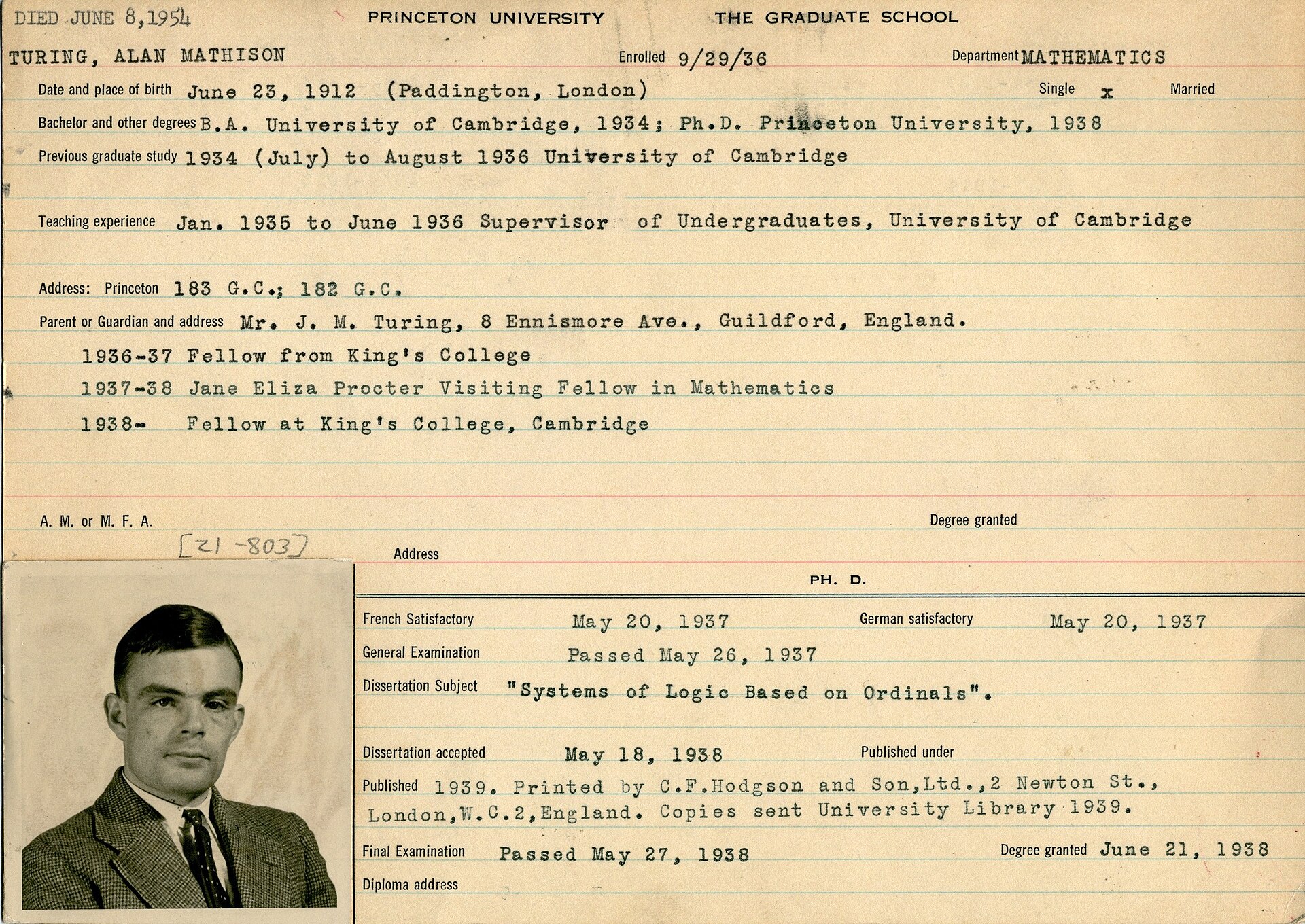
Alan Turing (1912-1954) at Princeton University in 1936
Alan Turing (1912-1954) at Princeton University in 1936AnonymousUnknown author · Public domain · via Wikimedia Commons
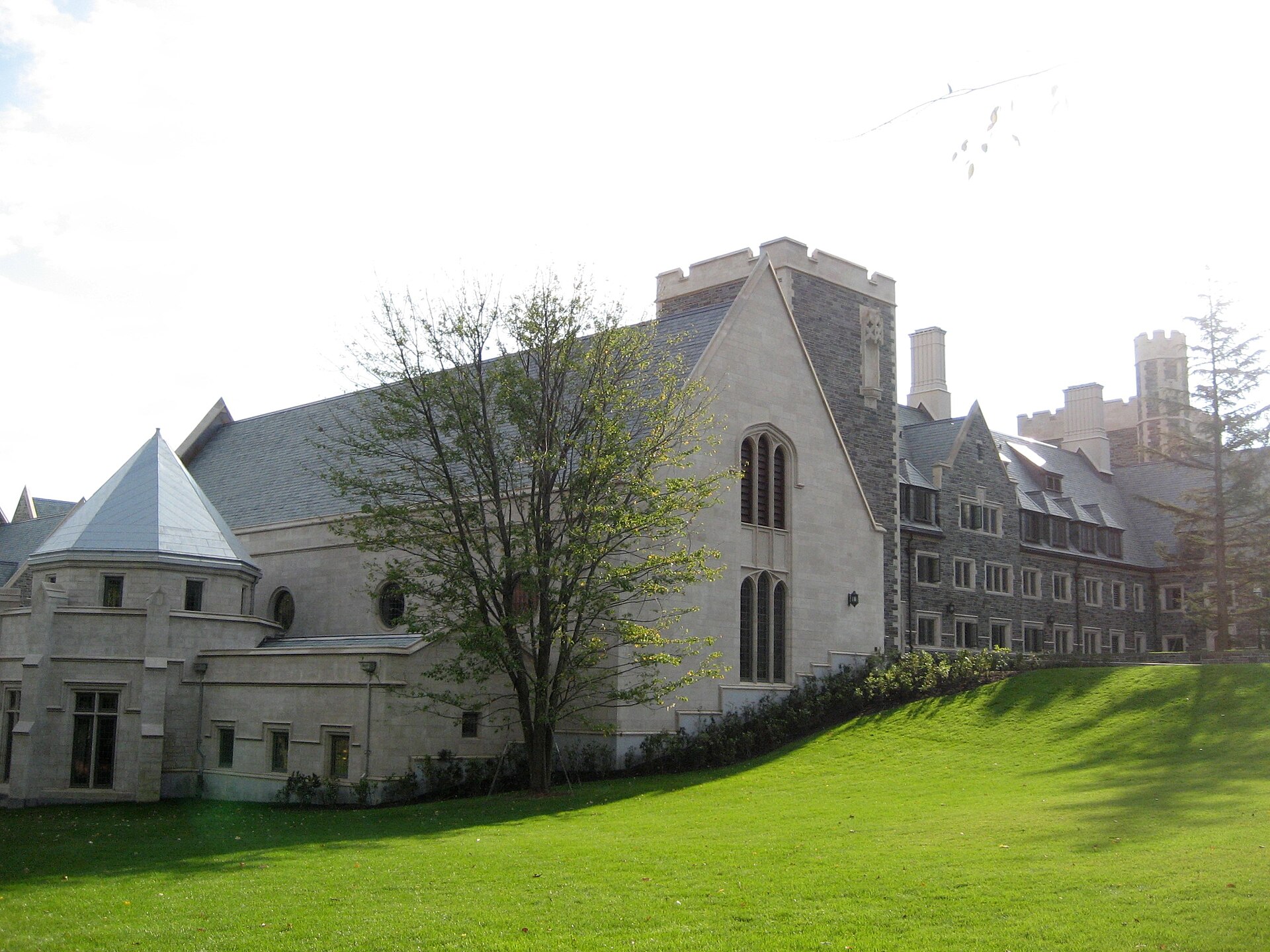
Picture of Princeton University's Whitman College. Designed by architect Demetri Porphyrios, built in 2002.
Picture of Princeton University's Whitman College. Designed by architect Demetri Porphyrios, built in 2002.Kungming2 · CC BY-SA 3.0 · via Wikimedia Commons
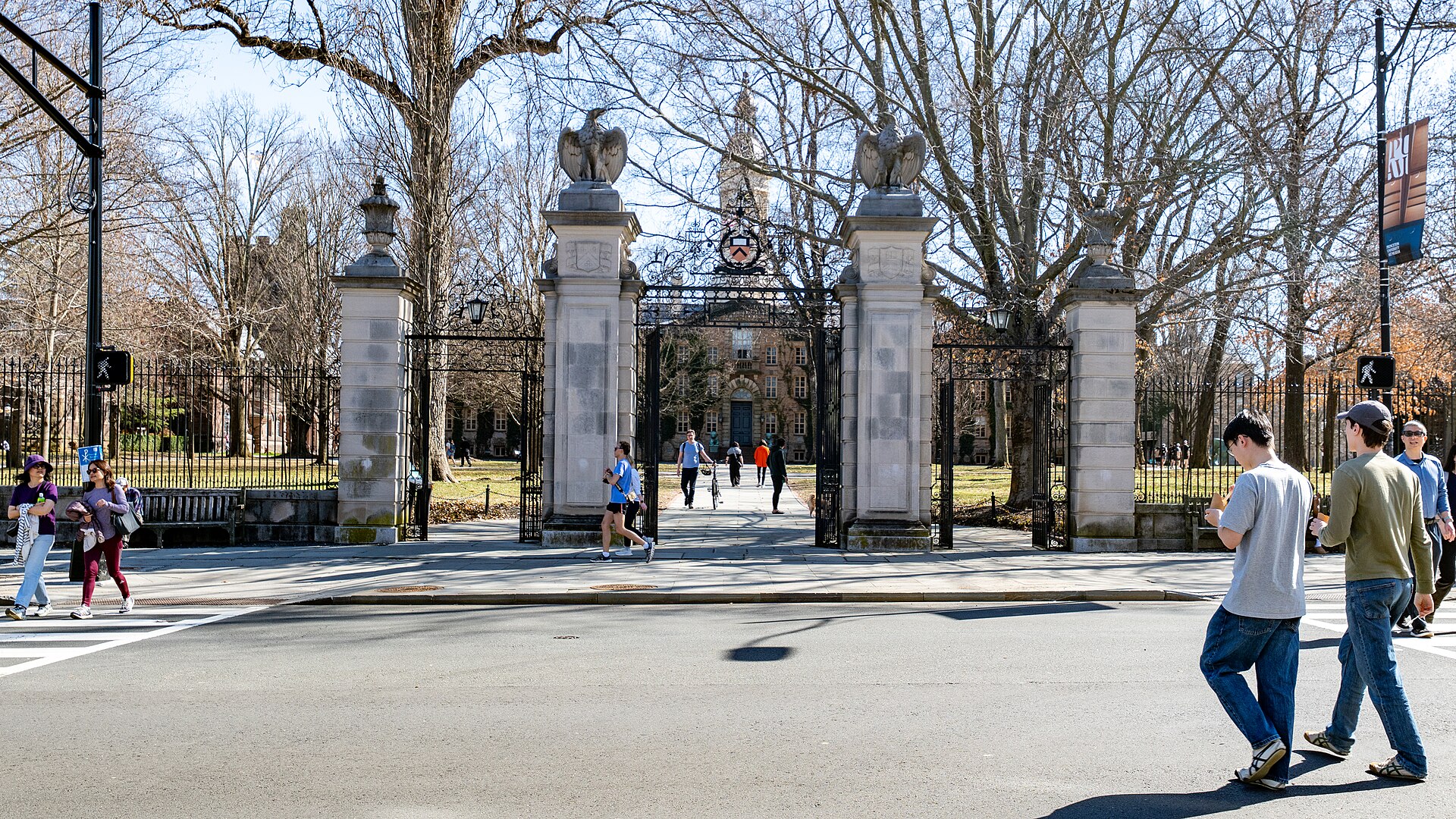
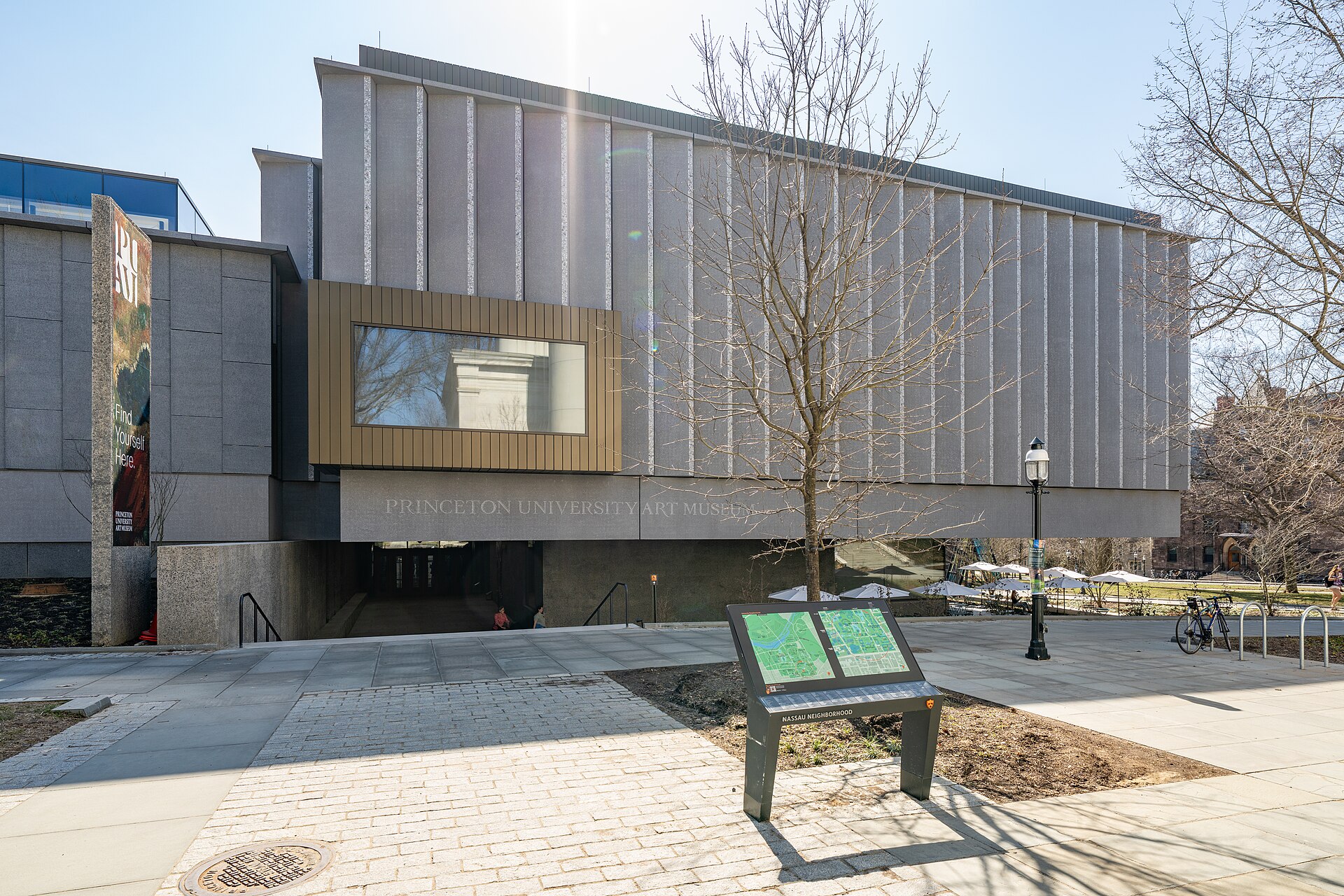
Princeton, NJ
Princeton, NJajay_suresh · CC BY 4.0 · via Wikimedia Commons
Princeton, NJ
Princeton, NJajay_suresh · CC BY 4.0 · via Wikimedia Commons
Forbes College at Princetown University, from College Road West
Forbes College at Princetown University, from College Road WestGeorgios Michalogiorgakis · CC BY-SA 2.0 · via Wikimedia Commons

Why Princeton — Undergraduate Focus, No-Loan Aid & the Senior Thesis

Princeton has made deliberate structural choices that distinguish it from every other Ivy League university — choices that directly benefit international undergraduates. Understanding those choices is the starting point for any serious Princeton application strategy.

01Undergraduate Teaching is the Mission
Princeton's professors are required to teach undergraduates — not just graduate students. The 5:1 student-to-faculty ratio and intimate seminars mean you learn directly from world-leading scholars from Day 1.
02The Senior Thesis — A Graduate-Level Credential
Every Princeton undergraduate completes a year-long original research thesis supervised by a faculty member. Unique in US higher education at the undergraduate level — it differentiates Princeton graduates in PhD programmes and careers worldwide.
03Need-Blind, No-Loan Financial Aid for Internationals
Princeton is one of fewer than ten universities in the world that meet 100% of demonstrated financial need for international students — with all aid in grants, no loans. Over 90% of recent Princeton seniors graduated debt-free.
04Academic Depth — #1 US University
Ranked #1 nationally (US News), #6 globally (THE), and #22 globally (QS). Princeton's mathematics, physics, economics, ORFE, and public policy programmes are consistently in the world's top 5.

Princeton Acceptance Rate & Admitted Student Profile

Stats

~37,000
Applications (recent cycle)
4.4%
Acceptance Rate
~5,300
Undergraduate Enrolment

Profile Stats

1490–1560
SAT Middle 50%
34–35
ACT Middle 50%
3.9
Minimum Unweighted GPA
42+
IB Competitive Band
24%
International Students
5:1
Student:Faculty Ratio
Admitted Student Profile — Key Statistics
Overall acceptance rate, most recent cycle

Rea Vs Rd

Rd Label: Regular Decision
Rd Value: ~3-4%
Rea Label: Single Choice Early Action
Rea Value: ~7-8%

Princeton Admissions Requirements — Academics, Testing & International Profile

GPA & Coursework
Value: 3.9+ Unweighted
  • Virtually all admitted students rank in the top 5% of their class
  • Most rigorous curriculum available at your school is expected
  • IB HL, A-Level, or AP courses with strong performance
  • Teacher recommendations validate academic character and curiosity
Near-perfect grades in the most challenging courses available to you. Princeton reads your transcript school-by-school — 3.9 on a 4.0 unweighted scale is the floor, and course rigour matters as much as the grade itself.
SAT / ACT
Value: 1490–1560 / 34–35
  • Princeton superscores SAT across multiple sittings
  • ACT: highest single composite reported
  • Tests required from Fall 2028; optional for earlier cycles
  • TOEFL/IELTS/DET required for non-native English speakers
Middle 50%: SAT 1490–1560; ACT 34–35. Princeton requires tests from Fall 2028. During the optional window, submitting scores above 1490 typically strengthens an international student's file.
International Grades
Value: Top 1–5%
  • IB: 42+ points, 7s in relevant Higher Level subjects
  • A-Levels: A*A*A* in rigorous subjects
  • CBSE/ISC: 96%+ in relevant subjects
  • Graded written paper required — unique to Princeton
For international students: IB 42+ (7s in HL); A-Level A*A*A*; Indian boards 96%+. Princeton also requires a graded written paper from your secondary school — the only top US university to do so.

Princeton Application Components — Common App, Essays & the Graded Paper

Princeton accepts applications through the Common Application only. Every component is evaluated — there are no formalities. Princeton's graded written paper requirement is the most distinctive element of any top US application.

01RequiredCommon Application
Princeton accepts the Common Application only. The platform opens August 1 each year. Princeton's CEEB code is 2672.
02RequiredPrinceton Supplemental Essays
Five short-answer responses, two substantial essays (community/lived experience at 500 words; service/civic engagement at 250 words), and one academic interest essay (250 words). Princeton's supplement is among the most extensive in the Ivy League.
03Required — Unique to PrincetonGraded Written Paper
One graded analytical essay from secondary school coursework — in English, with teacher comments and a grade. No other top US university requires this. Princeton uses it to directly evaluate your academic writing ability.
04RequiredOfficial Transcripts
All secondary school transcripts including internal grades and external exam results (IB, A-Level, IGCSE, national leaving certificates). Grade conversions are not required.
05RequiredSchool Report & Counsellor Recommendation
Contextualises your academic performance within your institution — critical for international applicants from schools outside Princeton's direct experience. Give your counsellor at least 6 weeks.
06RequiredTwo Teacher Recommendations
From two different core academic subject teachers who know your intellectual curiosity — not simply the subjects where you earned your highest grades.
07ConditionalStandardised Test Scores (SAT/ACT)
Required for Fall 2028 entry. Optional for Fall 2026 and 2027. International students applying in the optional window benefit from submitting scores at 1490+ (SAT) or 34+ (ACT).

Princeton Essays — Writing the Perfect Common App & Princeton Supplement

Tips

Princeton's supplement is among the Ivy League's most demanding
Eight distinct pieces of writing across five questions and two substantial essays. Princeton is building a complete portrait. Each essay must reveal something new about who you are — the supplement and personal statement should never repeat.
The 500-word lived experience essay is your primary signal
Princeton's admissions committee reads the community/lived experience essay as its most important supplemental document. Specificity is everything — a precise memory, a named person, a concrete situation. Generic diversity narratives disappear in a pool of 37,000.
Princeton's motto is not decorative
'Princeton in the Nation's Service and in the Service of Humanity' actively shapes what Princeton looks for. Essays that demonstrate genuine civic commitment — not résumé-padding volunteer hours — resonate specifically at Princeton in ways they do not at peer institutions.
The 50-word short answers require more craft than the long essays
Three personality questions at 50 words each. The pressure to be generic is highest in the shortest formats. The candidates who stand out use 50 words to be unexpectedly specific and reveal genuine personality.

Prompts

Common App Personal Statement
Choose from 7 Common App prompts. 650 words. Princeton reads all prompts equally — choose the one that frames the specific story only you can tell.
Community & Lived Experience (500W)
Reflect on how your lived experiences will impact the conversations you will have in the classroom, the dining hall or other campus spaces. What lessons have you learned in life thus far? What will your classmates learn from you?
Service & Civic Engagement (250W)
Princeton has a longstanding commitment to understanding our responsibility to society through service and civic engagement. How does your own story intersect with these ideals?
Three Short Answers (50W × 3)
What is a new skill you would like to learn in college? What brings you joy? What song represents the soundtrack of your life at this moment? — 50 words each
Academic Interest / Why Princeton (250W)
What academic areas most pique your curiosity, and how do Princeton's programmes suit your particular interests? (A.B.) — or — Why are you interested in engineering at Princeton? (B.S.E.) — 250 words
The most common Princeton essay mistake. Writing what sounds impressive to a Princeton admissions officer — instead of writing what is genuinely, specifically, irreplaceably yours.
Writing Strategy — What Works at Princeton

What Princeton Admissions Officers Are Looking For

Princeton uses a holistic review process. Every file is read by multiple admissions officers and rated across six dimensions. Understanding what each reviewer is assessing — and how to demonstrate each quality authentically — is the foundation of a strong Princeton strategy.

01Academic Excellence in Context
Princeton expects near-perfect grades in the most rigorous curriculum available — not grades optimised by choosing easier courses. Your academic record is read relative to what your specific school makes available.
02Intellectual Vitality and Curiosity
Do you pursue ideas independently? Princeton's senior thesis requires students capable of a year-long independent intellectual project. Applicants who have already demonstrated original thinking — through research, creative work, or self-directed inquiry — are more compelling than those with identical grades who have not.
03Extracurricular Depth and Real Impact
Princeton prefers authentic depth over a laundry list of activities. What have you built, changed, or created that had real-world impact? The student who founded and led one meaningful project over four years reads more compellingly than one with ten surface-level memberships.
04Personal Character and Integrity
Who are you beyond your achievements? Princeton's essays are designed to reveal character — honesty, resilience, intellectual courage, and generosity. Princeton selects students who will contribute to its community's human richness, not only benefit from it.
05Service and Civic Responsibility
Princeton's motto — 'Princeton in the Nation's Service and in the Service of Humanity' — is not aspirational. It describes what Princeton is and who it selects. Evidence of genuine service, community engagement, and civic commitment is weighted seriously and explicitly.
06The Graded Paper as an Academic Signal
Princeton's unique graded paper requirement is itself an evaluation dimension. A paper that demonstrates original argument, organised thinking, and precise academic prose — with substantive teacher commentary — signals the intellectual seriousness Princeton's senior thesis requires.

Princeton Financial Aid & Scholarships for International Students

Princeton's financial aid programme is one of the most generous in the world — and critically, it applies equally to international students. Princeton is need-blind for all applicants worldwide and meets 100% of demonstrated financial need entirely in grants.

Aid amounts are based on Princeton's published need-based formula and Office of Financial Aid guidance. Individual packages are determined case-by-case by Princeton's Financial Aid Office.

Stats

90%+
of Princeton seniors graduated debt-free
100%
of demonstrated need met — every admitted student
$0
expected from qualifying low-income families
Need-Blind
Admission policy for aid applicants — domestic and international

Contribution Tiers

NoteRangePercentPercent Value
Full cost typically covered — $0 expectedUnder $75,000100%100
Minimal contribution, typically 0–5% of income$75K–$100K92%92
Modest contribution, roughly 5–10% of income$100K–$150K80%80
Scaled contribution; substantial grants still available$150K–$200K60%60
Some grant aid available; contact Financial Aid OfficeOver $200K30%30
Princeton's No-Loan Policy — What This Means. Princeton eliminated student loans from its standard financial aid packages. Every dollar of institutional aid is a grant — money you receive and never repay. For a family earning under approximately $100,000 per year, Princeton may genuinely cost nothing. A Princeton education can be less expensive than most domestic alternatives for qualifying international families.
Expected Family Contribution — Qualitative Bands

Key Dates

SCEA Application Deadline
Date: Nov 1
SCEA Decision Released
Date: Mid-Dec
RD Application Deadline
Date: Jan 1
RD Decisions Released
Date: Late Mar

Advantages

  • Higher acceptance rate (~7–8% SCEA vs ~3–4% RD)
  • Non-binding — you are free to compare financial aid offers before committing
  • Signals genuine first-choice commitment to Princeton
  • Earlier decision in mid-December
  • More holistic review with less volume pressure

Disadvantages

  • Cannot apply EA or ED to other private US universities simultaneously
  • Public universities and UK/non-US applications remain unrestricted
  • Application must be complete and strongest by November 1
  • Less time to include senior-year results or new achievements
  • If deferred, wait until April with limited other early options
SCEA vs Regular Decision. SCEA gives a meaningful admissions advantage and — unlike Early Decision elsewhere — preserves your right to compare financial aid offers before committing. For most applicants with a complete file by November 1, SCEA is the recommended strategy.
Tychr's SCEA Recommendation. Apply SCEA if Princeton is your clear first choice and your application is genuinely complete by October. The higher acceptance rate (~7–8%) makes SCEA significantly better odds. And because SCEA is non-binding, you can still compare Princeton's financial aid against other offers before making your final decision — a major advantage over Early Decision at peer schools.
Princeton Single Choice Early Action — Pros, Cons & Strategy

Princeton Interview — Format, Questions & Preparation

Princeton alumni conduct interviews for applicants worldwide — typically a 45–60 minute conversation. The interview is conversational and evaluative: your interviewer submits a report on your intellectual engagement, character, and fit with Princeton's community. It is an opportunity, not a hurdle, and most Princeton-admitted students report positive interview experiences.

Meta

45–60 min conversation with a Princeton alumni interviewer
Format
Coffee shop, video call, or alumni's workplace
Location
Intellectual curiosity, civic engagement, personal character
Evaluates
A positive factor — part of holistic review, not pass/fail
Weight

Questions

Why Princeton specifically — and not another Ivy League university?
Tip: Name specific courses, professors, research centres, or Princeton programmes. Do not mention rankings or 'the best'. Princeton expects you to know Princeton.
Tell me about a book, article, or idea you've engaged with recently.
Tip: Not a school text. Demonstrate genuine intellectual curiosity. Have an argument about it — not just a summary. Princeton interviewers are themselves intellectual.
How do you think about your responsibility to your community or to society?
Tip: Princeton values civic commitment as a genuine character trait, not a résumé line. Describe a specific engagement and what it meant to you personally.
What intellectual question would you most like to spend a year investigating?
Tip: The senior thesis is Princeton's academic pinnacle — every student completes one. Show that you understand what independent research means and are genuinely drawn to it.
What aspect of Princeton's community do you most look forward to?
Tip: Princeton's eating clubs, residential colleges, and campus culture are genuinely distinctive. Show you have researched Princeton as a place, not just a degree.

Princeton's Residential Colleges & Eating Clubs

Princeton's residential life is shaped by two institutions found nowhere else in American higher education: the seven residential colleges for freshmen and sophomores, and the eleven eating clubs for juniors and seniors. Together they create a distinctive campus community that is one of Princeton's most celebrated features.

Houses

Butler College
Tag: Residential College
Largest residential college; strong sense of community
Forbes College
Tag: Residential College
Small and intimate; off-campus feel near the arts district
Huo College
Tag: Residential College
Newest college; modern facilities and diverse community
Mathey College
Tag: Residential College
Gothic architecture; strong academic culture
Rockefeller College
Tag: Residential College
Historic location near Nassau Hall; vibrant dining culture
Whitman College
Tag: Residential College
Award-winning Gothic architecture; built in 2007
Yeh College
Tag: Residential College
Newest college alongside Huo; modern campus integration
Ivy Club
Tag: Eating Club
Oldest eating club (1879); selective bicker process
Tiger Inn
Tag: Eating Club
Known for social atmosphere; bicker club
Charter Club
Tag: Eating Club
Sign-in club; open to all juniors and seniors by lottery
Cap and Gown
Tag: Eating Club
Sign-in club; diverse membership; well-regarded dining

Lottery Steps

  • All first and second-year students live and dine in one of seven residential colleges: Butler, Forbes, Huo, Mathey, Rockefeller, Whitman, Yeh
  • Each college has its own dining hall, common spaces, Master, academic advisers, and programming
  • Students are assigned to a residential college; the assignment shapes first-year friendships and academic community
  • From junior year, students may join one of eleven eating clubs on Prospect Avenue ('The Street')
  • Four clubs are 'sign-in' (open to all by lottery); seven are 'bicker' (selective admission process)
  • Financial aid covers the average eating club cost — aid recipients can join a club without additional out-of-pocket expense

Princeton Programmes & Undergraduate Concentrations

A.B. Programme — Arts & Sciences
Label: ~35 Concentrations
  • {"label":"Undergraduate concentrations available","value":"35+"}
  • {"label":"When concentration declared","value":"Sophomore year"}
  • {"label":"Senior thesis","value":"Required — all students"}
  • {"label":"Junior independent work","value":"Required — most departments"}
The A.B. (Bachelor of Arts) is Princeton's humanities, social sciences, and sciences pathway. Concentrations include Economics, Mathematics, History, Politics, English, Molecular Biology, Computer Science, Physics, and 25+ others.
B.S.E. Programme — Engineering & Applied Science
Label: 8 Departments
  • {"label":"Engineering departments","value":"8"}
  • {"label":"Signature programme","value":"ORFE"}
  • {"label":"Founding year","value":"1875"}
  • {"label":"Supplemental essay","value":"Required (B.S.E. specific)"}
Engineering applicants apply for the B.S.E. (Bachelor of Science in Engineering). Departments include Civil & Environmental Engineering, Computer Science, Electrical & Computer Engineering, and the uniquely Princeton programme in Operations Research and Financial Engineering (ORFE).
School of Public and International Affairs (SPIA)
Label: Unique Undergraduate Certificate
  • {"label":"Undergraduate access","value":"Certificate alongside A.B."}
  • {"label":"Founded","value":"1930"}
  • {"label":"Global ranking","value":"Top 3 globally"}
  • {"label":"Graduate flagship","value":"MPA/MPP"}
SPIA is one of the world's premier public policy schools. Undergraduates pursue A.B. concentrations (often Politics, Economics, or History) alongside a SPIA certificate. The programme's Woodrow Wilson Fellowship and internship pipeline into government, the UN, and international NGOs is unmatched.
Princeton Neuroscience Institute
Label: Interdisciplinary Certificate
  • {"label":"Approach","value":"Interdisciplinary"}
  • {"label":"Access","value":"Certificate + A.B./B.S.E."}
  • {"label":"Faculty","value":"50+ affiliated"}
  • {"label":"Research","value":"PNI labs open to undergrads"}
Princeton's neuroscience programme is a model of interdisciplinary undergraduate research. Undergraduates combine a primary concentration in biology, psychology, or computer science with neuroscience coursework and hands-on research in PNI labs.
Graduate School
Label: PhD and Master's Programmes
  • {"label":"Graduate students","value":"~3,200"}
  • {"label":"PhD programmes","value":"42"}
  • {"label":"Graduate funding","value":"Fully funded PhDs"}
  • {"label":"Faculty:PhD student ratio","value":"Extremely low"}
Princeton's Graduate School is exclusively PhD and select master's programmes — there are no MBA, law, or medical schools. The graduate school's small size and the emphasis on undergraduate teaching mean undergraduates work alongside PhD students in research settings from Year 1.

Research & Extracurricular Opportunities at Princeton

Freshman Research Programme (FRP)
Category: Undergraduate Research
Princeton's Freshman Research Programme places first-year students directly in faculty research labs from the start of their undergraduate education — rare for a research university of this calibre. Applications open in the spring of the admission year.
Independent Work — Junior Papers & Senior Thesis
Category: Independent Research
Every Princeton undergraduate completes junior independent papers and a year-long senior thesis. This is the cornerstone of the Princeton education — and the most distinctive credential Princeton graduates carry into graduate school and careers.
Woodrow Wilson School Programmes (SPIA)
Category: Public Service & Policy
SPIA fellowships, policy workshops, and research opportunities are open to Princeton undergraduates. The SPIA pipeline into the US State Department, international organisations, and public policy roles is among the strongest in the world.
Student Organisations & Athletics
Category: 300+ Active Groups
The Daily Princetonian (daily newspaper), Triangle Club (oldest touring college musical comedy troupe), Princeton Model UN, debate, orchestra, and 37 varsity sports in NCAA Division I (Ivy League). 300+ student organisations spanning every interest.
Scroll right to explore Princeton's research programmes and student life opportunities.

Career Outcomes & Princeton Alumni Network

Princeton's alumni network is particularly powerful in public service, academia, and quantitative finance — fields where Princeton's specific academic culture (the thesis, the 5:1 ratio, the SPIA pipeline) creates a distinctive advantage that brand name alone does not.

Stats

95%
Employed or in graduate school within one year
$85,000
Average starting salary, recent graduating class
2
US Presidents among Princeton alumni
68+
Nobel laureates affiliated with Princeton
24%
International student share of enrolment
Top 3
Top employer categories: Finance, Technology, Public Service

Categories

Quantitative Finance & Consulting
Two Sigma, D.E. Shaw, Goldman Sachs, McKinsey — Princeton's ORFE and Mathematics programmes feed directly into the most competitive quantitative finance and consulting roles in the world. Princeton alumni disproportionately lead global hedge funds and trading desks.
Public Service & International Affairs
US State Department, the United Nations, World Bank, Congress — Princeton's SPIA pipeline into public service and international policy is unmatched among undergraduate institutions. Princeton alumni lead international organisations at a rate no peer university approaches.
Academia & PhD Programmes
Top PhD programmes in mathematics, physics, economics, and computer science recruit Princeton alumni consistently. The senior thesis is the reason — Princeton undergraduates arrive at graduate school having already produced book-length original research.

Our Princeton Admissions Track Record & Student Success Stories

Priya S.
Tychr helped me understand that Princeton's supplement wasn't asking me to summarise my activities — it was asking who I am. My lived experience essay became specific, grounded, and genuinely mine. The feedback on my graded paper choice was equally transformative.
Country: India
Program: Princeton — Mathematics
Class Year: Class of 2027
Residential: Whitman College
Academic Profile: IB 44 · SAT 1560 · AIME Qualifier
Daniel O.
I almost applied RD because I thought SCEA was binding. Tychr clarified it was non-binding — which meant I could compare Princeton's aid offer against others before deciding. I applied SCEA, was admitted in December, and Princeton's no-loan package made the decision straightforward.
Country: Nigeria
Program: Princeton — ORFE
Class Year: Class of 2026
Residential: Rockefeller College
Academic Profile: SAT 1540 · A-Levels A*A*A*
Ji-Yeon K.
The graded paper requirement caught me completely off-guard in September. My Tychr counsellor had flagged it six months earlier and helped me identify and strengthen the right paper. Without that preparation, I would have submitted something generic.
Country: South Korea
Program: Princeton — Politics
Class Year: Class of 2025
Residential: Mathey College
Academic Profile: IB 43 · SAT 1530

Faqs

Is Princeton need-blind for international students?+

Yes. Princeton is one of fewer than ten universities in the world that are need-blind for all applicants, including international students. Applying for financial aid — even if you need 100% of costs covered — does not disadvantage your application in any way. If admitted, Princeton meets 100% of demonstrated financial need entirely in grants, with no loans.

What is the graded written paper requirement?+

Princeton requires you to submit one graded analytical essay from your secondary school coursework — preferably from English, history, or a humanities subject. The paper must be in English, include your teacher's comments and a grade or rubric, and be an original analytical essay (not a creative piece or science lab report). This is unique among top US universities and is a genuine evaluation of your academic writing ability.

What is Princeton SCEA and is it better than Regular Decision?+

Single Choice Early Action (SCEA) is Princeton's early round. It is non-binding (you are not obligated to attend if admitted) but restrictive (you cannot apply EA or ED to other private US universities while your Princeton SCEA is pending). SCEA historically carries a higher acceptance rate and signals genuine first-choice commitment. For most applicants with a complete application by November 1, SCEA is the recommended strategy.

Are standardised tests required at Princeton?+

Tests are currently optional for Fall 2026 and 2027 entry, but Princeton has confirmed they will be required from Fall 2028. For international students applying in the optional window, submitting strong scores (SAT 1490+ or ACT 34+) typically adds positive academic context to a file.

Does Princeton prefer certain concentrations at admission?+

Princeton does not admit students to specific departments — all undergraduates are admitted to Princeton and choose their concentration in sophomore year. However, engineering applicants must apply for the B.S.E. programme specifically, which requires a different supplemental essay. The admissions process is holistic regardless of intended field.

Is the senior thesis required for all Princeton students?+

Yes. Every Princeton undergraduate, in every department, completes a year-long senior thesis — an original research project supervised by a faculty adviser. In most departments, students also complete independent junior papers. The thesis is non-negotiable and is what makes a Princeton degree fundamentally different from any other undergraduate credential in the US.

What English language tests does Princeton accept?+

Princeton accepts the TOEFL iBT (minimum 100), IELTS Academic (minimum 7.5), Duolingo English Test (minimum 120), and PTE Academic. You are exempt if English is your first language or if you have attended a school where English was the primary medium of instruction for at least three years.

Can I apply to both Princeton SCEA and other Ivy League schools early?+

Not to other private US universities simultaneously. SCEA restricts you from applying EA or ED to other private US universities while your Princeton SCEA is pending. You may, however, apply Early Action to US public universities (e.g. UMich, UNC, Georgia Tech) and to non-US universities (UK, Canada, etc.) without restriction.

Book a Free Princeton Admissions Strategy Session

In 60 minutes our Princeton admissions specialists will evaluate your academic profile, identify your application strengths and gaps, develop your essay strategy (including the graded paper), and determine whether SCEA or Regular Decision gives you the best odds.

  • No commitment required
  • Princeton specialists with insider knowledge
  • Personalised strategy — not generic Ivy League advice
Getting into Princeton is not about being the most impressive — it is about being unmistakably, specifically, irreplaceably yourself.

Princeton Admissions Requirements

Princeton Academic Requirements, The Honest Breakdown for International Students

What GPA, test scores, and academic profile do Princeton's admitted students actually have? And what does Princeton's unique senior thesis requirement mean for students from IB, A-Level, AP, and other international curricula?

3.9
Minimum Unweighted GPA
Floor, not the target
1490–1560
SAT Middle 50%
Admitted band
34–35
ACT Middle 50%
Admitted band
42+
IB Competitive Range
7s in relevant HLs
A*A*A*
A-Level Expectation
In rigorous subjects
4.4%
Acceptance Rate
Most recent cycle

GPA & Class Rank

Princeton and GPA, What the Data Shows

The honest picture: Princeton does not publish a minimum GPA. In practice, 3.9 on a 4.0 unweighted scale is the floor, not the expectation. Virtually all admitted students rank in the top 1–5% of their graduating class.

A 3.9+ GPA is a threshold, not a differentiator. What distinguishes Princeton's admitted students is the combination of excellent grades in exceptionally rigorous courses — plus genuine intellectual depth beyond the transcript.

3.9
Minimum GPA Princeton considers
~95%
Virtually all admitted students rank in the top 10% of their class
What this means for international students. International students from systems without formal class rank (IB, UK A-Levels, many Asian national systems) are evaluated on their grades relative to their school's known performance range and against other applicants from the same educational background. Princeton's admissions officers are experienced international transcript readers.
Grade trajectory matters. A student with a strong upward trajectory — improving from a moderate start to exceptional senior-year performance — reads differently from one whose grades have plateaued or declined. Princeton's review is genuinely contextual; an early weak period followed by sustained excellence is a context, not a disqualifier.

Academic Context

Class Rank and School Context, How Princeton Reads Academic Performance

Princeton does not require class rank, and many international schools do not provide it. Princeton's admissions office is experienced at evaluating performance across widely different school systems — from the IB to the Chinese Gaokao to CBSE to A-Levels.

How Princeton contextualises your academic record
Every application is evaluated with reference to the specific school's curriculum, grading norms, and course offerings. Princeton uses school profiles submitted through the Common Application to understand the academic environment each applicant came from. A student at a school that offers no IB or A-Level options is evaluated differently from one at a fully-equipped international school.
What this means practically
Taking the most rigorous courses available at your specific school is more important than achieving perfect grades in easier options. Princeton explicitly evaluates 'rigour of secondary school record' as a primary academic factor — separately from the grade itself.
For students at less well-known international schools. Your school counsellor's letter is particularly important — it provides Princeton with the institutional context needed to evaluate your academic performance fairly. Tychr coaches school counsellors on how to provide this context effectively, including for homeschooling parents writing counsellor letters.

Standardised Testing

SAT Scores at Princeton, What You Actually Need

Princeton SAT Data — Admitted Students

LabelScorePercent
25th percentile149060
75th percentile156090
Target for strong submission1530+78
The SAT Math subscore. For STEM-focused applicants (Mathematics, Computer Science, Physics, ORFE), a strong Math subscore (780–800) is particularly important. Princeton's quantitative programmes are among the most demanding in the world — a high Math subscore signals the preparation they require.
Preparation. Tychr's structured SAT preparation averages 150+ point improvement over 8–12 weeks. Students targeting Princeton should aim for 1510+ before considering submission in the optional window, and 1530+ as a genuine competitive benchmark.
Submitting vs. withholding scores. Princeton is currently test-optional for Fall 2026 and 2027. For international students, Tychr generally recommends submitting scores above 1490 — they provide additional academic context Princeton can compare across 50+ educational systems. Scores between 1460 and 1490 are judgment calls; scores below 1460 in the optional window are typically better withheld.

Standardised Testing

ACT Scores at Princeton, The Data and the Strategy

Princeton ACT Data — Admitted Students

Metrics

25th percentile
Score: 34
75th percentile
Score: 35

Comparison Cards

Both accepted equally
Princeton does not prefer one over the other. Choose based on which test plays to your specific strengths after taking a diagnostic of both.
SAT rewards
Careful analytical reading and precise mathematical reasoning across a longer test.
ACT rewards
Speed across four sections, including the Science section's data interpretation — a format some international students find unfamiliar and should practise specifically.
Superscore policy. Princeton superscores the SAT (taking the highest section scores from multiple sittings). For the ACT, Princeton uses the highest single composite sitting. Taking the SAT multiple times and submitting all sittings is advantageous — Princeton will see and use your highest superscore.
Tychr's recommendation. Take a diagnostic of both tests before committing. If your ACT diagnostic is 33 or above, it is worth pursuing. The ACT Science section is a data-reading exercise that can be learned — international students should practise it specifically if considering the ACT.

Testing Strategy

Princeton Test Policy, The Strategic Decision Explained

Princeton's test policy has evolved post-pandemic, with a formal return to test-required admissions from Fall 2028. Understanding what 'test-optional' actually means — and when not submitting scores is or isn't advantageous — is important for Princeton applicants.

Submit Items

Your SAT is at or above 1490 — submit. Scores above the 25th percentile add positive academic value.
Your ACT is at or above 34 — submit.
You are an international student — a strong score provides academic context Princeton can compare directly across 50+ educational systems.

Withhold Items

Your score is below 1460 (SAT) or below 33 (ACT) — withholding is typically the better strategy in the optional window.
Submitting would draw attention to a dimension of your academic profile significantly weaker than everything else in your file.
Current policy. Princeton accepts applications without SAT or ACT scores for Fall 2026 and Fall 2027 entry. Princeton has confirmed that standardised tests will be required from Fall 2028. This signal matters — Princeton views standardised tests as valuable evaluative tools and its admitted class consistently scores among the highest of any university.
The misconception. 'Test-optional' does not mean 'test-irrelevant.' Princeton's admitted class contains a very high proportion of strong test scorers. Students who submit strong scores receive a positive academic signal. Students who don't submit remove that signal — which means the rest of the academic profile must carry more weight. It is not a level playing field; it is a different evaluation context.

Curricula

A-Levels and IB at Princeton, Specific Benchmarks

IB Diploma
Note: What Princeton values in IB applicants: ambitious HL combinations that signal genuine intellectual courage — not easy HL choices designed to maximise the point total. The Extended Essay grade (A or B) is meaningful context for a university that requires every undergraduate to write a senior thesis. Princeton reads IB EEs as evidence of independent research capability.
  • {"label":"Competitive range","value":"42–45 points"}
  • {"label":"HL expectations","value":"7,7,6 or 7,7,7 in subjects relevant to intended concentration"}
  • {"label":"Subject rigour","value":"HL Mathematics: Analysis & Approaches (preferred for quantitative applicants); HL sciences or humanities aligned with Princeton concentration"}
  • {"label":"Extended Essay","value":"A or B grade; read as evidence of independent research capability"}
A-Levels
Note: Princeton understands A-Level predicted grades and expected school conventions. Strong predicted grades with consistent historical GCSE/IGCSE performance are the expected profile. Three rigorous A-Level subjects read well — Princeton does not penalise for not taking four, if the three taken are genuinely demanding.
  • {"label":"Competitive range","value":"A*A*A* in rigorous subjects"}
  • {"label":"Subject rigour","value":"Mathematics, Further Mathematics for STEM; English, History, Economics for humanities; Sciences for pre-med tracks"}
  • {"label":"AS results","value":"Reviewed alongside predicted A-Level grades; strong AS supports the predicted grade argument"}

Advanced Placement

AP Courses at Princeton, What Counts and What to Take

For students in schools that offer AP courses, Advanced Placement performance is a significant component of the academic profile and provides standardised evidence that validates school grades.

What Princeton is looking for
AP 5s across multiple rigorous subjects: Calculus BC, Physics C (Mechanics and E&M), Chemistry, Biology, US History, World History, English Language, Statistics, Computer Science A. The pattern of AP subject choices should reflect genuine intellectual ambition — 5s in AP Studio Art and AP Environmental Science alongside 3s in AP Calculus tell a different story than the reverse.
How many APs?
Princeton doesn't publish an expected number. Competitive applicants typically have 5–10 AP exams with predominantly 5s. Subject rigour matters more than count. A student with 5s in five demanding AP courses is more compelling than one with 3s and 4s across twelve easier ones.
Grade validation function
Strong AP scores independently validate school grades across different grading environments. This is particularly valuable for international students at schools where Princeton has less direct experience evaluating grading norms.
Princeton awards course credit for AP scores of 5 in many subjects, allowing students to place out of introductory courses and pursue upper-division work earlier. This is a genuine educational benefit — Princeton undergraduates who place out of required foundation courses have more freedom to explore advanced and interdisciplinary work from Year 1.
International students at schools that don't offer AP should not artificially pursue AP exams. The IB Diploma or A-Level system is appropriate for their context and evaluated accordingly. AP is evaluated relative to what was accessible to the student — not as a universal requirement.

Academic Rigour

Rigour of Secondary School Record, Princeton's Primary Academic Signal

Princeton lists 'Rigour of secondary school record' as one of its most important academic factors. Understanding what this means — and how Princeton's admissions office actually evaluates it — is fundamental to a competitive application.

Taking the most challenging courses available at your specific school, in the subjects most relevant to your genuine intellectual interests.

The contextual element. Rigour is always evaluated relative to what was available. A student at a school that offers only five AP courses is evaluated differently from one at a school with thirty options. What matters is whether the student challenged themselves relative to what was possible — not whether they matched an abstract global standard.
What rigour means. This does not mean taking every possible challenging course simultaneously. It means demonstrating genuine academic ambition through course selection — choosing the combination that reflects intellectual seriousness in your areas of strength, not the combination that maximises your grade average.
What Princeton is looking for. A student who took IB HL Mathematics: Analysis & Approaches, HL Physics, and HL Chemistry simultaneously demonstrates the academic courage Princeton's senior thesis requirement assumes. Princeton's admissions officers, experienced readers of international transcripts, can distinguish grade-optimised course choices from genuinely ambitious ones immediately.

Subject Preparation

Subject Preparation Princeton Expects by Area

Princeton has no formal subject prerequisites for undergraduate admission. However, the academic profile of admitted students reveals clear expectations by intended concentration. The following reflects what competitive Princeton applicants in each field actually demonstrate.

Mathematics & Quantitative Fields
For any quantitative concentration (Mathematics, Computer Science, Physics, ORFE, Economics), Princeton expects preparation well beyond the standard curriculum: IB HL Mathematics: Analysis & Approaches (not Applications) or A-Level Mathematics + Further Mathematics. Competition mathematics experience — AIME qualification, national Olympiad selection, or international equivalents — is a meaningful differentiator. Princeton's Mathematics department is one of the three strongest in the world.
Sciences & Pre-Medical
For Molecular Biology, Chemistry, Physics, or pre-med: HL sciences with 7s (IB) or A* grades in three sciences (A-Level) are the baseline. Research experience through competitive summer programmes (RSI, PRIMES, STS, Simons) or university lab attachments is the strongest differentiator among applicants with equivalent scores and grades.
Computer Science & Engineering
For B.S.E. engineering applicants specifically: competitive programming achievement (USACO Platinum, ICPC, or equivalent national competitions), original projects with real users, or research with published or presented output strengthen an engineering application meaningfully. The B.S.E. supplemental essay requires a specific explanation of your engineering interest and experience.
Humanities & Social Sciences
For Politics, History, Economics, SPIA, or English: the graded written paper Princeton requires is an especially important evaluative tool for humanities applicants. An analytical essay that demonstrates original argument, intellectual honesty, sophisticated prose, and substantive teacher commentary matters as much as test scores for humanities files. Wide reading and original written output are the primary signals.

Language Proficiency

English Language Requirements for International Princeton Applicants

Princeton requires English proficiency demonstration from non-native speakers who have not attended an English-medium school for at least three years. Four tests are accepted.

Princeton's application essays — the 500-word lived experience essay, the 250-word service essay, and the 250-word academic interest essay — are themselves the most revealing English writing evaluation. A student who writes compelling, fluent, precisely argued essays in English demonstrates proficiency more convincingly than any test score alone.

Test: TOEFL iBT
Score: 100+
Test: IELTS Academic
Score: 7.5+
Test: Duolingo English Test
Score: 120+
Test: PTE Academic
Score: Contact Princeton
Practical guidance. These are minimum thresholds, not targets. A TOEFL of 100 is the floor the requirement sets — it is not the score that signals competitive English proficiency to Princeton's admissions committee. International students whose primary language of instruction is not English should focus most of their language preparation on writing quality, not test score maximisation.

By Concentration

Academic Requirements by Concentration, What Different Princeton Paths Expect

Princeton does not formally consider intended concentration in admissions — students are admitted to Princeton and choose their concentration in sophomore year. However, the academic profile should be coherent with the stated intellectual interests the applicant describes in their essays.

SignalsExpectationConcentration
AMC/AIME/USAMO; competition maths; proof-writingHL Maths AA / Further Maths A*Mathematics
USACO Platinum; original software projectsHL Maths + CS backgroundComputer Science
Financial modelling; econometric research; data projectsHL Maths AA + EconomicsORFE (Operations Research)
Quantitative research; economic analysis projectsHL Maths AA + EconomicsEconomics
Original lab research; science fair achievement; RSIHL Chemistry + Biology 7sMolecular Biology / Chemistry
Physics olympiad; AMC/AIME; original experimentsHL Maths + Physics A*sPhysics
Engineering competition; design projects; USACOHL Maths + Physics / CSEngineering (B.S.E.)
Policy writing; MUN achievement; internship or researchStrong humanities + economics profileSPIA / Public Policy
Graded paper strength; published writing; extended readingStrong humanities A-Levels or IB HLsHistory / English / Politics
Clinical or research experience; HL sciences 7sHL Chemistry + Biology + MathsPre-Medical track (A.B.)

International Systems

Princeton and International Education Systems, How Your Curriculum Is Evaluated

IB Diploma
Highly valued and well understood. Princeton's admissions officers are experienced IB readers — they know the difference between a student who challenged themselves and one who chose HL subjects to protect their total score. The EE grade and subject are taken seriously as evidence of independent research capability, directly relevant to Princeton's senior thesis requirement.
A-Levels (Cambridge and Edexcel)
Equally well understood. A-Levels are the primary qualification for UK, Australian, and many international students applying to Princeton. The combination of subjects chosen and the predicted and achieved grade profile are both carefully evaluated.
Indian Boards (CBSE / ISC)
Accepted and evaluated carefully. Princeton is aware of grade variability across CBSE and ISC contexts. Supplementary evidence — JEE performance, Olympiad results, research publications, or competition achievements — significantly strengthens the academic picture for Indian applicants.
Chinese Gaokao
Gaokao results are one data point for Chinese applicants. A-Level or IB study alongside or instead of the Gaokao, supplemented by strong SAT scores and research experience, typically makes for a more competitive Princeton application.
Homeschooled students
Princeton accepts applications from homeschooled students and evaluates academic preparation based on externally validated qualifications (IB, AP, A-Level), SAT/ACT scores, and the counsellor letter provided by the supervising parent.

Roadmap

Building a Princeton Academic Profile, What to Do at Each Stage

Grade 9–10Lay the Foundation
Year: Grade 9–10
  • Select IGCSE or MYP subjects that leave maximum options for IB HL or A-Level selection.
  • Identify subjects where you have genuine intellectual passion — not just grade potential.
  • Begin exploring academic interests outside the classroom: competitions, independent reading, online coursework in your areas of genuine curiosity.
  • These years are noticed in the Princeton file — an early record of intellectual ambition matters.
Grade 10–11Build Genuine Depth
Year: Grade 10–11
  • IB HL subject selection — choose ambitiously, not strategically for grade optimisation.
  • A-Level subject combination finalised with an eye to Princeton concentration coherence.
  • Begin SAT or ACT preparation — take diagnostic sittings by early Grade 11.
  • Identify research programmes to apply for (RSI, PRIMES, PROMYS, Polygence, Simons): deadlines are in winter, Grade 11.
  • Begin developing the intellectual commitment (a project, competition, or research strand) that will become your primary narrative.
Grade 11Research and High-Impact Projects
Year: Grade 11
  • Grade 11 summer is the most important summer for Princeton applicants. A competitive research programme, university lab attachment, or independently initiated project with measurable outcomes differentiates at the top of the applicant pool.
  • Identify your strongest academic paper for the graded written paper requirement — review all your analytical essays from Grades 9–11.
  • Begin drafting the Princeton supplement by the end of Grade 11.
Grade 12Execute and Apply
Year: Grade 12
  • Confirm and finalise your graded written paper — choose the essay with the strongest teacher commentary.
  • Finalise SAT/ACT scores by October for SCEA or December for RD.
  • Request teacher recommendations from teachers who have had you for at least a year — ideally Grade 11 teachers who know your work well.
  • Submit SCEA by November 1 if Princeton is your first choice and your application is genuinely complete.

Common Pitfalls

Academic Mistakes That Cost Princeton Applications, And How to Avoid Them

Choosing easier HL subjects to protect the IB total
Princeton's admissions officers know the IB curriculum intimately. A student with 44 points across HL Visual Arts, HL Psychology, and HL Sports Science reads very differently from one with 42 points across HL Maths, HL Physics, and HL Chemistry.
Submitting below-threshold test scores
An SAT score of 1440 submitted to Princeton draws attention to a dimension significantly below the admitted student 25th percentile. Withhold scores below 1460 in the optional window. Prepare to a higher score first.
Leaving the graded written paper to the last minute
The graded paper requirement is known to applicants months in advance. Finding and preparing the right paper in the final two weeks before the deadline produces rushed, suboptimal submissions. Start reviewing your academic writing portfolio in Grade 11.
Not taking the IB Extended Essay seriously
Princeton reads the EE grade and topic as evidence of independent research capability — directly relevant to whether a student is likely to thrive in Princeton's senior thesis environment. Treating the EE as a formality is a missed signal.
Predicted grades that don't match the track record
Princeton's admissions officers have experience with most major university systems. If your predicted grades are optimistically inflated relative to your demonstrated track record, this discrepancy is visible — and concerning.

Real Outcomes

What Academic Profiles Tychr's Princeton-Admitted Students Had

The following profiles represent the academic backgrounds of students Tychr has supported through successful Princeton applications or Princeton-equivalent outcomes. They illustrate the range of preparation that works — and what made each application compelling.

Profile 1 — STEM Focus
HL Maths AA (7), HL Physics (7), HL Chemistry (6). PRIMES programme (MIT). Published a computational chemistry paper as a co-author in a peer-reviewed journal.
Stats: IB 43 · SAT 1550 · AIME Qualifier
Takeaway: The academic profile was strong but not exceptional by Princeton's standards. The PRIMES research and publication elevated the application — and made the senior thesis pitch genuinely credible.
Profile 2 — Humanities
A*A*A* in History, English Literature, and Economics (A-Level). No standardised test submitted (optional cycle). EPQ on Ottoman land reform awarded A*. Winner of a national history essay competition.
Stats: A-Levels A*A*A* · Essay prize winner
Takeaway: The humanities profile was coherent, well-evidenced, and supported by the graded written paper: an analytical history essay with extensive teacher commentary that demonstrated exactly the independent thinking Princeton's thesis requires.
Profile 3 — Social Sciences / SPIA
HL Economics (7), HL Mathematics AA (7), HL Politics (7). Independent research on public health policy using World Bank data. Presented findings at a national youth economics forum.
Stats: IB 44 · SAT 1545
Takeaway: The academic profile was strong, but what differentiated the application was the genuine policy research — and an essay on civic responsibility that demonstrated Princeton's service ethos as a lived value, not a résumé item.

Faqs

Is a 3.9 GPA enough for Princeton?+

A 3.9 GPA meets Princeton's stated minimum — but it is not sufficient on its own. Princeton receives applications from thousands of students with perfect or near-perfect GPAs. The academic profile must combine exceptional grades with exceptional rigour and genuine intellectual engagement beyond the transcript.

What IB score do I need for Princeton?+

Competitive IB applicants to Princeton typically have scores of 42 or above, with 7,7,7 or 7,7,6 in Higher Level subjects relevant to their intended concentration. The EE grade and subject matter — Princeton uses this as evidence of independent research capability. IB scores below 40 are below the competitive range for most Princeton applicants.

Does Princeton prefer SAT or ACT?+

No preference. Choose the test you score higher on. Take a diagnostic of both before committing. Many international students find the SAT's structure more familiar; the ACT's Science section rewards data-interpretation speed that can be learned through specific practice.

Can I apply to Princeton without test scores?+

Yes, for Fall 2026 and 2027 entry. Princeton returns to test-required admissions from Fall 2028. During the optional window, Tychr generally recommends submitting strong scores (1490+ SAT, 34+ ACT) rather than going test-optional — scores provide a standardised benchmark Princeton can compare across 50+ educational systems.

Does Princeton accept students who were not top of their class?+

Yes. Princeton evaluates academic performance in the context of your school's specific curriculum and the opportunities available to you. A student who was the top performer at a school with limited resources is evaluated in that context — not against a universal abstract standard.

Financial Aid & Scholarships

Princeton May Cost Your Family Less Than You Think. Here's the Full Picture.

Princeton's need-blind admissions and no-loan financial aid make it genuinely affordable for many international families. Here is exactly what Princeton costs, how the aid programme works, and what you need to do to access it.

100% Need-Blind
Admissions decisions made without knowledge of financial need — domestic and international alike
Zero Student Loans
All Princeton institutional support is grant-based — money you never repay

Cost Transparency

What Princeton Actually Costs, The Full Annual Figure

Princeton's endowment — among the largest per student of any university in the world — funds the most comprehensive undergraduate financial aid programme in US higher education. Princeton can charge high sticker prices and subsidise lower-income families completely, which is exactly what it does.

Tuition
Cost: $65,210
Room (residential college or upperclass housing)
Cost: Included in COA
Board (residential college dining / eating club)
Cost: Included in COA
Books and supplies
Cost: ~$1,500
Personal expenses and living costs
Cost: ~$20,000
Total Cost of Attendance (estimated)
Cost: $87,000
For qualifying families. $0 Real Price
Sticker Price. $87,000
Princeton Cost of Attendance (Annual Estimate)
For families below Princeton's income thresholds, the real price is close to nothing.
The full annual cost before any financial aid is applied.

Admissions Equality

Princeton's Need-Blind Policy, What It Means and Why It Matters

This policy applies to all admitted students globally, including international applicants. Princeton is one of fewer than ten universities in the world that is need-blind for international students — the others are Harvard, MIT, and a handful of elite US universities.

Why This Matters: Princeton vs. Need-Aware Schools. At need-aware schools — the majority of US universities, including most Ivy League schools for international applicants — financial need can reduce the probability of admission. At Princeton, it cannot. A student from a family earning $40,000/year has exactly the same probability of admission as one from a family earning $400,000/year, all else equal.
What Happens After Admission. Once admitted, Princeton's Financial Aid Office calculates the family's expected contribution based on income, assets, family size, number of children in college, and specific circumstances. The difference between the expected contribution and the full cost of attendance is covered by Princeton grant — entirely in grants, with no loan component.
Applies Globally to All Admitted Students
Need-blind admissions means Princeton's admissions decisions are made without any knowledge of or weight given to the applicant's financial need. An applicant's family income, assets, or ability to pay does not affect whether they are admitted.

Institutional Power

Why Princeton Can Do This, The Endowment and the Mission

Endowment and Access Connection
Princeton's financial aid programme is funded primarily through endowment returns — one of the highest per-student endowments of any university in the world. This is what makes the no-loan, full-need, need-blind model financially sustainable without relying on tuition revenue to balance the budget.
Subtitle: Endowment-Funded Aid Programme
Historical Context and Expansion
Princeton eliminated loans from student financial aid packages in 2001 — making it the first major US university to do so. Over the following two decades, the programme has expanded: extending need-blind admission internationally, increasing grant amounts, and maintaining the no-loan commitment through financial cycles that tested lesser endowments.
Subtitle: First Major University to Go No-Loan (2001)
Princeton's Per-Student Endowment. Princeton's endowment is among the largest per-student of any university globally. The annual spending from this endowment funds Princeton's financial aid programme, faculty research, and university operations without requiring tuition revenue to cover operating costs.
"Princeton commits to meeting 100% of each student's demonstrated financial need — with no loans, only grants."
Princeton University Office of Financial Aid

Financial Aid Walkthrough

Applying for Princeton Financial Aid, The Process Step by Step

Princeton financial aid is not automatic — it requires a separate application through the CSS Profile. International students must complete this process carefully and on time. Here is the complete process.

01Create a College Board Account
  • Access cssprofile.collegeboard.org
  • Register or log into your College Board student account
The CSS Profile is administered by College Board. International students complete the CSS Profile (not the FAFSA, which is US citizens only). Create a College Board account at cssprofile.collegeboard.org.
02Complete the CSS Profile
Notes: For international families: the CSS Profile accommodates non-US financial systems. Report income and assets in US dollars using current exchange rates. International tax documents and financial statements are typically accepted in their original form with certified translations where applicable.
  • Parent income from all sources (employment, business, investments)
  • Parent assets (bank accounts, real estate, business interests)
  • Non-custodial parent information if parents are separated or divorced
  • Student income and assets
  • Household size and number of siblings in college simultaneously
  • Home equity (if parents own property)
  • Any unusual financial circumstances (medical costs, family obligations)
The CSS Profile is significantly more detailed than standard financial aid forms and collects extensive documentation of the family's complete financial picture.
03Submit by Deadline
Financial aid deadlines are aligned with application round deadlines.
  • {"date":"November 1","label":"SCEA Applicants"}
  • {"date":"February 1","label":"RD Applicants (approximate)"}
04Receive Financial Aid Determination
Financial aid offers are released alongside admissions decisions — in mid-December for SCEA admits and late March for RD admits. The offer specifies your Princeton Grant amount and expected family contribution.
05If Necessary, Appeal
If your financial circumstances have changed since the CSS Profile was submitted, or if the initial offer seems inconsistent with your actual family situation, Princeton's Financial Aid Office reviews formal appeals. Document any changed circumstances clearly.
Student completing financial aid application

Global Admissions Aid

Princeton Financial Aid for International Students, How It Works

Princeton's need-blind, full-need, no-loan policy for international students is one of the most important and least well-understood facts in global university admissions. Here is what it means in practice for a student from outside the United States.

The same programme, globally
International students are covered by exactly the same financial aid programme as domestic students. The CSS Profile calculation uses the same formula, applied to the family's financial situation in their home country, converted to US dollars. There is no separate, smaller international aid pool.
How Princeton evaluates international income
Princeton's financial aid office has experience assessing income and assets from every major country. Income is evaluated in the context of the local economy and purchasing power — a family whose income translates to $60,000 in a country with significantly lower costs of living may be assessed differently than a US family at the same dollar figure.
What 'home country context' means
Princeton does not mechanically convert income to dollars and apply a US formula without adjustment. The financial aid office considers local economic context: typical household income in the family's country, what assets are standard for the family's professional background, and the actual cost of the student's lifestyle.
Aid is awarded in US dollars
The grant award covers costs at Princeton regardless of the family's home currency. For fully-covered families, there are no dollar-denominated payments — Princeton covers the entire cost of attendance through the grant.

Financial Aid Estimates

What Princeton Financial Aid Actually Looks Like, Qualitative Bands

Approximate Princeton Aid by Family Income (illustrative)

These are illustrative qualitative estimates based on Princeton's publicly available aid framework. Individual circumstances vary significantly. Use Princeton's Net Price Calculator on the official website for a personalised estimate, or contact the Financial Aid Office directly for international family guidance.

For families earning under approximately $75,000–$100,000 per year, Princeton is effectively free. For families earning under $150,000, the annual contribution is typically a modest fraction of income. For families earning above $200,000, grants are still available and the exact amount depends on the CSS Profile assessment.

GrantIncomeContribution
Full cost typically coveredUnder $75,000$0
Near-full coverage; minimal contribution$75,000–$100,000Typically $0–$5,000
Significant grant; modest contribution$100,000–$150,000Typically $5,000–$15,000
Substantial grant; scaled contribution$150,000–$200,000Typically $15,000–$30,000
Grant available; larger contributionAbove $200,000Scales up; contact Financial Aid Office
Princeton's expected family contribution is calculated based on a formula that considers income, assets, family size, and specific circumstances. The formula is designed to keep family contributions as a manageable proportion of income — significantly lower than standard financial planning assumptions might suggest.

Table Headers

Grant: Estimated Princeton Grant
Income: Family Income (Annual, approximate)
Contribution: Estimated Family Contribution

Scholarship Information

Princeton Scholarships, What Exists and Who Qualifies

Princeton does not award merit scholarships. All Princeton financial aid is need-based — awarded based solely on demonstrated family financial circumstances, not academic achievement, test scores, or extracurricular performance.

What this means
A student with a perfect SAT score and a 4.0 GPA from a wealthy family receives no financial aid from Princeton. A student with an identical academic profile from a family with demonstrated financial need receives Princeton Grant to cover the gap between family contribution and full cost. The aid formula is entirely financial — not academic.
Why Princeton has no merit aid
Princeton's philosophy is that all admitted students are meritorious by definition — the admissions process selects for academic and personal excellence across the whole file. Financial aid is then awarded based on need alone, to ensure that the ability to pay does not determine who can attend.
What Princeton Grant means in practice
Princeton Grant is functionally equivalent to a full scholarship for qualifying families — covering tuition, room, board, and expenses entirely. But it is a grant awarded on the basis of need, not a named merit scholarship. The distinction matters for understanding Princeton's institutional philosophy.
Academic prizes for enrolled students
Princeton does award departmental prizes and academic honours to enrolled students for exceptional academic performance. But these are post-admission recognitions for current students — not pre-admission merit scholarships that affect the financial aid calculation.

External Funding

External Scholarships, Additional Funding for Princeton Students

While Princeton itself offers only need-based grants, numerous external organisations award scholarships to Princeton applicants and students. These can supplement Princeton's grant for qualifying students, though Princeton's stacking policy affects how external awards interact with the institutional grant.

QuestBridge National College Match
US programme connecting high-achieving, low-income students with full-scholarship partnerships at leading universities including Princeton — one of QuestBridge's partner schools
Coca-Cola Scholars Foundation
US high school seniors; $20,000 scholarships for students with strong leadership and community involvement
Country-of-origin government scholarships
Many governments offer scholarships for citizens attending top US universities. Research your home country's scholarship landscape — programmes vary enormously by country and field
Princeton-specific departmental fellowships
Various endowed fellowships and travel grants available to enrolled Princeton students through academic departments — primarily for undergraduate research and thesis support
Tychr's scholarship guidance: As part of every full admissions programme, Tychr identifies external scholarship opportunities relevant to the student's country of origin, intended field, and financial need. This is provided alongside financial aid application coaching.
External scholarship stacking: Princeton's policy on external scholarships is to reduce the Princeton Grant dollar-for-dollar in many cases (Princeton's grant fills the gap between family contribution and full cost — an external award reduces that gap). However, in some circumstances external awards reduce the student employment component rather than the grant. Check Princeton's current stacking policy with the Financial Aid Office.
Country-specific government scholarships: Several countries offer competitive scholarships for citizens attending Ivy League universities. These vary by country — some cover full costs, others provide supplementary support. Tychr maintains awareness of major country-specific programmes and advises relevant students on how to pursue them alongside the Princeton aid application.

Debt-Free Education

Princeton's No-Loan Policy, Why It Matters and What It Actually Means

Princeton eliminated student loans from its standard financial aid packages in 2001 — the first major US university to do so. All institutional Princeton support is in the form of grants that are never repaid. This is one of the most financially transformative features of a Princeton education.

What this means
A student who receives a Princeton financial aid package that covers $70,000 of their annual costs receives that as a grant — not as debt to be repaid after graduation. When they leave Princeton, they leave with a degree and zero institutional debt from the financial aid programme. Over 90% of recent Princeton seniors graduated debt-free.
Why other universities include loans
Many universities include loan expectations in aid packages. A student might receive a grant covering 80% of costs and be expected to take out loans for the remaining 20%. Over four years, this creates significant debt for students from modest-income families — even after receiving substantial scholarship support.
Princeton's approach since 2001
Princeton's no-loan commitment was a deliberate policy decision made in 2001 and funded by the endowment. It makes Princeton genuinely free — not 'affordable through debt' — for qualifying families. This is the correct way to understand the sticker price: it is a ceiling, not a floor.
Student employment component
Princeton aid packages include a student employment component — students are typically expected to earn approximately $2,000–$3,500 per year from on-campus employment. This is a modest contribution that does not significantly alter the financial calculation and provides professional experience alongside income.

Student Employment

Student Employment at Princeton, What to Expect

Princeton financial aid packages include a student employment component — an expected contribution of approximately $2,000–$3,500 per year from on-campus or approved employment. This is modest compared to the overall aid package and provides professional experience alongside financial support.

  • Research assistant positions in faculty labs (highly sought-after — provides both income and the research experience relevant to junior papers and the senior thesis)
  • Library and administrative positions across Princeton's 17 libraries
  • Dining and residential college services
  • Academic tutoring and writing centre support
  • Office of Admission: campus tour guide and ambassador roles
  • IT and computing support positions
Students are assigned an employment contribution as part of their aid package. This is not automatically provided — students must find and work a qualifying position to earn it. Princeton's Student Employment Office lists positions across departments, labs, residential colleges, dining, and administrative offices throughout the academic year.
$2,000–$3,500 per year is approximately 8–12 hours of work per week during the semester — a manageable commitment that most Princeton financial aid recipients find professionally valuable as well as financially necessary. Research assistant positions in particular are considered a genuine academic benefit, not just a work obligation.
The student employment component is technically optional — students who choose not to work must replace the expected contribution from personal savings or additional family contribution. For most financial aid recipients, student employment is a practical and professionally enriching part of the Princeton experience.

Benchmarking

Princeton vs. Other Ivies, Financial Aid Comparison for International Students

PolicySchoolNo LoansTypical Cost
Need-blind (intl)PrincetonYes (since 2001)$0 (qualifying families)
Need-blind (intl)HarvardYes$0 (qualifying families)
Need-blind (intl)MITYes$0 (qualifying families)
Need-aware (intl)YaleNo (minimal)~$5,000–$20,000
Need-aware (intl)DartmouthNo~$10,000–$25,000
Need-aware (intl)ColumbiaNo~$10,000–$25,000
Need-aware (intl)UPennNo~$15,000–$30,000
Need-aware (intl)CornellNo~$10,000–$30,000
For international families at need-aware schools, applying Early Decision without knowing the financial aid offer is a genuine risk — an ED-admitted student is committed before knowing whether the package is adequate. Princeton SCEA is non-binding, removing this risk entirely.
For international families with significant financial need, Princeton, Harvard, and MIT are the three most advantageous Ivy League applications: need-blind admission means financial circumstances don't disadvantage the application, and the no-loan structure means the aid, if awarded, is genuinely comprehensive rather than a debt-deferred subsidy.

Cost Analysis

Princeton vs. Alternatives, What You Actually Pay

For a family earning approximately $75,000 per year, Princeton — with its list price of $87,000 per year — may genuinely cost nothing, while a UK university or a US state university charges $30,000–$45,000 per year with no loan-free guarantee. The sticker price is not the real price for qualifying families.

PolicySchoolContributionFour Year Cost
Need-blind, full-need, no loansPrinceton~$0~$0
Need-blind, full-need, no loansHarvard~$0~$0
Need-blind, full-need, no loansMIT~$0~$0
Need-aware, full-need, some loansYale~$5,000–$15,000~$20,000–$60,000
Limited international aidTop state university (out-of-state)~$30,000–$45,000~$120,000–$180,000
Limited international aidUK Russell Group (London)~$30,000–$40,000/year~$120,000–$160,000
Illustrative Comparison: Family Income ~$75,000/Year

Financial Appeals

Appealing a Princeton Financial Aid Decision, When and How

Princeton's initial financial aid offer is based on the CSS Profile information submitted. If circumstances have changed or the initial offer doesn't accurately reflect your family's financial situation, Princeton has a clear, responsive appeals process.

Princeton's financial aid formula is already very generous. Appeals are most successful when based on a genuine change in circumstances or a clear error in the initial calculation — not on disagreement with the formula's assessment of a stable financial situation.

How To Appeal

  • Contact Princeton's Office of Financial Aid directly by phone or through the MyFinAid student portal
  • Submit a written appeal explaining the specific circumstances that justify reconsideration
  • Provide documentation supporting the appeal: income change records, medical bills, job loss documentation, or other relevant evidence

When To Appeal

  • Family financial circumstances have changed significantly since the CSS Profile was submitted (job loss, medical expenses, family crisis, business failure)
  • The CSS Profile contained an error or omission that affected the aid calculation
  • The initial offer appears materially inconsistent with the family's actual financial situation
  • A competing university has offered substantially different aid (relevant primarily for comparing packages before accepting)
Princeton's Financial Aid Office reviews appeals individually. Decisions are typically communicated within 2–4 weeks. A well-documented appeal that accurately reflects a changed or incorrectly calculated financial situation frequently results in revised aid. Princeton's office is known for responsiveness and individual attention to international family circumstances.

Timeline & Planning

Planning for Princeton Costs, What to Do and When

Research Princeton's aid programme early
Timeframe: Grade 10–11
Begin understanding Princeton's financial aid structure. Use Princeton's Net Price Calculator (at finaid.princeton.edu) for a preliminary family estimate. This is not a formal determination — but it gives a realistic expectation before you make the application decision. For international families where the calculator is less precise, contact Princeton's Financial Aid Office directly for guidance.
Gather financial documentation
Timeframe: Grade 12, September–October
Begin assembling financial documentation before the CSS Profile opens. Gather: most recent tax returns from all relevant parents, bank and investment account statements, property valuations, business income documentation if applicable. International families should prepare certified translations of non-English documents where these are expected.
Complete the CSS Profile
Timeframe: Grade 12, October–November
Open the CSS Profile as soon as possible in October. For SCEA applicants, submit by November 1. The CSS Profile is detailed and time-consuming — do not leave it to the final week before the deadline. Tychr provides CSS Profile guidance to all full-programme students.
Receive and review your aid offer
Timeframe: Grade 12, December (SCEA) or late March (RD)
SCEA-admitted students receive their financial aid package in mid-December, alongside their admissions decision. Review the offer carefully. Because Princeton SCEA is non-binding, you are free to compare this offer against other university aid packages before making your final enrolment decision.
Annual aid renewal
Timeframe: Every year at Princeton
Princeton's aid is renewed annually — families must resubmit the CSS Profile each year. Aid is adjusted if family circumstances change significantly, in either direction. Students whose family income increases substantially may see their aid package reduced; those whose circumstances worsen may see it increase.

ESSAYS

Princeton Essays — Why They Matter More Than at Almost Any Other University

At 4.4% acceptance, thousands of Princeton applicants arrive with near-perfect grades and top test scores. What separates admitted students is authenticity, intellectual depth, and a genuine connection between who they are and what Princeton stands for — in the Nation's Service.

Princeton's supplement is among the most substantive of any Ivy League school: five short-answer questions, two substantial essays, one academic interest essay, and the unique graded written paper requirement. Together, these give Princeton's admissions committee a richer portrait than grades and tests alone can provide. This guide covers every prompt and the graded paper — with strategy specific to Princeton's values.

OVERVIEW

Princeton Essay Structure — What You're Writing

Princeton's essay suite consists of the following components, all submitted through the Common Application. Princeton's total writing requirement is among the most extensive in the Ivy League.

REQUIRED · 650 WORDSCommon App Personal Statement
Choose from the seven Common App prompts. Princeton reads all prompts equally. This essay is shared with all universities on your Common App list.
REQUIRED · 500 WORDSCommunity & Lived Experience Essay
Princeton's most important supplemental essay. How your lived experiences will shape the conversations you will have at Princeton — in classrooms, dining halls, residential colleges, and eating clubs.
REQUIRED · 250 WORDSService & Civic Engagement Essay
How your personal story intersects with Princeton's commitment to service and civic responsibility — Princeton's defining institutional identity.
REQUIRED · 50 WORDS EACHThree Short-Answer Questions
What new skill would you like to learn? What brings you joy? What song represents your life right now? Three personality questions, 50 words each — the most demanding writing format because every word must earn its place.
REQUIRED · 250 WORDSAcademic Interest Essay
A.B. applicants: academic areas that excite you and how Princeton's specific programmes fit. B.S.E. applicants: your interest in engineering and why Princeton's engineering programmes suit you specifically.
REQUIRED — UNIQUE TO PRINCETONGraded Written Paper
One graded analytical essay from secondary school coursework, in English, with teacher comments and a grade. No other top US university requires this. Princeton uses it to directly evaluate your academic writing ability and see what substantive teacher commentary on your work looks like.
https://admission.princeton.edu/how-apply

ESSAY PROMPTS

Princeton 2025–2026 Supplemental Essay Prompts

REQUIRED · 500 WORDSCommunity & Lived Experience
Official Text: Princeton values community and encourages students, faculty, staff and leadership to engage in respectful conversations that can expand their perspectives and challenge their ideas and beliefs. As a prospective member of this community, reflect on how your lived experiences will impact the conversations you will have in the classroom, the dining hall or other campus spaces. What lessons have you learned in life thus far? What will your classmates learn from you? In short, how has your lived experience shaped you?
Strategic Guide: This is Princeton's most important supplemental essay — 500 words gives you real room to develop something meaningful. The essay is NOT asking you to list your achievements or describe your cultural background as an external fact. It is asking what you bring to Princeton's community as a human being shaped by specific experiences. For international students, this is an opportunity to reflect genuinely on how growing up in your specific context — your country, your family, your educational system, your community's challenges and values — has shaped how you think and what you contribute. The most effective responses centre on a particular experience, relationship, or moment, and draw from it lessons that Princeton's community will genuinely benefit from. Avoid abstraction and grand claims about diversity — anchor everything in the specific and personal.
REQUIRED · 250 WORDSService & Civic Engagement
Official Text: Princeton has a longstanding commitment to understanding our responsibility to society through service and civic engagement. How does your own story intersect with these ideals?
Strategic Guide: 250 words is tight — this essay rewards precision and authenticity over breadth. Princeton is not asking for a list of volunteer hours or a résumé of service activities. It is asking how your personal story connects to a genuine sense of responsibility beyond yourself. The most effective essays describe a specific engagement — a community project, an advocacy effort, a moment of civic realisation — and trace how it reflects a value rather than a résumé entry. International students whose communities face real challenges (inequality, environmental issues, educational access, political instability) often have more authentic material for this prompt than students from more privileged contexts. Write from that honesty.
SHORT ANSWER · 50 WORDSWhat New Skill Would You Like to Learn?
Official Text: What is a new skill you would like to learn in college?
Strategic Guide: 50 words. Be specific and genuine — not impressive-sounding and generic. 'I want to learn to code' is forgettable. 'I want to learn to read archival Ottoman documents in Arabic so I can trace the land reforms that displaced the community my grandmother grew up in' is memorable. Connect the skill to who you actually are.
SHORT ANSWER · 50 WORDSWhat Brings You Joy?
Official Text: What brings you joy?
Strategic Guide: This is the most deceptively difficult short answer because it is the most open. Princeton is looking for your authentic voice — not a philosophical statement about joy, but a genuine, specific answer. The best responses are concrete and often unexpected. 'The hour before dawn on a fishing boat with my grandfather' reveals more than 'spending time with family'. Specificity is everything in 50 words.
SHORT ANSWER · 50 WORDSSoundtrack of Your Life
Official Text: What song represents the soundtrack of your life at this moment?
Strategic Guide: Princeton is interested in your personality, not your taste in prestigious music. Name a specific song and explain why it resonates right now — let it reveal something true about you. Cross-cultural music choices — a song from your home culture that carries specific meaning — are often more memorable and distinctively personal than mainstream Western choices.
REQUIRED · 250 WORDSAcademic Interests (A.B. Applicants)
Official Text: As a research institution that also prides itself on its liberal arts curriculum, Princeton allows students to explore areas across the humanities and the arts, the natural sciences, and the social sciences. What academic areas most pique your curiosity, and how do the programs offered at Princeton suit your particular interests?
Strategic Guide: This is your 'Why Princeton' academic essay. It must be specific to Princeton — not a generic statement that could apply to any research university. Name actual Princeton programmes, courses, faculty members, research centres, or academic traditions. 'Professor Janet Currie's work on environmental health policy and children's outcomes, which I encountered while writing my IB Extended Essay on air quality in my city, connects directly to my concentration interest in Economics and SPIA' is specific. 'Princeton's excellent faculty and research opportunities' is not. Do the research: explore Princeton's departmental websites, faculty pages, and course listings before writing.
REQUIRED · 250 WORDSWhy Engineering at Princeton (B.S.E. Applicants)
Official Text: Please describe why you are interested in studying engineering at Princeton. Include any of your experiences in, or exposure to engineering, and how you think the programs offered at the University suit your particular interests.
Strategic Guide: For B.S.E. applicants, name Princeton's specific engineering departments and their distinctive research strengths. ORFE (Operations Research and Financial Engineering) is uniquely positioned at the intersection of mathematics, statistics, and economics — mention it if relevant. Reference specific faculty research, labs, or joint programmes that connect to your background. Describe actual engineering experiences — projects, competitions, research — that demonstrate engineering is a genuine intellectual commitment, not a career strategy.
https://admission.princeton.edu/how-apply

PERSONAL STATEMENT

The Common App Personal Statement for Princeton

The 650-word Common App Personal Statement is your most important single document — shared with every university on your list, including Princeton. Princeton reads it as one component of a holistic application, alongside its own substantial supplement and the graded written paper.

For Princeton specifically, the personal statement and the supplemental essays should complement each other without repeating content. If your personal statement centres on your intellectual passion for public policy, your Community essay should not also focus on policy work — Princeton's reviewers read the complete file and expect a multi-dimensional portrait. Each piece of writing should reveal something that no other piece does.

Princeton's admissions officers read approximately 37,000 personal statements each cycle. The ones that are remembered are specific: they centre on a precise moment, a named person, a concrete experience — and they make an original argument or observation that could have come from no other applicant. The narrative of 'I overcame adversity and learned resilience' is not a problem in itself; it becomes a problem when it is the structure and the insight, rather than the starting point for something more specific and honest.

STRATEGY

Princeton Supplement Strategy — How the Essays Work Together

Princeton's eight-piece writing requirement is an opportunity to build a genuinely multidimensional portrait. Think of the essays as different lenses — each one should show Princeton something that no other piece of writing does.

Community Essay (500W): Your Identity and What You Bring
This should reveal the experiential and human dimensions of who you are — the specific lived experiences that have shaped how you think, engage with ideas, and relate to community. The best versions of this essay are not about your community in the abstract; they show that you understand what Princeton's specific community is and have something particular and genuine to contribute to it.
Service Essay (250W): Your Values in Action
Princeton's service ethos is genuine, pervasive, and expressed in the institutional motto. This essay should demonstrate that you share this ethos authentically — not as a performance for the application, but as a reflection of how you actually orient yourself in the world. The key is showing that service is a value you live by, not a résumé category you fill.
Short Answers (50W × 3): Your Personality, Unmediated
These three questions are Princeton's informal introduction to who you are. Do not overthink them and do not write what sounds impressive. Write what is true, specific, and reveals something your longer essays don't. Admissions officers read thousands of short answers; the ones that stay are unexpectedly specific or genuinely revealing.
Academic Essay (250W): Your Intellectual Fit with Princeton
This is where you demonstrate that you know Princeton — not its rankings, but its actual academic programmes, specific professors, research traditions, and intellectual culture. If you cannot name at least three Princeton-specific academic reasons for applying that are grounded in real research of Princeton's offerings, you have not done enough preparation for this essay.
Graded Paper: Your Academic Writing, Unmediated
This is not an essay you write for the application — it is an essay from your secondary school career that Princeton uses to see how you actually write in an academic context. Choose the essay that best demonstrates original analytical thinking and sophisticated argument, with the most substantive teacher commentary available.

TOPIC SELECTION

Choosing Essay Topics for Princeton

The most common mistake Princeton applicants make is choosing topics that sound impressive rather than topics that are genuinely and specifically theirs. Princeton's admissions officers have read every impressive-sounding topic — the international student who started an NGO, the mathematician who won a national olympiad medal, the community builder whose project transformed their neighbourhood. These topics are not problems in themselves; the problem is when the essay is about the achievement rather than the person behind it.

Choose Specificity Over Impressiveness
An essay about how you learned to recognise and name the trees in your grandmother's village — and what that taught you about knowledge systems that universities rarely validate — is more distinctive than an essay about winning a national science competition, if the tree essay is written with genuine specificity, original insight, and intellectual honesty. Princeton values depth of thought. That depth can be demonstrated through any subject.
Engage Princeton's Own Values Honestly
Princeton's culture is genuinely oriented toward service, responsibility, and intellectual rigour in the service of something larger than personal advancement. Essays that demonstrate a genuine sense of obligation — to a community, a question, a set of people — resonate specifically at Princeton in ways they do not at peer institutions where these values are less central.
Reveal Your Intellectual Life
Princeton's academic environment assumes students who have a genuine inner intellectual life — one that drives them independently of class assignments. Essays that reveal how you think — about a problem, a text, a question you couldn't let go — are more aligned with what Princeton's admissions officers are looking for than essays focused primarily on external achievements and their impact.

COMMON MISTAKES

Princeton Essay Mistakes to Avoid

  • Writing the Community essay as a list of cultural differences or demographic facts rather than a specific, personal narrative about your actual lived experience and what it means for how you engage intellectually
  • Treating the Service essay as a résumé of volunteer hours — Princeton wants evidence that civic responsibility is a genuine value woven through your life, not a category you filled to strengthen the application
  • Using the short-answer questions (50 words) to sound impressive rather than to be authentic, specific, and genuinely revelatory about who you are as a person
  • Writing a generic academic essay that could apply to any research university — Princeton expects you to name specific courses, faculty members, research programmes, or academic traditions unique to Princeton
  • Repeating the same theme across all essays — the personal statement and supplement should each show Princeton a different dimension of who you are; five variations of the same theme produce a flatter portrait than the actual person
  • Choosing an inappropriate graded written paper — creative writing, science lab reports, personal reflections, and formulaic five-paragraph essays do not serve the requirement well; choose your best original analytical essay
  • Approaching the essays as a performance for the admissions committee rather than as genuine communication — Princeton's admissions officers are experienced readers who have seen every form of self-presentation; authenticity reads clearly and distinguishes genuine applicants from those performing a version of themselves

ESSAY FAQs

Princeton Essay — Frequently Asked Questions

Does Princeton prefer a specific Common App prompt?+

No. Princeton reads all seven Common App prompts equally. The prompt matters far less than what you do with it. Choose the prompt that best frames the specific story you want to tell — not the one that sounds most intellectually impressive.

Can I reuse essays I've written for other universities?+

You can use the same Common App Personal Statement across all universities. However, Princeton's supplemental essays — particularly the Community essay and the Academic Interest essay — must be specific to Princeton. An essay that could be submitted unchanged to Harvard, Yale, or Columbia will not serve you well in Princeton's review.

How should I choose my graded written paper?+

Choose the paper that best demonstrates your ability to construct an original argument in clear, precise academic prose — with the most substantive teacher commentary available. Quality and analytical depth matter more than recency or the subject grade the paper received. A carefully argued history essay from Grade 10 with rich, specific teacher feedback often outperforms a rushed Grade 12 essay with minimal commentary.

How important are the 50-word short answers?+

More important than they appear. These three questions are Princeton's informal introduction to your personality — every admissions officer who reads your file reads these. A short answer that is unexpectedly specific, genuinely honest, or disarmingly personal creates an impression that stays with the reader through the file. In a pool where thousands of applicants are impressive, being real and specific is a meaningful differentiator.

Should my academic interest essay commit me to a specific concentration?+

You should name your primary area of intellectual interest — but you are not locked into it. Princeton students declare concentrations in sophomore year and often change direction. The academic interest essay should demonstrate genuine curiosity and specific knowledge of Princeton's offerings in your area, not an inflexible commitment to a single concentration.

How many times should I revise my Princeton essays?+

The most effective Princeton applicants revise each essay five to eight times before submitting. The first draft establishes the idea; subsequent drafts refine the voice, eliminate generalities, sharpen the argument, and test whether the essay is specific enough that no other applicant could have written it. That last test is the most reliable indicator that an essay is ready.

My graded written paper was in a language other than English. What should I do?+

Princeton's requirement is that the paper be originally written in English — a translation of a paper written in another language is not acceptable. If your secondary schooling was primarily in a non-English language, discuss this with your school counsellor and contact Princeton's admissions office for guidance. If you have written academic essays in English-medium classes (ESL, international school English courses, or AP English), those may be appropriate.

What is the biggest single mistake Princeton applicants make in their essays?+

Writing what they think Princeton wants to read — rather than writing what is genuinely, specifically, and irreplaceably theirs. Princeton's admissions committee reads 37,000 applications. The ones that are remembered in committee discussions are specific, honest, and unmistakably personal. The ones that disappear are written for an imagined admissions officer rather than from genuine self-knowledge.

Courses — schools, degrees & intake

44 degrees across 5 groupings.

Princeton School of Engineering and Applied Science (SEAS) · 8 degrees

Architecture

BachelorsEntry SAT 1490–1560 / ACT 34–35 / IB 42+ / GPA 3.9+ (holistic; test required; 4.4% acceptance rate)Deadline 2026-11-01

Bioengineering

BachelorsEntry SAT 1490–1560 / ACT 34–35 / IB 42+ / GPA 3.9+ (holistic; test required; 4.4% acceptance rate)Deadline 2026-11-01

Chemical and Biological Engineering

BachelorsEntry SAT 1490–1560 / ACT 34–35 / IB 42+ / GPA 3.9+ (holistic; test required; 4.4% acceptance rate)Deadline 2026-11-01

Civil and Environmental Engineering

BachelorsEntry SAT 1490–1560 / ACT 34–35 / IB 42+ / GPA 3.9+ (holistic; test required; 4.4% acceptance rate)Deadline 2026-11-01

Electrical and Computer Engineering

BachelorsEntry SAT 1490–1560 / ACT 34–35 / IB 42+ / GPA 3.9+ (holistic; test required; 4.4% acceptance rate)Deadline 2026-11-01

Engineering Physics

BachelorsEntry SAT 1490–1560 / ACT 34–35 / IB 42+ / GPA 3.9+ (holistic; test required; 4.4% acceptance rate)Deadline 2026-11-01

Mechanical and Aerospace Engineering

BachelorsEntry SAT 1490–1560 / ACT 34–35 / IB 42+ / GPA 3.9+ (holistic; test required; 4.4% acceptance rate)Deadline 2026-11-01

Operations Research and Financial Engineering

BachelorsEntry SAT 1490–1560 / ACT 34–35 / IB 42+ / GPA 3.9+ (holistic; test required; 4.4% acceptance rate)Deadline 2026-11-01

Princeton School of Public and International Affairs (SPIA) · 1 degrees

Public and International Affairs

BachelorsEntry SAT 1490–1560 / ACT 34–35 / IB 42+ / GPA 3.9+ (holistic; test required; 4.4% acceptance rate)Deadline 2026-11-01

Humanities · 15 degrees

African American Studies

BachelorsEntry SAT 1490–1560 / ACT 34–35 / IB 42+ / GPA 3.9+ (holistic; test required; 4.4% acceptance rate)Deadline 2026-11-01

American Studies

BachelorsEntry SAT 1490–1560 / ACT 34–35 / IB 42+ / GPA 3.9+ (holistic; test required; 4.4% acceptance rate)Deadline 2026-11-01

Art and Archaeology

BachelorsEntry SAT 1490–1560 / ACT 34–35 / IB 42+ / GPA 3.9+ (holistic; test required; 4.4% acceptance rate)Deadline 2026-11-01

Classics

BachelorsEntry SAT 1490–1560 / ACT 34–35 / IB 42+ / GPA 3.9+ (holistic; test required; 4.4% acceptance rate)Deadline 2026-11-01

Comparative Literature

BachelorsEntry SAT 1490–1560 / ACT 34–35 / IB 42+ / GPA 3.9+ (holistic; test required; 4.4% acceptance rate)Deadline 2026-11-01

English

BachelorsEntry SAT 1490–1560 / ACT 34–35 / IB 42+ / GPA 3.9+ (holistic; test required; 4.4% acceptance rate)Deadline 2026-11-01

French and Italian

BachelorsEntry SAT 1490–1560 / ACT 34–35 / IB 42+ / GPA 3.9+ (holistic; test required; 4.4% acceptance rate)Deadline 2026-11-01

Gender and Sexuality Studies

BachelorsEntry SAT 1490–1560 / ACT 34–35 / IB 42+ / GPA 3.9+ (holistic; test required; 4.4% acceptance rate)Deadline 2026-11-01

German

BachelorsEntry SAT 1490–1560 / ACT 34–35 / IB 42+ / GPA 3.9+ (holistic; test required; 4.4% acceptance rate)Deadline 2026-11-01

History

BachelorsEntry SAT 1490–1560 / ACT 34–35 / IB 42+ / GPA 3.9+ (holistic; test required; 4.4% acceptance rate)Deadline 2026-11-01

Music

BachelorsEntry SAT 1490–1560 / ACT 34–35 / IB 42+ / GPA 3.9+ (holistic; test required; 4.4% acceptance rate)Deadline 2026-11-01

Philosophy

BachelorsEntry SAT 1490–1560 / ACT 34–35 / IB 42+ / GPA 3.9+ (holistic; test required; 4.4% acceptance rate)Deadline 2026-11-01

Religion

BachelorsEntry SAT 1490–1560 / ACT 34–35 / IB 42+ / GPA 3.9+ (holistic; test required; 4.4% acceptance rate)Deadline 2026-11-01

Slavic Languages and Literatures

BachelorsEntry SAT 1490–1560 / ACT 34–35 / IB 42+ / GPA 3.9+ (holistic; test required; 4.4% acceptance rate)Deadline 2026-11-01

Spanish and Portuguese

BachelorsEntry SAT 1490–1560 / ACT 34–35 / IB 42+ / GPA 3.9+ (holistic; test required; 4.4% acceptance rate)Deadline 2026-11-01

Social Sciences · 10 degrees

Anthropology

BachelorsEntry SAT 1490–1560 / ACT 34–35 / IB 42+ / GPA 3.9+ (holistic; test required; 4.4% acceptance rate)Deadline 2026-11-01

East Asian Studies

BachelorsEntry SAT 1490–1560 / ACT 34–35 / IB 42+ / GPA 3.9+ (holistic; test required; 4.4% acceptance rate)Deadline 2026-11-01

Economics

BachelorsEntry SAT 1490–1560 / ACT 34–35 / IB 42+ / GPA 3.9+ (holistic; test required; 4.4% acceptance rate)Deadline 2026-11-01

Environmental Studies

BachelorsEntry SAT 1490–1560 / ACT 34–35 / IB 42+ / GPA 3.9+ (holistic; test required; 4.4% acceptance rate)Deadline 2026-11-01

Global Health and Health Policy

BachelorsEntry SAT 1490–1560 / ACT 34–35 / IB 42+ / GPA 3.9+ (holistic; test required; 4.4% acceptance rate)Deadline 2026-11-01

Linguistics

BachelorsEntry SAT 1490–1560 / ACT 34–35 / IB 42+ / GPA 3.9+ (holistic; test required; 4.4% acceptance rate)Deadline 2026-11-01

Near Eastern Studies

BachelorsEntry SAT 1490–1560 / ACT 34–35 / IB 42+ / GPA 3.9+ (holistic; test required; 4.4% acceptance rate)Deadline 2026-11-01

Politics

BachelorsEntry SAT 1490–1560 / ACT 34–35 / IB 42+ / GPA 3.9+ (holistic; test required; 4.4% acceptance rate)Deadline 2026-11-01

Psychology

BachelorsEntry SAT 1490–1560 / ACT 34–35 / IB 42+ / GPA 3.9+ (holistic; test required; 4.4% acceptance rate)Deadline 2026-11-01

Sociology

BachelorsEntry SAT 1490–1560 / ACT 34–35 / IB 42+ / GPA 3.9+ (holistic; test required; 4.4% acceptance rate)Deadline 2026-11-01

Natural Sciences and Mathematics · 10 degrees

Astrophysical Sciences

BachelorsEntry SAT 1490–1560 / ACT 34–35 / IB 42+ / GPA 3.9+ (holistic; test required; 4.4% acceptance rate)Deadline 2026-11-01

Chemistry

BachelorsEntry SAT 1490–1560 / ACT 34–35 / IB 42+ / GPA 3.9+ (holistic; test required; 4.4% acceptance rate)Deadline 2026-11-01

Computer Science

BachelorsEntry SAT 1490–1560 / ACT 34–35 / IB 42+ / GPA 3.9+ (holistic; test required; 4.4% acceptance rate)Deadline 2026-11-01

Ecology and Evolutionary Biology

BachelorsEntry SAT 1490–1560 / ACT 34–35 / IB 42+ / GPA 3.9+ (holistic; test required; 4.4% acceptance rate)Deadline 2026-11-01

Geosciences

BachelorsEntry SAT 1490–1560 / ACT 34–35 / IB 42+ / GPA 3.9+ (holistic; test required; 4.4% acceptance rate)Deadline 2026-11-01

Mathematics

BachelorsEntry SAT 1490–1560 / ACT 34–35 / IB 42+ / GPA 3.9+ (holistic; test required; 4.4% acceptance rate)Deadline 2026-11-01

Molecular Biology

BachelorsEntry SAT 1490–1560 / ACT 34–35 / IB 42+ / GPA 3.9+ (holistic; test required; 4.4% acceptance rate)Deadline 2026-11-01

Neuroscience

BachelorsEntry SAT 1490–1560 / ACT 34–35 / IB 42+ / GPA 3.9+ (holistic; test required; 4.4% acceptance rate)Deadline 2026-11-01

Physics

BachelorsEntry SAT 1490–1560 / ACT 34–35 / IB 42+ / GPA 3.9+ (holistic; test required; 4.4% acceptance rate)Deadline 2026-11-01

Quantitative and Computational Biology

BachelorsEntry SAT 1490–1560 / ACT 34–35 / IB 42+ / GPA 3.9+ (holistic; test required; 4.4% acceptance rate)Deadline 2026-11-01

Want your real chances at Princeton University?

Create a free TYCHR account for your personalised admit-chance, a shortlist you can track, exact entry requirements, and essay + counselling help.