Stanford University
Stanford, United States · Suburban
Stanford sits at the intersection of academic excellence and entrepreneurial ambition. Gaining a place here requires more than top grades — it demands a story of genuine intellectual curiosity, depth of commitment, and a drive to change how the world works.
Campus
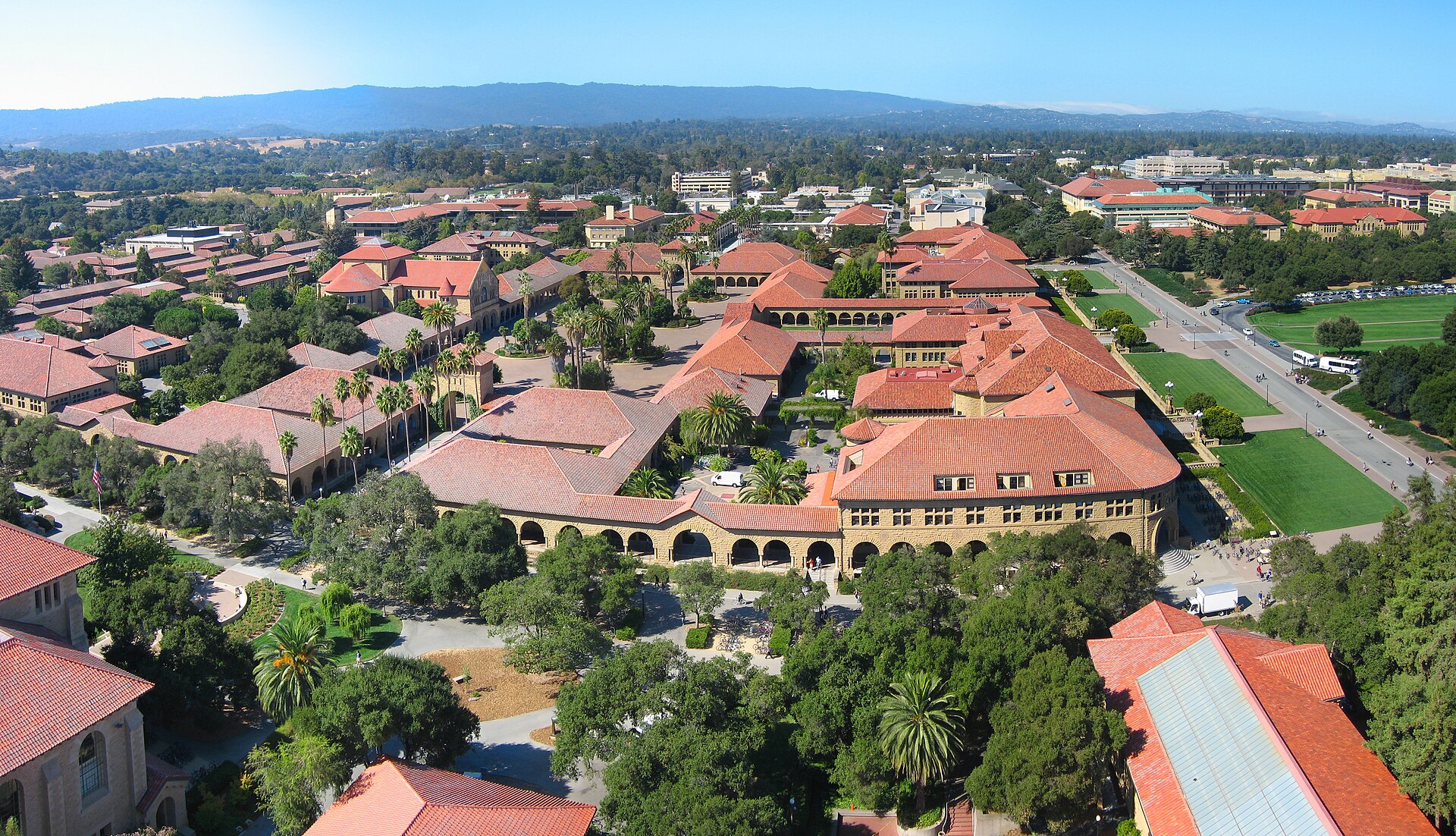
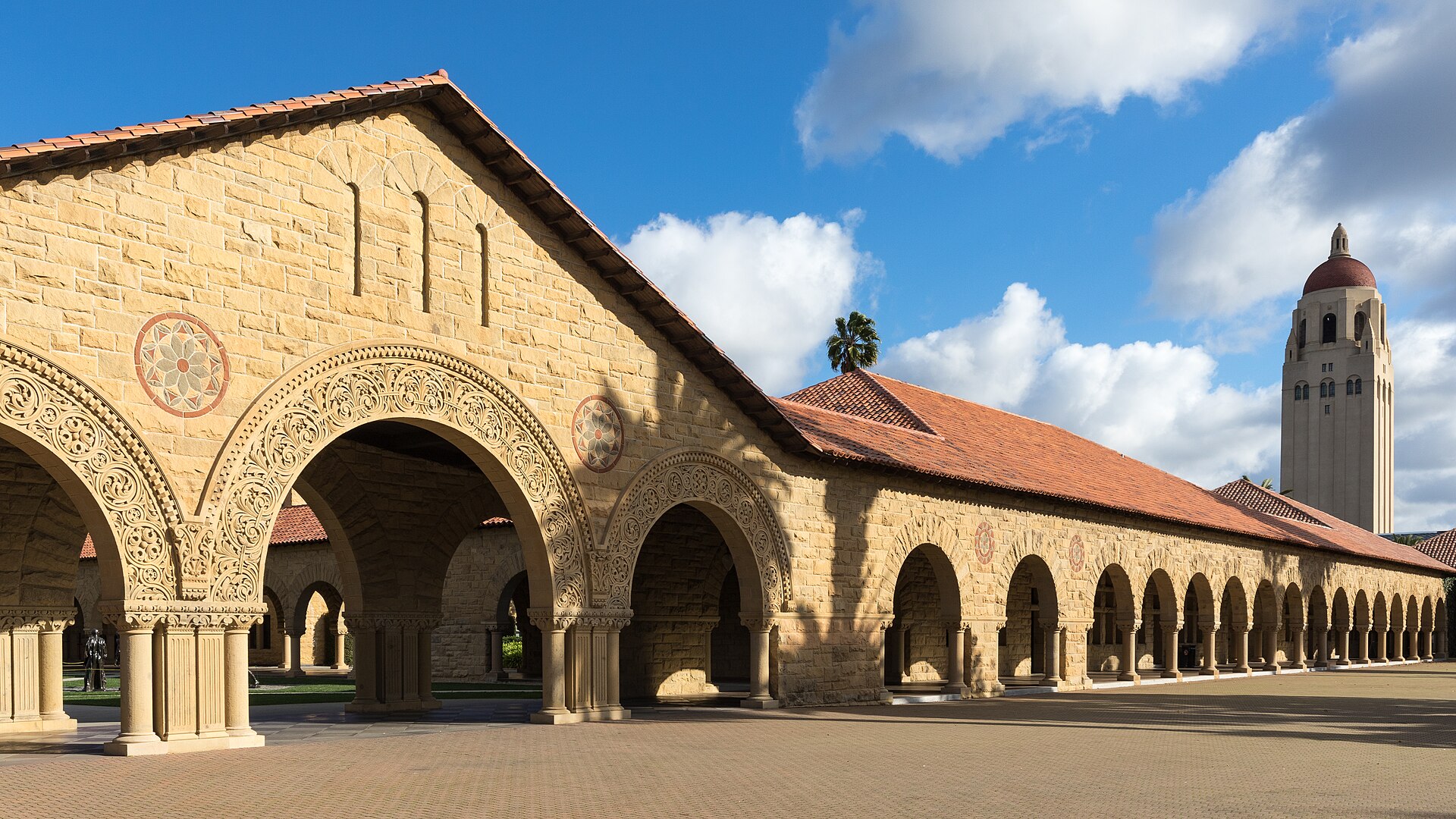
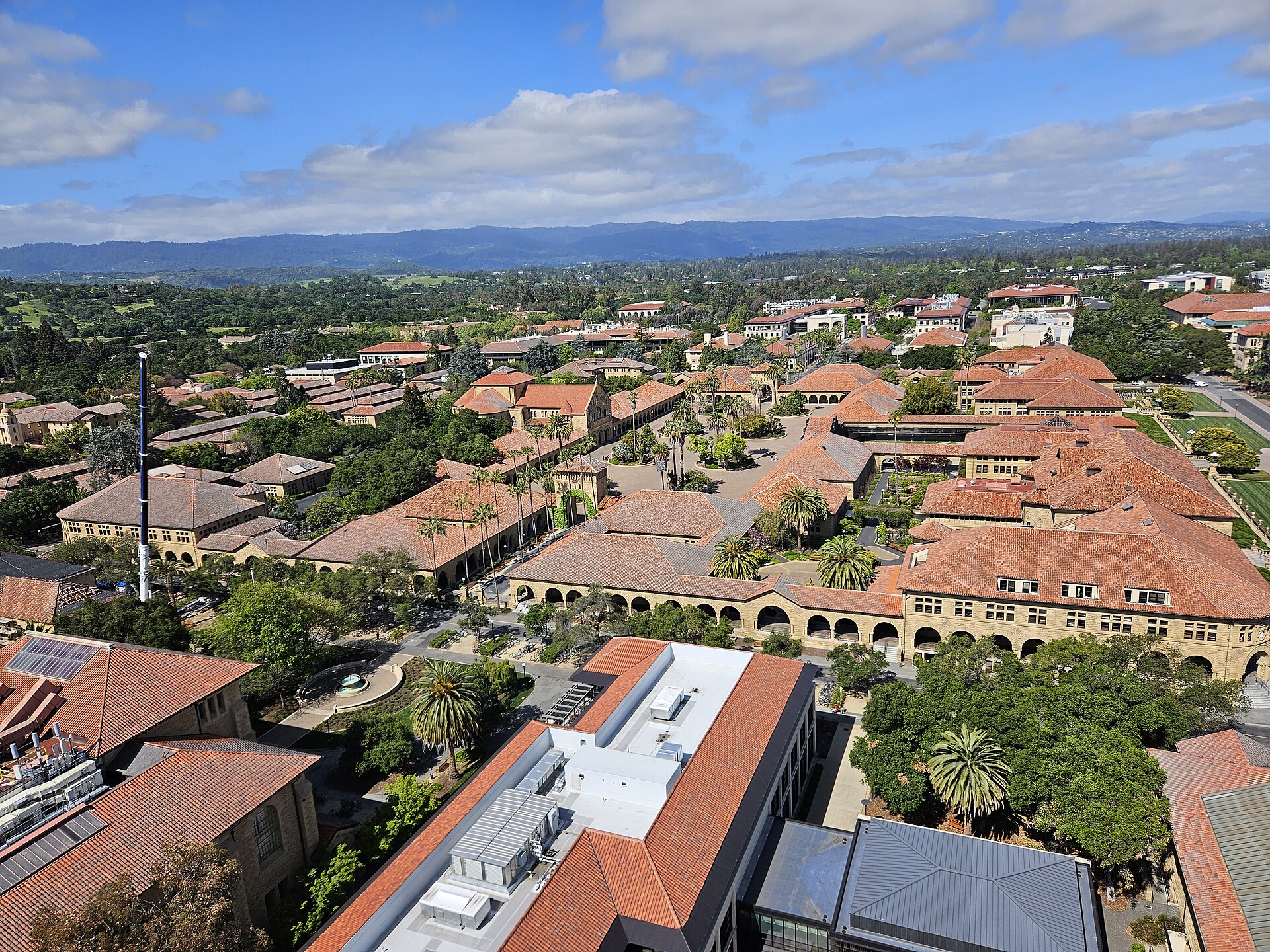
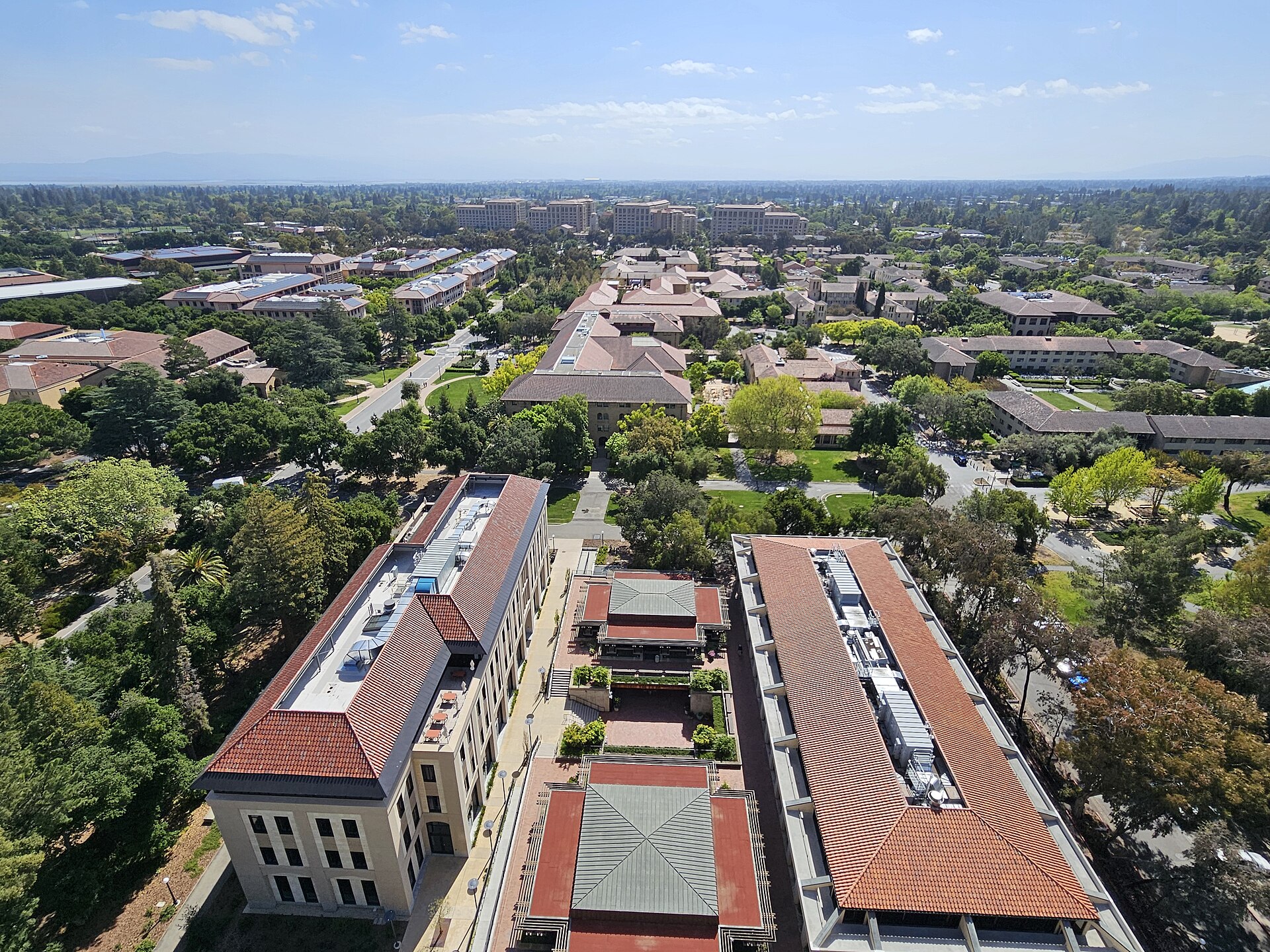
Stanford University — campus in pictures
Real, freely-licensed photographs of the campus (via Wikimedia Commons).
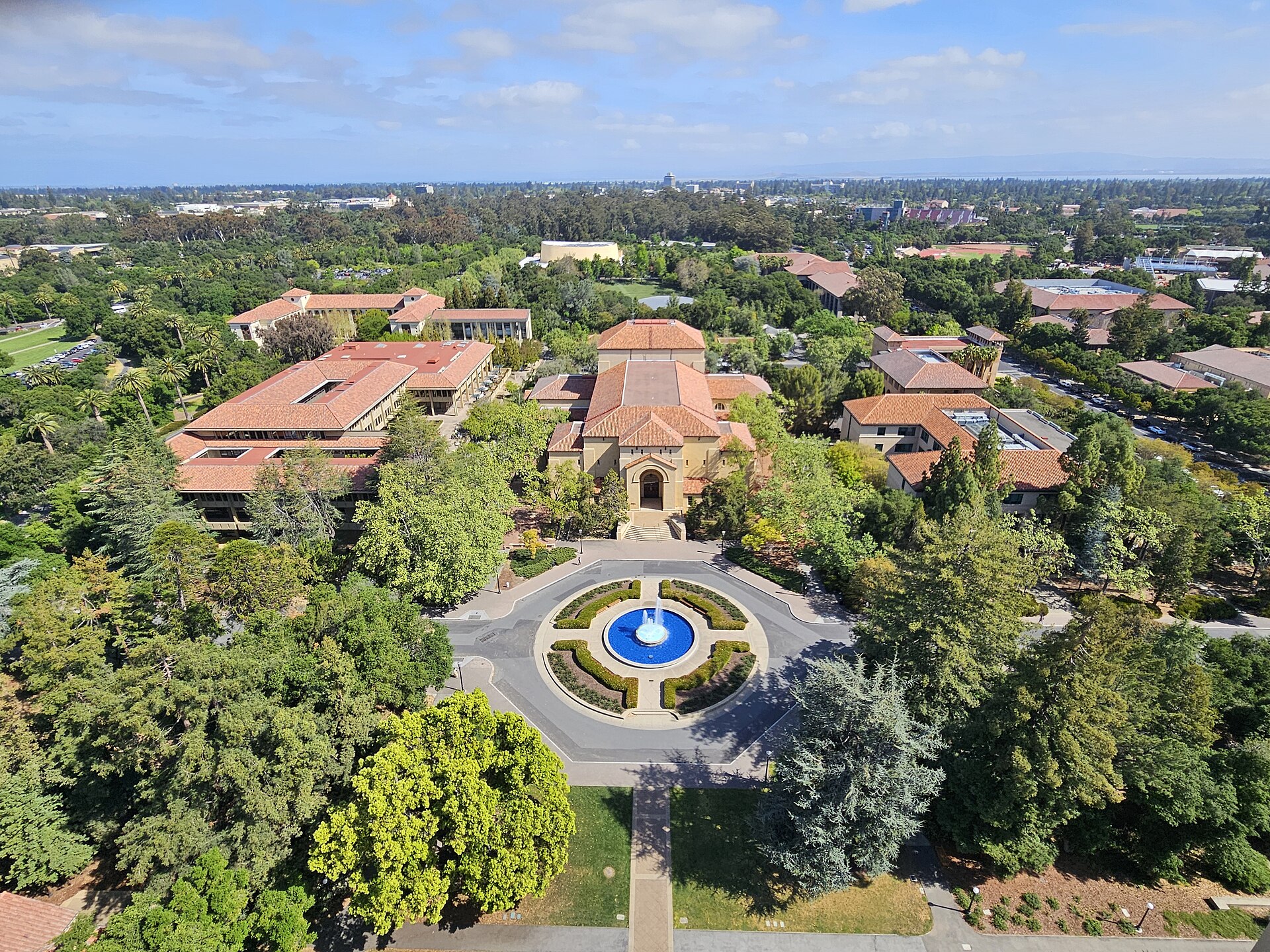
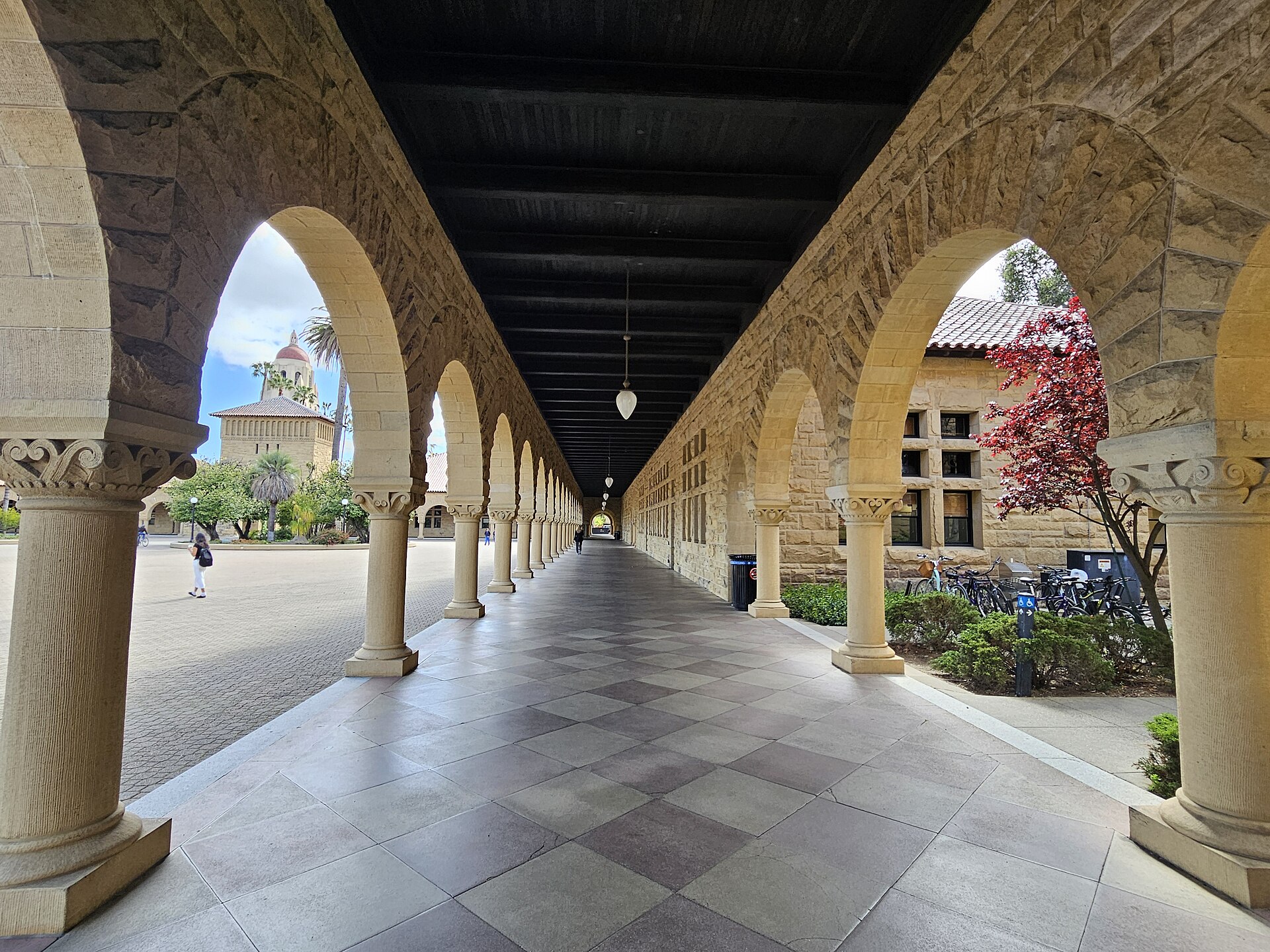
Why Stanford — Silicon Valley, Research & Entrepreneurial Legacy
Stanford University is not simply a prestigious university — it is the institution most directly connected to the transformation of the modern world through technology and entrepreneurship. For students who want to both understand and change the world, Stanford sits in a category of its own.
Stanford Acceptance Rate & Admitted Class Profile
Stats
Profile Stats
Rea Vs Rd
Stanford Admissions Requirements — Academics, SAT/ACT & International Qualifications
- Near-perfect grades in the most rigorous courses available
- Stanford reads transcripts school-by-school — context matters
- AP 5s, IB 7s, A-Level A*s are baseline expectations
- Teacher recommendations validate academic character beyond grades
- Stanford requires test scores for all applicants (restored as of Class of 2030)
- SAT middle 50%: 1510–1570; ACT middle 50%: 34–35
- TOEFL minimum: 100; IELTS minimum: 7.0
- Scores are evaluated alongside the full academic profile
- IB: 43+ total points, 7s in relevant Higher Level subjects
- A-Levels: A*AA to A*A*A in demanding subjects
- CBSE/ISC: 97–99% in relevant subjects
- International competition and research achievements carry significant weight
Stanford Application Components — Common App, Essays & Activities
Stanford uses the Common Application exclusively. Below are all components of a complete Stanford application — required and optional — with strategic notes on each.
Stanford Essays — Writing the Perfect Common App & Supplements
Tips
Prompts
What Stanford Admissions Officers Are Looking For
Stanford uses a holistic admissions process. Every application is reviewed by multiple readers, rated on multiple dimensions, and discussed in committee. Understanding what each dimension actually means — and how to demonstrate it authentically — is the foundation of a strong Stanford application strategy.
Stanford Financial Aid & Scholarships for International Students
Stanford's undergraduate financial aid programme is one of the most generous in the United States. For domestic students, Stanford meets 100% of demonstrated financial need with no loans in the aid package. For international students, aid is available but Stanford is need-aware — financial need may be considered during the admissions process.
Aid amounts are estimates based on Stanford's published guidelines. Individual packages are determined by the Financial Aid Office. International students: Stanford is need-aware for international applicants — financial need may be a factor in admission decisions.
Stats
Contribution Tiers
| Note | Range | Percent | Percent Value |
|---|---|---|---|
| Full cost covered — $0 contribution expected | Under $75,000 | 100% | 100 |
| Tuition fully covered; modest contribution to room and board | $75K–$100K | 90% | 90 |
| Tuition covered; scaled contribution to living costs | $100K–$150K | 75% | 75 |
| Scaled grant; meaningful contribution expected | $150K–$225K | 50% | 50 |
| Grant aid available; larger expected contribution | Over $225K | 25% | 25 |
Key Dates
Advantages
- Higher acceptance rate (historically ~7–9% REA vs ~3% RD)
- Signals Stanford as your clear first-choice institution
- Earlier decision — mid-December notification reduces uncertainty
- Demonstrates genuine interest, which Stanford values
- More considered, individualised holistic review
Disadvantages
- Stanford's REA is restrictive — you cannot apply Early Action or Early Decision to other private universities
- Application must be complete and strongest by November 1
- Less time for additional senior-year achievements
- Financial aid can only be compared after Regular Decision offers from other schools
- If deferred, you wait until April without other early offers in hand
Stanford Does Not Conduct Undergraduate Interviews
Unlike Harvard, Yale, and many other selective US universities, Stanford does not offer alumni or admissions office interviews for undergraduate applicants. Your written application — essays, recommendations, and academic record — is your complete direct communication with Stanford's admissions committee.
Meta
Questions
Stanford's Residences & Residential Life
Stanford does not use a house lottery system like Harvard's. All freshmen are required to live on campus in designated first-year residences. After freshman year, students apply to their preferred dorm, theme house, cooperative, or Row house. Stanford guarantees on-campus housing for all four undergraduate years — a significant benefit given the Bay Area's high cost of living.
Houses
Lottery Steps
- Year 1: All freshmen live in assigned first-year residences (FloMo, Branner, Stern, Wilbur, etc.)
- After Year 1: Students apply to specific residences, including theme houses, co-ops, and Row houses
- Theme houses (Ujamaa, Casa Zapata, Hammarskjöld, etc.) require an application outlining interest and contribution
- Stanford guarantees on-campus housing for all four years
- Off-campus housing in Palo Alto / Menlo Park is available but expensive — the on-campus housing guarantee is a genuine financial benefit
Stanford Schools & Undergraduate Majors
- {"label":"Undergraduate departments","value":"45+"}
- {"label":"Majors and programmes","value":"70+"}
- {"label":"When students declare major","value":"Year 1–2"}
- {"label":"Core focus areas","value":"Sciences, Social Sciences, Humanities, Math"}
- {"label":"Undergraduate engineering departments","value":"9"}
- {"label":"Annual research expenditure","value":"$800M+"}
- {"label":"Notable programmes","value":"EE, ME, Bioengineering, CS (joint)"}
- {"label":"Industry connection","value":"Silicon Valley pipeline"}
- {"label":"Flagship programme","value":"Earth Systems"}
- {"label":"Focus areas","value":"Climate, Energy, Geology, Environmental"}
- {"label":"Industry connection","value":"Energy sector and climate policy"}
- {"label":"Research centres","value":"Woods Institute, Precourt Institute"}
- {"label":"Flagship programme","value":"MBA"}
- {"label":"Undergraduate access","value":"MS&E major, cross-enrolment"}
- {"label":"US ranking","value":"#1 (US News)"}
- {"label":"Entrepreneurship","value":"Stanford STVP, E-School"}
- {"label":"Flagship programme","value":"J.D."}
- {"label":"US ranking","value":"Top 3"}
- {"label":"Undergraduate access","value":"Courses via cross-registration"}
- {"label":"Notable programme","value":"CodeX (Law+Technology)"}
- {"label":"Flagship programme","value":"M.D."}
- {"label":"US research ranking","value":"Top 5"}
- {"label":"Affiliated hospitals","value":"Stanford Health Care, Lucile Packard"}
- {"label":"Undergraduate pathway","value":"Human Biology, pre-med"}
Research & Extracurricular Opportunities at Stanford
Career Outcomes & Stanford Alumni Network
Stanford's location in Silicon Valley gives its graduates a structural advantage that no other university can fully replicate. The alumni network — 250,000+ living alumni in 140+ countries — is exceptionally active in the technology, entrepreneurship, and venture capital sectors, providing Stanford graduates with access to the most competitive career opportunities in the world.
Stats
Categories
Our Stanford Admissions Track Record & Student Success Stories
Faqs
Is Stanford test-optional?+
No. Stanford reinstated its test requirement and all applicants must now submit either SAT or ACT scores. The middle 50% for admitted students is 1510–1570 (SAT) and 34–35 (ACT). International students should also meet Stanford's English proficiency minimums (TOEFL 100+ or IELTS 7.0+).
Does Stanford prefer certain majors?+
No. Stanford admits students to the university broadly, not to specific departments. Students declare their major in Year 1 or 2. Computer Science is the most popular major, but Stanford's holistic review considers the full person — a passionate humanities student is equally considered as a STEM applicant.
Does Stanford offer financial aid to international students?+
Yes, but with an important distinction from Harvard: Stanford is need-aware for international applicants, meaning financial need may be considered during the admissions process. However, Stanford does award financial aid to international students who are admitted, and meets 100% of demonstrated need with no loans for those who receive it.
Can I apply Stanford REA and MIT EA simultaneously?+
No. Stanford's REA is restrictive — applicants cannot apply Early Decision or Early Action to other private universities in the same cycle. Public universities and non-restrictive programmes are permissible. MIT's EA programme is single-choice as well, so you must choose between them.
Does Stanford conduct interviews?+
Stanford does not conduct undergraduate admissions interviews. There are no alumni interviews offered to applicants. Your essays, teacher recommendations, counsellor letter, and academic record are your complete direct communication with the admissions committee.
How does Stanford evaluate IB students?+
Stanford is experienced at evaluating IB applicants. Competitive IB applicants typically have predicted or achieved scores of 43 or above, with 7s in relevant Higher Level subjects. IB students should pay careful attention to HL subject selection — choosing rigorous HLs aligned with intended areas of study is viewed positively. The Extended Essay is considered as supplementary evidence of research capability.
What makes a competitive Stanford extracurricular profile?+
Depth and impact, not breadth. Stanford is unimpressed by long lists of leadership titles. What distinguishes competitive applicants is sustained, genuine commitment to one or two activities that has produced real, measurable impact — a published research paper, a company with users, a programme that changed something real. The activity should connect coherently with who you are, not be assembled to fill a profile.
What is the real cost of Stanford for a family earning $100,000/year?+
For a domestic US family earning approximately $100,000/year, Stanford's expected family contribution is typically modest — tuition is covered, and the primary out-of-pocket cost is a share of room, board, and personal expenses. The exact figure depends on the full CSS Profile assessment, but Stanford's aid policy makes it significantly more affordable than its $92,892 sticker price suggests. International student families should contact Stanford's financial aid office directly.
Book a Free Stanford Admissions Strategy Session
In 60 minutes, our Stanford admissions specialists will evaluate your academic profile, identify your application strengths and gaps, develop your essay and activity strategy, and determine whether Restrictive Early Action or Regular Decision gives you the best odds.
- No commitment required
- Stanford specialists with insider knowledge
- Personalised strategy — not generic advice
Stanford Admissions Requirements
Stanford Academic Requirements, The Honest Breakdown for International Students
What GPA, test scores, and academic profile do Stanford's admitted students actually have? And what does Stanford's holistic review mean for students from IB, A-Level, AP, and other international curricula?
GPA & Class Rank
Stanford and GPA, What the Data Shows
Stanford does not publish a minimum GPA requirement. In practice, the vast majority of admitted students achieved near-perfect academic records — typically a minimum 3.95 unweighted GPA, with most admitted students at or near the top of their graduating class.
A 3.95 or 4.0 GPA is a threshold, not a differentiator. Among the students who are competitive for Stanford, most have similar grades. What distinguishes admitted students is the combination of exceptional grades in the most rigorous courses available, sustained over four years.
Academic Context
Class Rank and School Context, How Stanford Reads Academic Performance
Stanford does not require class rank. Many international schools do not provide it. Stanford's admissions office evaluates academic performance across widely different educational systems and is highly experienced at contextualising international academic records.
Standardised Testing (Required)
SAT Scores at Stanford, What You Actually Need
Stanford SAT Data — Admitted Class
| Label | Score | Percent |
|---|---|---|
| 25th percentile | 1510 | 58 |
| 75th percentile | 1570 | 90 |
| Estimated median | ~1540 | 74 |
Standardised Testing (Required)
ACT Scores at Stanford, The Data and the Strategy
Stanford ACT Data — Admitted Class
Metrics
Comparison Cards
Testing Policy
Stanford's Test Requirement — Restored and Mandatory
Stanford was test-optional during COVID and its aftermath. However, Stanford has reinstated standardised test requirements for the Class of 2030 application cycle and beyond. Understanding what this means — and what it requires of applicants — is essential.
Submit Items
Withhold Items
International Curricula
A-Levels and IB at Stanford, Specific Benchmarks
- {"label":"Competitive range","value":"43+ points total"}
- {"label":"HL expectations","value":"7,7,6 or 7,7,7 at Higher Level, especially in subjects relevant to intended major"}
- {"label":"Subject rigour","value":"HL Mathematics (Analysis & Approaches strongly preferred for STEM), HL sciences or humanities per intended major"}
- {"label":"Extended Essay","value":"A or B grade; treated as evidence of research and sustained intellectual engagement"}
- {"label":"Competitive range","value":"A*AA to A*A*A"}
- {"label":"Subject rigour","value":"Mathematics, Further Mathematics, and sciences for STEM; English Literature, History, and languages for humanities"}
- {"label":"Supporting tests","value":"SAT or ACT required in addition to A-Level qualifications"}
Advanced Placement
AP Courses at Stanford, What Counts and What to Take
For students in the US curriculum or at schools offering Advanced Placement courses, AP performance is a significant component of the academic profile at Stanford.
Academic Rigour
Rigour of Secondary School Record — Stanford's Most Important Academic Factor
Stanford consistently identifies 'rigour of secondary school record' as the most important academic factor in its admissions process. Understanding what this means in practice — and how to demonstrate it — is essential to a competitive Stanford application.
Take the most challenging courses available at your school, in the subjects most aligned with your genuine intellectual interests and intended direction.
STEM Preparation
Mathematics and Science Preparation, What Stanford Expects
Stanford has no formal prerequisites for undergraduate admission — students are admitted to the university broadly and declare their major after arrival. However, competitive applicants in STEM typically demonstrate mathematical and scientific preparation well beyond standard curricula.
Language Proficiency
English Language Requirements for International Stanford Applicants
Stanford requires demonstration of English proficiency for applicants whose primary language of instruction is not English. Unlike some universities that rely entirely on essays, Stanford has published minimum standardised test thresholds.
Stanford's application essays are, themselves, a substantial English proficiency demonstration. A student who writes fluent, specific, and compelling essays in English will be evident to admissions readers. Meeting the minimum test thresholds is necessary but not sufficient — essay quality is the primary language signal readers evaluate.
By Major
Academic Requirements by Major, What Different Paths Expect
Stanford does not formally consider intended major in admissions, students are admitted to Stanford broadly. However, the academic profile should be coherent with the student's stated intellectual interests and intended field of study.
| Signals | Expectation | Concentration |
|---|---|---|
| AMC/AIME/USAMO; proof-writing in essays; competition mathematics | HL Maths AA / Further Maths A* | Mathematics |
| USACO Gold/Platinum; original software projects; ML research | HL Maths AA + CS background | Computer Science |
| Symbolic Systems; philosophy of mind; cognitive science projects | HL Maths + Philosophy or Linguistics | Symbolic Systems |
| Econometric research; economic policy writing; data projects | HL Maths + Economics | Economics |
| Research publications; science fair (ISEF); HL 7s in all sciences | HL Biology + Chemistry 7s | Human Biology / Biology |
| Physics Olympiad; AMC; research experience | HL Maths + Physics A*s | Physics |
| Engineering competition (FRC, design challenges); lab experience | HL Maths + Physics / Chemistry | Engineering (EE, ME, Bioeng) |
| Climate policy writing; earth science research; environmental work | Sciences + humanities breadth | Earth Systems |
| MUN; policy research; debate; internship experience | Strong humanities/social sciences profile | Political Science |
International Education Systems
Stanford and International Education Systems, How Your Curriculum Is Evaluated
Roadmap
Building an Academic Profile for Stanford, What to Do at Each Stage
- Select IGCSE/MYP subjects that leave the widest options for IB HL or A-Level choices in the years ahead.
- Prioritise mathematics — quantitative ability opens more doors at Stanford than any other single subject.
- Begin identifying genuine intellectual interests through reading, online courses, or extracurricular exploration.
- IB HL subject selection: choose subjects that reflect genuine intellectual ambition, not grade protection. Stanford's readers know the difference.
- A-Level subject combination finalised — three strong subjects in a coherent intellectual direction.
- Begin SAT or ACT preparation (Stanford requires test scores; plan for at least two sittings).
- Identify and apply to competitive summer research programmes — RSI, Simons, PRIMES, CURIE, Polygence — with November–January deadlines.
- Pursue academic competitions in your strongest subject.
- Pursue research actively — through a Tychr-facilitated programme, a competitive summer placement, or direct faculty outreach.
- Complete and do well in the SAT/ACT. Aim for scores comfortably within Stanford's middle 50% before submitting.
- Engage with academic competitions and pursue distinction, not just participation.
- Begin preliminary Stanford-specific research — programmes, faculty, labs that genuinely interest you.
- Predicted grades finalised — Tychr works with students on communicating predicted grade strength to counsellors during mock exam season.
- SAT/ACT scores finalised and on record.
- Stanford application submitted November 1 (REA) or January 2 (RD).
- CSS Profile submitted by application deadline for financial aid consideration.
Common Pitfalls
Academic Mistakes That Cost Stanford Applications, And How to Avoid Them
Real Outcomes
What Academic Profiles Tychr's Stanford-Admitted Students Had
The following profiles illustrate the academic backgrounds of students Tychr has helped gain Stanford admission or Stanford-equivalent outcomes. They show the range of academic preparation that works — and what made each application compelling beyond the grades.
Faqs
Is a 3.95 GPA enough for Stanford?+
A 3.95 GPA is an expectation, not a differentiator. Stanford receives applications from thousands of students with equivalent or higher GPAs. What distinguishes admitted students is the combination of exceptional grades in genuinely rigorous courses, supplemented by the intellectual depth and character demonstrated through research, competitions, essays, and recommendations.
What IB score do I need for Stanford?+
Competitive IB applicants to Stanford typically have predicted or achieved scores of 43 or above, with 7s in relevant Higher Level subjects. An IB score below 40 is generally below the competitive range, though exceptional cases exist. The HL subject combination matters as much as the total score.
Does Stanford prefer SAT or ACT?+
No preference. Both are accepted equally. Take a full-length diagnostic of both before committing to either. Stanford does not superscore across sittings — choose the test where your best single-sitting performance is highest.
Is Stanford test-optional?+
No. Stanford reinstated its test requirement for the Class of 2030 and later. All applicants must submit either SAT or ACT scores. Applications without test scores are incomplete.
Does Stanford accept students who were not top of their class?+
Yes, Stanford's holistic review evaluates everything in context. A student who ranked 10th at an extraordinarily competitive school may be evaluated as more competitive than a student who ranked 1st at a less challenging one. Context is always considered.
Financial Aid & Scholarships
Stanford May Cost Your Family Less Than You Think. Here Is the Full Picture.
Stanford's financial aid programme is among the most generous in the United States for domestic students. For international students, aid is available but need-awareness applies. Here is exactly what Stanford costs, how the aid programme works, and what you need to do to access it.
Cost Transparency
What Stanford Actually Costs, The Full Annual Figure
Stanford's endowment of over $36 billion funds a financial aid programme that makes the $92,892 sticker price irrelevant for a large proportion of admitted students. For domestic families earning under $75,000 per year, the expected contribution is $0. For families earning under $150,000, tuition is fully covered.
Admissions & Aid Policy
Stanford's Financial Aid Policy, Need-Blind for Domestic, Need-Aware for International
For domestic US students and permanent residents, Stanford is need-blind — financial circumstances are not considered during admissions. For international students, Stanford is need-aware: financial need may be a factor in admission decisions. However, for international students who are admitted, Stanford does meet 100% of demonstrated need with no loans.
Institutional Commitment
Why Stanford Can Offer This Level of Aid
Financial Aid Walkthrough
Applying for Stanford Financial Aid, The Process Step by Step
Stanford financial aid is not automatic — it requires a separate application through the CSS Profile. Here is the complete process.
- Access cssprofile.collegeboard.org
- Log into or register a College Board student account
- Parent income from all sources, documented
- Parent assets: savings, investments, real estate, business interests
- Non-custodial parent information if parents are separated or divorced
- Student income and assets
- Household size and number currently in college
- Home equity if applicable
- Any unusual financial circumstances
- {"date":"November 1","label":"REA Applicants"}
- {"date":"January 2","label":"RD Applicants"}
International Aid
Stanford Financial Aid for International Students, How It Works
Stanford's financial aid for international students is substantial, but there is a key distinction from Harvard and MIT: Stanford is need-aware for international applicants. Here is what that means in practice, and what international families should know.
Aid Calculations
What Stanford Financial Aid Actually Looks Like, Income Bands
Stanford Aid by Family Income (Approximate, Domestic Families)
Figures are approximate and based on Stanford's published aid guidelines. Individual packages are determined by the full CSS Profile assessment. International student aid is assessed separately.
For domestic families earning under $75,000/year, Stanford is free. For families earning under $150,000/year, tuition is fully covered. International families should consult Stanford's financial aid office directly — the need-aware admission policy means early engagement is important.
| Grant | Income | Contribution |
|---|---|---|
| Full cost covered | Under $75,000 (domestic) | $0 |
| Tuition fully covered | $75,000–$100,000 (domestic) | Partial room/board only |
| Significant grant | $100,000–$150,000 (domestic) | Modest scaled amount |
| Meaningful grant | $150,000–$225,000 (domestic) | Scaled contribution |
| Grant available, scales down | Above $225,000 (domestic) | Larger expected contribution |
| Need-based, case-by-case | International families (all bands) | Assessed via CSS Profile |
Table Headers
Qualification Criteria
Stanford Scholarships, What Exists and Who Qualifies
Stanford does not award merit scholarships at the undergraduate level. All Stanford financial aid is need-based, determined entirely by family financial circumstances — not by academic achievement, test scores, or extracurricular recognition.
External Funding
External Scholarships, Additional Funding for Stanford Students
While Stanford provides only need-based institutional aid, a range of external organisations award scholarships to students attending Stanford. These can supplement Stanford's institutional grant for qualifying students.
Debt-Free Education
Stanford's No-Loan Policy, Why It Matters
Stanford's institutional financial aid packages contain no loans. All aid provided by Stanford's financial aid office is in the form of grants that do not need to be repaid. This loan-free aid policy is one of the most important features of Stanford's affordability commitment.
Student Employment
Work-Study at Stanford, What to Expect
Stanford financial aid packages typically include a student employment component — an expected contribution of approximately $2,000–$2,500/year from on-campus or approved employment. This is a small, manageable element of the overall aid package.
- Research assistant positions in faculty labs (highly valued — provides both income and research experience)
- Library and administrative roles across campus
- Dining and residential services
- Academic tutoring and peer support programmes
- Undergraduate admissions tour guide and ambassador roles
- IT and computing support across university departments
Benchmarking
Stanford vs. Other Top Universities, Financial Aid Comparison
| Policy | School | No Loans | Typical Cost |
|---|---|---|---|
| Need-blind (all), no loans | Harvard | Yes | $0 (under $85K) |
| Need-blind (all), no loans | Princeton | Yes | $0 (under $100K) |
| Need-blind (all), no loans | MIT | Yes | $0 (under $90K) |
| Need-blind (domestic), need-aware (intl), no loans | Stanford | Yes | $0 (domestic, under $75K) |
| Need-aware (all), no loans (minimal) | Yale | Minimal | ~$5,000–$15,000 |
| Need-aware (all) | Columbia | No | ~$10,000–$25,000 |
| Need-aware (all) | UPenn | No | ~$10,000–$25,000 |
Cost Analysis
Stanford vs. Alternatives, What You Actually Pay
For a domestic family earning $70,000/year, Stanford with its $92,892 list price may genuinely cost $0, while a state university or UK Russell Group institution charges $30,000–$45,000/year. The sticker price at Stanford is not the real price for qualifying families.
| Policy | School | Contribution | Four Year Cost |
|---|---|---|---|
| Need-blind (domestic), no loans | Stanford | ~$0 | ~$0 |
| Need-blind (all), no loans | Harvard | ~$0 | ~$0 |
| Need-blind (all), no loans | MIT | ~$0 | ~$0 |
| Need-aware, some loans | Yale | ~$5,000–$10,000 | ~$20,000–$40,000 |
| Limited international aid | US public flagship (out-of-state) | ~$30,000–$45,000 | ~$120,000–$180,000 |
| Limited international aid | UK Russell Group (London) | ~$30,000–$40,000/yr | ~$120,000–$160,000 |
Financial Appeals
Appealing a Stanford Financial Aid Decision, When and How
Stanford's initial financial aid offer is based on the information submitted in the CSS Profile. If circumstances have changed or if the offer does not accurately reflect your family's situation, Stanford's financial aid office has an established appeals process.
The honest note: Stanford's financial aid formula is already structured generously for families within its coverage model. Appeals are most successful when based on a genuine change in circumstances, a factual error, or a significant omission — not disagreement with the formula when applied correctly to a stable situation.
How To Appeal
- Contact Stanford's Office of Financial Aid directly at finaid@stanford.edu
- Submit a written appeal explaining the specific circumstances that warrant reconsideration
- Provide complete documentation supporting the appeal: tax returns, medical bills, employment change letters, or other relevant evidence
When To Appeal
- Family financial circumstances have changed significantly since the CSS Profile was submitted (job loss, medical expenses, family crisis)
- The CSS Profile contained an error or omission
- The initial offer appears inconsistent with the family's documented financial situation
- A peer institution has offered substantially different aid (most relevant for domestic students comparing multiple offers)
Timeline & Planning
Planning for Stanford Costs, What to Do and When
Admissions Strategy
Stanford Essays, Everything You Need to Know to Write Them Well.
A complete guide to Stanford's essay requirements — what the application asks, how Stanford reads written work, and the specific strategies that produce essays admissions officers remember. Stanford's supplements are among the most distinctive in US admissions.
Requirement Overview
Stanford Essay Requirements, The Full Picture
Stanford uses the Common Application. Its supplement includes three required essays (approximately 250 words each) and a set of short-answer questions. Unlike most Ivy-calibre schools, Stanford does not require a lengthy additional essay — the weight is distributed across the Common App personal statement and Stanford's specific, deliberately designed supplement prompts.
Required Items
Optional Items
The 650-Word Anchor
The Common App Essay at Stanford, What It Needs to Accomplish
Stanford's supplement places significant emphasis on its distinctive prompts, but the Common App personal statement remains the single longest piece of writing in the application and must be excellent. Where Yale and Columbia have lengthy supplemental essay requirements, Stanford's written emphasis falls partly on the personal statement and partly on its shorter, more targeted supplements.
The Common App personal statement must serve every school on the applicant's list. It should not reference Stanford specifically, but should be crafted with an awareness of what Stanford values: intellectual vitality, genuine depth of engagement, and authentic character. The best personal statements are ones the reader would remember three days after reading.
Looking For List
- A genuine, specific perspective that only this student could articulate
- Evidence of how the student's mind works — not achievements catalogued, but ideas engaged with
- Authentic voice — the essay should be unmistakably personal, not polished into anonymity
- Intellectual or personal character that does not appear elsewhere in the application
Tired Of List
- Essays that restate the activities list in narrative form
- Lessons-learned-from-hardship essays that are formulaic rather than felt
- Stanford name-dropping in the personal statement (save that for the supplements)
- Opening lines that are quotes, dictionary definitions, or rhetorical questions
Creative Strategy
Choosing Your Essay Topic, The Decision That Shapes Everything
The personal statement topic is the single most consequential creative decision in the Stanford application. The wrong topic, perfectly written, is less effective than the right topic, imperfectly written. The right topic is one that reveals something true and important about the writer — not one that sounds impressive.
Criteria
Caution Topics
- Sports injury and perseverance lessons — extremely common; requires exceptional execution to stand out
- Mission trip or volunteer tourism transformation — common; frequently superficial in reflection
- Generic immigrant or first-generation story without a specific intellectual or personal lens
- Any topic chosen primarily because it sounds impressive to an admissions officer rather than being genuinely true
Stanford's Signature Prompts
Stanford's Supplement Essays, What to Write and How to Approach Them
Stanford's three supplement essays are among the most carefully designed prompts in elite US admissions. Each one is asking a specific thing. The most common mistake is treating them as generic essay prompts and writing the same kind of response a student might write for any school.
Essay System
How Stanford's Essay System Works
Stanford uses the Common Application. The complete written application includes: one Common App personal statement (650 words), three Stanford-specific supplement essays (~250 words each), approximately six short-answer questions (~50 words each), and an optional additional information section. Stanford does not conduct undergraduate interviews, which means written materials carry even greater weight than at interview-based schools.
Current Prompts
Stanford Supplement Prompts — What Stanford Is Actually Asking
The following prompts reflect Stanford's current supplement requirements. Always verify the prompts on Stanford's official admissions website before submitting — prompts may be updated between cycles.
Personal Statement Strategy
Writing the Common App Essay for Stanford
Stanford does not have a school-specific required long essay. The Common App personal statement therefore carries the full weight of the 650-word narrative slot. It must be excellent in isolation — revealing, specific, and written in your authentic voice — without referencing Stanford directly. Reserve Stanford-specific content for the supplements.
- Write about one specific thing, not several related things. The best personal statements have a tight, singular focus.
- Show the reader how you think, not what you have done. Stanford's 'intellectual vitality' criterion is as true for the personal statement as for the intellectual vitality supplement.
- End with something open, not a resolution. The best essays leave the reader curious about the person, not satisfied that a lesson has been learned.
- Read your essay aloud. If it does not sound like you talking, it is not done yet.
Supplement Strategy
Approaching Stanford's Three Supplements Strategically
Topic Selection
Choosing What to Write — The Most Important Decision
For the Common App personal statement, the topic is the most important creative decision. For Stanford's supplements, the prompt guides you more tightly. But for both, specificity of subject matter — and authenticity of voice — matter more than the prestige of the topic.
Good Topics
- A specific intellectual discovery that changed how you understand something you thought you knew
- A daily habit or ritual that reveals something genuine and surprising about who you are
- A tension or contradiction in your identity that you have genuinely thought about
- A question you cannot answer — and why you cannot stop trying
Avoid Topics
- The sports injury and the perseverance lesson — extremely common
- The mission trip transformation — common and frequently superficial
- The topic chosen because it sounds impressive rather than because it is true
- The essay that describes a problem in the world and says you will solve it
Common Essay Mistakes
Stanford Essay Mistakes That Cost Applications
Essay FAQs
Stanford Essay Questions, Answered
How important are Stanford's essays compared to the rest of the application?+
Very important — perhaps more so than at interview-based schools. Because Stanford does not conduct undergraduate interviews, your essays are the only direct voice you have in the admissions process. The academic record and recommendations speak for you; the essays speak as you. They carry significant evaluative weight.
How long should Stanford's supplement essays be?+
Stanford specifies approximately 250 words for each of the three supplement essays. Do not treat this as a suggestion — write to the limit, not significantly under it (which signals insufficient care) or significantly over it (which signals an inability to edit). Short-answer questions should be approximately 50 words.
Should the roommate letter be funny?+
It should be authentic, which may or may not involve humour depending on who you actually are. Forced humour is more damaging than no humour. Write the letter you would genuinely write to a stranger you were about to share a room with. If that person would be funny, be funny. If they would be sincere, be sincere.
Can I write about the same topic in multiple essays?+
You can reference the same area of your life, but each essay should reveal something distinct. If the personal statement and all three supplements all centre on the same theme or story, Stanford reads less of you. Use the different essay spaces strategically to reveal different dimensions of your character and thinking.
Should I mention specific Stanford professors or programmes in my essays?+
Specific references to Stanford's academic programmes, faculty, or research groups are appropriate in the 'distinctive contribution' essay if they are genuine and specific. Avoid vague references to 'Stanford's world-class facilities' or 'the innovative culture' — these are not specific to Stanford and read as generic.
Does Stanford care about the 'Why Stanford' question?+
Stanford does not have a formal 'Why Stanford?' supplement. However, the distinctive contribution essay functions partly as a 'Why Stanford?' prompt — what you will bring to Stanford, and implicitly, why Stanford is the right place for you. Answer it with specificity.
How many drafts should I write of each essay?+
As many as required to produce something that is genuinely good. Tychr's essay programme typically involves 3–5 drafts for each supplement and 4–6 drafts for the personal statement. The final essay should sound so unmistakably like you that someone who knows you well would recognise the voice without seeing your name.
Is it worth using the optional 'Additional Information' section?+
Use it only if there is something genuinely important that the rest of the application doesn't capture — a gap year, an unusual circumstance, a significant life event, or an additional intellectual dimension. Do not use it to repeat information already present elsewhere, and do not use it to pad an otherwise complete application.
Courses — schools, degrees & intake
52 degrees across 3 groupings.
School of Engineering · 11 degrees
Aeronautics and Astronautics
Bioengineering
Chemical Engineering
Civil Engineering
Computer Science
Electrical Engineering
Engineering (Interdisciplinary)
Management Science and Engineering
Materials Science and Engineering
Mechanical Engineering
Product Design
School of Humanities and Sciences · 40 degrees
African and African American Studies
American Studies
Anthropology
Art History
Art Practice
Biology
Chemistry
Classics
Communication
Comparative Literature
Comparative Studies in Race and Ethnicity
East Asian Languages and Cultures
Economics
English
Ethics in Society
Feminist, Gender, and Sexuality Studies
Film and Media Studies
French
German Studies
History
Human Biology
International Relations
Italian
Linguistics
Mathematics
Mathematics and Computational Science
Music
Philosophy
Physics
Political Science
Psychology
Public Policy
Religious Studies
Science, Technology, and Society
Slavic Languages and Literatures
Sociology
Spanish
Statistics
Symbolic Systems
Theater and Performance Studies
Doerr School of Sustainability · 1 degrees
Earth Systems
Want your real chances at Stanford University?
Create a free TYCHR account for your personalised admit-chance, a shortlist you can track, exact entry requirements, and essay + counselling help.