← All universities

Technical University of Munich

Munich, Germany · Urban

TU9PublicResearchTechnical
Acceptance
15.0%
QS World
#22
Tuition/yr
$6,500
Students
52,000
Founded
1868

Navigating the path to Germany's #1 university requires a different strategy from any US or UK application — TUM's programme-specific aptitude assessments, the uni-assist process, and the motivation letter are unlike anything in the Common App or UCAS world.

Technical University of Munich Admissions Guide for

Campus

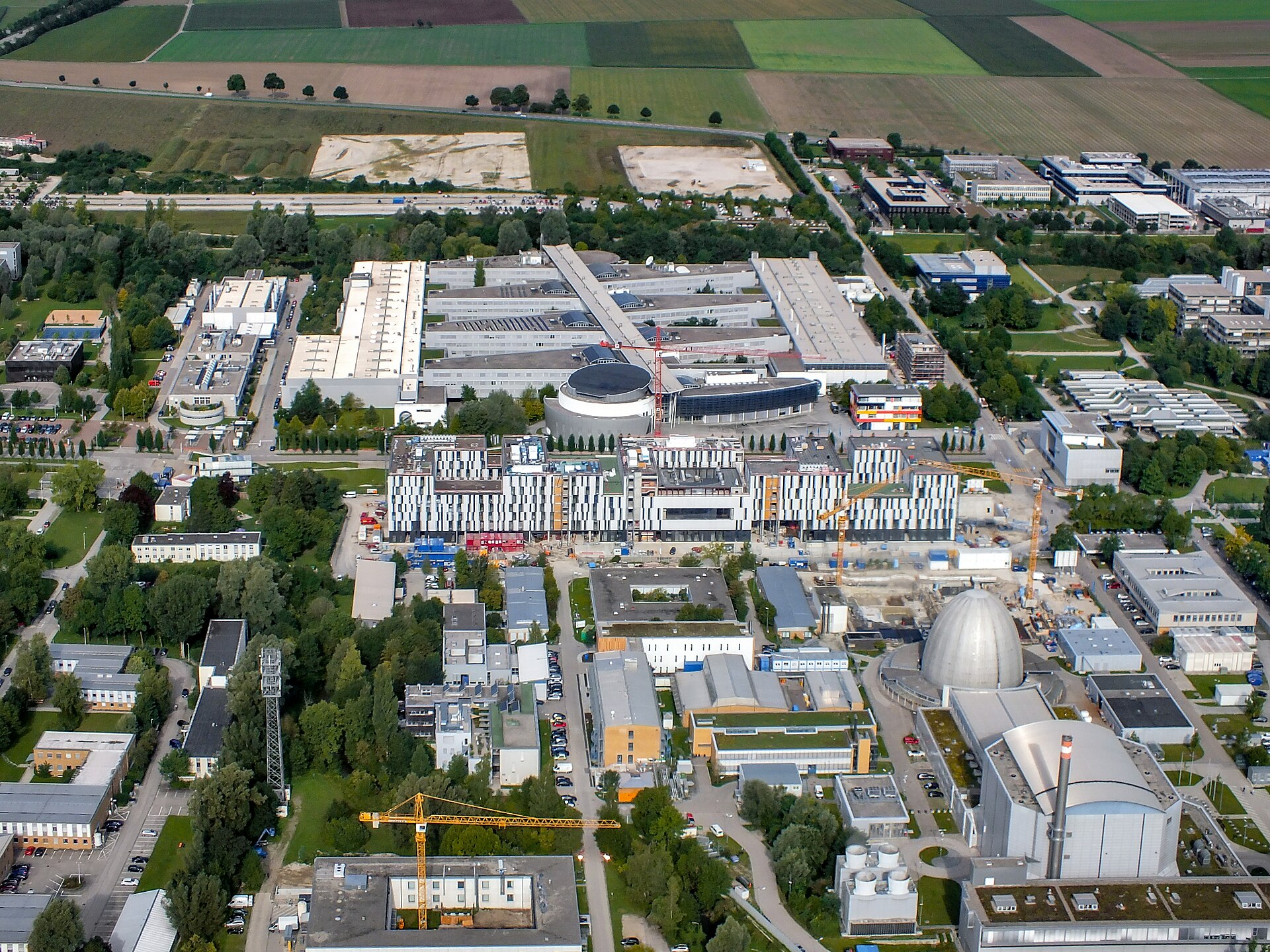
Technical University of Munich — campus in pictures

Real, freely-licensed photographs of the campus (via Wikimedia Commons).
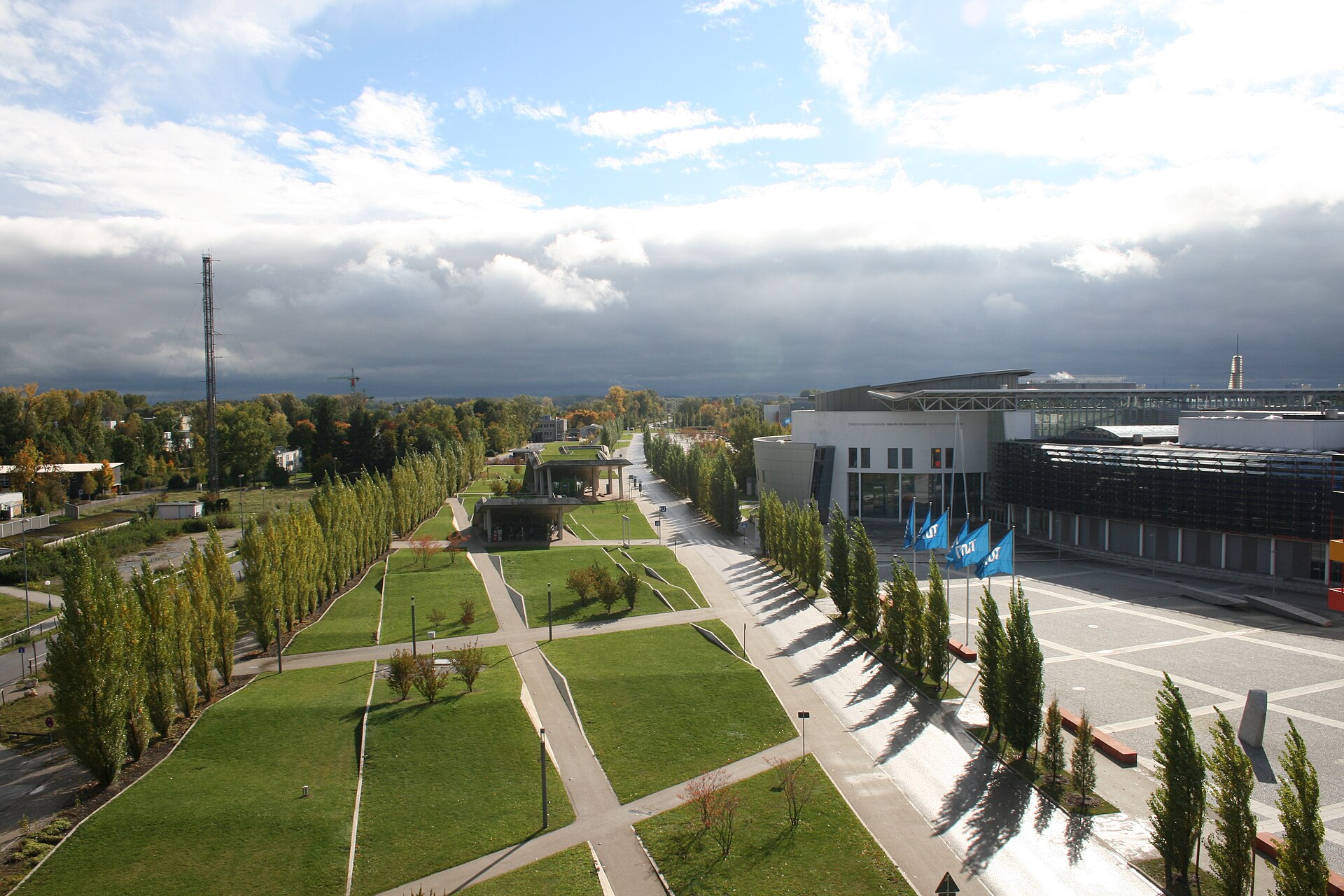
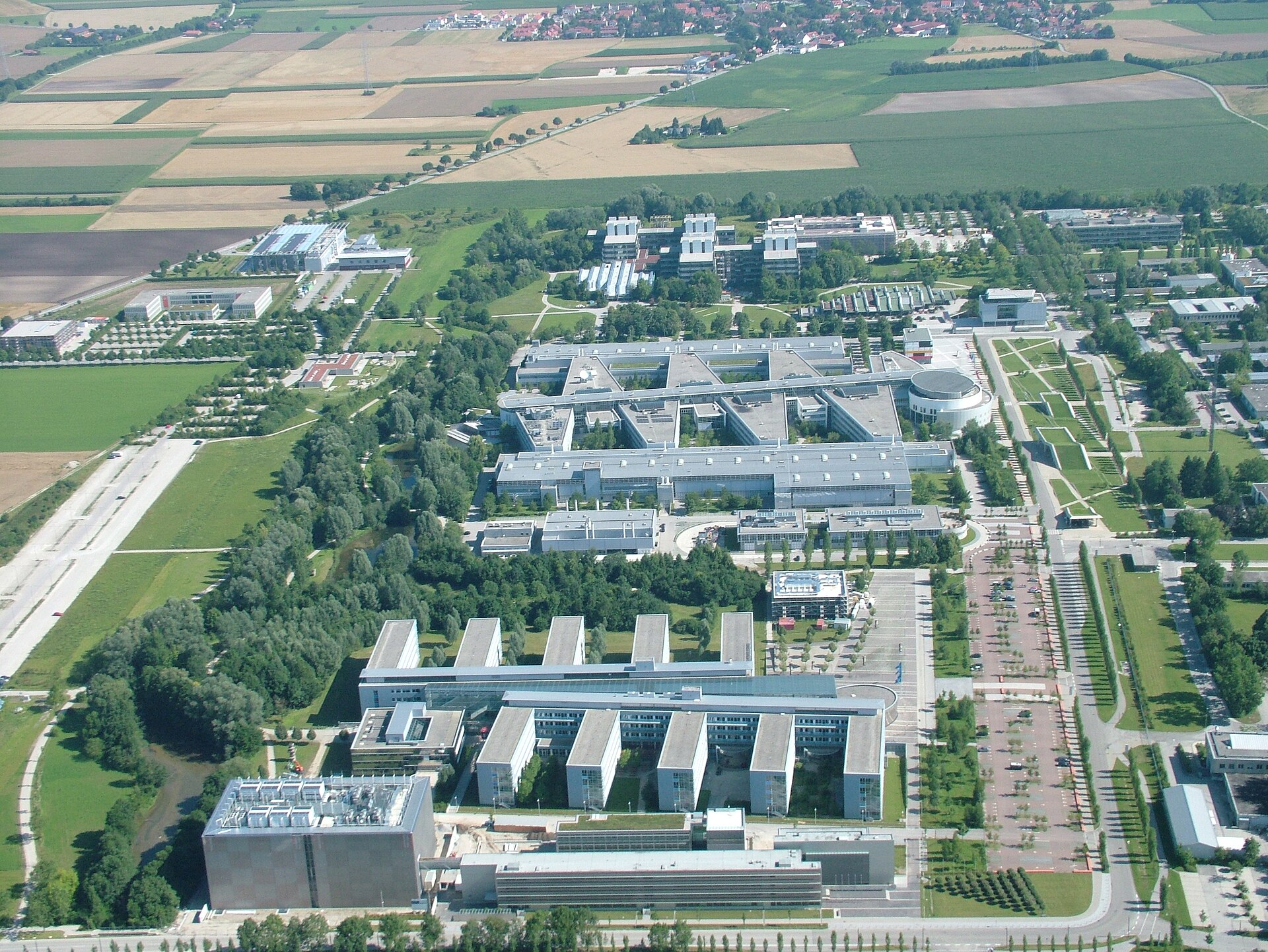
Garching Research Center (Garching-Forschungszentrum). View from the Institute of Advance Study (IAS) of the TU Munich.
Garching Research Center (Garching-Forschungszentrum). View from the Institute of Advance Study (IAS) of the TU Munich.Heedmane · CC BY-SA 3.0 · via Wikimedia Commons
Forschungsgelände TU-München Garching
Forschungsgelände TU-München GarchingGraf-flugplatz · CC BY-SA 3.0 · via Wikimedia Commons
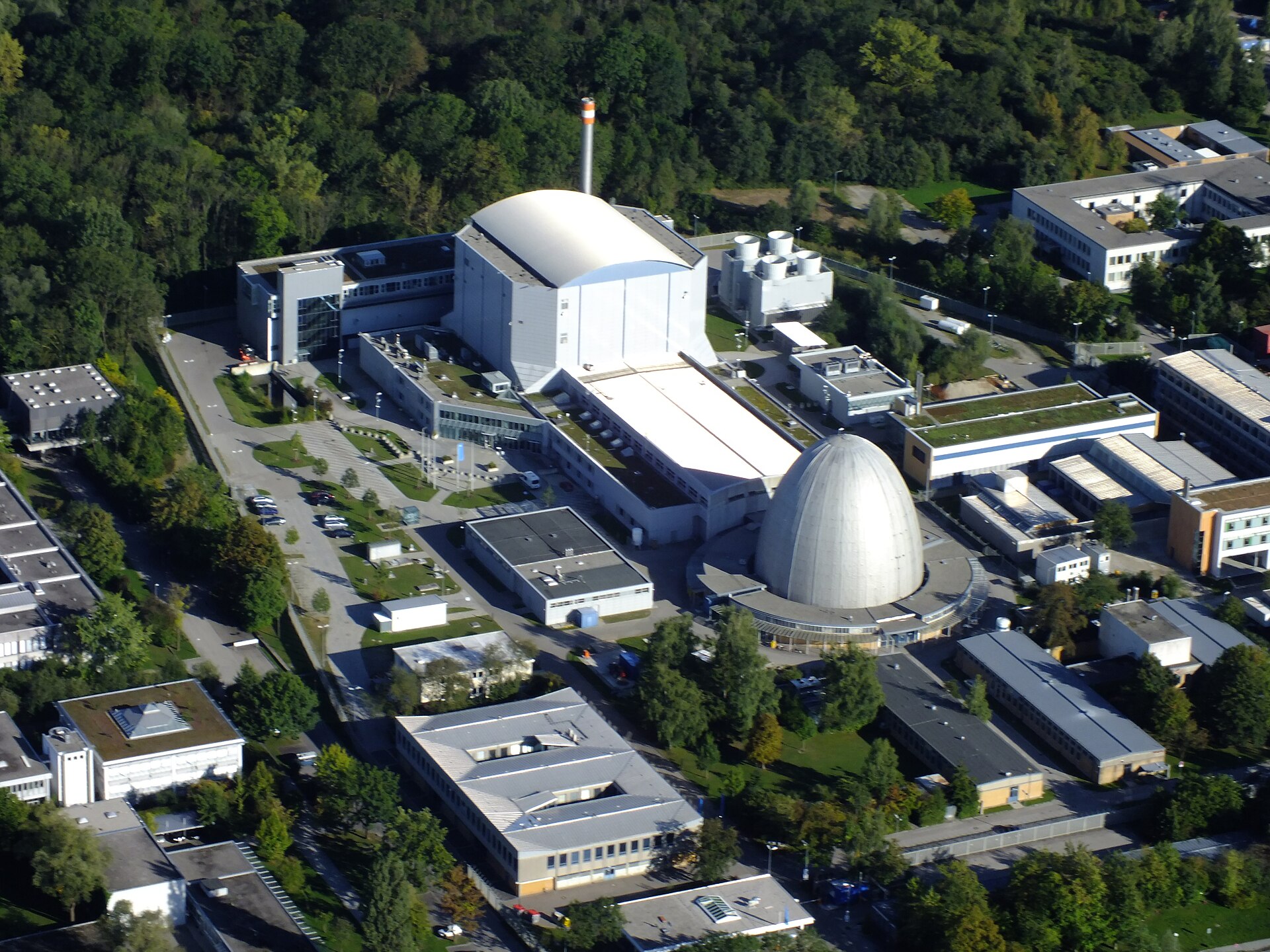
Garchinger Ei, FRM2, Forschungsgelände TU-München Garching
Garchinger Ei, FRM2, Forschungsgelände TU-München GarchingGraf-flugplatz · CC BY-SA 3.0 · via Wikimedia Commons
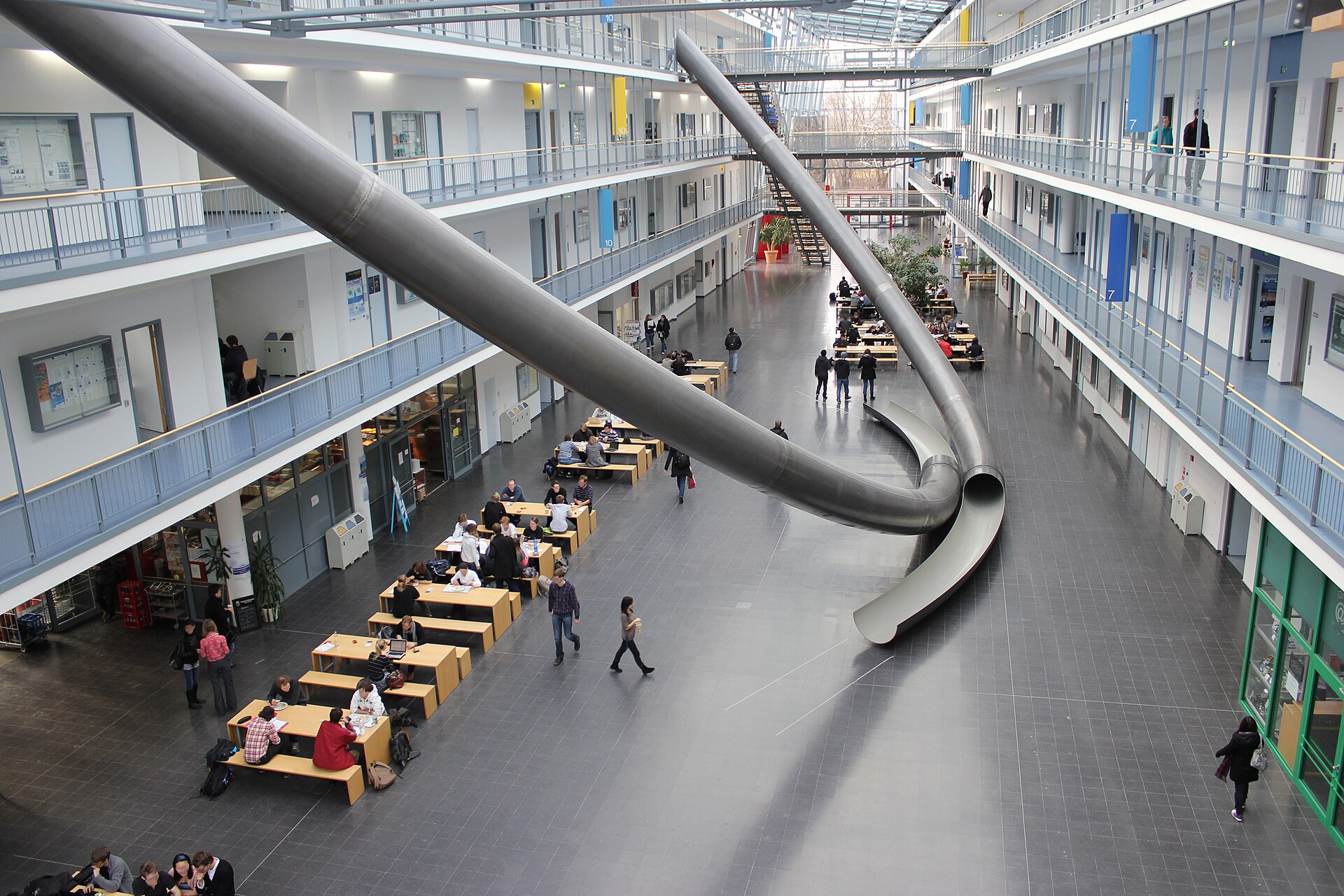
MI Gebäude der TU München Magistrale2
MI Gebäude der TU München Magistrale2TobiasK · CC BY-SA 4.0 · via Wikimedia Commons
A view of the Garching research campus (170818035 cc)
A view of the Garching research campus (170818035 cc)Ernst A. Graf/ESO · CC BY 4.0 · via Wikimedia Commons
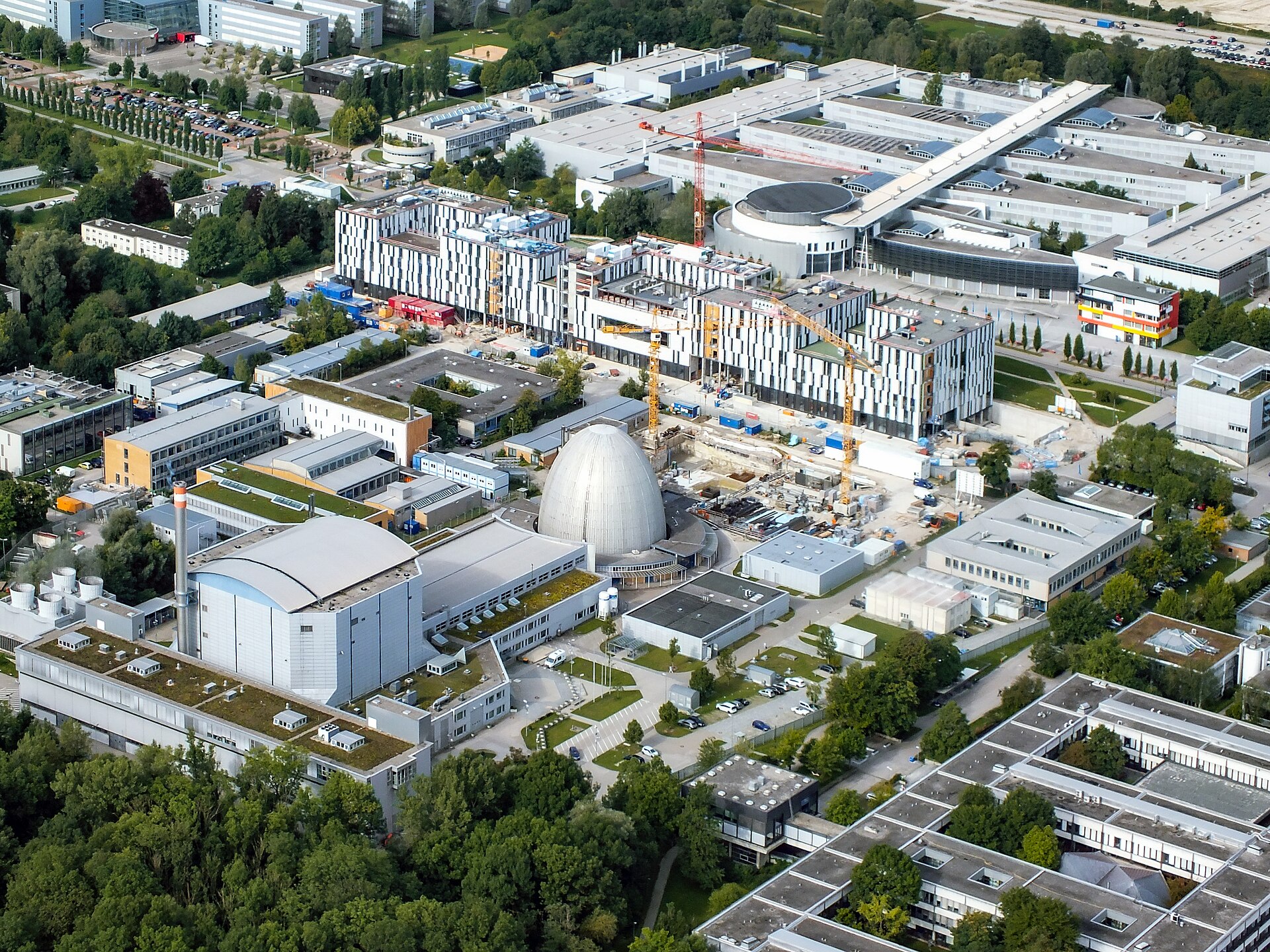
Technische Universität München Forschungszentrum campus (170818042 cc)
Technische Universität München Forschungszentrum campus (170818042 cc)Ernst A. Graf/ESO · CC BY 4.0 · via Wikimedia Commons

Why TUM — Research Power, Industry Access & Global Standing

TUM is not simply Germany's best technical university. It is one of the world's most consequential research and innovation institutions. For international students in engineering, computer science, management, and the natural sciences, TUM offers a rare combination of elite academic standing, world-class industry access, and an affordable, cosmopolitan education in one of Europe's most liveable cities.

01Global Research Prestige
Ranked #22 in QS World University Rankings and #26 by Times Higher Education — Germany's top-ranked university. A TUM degree in engineering, computer science, or natural sciences is recognised by employers in over 140 countries.
02Research at Scale
19 Nobel Prize winners among researchers and alumni; 270 ERC Grants; 7 Clusters of Excellence spanning robotics, quantum science, cancer research, and more. Undergraduates and master's students engage with this research ecosystem from day one.
03Industry Ecosystem — Munich
BMW, Siemens, Airbus, MAN, SAP, and Allianz partner actively with TUM for research chairs, internships, and graduate hiring. TUM alumni have founded 23 unicorn companies; Munich is Europe's second-largest tech hub.
0490+ English-Taught Programmes
Over 90 TUM programmes — concentrated at master's level — are taught entirely in English, making world-class German engineering education accessible to international students without German language prerequisites.
05University of Excellence (4x Designated)
TUM has been designated a 'University of Excellence' by the German federal government in 2006, 2012, 2019, and 2026 — placing it in the elite tier of German higher education with exceptional long-term public funding.
06Ranked #13 Globally for Employability
Times Higher Education Global Employability Ranking places TUM #13 worldwide. A 92% employment rate and average starting salary of approximately $54,000 USD reflect TUM's direct pipeline into leading multinationals and start-ups.
https://www.tum.de/en/about-tum/facts-and-figures/tum-in-figures

TUM Acceptance Rate & Admitted Student Profile

Stats

~15%
Overall acceptance rate
52,000
Total enrolment
30%
International students

Profile Stats

34+
IB Diploma competitive benchmark
3.0
Minimum GPA (US 4.0 scale equivalent)
6.5
IELTS minimum (English programmes)
88
TOEFL iBT minimum
30%
International student population
#22
QS World Rank
Overall acceptance rate — varies significantly by programme

Rea Vs Rd

Rd Label: Rolling / Programme Deadline
Rd Value: ~15% overall
Rea Label: Competitive Programmes (CS, Data Engineering)
Rea Value: Significantly lower

TUM Admissions Requirements — GPA, Qualifications & Language Proficiency

Bachelor's GPA
Value: 3.0+ / 4.0
  • Minimum GPA of 3.0/4.0 (US scale equivalent)
  • Top quartile of graduating class preferred for competitive programmes
  • uni-assist converts your grades to the German scale
  • Strong Bachelor's GPA is the single most important factor
TUM's aptitude assessment is heavily grade-weighted. Your Bachelor's GPA — converted to the German grading scale by uni-assist — accounts for the largest share of your admission score. Meeting the minimum (3.0 US equivalent) does not guarantee admission; competitive programmes select well above the floor.
Pre-University Qualifications
Value: 34+ IB Points
  • IB Diploma: 34+ points competitive benchmark
  • A-Levels: typically BBB or above in relevant subjects
  • Subject relevance assessed separately from overall score
  • HL Mathematics and relevant sciences expected for STEM programmes
For bachelor's entry, TUM requires an Abitur-equivalent qualification. The IB Diploma benchmark for competitive entry is 34 points; A-Levels at BBB or above in relevant subjects are the standard expectation. For master's entry, the bachelor's degree is the primary qualification.
Language Proficiency
Value: IELTS 6.5 / TOEFL 88
  • IELTS Academic: 6.5 overall minimum
  • TOEFL iBT: 88 minimum
  • English-medium degree may waive requirement
  • No Duolingo test accepted (confirm on official page)
English-taught master's programmes require IELTS 6.5 or TOEFL 88. German-taught programmes require TestDaF Level 4 or DSH-2. Some programmes have higher requirements — always confirm on the specific programme page.

TUM Application Components — TUMonline, Motivation Letter & Aptitude Assessment

TUM uses a programme-specific aptitude assessment model rather than a single centralised admissions process. The application is document-heavy and grade-focused. Below is every component of a complete TUM application with strategic notes for international applicants.

01RequiredTUMonline Application Portal
All TUM applications are submitted through TUMonline, TUM's campus management portal. Register, select your programme, and upload all required documents as PDFs before the programme-specific deadline.
02Required (Non-German Qualifications)Uni-Assist VPD
International students with non-German qualifications must obtain a Vorprüfungsdokumentation (VPD) from uni-assist before TUMonline submission. Processing takes up to 8 weeks — begin this first.
03RequiredAcademic Transcripts & Certificates
Official Bachelor's degree certificate or current transcript of records. Documents not in German or English must be accompanied by a certified translation.
04Required for Most ProgrammesMotivation Letter / Statement of Purpose
The most critical subjective element. TUM assessors formally score this document on a points scale; it must demonstrate both your academic suitability and your specific reasons for choosing this TUM programme.
05RequiredProof of Language Proficiency
IELTS 6.5 or TOEFL 88 for English-taught programmes. TestDaF Level 4 or DSH-2 for German-medium programmes. Some programmes set higher minimums.
06Programme-DependentAptitude Interview (Stage 2)
Many master's programmes conduct a two-stage assessment: document review (Stage 1), then a 20-minute structured interview with faculty (Stage 2). Not all programmes include interviews — confirm on your programme's admissions page.
07Some ProgrammesCV and Reference Letters
CV is required or strongly recommended for most programmes. Academic reference letters are required by some departments. Check your specific programme's requirements — not universal across TUM.
https://www.tum.de/en/studies/application/master/application-master

TUM Motivation Letter — Writing the Statement of Purpose

Tips

Write what only you can write — specifically
TUM assessors read hundreds of applications. The letters they remember reference specific TUM research groups, name particular professors whose work they have actually read, and describe precise technical projects. Generic statements of ambition disappear.
The motivation letter is not optional in spirit
Even when labelled as a 'motivation letter', TUM's statement of purpose is formally scored by faculty in many programmes. Treat it with the rigour of a technical document, not a cover letter.
Structure: Suitability + Commitment, in that order
TUM's own guidance says the statement must address both your suitability (why you are academically prepared) and your commitment (why TUM specifically). Most applicants write the second without adequately establishing the first.
Personalise for each programme — never reuse
A motivation letter written for TUM Computer Science will not serve an application to Aerospace Engineering or Management & Technology. Each programme has different faculty, emphases, and evaluation criteria.

Prompts

Why Are You Suitable? (Core Required Element)
Demonstrate your academic suitability: reference specific relevant coursework, grades, research projects, or professional experience that directly qualify you for this TUM programme.
Why TUM Specifically? (Core Required Element)
Explain why you chose TUM and this specific programme. Reference specific faculty research, curriculum modules, or TUM initiatives you have actually engaged with — not ranking-based generalities.
Programme-Specific Structured Prompts (Some Programmes)
Some programmes use structured prompts with per-section word limits (e.g., 200 words per section for background, motivation, and career goals). Always check your specific programme's application requirements.
Career Goals (Coherent, Not Aspirational)
Articulate a coherent line from your academic background → this programme → your medium-term professional or research goals. The logic should be traceable and credible.
The most common TUM motivation letter mistake. Writing what you think TUM wants to read — a generic paragraph about world-class research — instead of demonstrating that you know this programme's specific content, faculty, and research areas.
Writing Strategy — What TUM Assessors Look For
https://www.tum.de/en/studies/application/master/application-master

What TUM Admissions Officers Are Looking For

TUM's selection is academically driven. There is no holistic 'whole-person' review in the US sense. Understanding what each department's aptitude assessment is looking for — and building your application around those specific criteria — is the foundation of a successful TUM strategy.

01Strong Bachelor's GPA in Relevant Field
TUM's aptitude assessment assigns the largest point weight to academic performance. A GPA in the top quartile of your graduating class, in a bachelor's programme directly relevant to the master's you are applying for, is the foundation of a competitive TUM application.
02Subject-Area Competence, Not Just Credentials
TUM programmes assess whether your prior study covered the content the programme assumes. For CS, this means algorithms, data structures, and mathematics. For engineering programmes, it means core engineering sciences. A high GPA in an unrelated field does not compensate for subject-area gaps.
03A Specific, Well-Argued Statement of Purpose
The motivation letter is formally scored in many programmes. TUM assessors look for: a clear account of your academic preparation; a specific rationale for choosing this TUM programme; and evidence of independent thinking, such as references to TUM research groups or faculty you have actually engaged with.
04Research or Professional Experience (Valued, Not Required)
Lab experience, internships at relevant companies, or published work strengthen applications, particularly for research-intensive programmes. Management programme applicants benefit from post-bachelor professional experience.
05Clarity of Professional Direction
TUM is not Harvard — it does not select for 'potential' in an abstract sense. A credible, coherent line from your background to this programme to your career or research goals is what distinguishes strong applications from merely qualified ones.
06Programme Fit over University Prestige
TUM's decentralised admissions model means faculty in each programme evaluate fit against their specific programme's content and community. An application that demonstrates deep knowledge of the programme, not just TUM's global ranking, is the one that gets remembered.

TUM Financial Aid & Scholarships for International Students

TUM's financial support for international students operates through scholarships, student employment, and Germany's public higher education system rather than through a US-style need-based institutional aid model. EU/EEA students study without tuition fees. Non-EU students pay programme-specific fees introduced from Winter Semester 2024/25, with waiver scholarships available for high performers.

Aid amounts are based on published programme descriptions. Individual awards vary by programme and application cycle. Check tum.de/en/studies/fees-and-financial-aid for current official information.

Stats

€0
EU/EEA student tuition per semester
~€144
Semester contribution (all students)
€300
Deutschlandstipendium monthly
~800
Awards: Deutschlandstipendium per year

Contribution Tiers

NoteRangePercentPercent Value
No tuition fees — pay only semester contribution ~€288/yearEU/EEA Students~100%100
Tuition waivers available for high-performing applicantsNon-EU (High GPA)Waiver eligible70
Deutschlandstipendium: €300/month + waiver applicationsMerit-Scholarship Recipients€300/mo50
DAAD: €750–€1,200/month + health insurance coverageDAAD Scholarship RecipientsFull living costs85
Working student roles up to 20h/week during termWerkstudent (Part-Time Work)~€15–20/hr30
How TUM Financial Support Works — What This Means. Germany's student support system differs fundamentally from the US or UK model. TUM does not offer a need-blind, full-cost-coverage programme. However, the combination of low or zero tuition, work-study rights, and named scholarships — including the Deutschlandstipendium — makes TUM significantly more affordable than equivalently ranked universities in any English-speaking country.
Available Financial Support by Student Type
https://www.tum.de/en/studies/fees-and-financial-aid

Key Dates

Non-EU Winter Semester (Oct) Application Window
Date: 1 Feb – 31 May
EU Winter Semester (Oct) Application Window
Date: Mid-Apr – 15 Jul
Non-EU Summer Semester (Apr) Application Window
Date: 1 Oct – 30 Nov
Uni-Assist VPD Submission (non-German qualifications)
Date: At least 8 weeks before deadline

Advantages

  • Winter semester (October) offers the widest programme selection
  • Non-EU applicants have a broad window: 1 February to 31 May
  • Earlier application within the window gives more processing buffer
  • Summer semester is an option for programmes that accept it
  • Applying early in the window allows time to address any document issues

Disadvantages

  • Non-EU deadline (31 May) is earlier than many international students expect — do not confuse with September
  • Uni-assist VPD requires up to 8 weeks — missing this makes TUMonline submission impossible
  • A limited number of programmes only accept winter semester entry
  • Summer semester has fewer programme options for international students
  • Late applications within the window may still miss rolling decisions in competitive programmes
Winter vs Summer Semester. Unlike US universities with EA/REA/RD rounds, TUM operates on a semester-based cycle with programme-specific deadlines. The winter semester (October start) is the primary intake. The critical first step — the uni-assist VPD — must precede your TUMonline application.
Tychr's Semester Recommendation. Apply for the winter semester if it is your first TUM application: it offers the most programmes, the most competitive experience, and the best orientation support for international students. Begin your uni-assist VPD process in January for a May deadline. Treat the deadline as firm — TUM does not grant individual extensions.
TUM Application Rounds — Winter vs Summer Semester & Deadlines
https://www.tum.de/en/studies/application/master/application-master

TUM Aptitude Interview — Format, Questions & Preparation

Many TUM master's programmes include a structured 20-minute aptitude interview as Stage 2 of their selection process, conducted by departmental faculty after candidates pass the initial document review. The interview is not conversational — it is a technical and motivational assessment. Not all programmes conduct interviews; always confirm on your specific programme's admissions page.

Meta

20-minute structured aptitude interview with faculty
Format
Stage 2 — only for candidates who pass document review
Stage
Technical knowledge, subject-area competence, programme motivation
Evaluates
Many master's programmes; not all — confirm on programme page
Coverage

Questions

Describe a project or course from your bachelor's that is most relevant to this programme.
Tip: Be specific and technical: name the module, describe the algorithm or project, explain what you learned. Faculty interviewers will probe any claim you make.
Why did you choose this specific TUM programme?
Tip: Reference specific TUM research groups, faculty, or curriculum modules you have actually read about. 'World-class research' without specifics fails this question every time.
Where do you see yourself professionally five years after graduating?
Tip: Have a coherent, realistic answer. It need not be perfectly resolved, but it must connect plausibly to what this programme teaches.
Explain a technical concept from your field that you find particularly interesting.
Tip: This is a direct technical probe. Prepare core content from your bachelor's relevant to the programme area — algorithms, engineering fundamentals, quantitative methods — depending on your field.
What do you expect to be the most challenging aspect of this programme for you?
Tip: TUM assessors are evaluating programme fit and intellectual honesty. Saying 'I don't know but here is how I would approach it' is far better than a confident wrong answer.

TUM Campus Locations & Student Housing

TUM operates across multiple campuses. Unlike a residential-college system, TUM does not house students on a single integrated campus. The Studentenwerk München — the student union — manages a portfolio of subsidised student halls across the city, but places are limited and demand is high.

Houses

Max-Bill-Straße
Tag: Studentenwerk München
Modern student halls near Obersendling, €310–€390/month
Garching Research Campus Halls
Tag: Studentenwerk München
On-site accommodation for students at the Garching campus, convenient for science and engineering programmes
Weihenstephan Campus Housing
Tag: Studentenwerk München
Green campus near Freising for life sciences and agriculture students
WG (Wohngemeinschaft)
Tag: Private / Shared
Shared flats — the most common student housing model in Munich; €500–€800/month per room in private market
Student Hostels / Temporary Housing
Tag: Short-Term
Several hostel-style student residences offer short-term placement for new arrivals while permanent housing is arranged

Lottery Steps

  • TUM does not have a residential college or house system — all housing is arranged independently
  • Apply to Studentenwerk München immediately upon receiving your TUM admission letter — waiting lists are long
  • Studentenwerk halls: €300–€450/month including utilities; far below Munich private market
  • Private shared flats (WG) are the most common alternative — use platforms like WG-Gesucht.de
  • Garching campus (science/engineering): dedicated on-campus accommodation available for that campus
  • The semester contribution (~€144/semester) includes a full Munich public transport pass — commuting is affordable and convenient

TUM Schools & Departments

TUM School of Engineering and Design
Label: Engineering, Architecture & Design
  • {"label":"Key programmes","value":"Mechanical, Aerospace, Civil, Architecture"}
  • {"label":"Industry partnerships","value":"BMW, Airbus, MAN"}
  • {"label":"Language of instruction","value":"German (bachelor's); English (many master's)"}
  • {"label":"Global rank","value":"Top 20 (engineering)"}
TUM's largest school, encompassing mechanical, aerospace, civil, and electrical engineering alongside architecture and industrial design. World-class research facilities including wind tunnels, robotics labs, and additive manufacturing centres.
TUM School of Computation, Information and Technology
Label: Computer Science & Data Science
  • {"label":"Key programmes","value":"Informatics, Data Engineering, Robotics, Bioinformatics"}
  • {"label":"QS Subject Rank","value":"Top 20 globally (CS)"}
  • {"label":"Selectivity","value":"Highly competitive — low admission rate"}
  • {"label":"Language","value":"English (all master's programmes)"}
Home to TUM's world-leading Informatics and Data Engineering programmes. Graduates are recruited by Google, Apple, SAP, Microsoft, and leading European tech firms. Research spans AI, machine learning, quantum computing, and human-computer interaction.
TUM School of Natural Sciences
Label: Physics, Chemistry, Mathematics & Biology
  • {"label":"Nobel Prize affiliated researchers","value":"Multiple"}
  • {"label":"Key programmes","value":"Physics, Mathematics, Chemistry, Biology, Biosciences"}
  • {"label":"Research clusters","value":"4 Clusters of Excellence"}
  • {"label":"Language","value":"German (bachelor's); English (master's options)"}
One of the strongest natural sciences faculties in German-speaking Europe. Hosts world-leading research in quantum physics, molecular biology, and mathematics. The Physics department in particular has exceptional global standing.
TUM School of Management
Label: Management, Finance & Technology
  • {"label":"Key programmes","value":"Management & Technology, Finance, Innovation & Business Creation"}
  • {"label":"AACSB accredited","value":"Yes"}
  • {"label":"Industry focus","value":"Technology management, entrepreneurship"}
  • {"label":"Language","value":"English (master's)"}
Ranked among Germany's leading management schools, with a distinctive focus on technology management. Particularly strong for students combining engineering or CS backgrounds with business study. Close ties to Munich's start-up ecosystem through TUM Venture Labs.
TUM School of Medicine and Health
Label: Medicine & Health Sciences
  • {"label":"Key programme","value":"Medicine (state examination)"}
  • {"label":"Language","value":"German (MD programme)"}
  • {"label":"Hospital partner","value":"Klinikum rechts der Isar (university hospital)"}
  • {"label":"Note","value":"State examination model — not Bologna-compatible bachelor's"}
Medicine at TUM leads to the German state medical examination (Staatsexamen). This programme is taught in German and follows the German medical education model, not a pre-med undergraduate pathway. International students pursuing medicine must have C1-level German.
TUM Campus Heilbronn
Label: Management & Data Science
  • {"label":"Location","value":"Heilbronn, Baden-Württemberg"}
  • {"label":"Programmes","value":"Master's in Management & Data Science"}
  • {"label":"Language","value":"English"}
  • {"label":"Focus","value":"Entrepreneurship & digital business"}
TUM's newest campus, opened in Heilbronn with a focus on management and data science at master's level. Funded by the Dieter Schwarz Foundation (Lidl/Kaufland founder) — a well-resourced, smaller-cohort, English-taught environment.

Research & Extracurricular Opportunities at TUM

TUM Research Groups
Category: Research Access
TUM master's students are actively embedded in research groups from their first semester. The university's seven Clusters of Excellence — spanning robotics, cancer research, quantum science, and more — provide world-class environments for thesis and project work. Students in competitive programmes should contact potential supervisors before or shortly after admission.
TUM Venture Labs & Start-Up Ecosystem
Category: Entrepreneurship
TUM Venture Labs is one of Europe's top university start-up incubators, producing 115 start-ups in 2025 alone. Students across all schools can access mentorship, funding, co-working space, and access to TUM's industry partner network. TUM has produced 23 unicorn companies to date.
Student Project Teams
Category: Engineering & Innovation
TUM hosts exceptional student engineering project teams including TUM Boring (tunnelling), WARR Racing (Formula Student E), TUM Robolab, and the TUM Satellite Team. These are nationally and internationally competitive teams that provide hands-on engineering experience beyond the curriculum.
TUM International Centre & Buddy Programme
Category: International Community
The TUM International Centre provides dedicated support for incoming international students including orientation events, language courses, visa guidance, and cultural integration. The TUM Buddy Programme pairs incoming international students with continuing peers for practical day-to-day support.
Scroll right to explore TUM's research programmes and student life opportunities.

Career Outcomes & TUM Alumni Network

TUM's alumni network (over 120,000 registered members) and its deep industry partnerships provide structured pathways into industry and research. For those pursuing further study, TUM's doctoral programmes are globally competitive and offer funded positions for exceptional master's graduates.

Stats

92%
Employment rate within months of graduation
$54,000
Average starting salary (USD equivalent)
#13
Global employability rank (THE)
23
Unicorn companies founded by TUM alumni/researchers
19
Nobel Prize winners affiliated with TUM
115
Start-ups from TUM research in 2025

Categories

Engineering & Manufacturing
BMW Group, Airbus, MAN, Bosch, Siemens — TUM's engineering graduates fill technical and R&D roles across Europe's largest industrial companies. Munich's industrial base means many TUM master's students begin their professional networks during study through Werkstudent roles.
Technology & Data
SAP, Microsoft Germany, Google Munich, MunichRe Digital, Celonis, Personio — TUM's Informatics and Data Engineering graduates are the most sought-after technical hires in the German tech market and increasingly across Europe.
Management & Consulting
Allianz, McKinsey Germany, Boston Consulting Group, Deutsche Bank, Linde — TUM's Management & Technology programme feeds directly into consulting, finance, and strategic management roles at leading German and international firms.
https://www.tum.de/en/about-tum/facts-and-figures/tum-in-figures

Our TUM Admissions Track Record & Student Success Stories

Aditya S.
I almost submitted the same motivation letter I used for two other German universities. My Tychr counsellor read it and said it failed the 'specific to TUM' test on every paragraph. After rewriting it with actual references to TUM's Robotics, Cognition, Intelligence cluster and the specific modules in the Informatics programme, I got through to the interview stage and was admitted.
Country: India
Program: TUM — Informatics (Computer Science)
Class Year: WS 2025/26
Residential: Garching Campus
Academic Profile: CGPA 9.1/10 · IIT Bombay
Mei-Lin C.
The uni-assist process was what nearly derailed my application. My Tychr advisor told me to start it four months before the May deadline — I had no idea it could take 8 weeks. We also found an error in the GPA conversion that we were able to correct before the final submission.
Country: Taiwan
Program: TUM — Aerospace Engineering
Class Year: WS 2024/25
Residential: Munich (private housing)
Academic Profile: GPA 3.85/4.0 · NTU Taipei
Kwame A.
The aptitude interview in the Management & Technology programme was unlike any job interview I had done. Tychr's preparation sessions focused on connecting my banking internship to TUM's specific curriculum — and the interviewer asked almost exactly the questions we had rehearsed.
Country: Ghana
Program: TUM — Management & Technology
Class Year: WS 2025/26
Residential: Munich Schwabing
Academic Profile: GPA 3.7/4.0 · University of Ghana Business School

Faqs

Is TUM free for international students?+

From Winter Semester 2024/25, TUM introduced tuition fees for newly enrolling non-EU/EEA international students. EU/EEA students continue to study without tuition fees, paying only a semester contribution of approximately €144/semester. Non-EU students pay programme-specific fees, with waiver scholarships available. All students benefit from the included Semesterticket (Munich public transport pass) in their semester contribution.

Do I need to speak German to study at TUM?+

Not for master's programmes taught in English — over 90 are fully English-medium. Most bachelor's programmes at TUM are taught in German and require TestDaF Level 4 or DSH-2. For daily life in Munich, basic German is helpful but not essential, especially in the international student community.

What is uni-assist and why do I need it?+

Uni-assist is a centralised service that verifies international qualifications for German universities. If your prior degree was earned outside Germany, you must obtain a Vorprüfungsdokumentation (VPD) from uni-assist before submitting your TUMonline application. It confirms qualification equivalence and converts your GPA to the German scale. Allow at least 8 weeks for processing.

How important is the motivation letter?+

Extremely important. In many TUM programmes, the motivation letter is formally scored by two faculty assessors on a points scale and directly determines whether you advance past the document-review stage. A generic letter tailored to no specific programme is one of the most common reasons for rejection at the aptitude assessment stage.

Will I have an interview?+

Many TUM master's programmes include a 20-minute structured aptitude interview as Stage 2 of their selection. It is conducted by faculty and assesses technical knowledge and programme motivation. Not all programmes include an interview — confirm on your specific programme's admissions page.

What is the IB benchmark for TUM?+

The IB Diploma competitive benchmark for TUM entry is 34 points. Higher Level grades in subjects relevant to your programme area (Mathematics, Physics, Computer Science, Chemistry) carry particular weight. For bachelor's entry, the IB Diploma is accepted as equivalent to the German Abitur.

When should I start my TUM application?+

Start 4–6 months before the semester deadline. For the winter semester (non-EU deadline typically 31 May), begin in January: submit to uni-assist first (8 weeks processing), then prepare your motivation letter, gather transcripts, and obtain language test certificates. Do not underestimate the VPD timeline.

Can I apply to multiple TUM programmes simultaneously?+

Yes, but each programme requires a separate application in TUMonline and a separate VPD from uni-assist. Plan your timeline carefully — each VPD takes up to 8 weeks and carries a processing fee.

Book a Free TUM Admissions Strategy Session

In 60 minutes, our TUM admissions specialists will evaluate your academic profile, identify your motivation letter strengths and gaps, map your uni-assist and TUMonline timeline, and determine which TUM programmes give you the strongest admission probability.

  • No commitment required
  • TUM specialists familiar with the German admissions system
  • Personalised strategy — motivation letter, uni-assist, and timeline planning
Getting into TUM is not about being the best-credentialed applicant globally — it is about demonstrating you are the best fit for this specific programme, with the academic foundation to succeed in it.

TUM Academic Requirements

TUM Academic Profile Requirements — The Honest Breakdown for International Students

What GPA, IB score, and academic background do admitted TUM students actually have? How does TUM read international qualifications from IB, A-Level, Indian, and other curricula? And what does the aptitude assessment actually measure?

34+
IB Diploma Benchmark
Competitive entry threshold
3.0/4.0
Minimum GPA
US-scale equivalent; varies by programme
6.5
IELTS Minimum
English-taught programmes
88
TOEFL iBT Minimum
Internet-based test
#22
QS World Rank
Germany's top-ranked university
~15%
Acceptance Rate
Overall; varies widely by programme

GPA & Academic Record

TUM and GPA — What the Data Shows

The honest picture: TUM does not publish a single university-wide GPA minimum. Every programme sets its own threshold. In practice, the vast majority of admitted students are in the top quartile of their graduating class in a relevant bachelor's programme.

A GPA of 3.0/4.0 is the floor, not the target. For CS, Informatics, and Data Engineering master's programmes — TUM's most competitive — applicants typically need GPAs of 3.5 or above in directly relevant bachelor's programmes to compete effectively.

3.0
Minimum GPA (US 4.0 scale equivalent) across most programmes
3.5+
Typical GPA of admitted students in competitive programmes
How international GPAs are converted. TUM's grade conversion system — administered by uni-assist — translates international GPAs to the German 1–5 scale (1 being best). The conversion formula varies by country and institution. A GPA from a highly-graded system will be treated differently from one at a rigorous institution with known grade deflation. This is why securing the VPD early is critical: it tells you how your GPA translates before you invest in a full application.
Grade trajectory: not formally weighted, but contextable. Unlike holistic US admissions, TUM's aptitude assessment does not formally consider grade trajectory. The GPA conversion takes your overall average. However, a strong motivation letter can contextualise a slightly lower overall GPA by highlighting exceptional performance in directly relevant modules.

Academic Context

How TUM Reads Academic Performance — Institution, Grades, and Subject Coverage

TUM's decentralised admissions system means academic context is assessed at the programme level by faculty, not by a central admissions office. Each programme's aptitude assessment committee knows its field — and they read your transcript for subject-area competence, not just headline GPA.

How TUM contextualises your academic record
Every application is evaluated with reference to the specific institution and qualification the student came from. A 3.5 GPA from a competitive national university in India, evaluated by uni-assist, reads differently from a 3.5 from a less-selective institution. Uni-assist's grade conversion formula uses both the institutional average and the student's individual performance.
Subject relevance over overall average
For TUM, the most important signal beyond GPA is whether you took the right courses. A computer science master's programme wants to see algorithms, data structures, linear algebra, and programming — not just a high overall average in a tangential field. Gaps in core content, identified through the subject-area assessment, can result in rejection regardless of overall GPA.
For students with borderline GPAs. Your motivation letter is the primary vehicle for contextualising your academic record. If your GPA is borderline but your grades in the directly relevant modules of your bachelor's were strong, this is where to make that argument — clearly, specifically, and with evidence.

Standardised Testing — SAT

SAT at TUM — Not Required, Not Considered

TUM does not require or use SAT scores in any part of its admissions process. The SAT is a US-designed test for US university admissions and has no role in German university selection.

LabelScorePercent
SAT required by TUMNo0
SAT considered in aptitude assessmentNo0
GRE required for standard master'sNo0
What about US-curriculum applicants?. If you are a US-curriculum student who has taken the SAT, your score is not submitted to or used by TUM. Your US transcript and any AP exam scores may be used by uni-assist to assess qualification equivalency for bachelor's entry, but the SAT score itself is not part of the evaluation.
Where to focus instead. International students targeting TUM should invest preparation time in their bachelor's degree GPA and in the motivation letter — not in standardised test preparation. Language tests (IELTS/TOEFL) are the only standardised tests that matter for TUM admissions.
Preparation strategy for TUM applicants. The most effective preparation strategy for TUM is: (1) maximise GPA in your bachelor's core modules; (2) prepare for IELTS or TOEFL at the required thresholds; (3) invest heavily in the motivation letter. Standardised test preparation does not contribute to TUM outcomes.

Standardised Testing — ACT

ACT at TUM — Not Part of the Process

TUM does not require or consider ACT scores. Like the SAT, the ACT is a US-specific admissions test with no role in German university applications.

Metrics

ACT required
Score: No
ACT considered
Score: No

Comparison Cards

Language tests: what actually matters
IELTS 6.5 or TOEFL 88 are the tests that matter for TUM English-taught programmes. Invest in these, not SAT or ACT.
German language test: TestDaF/DSH
If applying to a German-medium programme, TestDaF Level 4 across all sub-tests (or DSH-2) is required. Begin preparation at least 12–18 months in advance.
GRE: rare, only for specific dual-degree programmes
Some dual-degree programmes between TUM and US partner universities may ask for GRE scores. This is rare and programme-specific — confirm on the individual programme page.
What about test scores overall?. TUM has no superscore policy because it does not use any standardised tests in its admissions process. The only test scores that matter are language proficiency tests: IELTS Academic or TOEFL iBT for English-taught programmes, and TestDaF or DSH for German-medium programmes.
Tychr's recommendation for TUM applicants. Do not take the SAT or ACT in pursuit of a TUM application. Prepare for IELTS or TOEFL early — aim to have your language certificate at least six months before your target application deadline so you have time to resit if needed.

Testing Policy

TUM Testing Policy — What 'Optional' Actually Means

TUM's test policy — listed as 'optional' — refers to standardised academic tests (SAT/ACT/GRE). These are entirely optional because they are irrelevant to TUM's aptitude assessment. Language tests (IELTS/TOEFL/TestDaF) are not optional — they are required for the relevant programme types.

Submit Items

IELTS Academic with 6.5 or above — submit this for all English-taught programme applications.
TOEFL iBT 88 or above — accepted in place of IELTS for all English-taught programmes.
TestDaF Level 4 or DSH-2 — required if applying to a German-medium programme. Submit before or with your application.

Withhold Items

SAT, ACT, GRE — none of these are required or used by TUM. Do not submit them.
Duolingo English Test — not listed as a standard accepted test at TUM. Confirm on your programme's admissions page before relying on it.
What 'test optional' means at TUM. TUM does not use SAT, ACT, or GRE scores in admissions. These tests are 'optional' in the sense that submitting them has no effect on your application. Language proficiency tests (IELTS/TOEFL for English programmes; TestDaF/DSH for German programmes) are mandatory where applicable.
The common misconception. Many students researching German universities assume that because SAT/ACT scores helped them gain entry to their bachelor's programme, similar tests must be required for German master's programmes. They are not. The German university aptitude assessment is entirely transcript and document-based.

International Qualifications

IB and A-Levels at TUM — Benchmarks and How They Are Assessed

IB Diploma
Note: What TUM values in IB applicants: Higher Level grades in subjects directly relevant to the programme you are applying to carry significant weight in the aptitude assessment. A total score of 34+ with strong HLs in Mathematics, Physics, Computer Science, or Chemistry demonstrates both overall performance and subject-specific readiness.
  • {"label":"Competitive range","value":"34+ points (from facts file)"}
  • {"label":"HL expectations","value":"Strong grades in subjects relevant to target programme (Maths, Physics, CS, Chemistry for STEM)"}
  • {"label":"Bachelor's entry","value":"IB Diploma accepted as Abitur-equivalent; uni-assist performs grade conversion"}
  • {"label":"Master's entry","value":"Bachelor's degree GPA is the primary credential; IB history is context for subject background"}
A-Levels
Note: A-Level grades are accepted as Abitur-equivalent for bachelor's entry. Typically BBB or above in relevant subjects is the expectation. Subject choice matters — Mathematics and a relevant technical or scientific subject are expected for STEM programme entry. For master's entry, your bachelor's degree GPA is what is assessed.
  • {"label":"Bachelor's entry competitive range","value":"BBB or above in relevant subjects"}
  • {"label":"Subject priority","value":"Mathematics and relevant technical/science subjects for STEM"}
  • {"label":"Equivalency check","value":"Confirmed by uni-assist via the anabin database"}
  • {"label":"Master's entry","value":"Bachelor's degree certificate + transcript; A-Level history is background only"}

AP Courses

AP Courses at TUM — What Counts and What Doesn't

AP courses and scores are relevant only to US-curriculum students applying to TUM bachelor's entry. For master's entry — the primary route for most international applicants — AP scores are not part of the assessment. The bachelor's degree transcript is what matters.

AP and bachelor's entry: the role AP plays
For US-curriculum students applying to TUM bachelor's programmes: AP scores contribute to the uni-assist determination of whether a US high school diploma is equivalent to the Abitur. Strong AP scores in relevant subjects (Calculus BC, Physics, Chemistry, Computer Science) strengthen this equivalency case.
AP and master's entry: not relevant
For master's applicants, AP performance from secondary school is not assessed. TUM's aptitude assessment evaluates your bachelor's degree coursework and grades, not your secondary school qualifications. Focus entirely on your undergraduate academic record.
What to do with strong AP performance
If you are a US-curriculum student who completed AP Calculus BC, AP Physics, or AP Computer Science, these demonstrate quantitative and technical preparation relevant to TUM programmes. Reference them in your motivation letter as evidence of early academic interest in the field.
TUM does not award credit for AP scores. Advanced Placement does not accelerate your master's programme at TUM. Course credit and exemptions are determined by TUM's recognition process based on bachelor's-level coursework, not secondary school examinations.
International students from non-US curricula who have not taken AP courses should not attempt to sit AP exams in pursuit of a TUM application. TUM's aptitude assessment is built around the bachelor's degree — not secondary school qualifications — for master's entry.

Academic Rigour

Academic Rigour at TUM — What It Means for Bachelor's and Master's Entry

For bachelor's entry to TUM, the rigour of secondary school programme matters in determining Abitur equivalency. For master's entry — the more common path for international students — the rigour of the bachelor's programme is the defining academic factor.

At master's level: taking the most analytically and technically demanding courses available in your bachelor's — and performing well in them — is the signal TUM's aptitude assessment most values.

The contextual element. Rigour is always evaluated relative to what was available. A student from a rigorous technical institution with a 3.3 GPA may be more competitive for TUM than one from a less demanding programme with a 3.7 GPA, if the uni-assist conversion and the module profile demonstrate stronger technical preparation.
What rigour means for TUM. For TUM, rigour means: core technical depth in the relevant field; courses taught at advanced undergraduate level that connect directly to the master's programme content; and a thesis or final project that demonstrates capacity for independent technical work.
What TUM is specifically looking for. An engineering applicant who completed advanced thermodynamics, fluid mechanics, and structural analysis in their bachelor's — and performed well in them — demonstrates the technical rigour TUM's assessment rewards. A high GPA across general electives is far less compelling than a slightly lower GPA across demanding technical core modules.

Subject Preparation

Mathematics and Technical Preparation — What TUM Expects by Field

TUM is a technical university. Even management programmes expect quantitative foundations. These are the subject-level preparations that distinguish admitted students from those who clear the GPA minimum but are rejected at the aptitude assessment stage.

Mathematics
Essential for virtually every TUM programme. Engineering and computer science programmes require rigorous coverage of calculus, linear algebra, probability and statistics, and (for CS) discrete mathematics. TUM master's programmes assume this background and do not re-teach it. Students with gaps in mathematical foundations are identified at the aptitude assessment stage.
Computer Science
For Informatics, Data Engineering, and related master's programmes, TUM expects fluency in at least one programming language, understanding of algorithms and data structures at the undergraduate level, and familiarity with core theoretical CS (automata, complexity, formal methods). Practical projects — documented on GitHub or through internship experience — strengthen the motivation letter significantly.
Engineering Fundamentals
For aerospace, mechanical, electrical, and civil engineering programmes, the bachelor's must cover core engineering sciences: thermodynamics, mechanics, electrodynamics, signals and systems. The aptitude assessment committee reviews your module list for these subjects. Gaps in core engineering content can result in rejection regardless of overall GPA.

Language Proficiency

English Language Requirements for International TUM Applicants

TUM specifies minimum English proficiency scores for English-taught programmes. Unlike Harvard, where the essays themselves are the English test, TUM requires formal test certification for all applicants whose prior degree was not primarily conducted in English.

TUM's motivation letter is itself a writing quality test in practice. A student who writes poorly structured, grammatically uncertain prose in a one-page statement will face scepticism from faculty assessors regardless of their official IELTS score. Aim for clarity, technical precision, and concision in your written submission.

Test: IELTS Academic
Score: 6.5
Test: TOEFL iBT
Score: 88
Test: Duolingo
Score: Not specified (confirm on programme page)
English-medium degree waiver. Students whose bachelor's degree was conducted in English may be able to obtain a waiver from the formal language test requirement by submitting a letter from their registrar confirming English as the medium of instruction. This waiver is not guaranteed — confirm with TUM International Center for your specific programme before relying on it.

By Programme

Academic Requirements by TUM Programme — What Different Paths Expect

TUM students are admitted to specific programmes, not to the university generally. The academic requirements below reflect what each major programme area expects from applicants' bachelor's degrees.

SignalsExpectationConcentration
Algorithms, data structures, discrete maths, programming projectsCS or related bachelor's; strong maths; programming fluencyInformatics (CS)
ML/AI coursework, statistics, Python/R proficiency, data projectsCS/Maths/Engineering bachelor's; strong quantitative backgroundData Engineering & Analytics
Control systems, embedded programming, sensor fusion experienceCS or Electrical Engineering bachelor's; strong mathsRobotics, Cognition, Intelligence
Flight mechanics, CAD/FEM experience, fluid dynamics courseworkAerospace or Mechanical Engineering bachelor's; strong physics and mathsAerospace Engineering
Power systems, signal processing, embedded systems projectsElectrical Engineering bachelor's; strong maths and physicsElectrical Engineering
Post-bachelor professional experience; quantitative methods; business case workEngineering, CS, or relevant bachelor's; some professional experience valuedManagement & Technology
Molecular biology, biochemistry, computational methods courseworkBiology, Chemistry, or Bioinformatics bachelor'sBiosciences / Bioinformatics
Quantum mechanics, theoretical physics, advanced mathsPhysics bachelor's; exceptionally strong mathematical foundationPhysics (research track)

International Education Systems

TUM and International Curricula — How Your Qualification Is Evaluated

IB Diploma
Well understood and straightforwardly accepted for bachelor's entry as Abitur-equivalent. Uni-assist applies a conversion formula to the total IB points. For master's entry from a bachelor's programme, the IB history is background context; the bachelor's transcript is what the aptitude assessment uses.
A-Levels (UK / Cambridge International)
Accepted and well understood by uni-assist. Three A-Levels at BBB or above in relevant subjects is the typical equivalency threshold for bachelor's entry. For master's entry, the UK bachelor's degree transcript is assessed directly.
Indian Bachelor's Degrees (IIT/NIT/other)
Indian bachelor's degrees from accredited institutions (IITs, NITs, deemed universities) are well-recognised by uni-assist. A strong CGPA from an IIT typically converts well on the German scale. Applicants with degrees from less well-known institutions should check their specific institution's status on the anabin database before applying.
Chinese Qualifications
Evaluated via uni-assist using the anabin database. Chinese bachelor's degrees from QS-ranked institutions convert well. For bachelor's entry from the Gaokao, additional coursework may be required depending on the score and institution.
Other International Qualifications
TUM accepts qualifications from most countries. The anabin database (administered by the German Standing Conference of the Ministers of Education) is the reference for equivalency determinations. Uni-assist checks every international qualification against this database.

Roadmap

Building an Academic Profile for TUM — What to Do at Each Stage

Bachelor's Year 1Establish the academic foundation
Year: Bachelor's Year 1
  • Prioritise core technical modules in your major: mathematics, programming fundamentals, engineering sciences, or natural sciences depending on your field.
  • Build the GPA foundation from the outset — TUM's conversion uses your full bachelor's average, not just final-year grades.
  • Begin basic German language study if you plan to live in Munich — not required for English programmes but valuable for daily life.
Bachelor's Year 2Deepen technical specialisation
Year: Bachelor's Year 2
  • Choose electives that build depth in the area of your target TUM programme — avoid grade-optimising into unrelated easy courses.
  • Seek a research assistantship or industry internship in a directly relevant field. These become the core of your motivation letter.
  • Research TUM programmes in detail: read module catalogues, faculty research pages, and recent publications from groups you might want to work with.
Bachelor's Year 3 / Final YearPrepare the application
Year: Bachelor's Year 3 / Final Year
  • Sit IELTS or TOEFL at least 12 months before your target TUM semester deadline.
  • Write your bachelor's thesis on a topic directly relevant to your TUM target programme — this is the most powerful single item in your motivation letter.
  • Register with uni-assist and obtain your VPD; allow 8 weeks for processing.
  • Begin drafting your motivation letter with specific reference to TUM faculty and curriculum.
Application WindowSubmit and prepare for interview
Year: Application Window
  • Submit TUMonline application with all required documents before the programme deadline.
  • If your programme conducts an aptitude interview, prepare by reviewing core technical content from your bachelor's relevant to the programme.
  • Be ready to explain your motivation for TUM and this specific programme clearly and concisely.

Common Pitfalls

Academic Mistakes That Cost TUM Applications — And How to Avoid Them

Starting uni-assist too late
The VPD processing by uni-assist takes up to 8 weeks and must be completed before TUMonline submission. Applicants who start the VPD process two weeks before the deadline miss it entirely.
Applying to German-medium programmes without German certification
Most TUM bachelor's programmes are taught in German. International students who discover this only after applying to a German-medium programme without the required language certificate face automatic rejection.
Applying with a high GPA in an unrelated field
A high GPA in a non-STEM or unrelated bachelor's field does not qualify you for TUM engineering or CS programmes. Subject relevance is assessed separately from overall GPA. The aptitude assessment reviews your module list.
Submitting a generic motivation letter
TUM assessors — faculty in the relevant programme — immediately identify copy-pasted content and generic statements about 'world-class research at TUM'. Generic letters are the most common reported reason for aptitude assessment failure.
Overlooking certified translation requirements
Missing certified translations of documents not in German or English can stall or invalidate an application. Every document in a third language must be accompanied by a certified translation.

Real Outcomes

Academic Profiles of TUM-Admitted Students Tychr Has Supported

The following profiles represent the academic backgrounds of international students Tychr has helped gain TUM admission. They illustrate the range of academic preparation that succeeds — and what made each application compelling beyond the GPA.

Profile 1 — CS/AI Focus
Completed B.Tech Computer Science at IIT Madras with CGPA 8.9/10. Strong coursework in algorithms, machine learning, and systems programming. Undergraduate research assistant in a computer vision lab. Thesis on real-time object detection.
Stats: CGPA 8.9/10 · IELTS 7.5 · IIT Madras
Takeaway: The profile met TUM Informatics' GPA threshold with significant margin. The differentiator was the research assistant role and the thesis topic — directly cited in the motivation letter with a reference to TUM's Robotics, Cognition, Intelligence research cluster.
Profile 2 — Aerospace Engineering
Completed MEng Mechanical Engineering at TU Delft with GPA 7.8/10 (Dutch scale). Strong grades in aerospace modules, internship at Airbus Netherlands in structural analysis. Relevant bachelor's thesis on composite material fatigue.
Stats: GPA 7.8/10 · IELTS 7.0 · TU Delft
Takeaway: The Airbus internship and the thesis subject were the core of a motivation letter that specifically referenced TUM's Liechtenstein Chair for Carbon Composites. The match between prior experience and TUM research focus was explicit and credible.
Profile 3 — Management & Technology
Completed BBA at Korea University Business School with GPA 3.75/4.5. Two years post-bachelor work experience at Samsung Electronics in product strategy. Strong quantitative coursework in econometrics and corporate finance.
Stats: GPA 3.75/4.5 · TOEFL 102 · Korea University
Takeaway: The professional experience at Samsung — directly relevant to the tech management focus of TUM's M&T programme — was the application's main differentiator. The motivation letter framed the Samsung role as establishing the gap that the TUM programme would fill.

Faqs

What GPA is needed for TUM?+

The minimum is programme-specific but typically equivalent to approximately 3.0 on the US 4.0 scale. Meeting this minimum does not guarantee admission — competitive programmes select well above the floor. Aim for 3.5+ in a directly relevant bachelor's if targeting CS, Informatics, or Data Engineering.

What IB score do I need for TUM?+

34 IB Diploma points is the competitive benchmark from TUM's published facts. Higher Level grades in subjects relevant to your target programme (Mathematics, Physics, Computer Science, Chemistry) carry particular weight. For master's entry, the IB is historical context; the bachelor's GPA is the primary credential.

Does TUM consider SAT or ACT scores?+

Not relevant to TUM applications. TUM uses transcript-based aptitude assessments, not standardised tests. The only tests that matter are language proficiency tests: IELTS 6.5 or TOEFL 88 for English-taught programmes.

How long does the TUM application process take?+

The uni-assist VPD process takes up to 8 weeks. After receiving the VPD, TUMonline submission and document preparation takes 2–4 weeks. Total: plan for at least 3–4 months from beginning the process to completing the application.

How does TUM assess international applicants?+

Primarily through the bachelor's GPA (converted by uni-assist), subject-area course coverage assessed from the module list, the motivation letter (formally scored in many programmes), and — in two-stage programmes — an aptitude interview.

Costs & Financial Aid

TUM Costs Less Than You Think — Even for Non-EU Students. Here's the Full Picture.

Even with the non-EU fees introduced in 2024/25, a TUM education is substantially more affordable than equivalent programmes in the US or UK. Here is exactly what TUM costs, how the financial support system works, and what you can do to reduce the net cost.

EU/EEA: No Tuition
EU and EEA students pay zero tuition fees
Non-EU: Fees from 2024/25
Programme-specific fees; waiver scholarships available

Cost Transparency

What TUM Actually Costs — The Full Annual Figure

TUM is a public university with a mission to provide accessible technical education. Even with the newly introduced non-EU tuition fees, TUM's total annual cost of approximately $18,500 USD is 3–5 times less than equivalent-ranked universities in the US or UK. For EU/EEA students, who pay only the semester contribution (~€288/year), TUM is an exceptional value proposition.

Tuition (non-EU/EEA, master's estimate)
Cost: ~$6,500
Semester contribution (all students, includes transport pass)
Cost: ~$310
Housing (Studentenwerk €300–€450/month or private)
Cost: ~$6,000–$8,400
Food & groceries (subsidised Mensa + supermarkets)
Cost: ~$3,600
Health insurance (statutory student insurance ~€110/month)
Cost: ~$1,320
Books, materials, personal expenses
Cost: ~$1,800
Total estimated annual cost of attendance
Cost: ~$18,500
For EU/EEA Students. ~€288/year
Non-EU Annual Cost. ~$18,500
TUM Estimated Annual Cost of Attendance — Non-EU/EEA International Student
EU/EEA students pay only the semester contribution — no tuition.
Estimated total annual cost of attendance for non-EU/EEA students.
https://www.tum.de/en/studies/fees-and-financial-aid

Admissions & Financial Support

TUM's Financial Support Model — How It Works for International Students

Financial support for international students at TUM comes through scholarships, Germany's statutory student health insurance system, the semester Semesterticket (public transport), and the right to work part-time. TUM does not operate a US-style need-blind institutional aid system, but the combination of low costs and accessible funding makes TUM genuinely affordable.

Why This Matters: Academic Merit-Only Admissions. Unlike US need-aware schools where financial need can reduce admission probability, TUM's academic aptitude assessment is entirely grade and programme-fit based. Financial circumstances have no effect on admissions outcomes at TUM.
Financial Support Available After Admission. Once enrolled, students access financial support through the Deutschlandstipendium (€300/month scholarship), the TUM scholarship for international students (need-based, €500–€1,800/semester), DAAD scholarships (€750–€1,200/month for eligible applicants), and student employment (Werkstudent roles).
How Financial Support Reaches International Students
TUM's admissions decisions are made on academic merit alone. Financial circumstances are not part of the aptitude assessment. A student from a low-income background has exactly the same chance of admission as a wealthy peer, given equivalent academic credentials and a strong motivation letter.

Institutional Commitment

Why TUM Remains Affordable — Germany's Public University Commitment

Public Funding & University of Excellence Status
TUM is a public university funded primarily by the Bavarian state government and German federal research funding. Its ability to provide high-quality education at low cost is grounded in this public funding model — not tuition revenue. The University of Excellence designation brings additional federal research funding.
Subtitle: State + Federal Funded
Fee Introduction + Waiver Scholarships
From WS 2024/25, TUM introduced non-EU tuition fees to partially offset the cost of education. Simultaneously, TUM introduced tuition waiver scholarships for high-performing non-EU students, maintaining its commitment to academic merit over financial capacity as the primary selection criterion.
Subtitle: Merit Waivers Available
Germany's National Rank. TUM is ranked #1 in Germany by both QS and Times Higher Education, and is the country's most research-intensive technical university. Its public funding model means the world-class education it provides remains substantially below the market price of equivalent-quality private institutions.
"TUM's mission is to be a research university that serves the scientific community and society — accessible to excellent students from around the world, regardless of background."

Financial Aid Walkthrough

Applying for TUM Financial Support — The Process Step by Step

Unlike US universities where financial aid is centrally administered alongside admission, TUM's financial support involves multiple channels. Here is the complete step-by-step approach.

01Research DAAD Scholarships Before Applying to TUM
  • Visit daad.de/en and browse available scholarships by country of origin, field of study, and programme level
  • DAAD deadlines are typically October–November for the following academic year — often before TUM's application window opens
  • Apply for DAAD independently of TUM's admissions process
DAAD (German Academic Exchange Service) scholarships are the most generous financial support available to international master's students in Germany. Apply for DAAD before your TUM application if you are eligible.
02Apply for Tuition Waiver Scholarship (Non-EU Students)
  • Check your specific programme's fees and funding page on tum.de for waiver scholarship availability
  • Apply for the waiver at the same time as your TUMonline programme application
  • Criteria typically include academic merit (GPA) and financial need documentation
TUM introduced tuition waiver scholarships concurrent with the non-EU fee introduction. Apply at the time of your programme application.
03Apply for Studentenwerk Housing Immediately After Admission
  • Register with Studentenwerk München immediately upon receiving your admission letter
  • Waiting lists are long — early registration significantly increases the chance of a room at €300–€450/month
  • Submit proof of enrolment as required
Securing Studentenwerk housing is one of the most important cost-saving steps after admission. Apply immediately.
04Apply for Deutschlandstipendium Once Enrolled
  • Application window typically opens February–May each year
  • Prepare academic transcript, CV, and statement of academic and social achievement
  • Applications are submitted through TUMonline
The Deutschlandstipendium (€300/month) is applied for after enrolment during the annual application window. It is competitive but open to all nationalities.
05Explore Werkstudent (Working Student) Roles
  • TUM Career Service and TUM's industry partner network list Werkstudent roles
  • Up to 20 hours per week during term, full-time during university vacations
  • Rates typically €15–€20/hour; earnings can cover living costs substantially
Student employment (Werkstudent roles) is the most flexible and widely used source of supplementary income for international students in Munich.

International Student Aid

TUM Financial Aid for International Students — How It Works

TUM does not operate a US-style need-blind, full-cost-coverage programme for international students. However, the combination of low tuition (or zero for EU/EEA students), accessible scholarships, and student employment rights makes TUM genuinely more affordable than equivalently ranked universities in any English-speaking country.

EU/EEA Students: No Tuition
EU and EEA students pay no tuition at TUM. The semester contribution of approximately €144/semester covers Studentenwerk services and a full Munich public transport pass. Total annual cost for EU/EEA students is significantly below $10,000 USD.
Non-EU Students: Fees + Waiver Pathway
From WS 2024/25, non-EU students pay programme-specific tuition fees (approximately €4,000–€6,000/semester for some master's programmes, reflected in the ~$6,500/year figure in TUM's facts data). Tuition waiver scholarships are available and should be applied for at the time of programme application.
DAAD: The Most Valuable Financial Route
The German Academic Exchange Service (DAAD) offers scholarships covering €750–€1,200/month living stipend plus health insurance for eligible international master's students. DAAD scholarships are independent of TUM admissions and should be researched and applied for before the TUM application window.
Work Rights: 20 Hours per Week
International students in Germany on a student residence permit may work up to 20 hours per week during term and full-time during vacations. Munich's Werkstudent market — particularly in technology and engineering — typically pays €15–€20/hour, making student employment a significant income source.

Aid Overview

What Financial Support Looks Like — A Realistic Overview

Available Support by Student Category

Figures based on published scholarship and fee information. Individual awards vary by programme, cycle, and individual circumstances.

For EU/EEA students, TUM is among the most affordable elite universities in the world. For non-EU students with strong GPAs and DAAD eligibility, the combination of scholarship and work rights can cover living costs entirely. Full fee payment with no support is the realistic scenario for non-EU students who do not secure scholarship or waiver.

GrantIncomeContribution
€0 tuition; ~€288/year semester contributionEU/EEA Students (all income levels)~€288/year
Tuition waiver scholarship (programme-dependent)Non-EU: High GPA / Waiver EligibleSemester contribution only if waiver granted
€750–€1,200/month (DAAD) + health insuranceDAAD Scholarship RecipientsPersonal expenses only
€300/month (Deutschlandstipendium)Enrolled students (merit-based)Full costs minus €300/month
€500–€1,800/semester (TUM International Scholarship)Non-EU, financial need demonstrated, from 3rd bachelor's / 2nd master's semesterReduced by scholarship amount
~€15–20/hour for 20h/weekWerkstudent (part-time work)Remaining costs after work income
TUM's financial support is not a single comprehensive package — it is a combination of multiple sources applied strategically. DAAD first (covers living), waiver scholarship second (covers tuition), Deutschlandstipendium third (supplements monthly), Werkstudent fourth (flexible supplement).
https://www.tum.de/en/studies/fees-and-financial-aid/scholarships

Table Headers

Grant: Available Support
Income: Student Category
Contribution: Net Position

Scholarship Landscape

TUM Scholarships — What Exists and Who Qualifies

TUM's scholarship landscape combines merit-based and need-based awards. Unlike US merit scholarships offered at admission, TUM's scholarships are applied for separately — most after enrolment, not as part of the admissions process.

Deutschlandstipendium — Merit (Post-Enrolment)
The Deutschlandstipendium is TUM's primary merit scholarship, open to all nationalities. It awards €300/month tax-free for 12 months, co-funded by the federal government and private donors. Approximately 800 are awarded annually at TUM. Applied for after enrolment through TUMonline.
TUM International Students Scholarship — Need-Based
TUM's scholarship for international students is need-based, providing €500–€1,800 per semester for up to 36 months. Available from the 3rd bachelor's or 2nd master's semester onwards. Requires proof of financial need and strong academic performance.
Tuition Fee Waiver Scholarships — Merit (At Application)
Tuition waiver scholarships are available for high-performing non-EU/EEA students from WS 2024/25 onwards. These are programme-specific and applied for at the time of TUMonline application. Details are published on each programme's fees and funding page.
Corporate and Foundation Scholarships
Several TUM alumni foundations and corporate partners fund scholarships for students in specific programme areas. The E.ON Stipend, MAN Foundation awards, and Bavarian State Scholarship (Bayerisches Begabtenstipendium) are among the named awards available. Research these through TUM's scholarship database.

External Funding

External Scholarships — Additional Funding for TUM Students

Beyond TUM's own scholarship programmes, numerous German government and international funding sources support international students studying at German universities. These are the most accessible and significant external options.

DAAD Scholarships
Most comprehensive external funding for international students in Germany; covers living costs and health insurance; programme- and field-specific
Konrad-Adenauer-Stiftung
German political foundation; scholarships for international students with strong academic performance and civic engagement; open to all fields
Heinrich-Böll-Stiftung
For students committed to democracy, ecology, and social change; open internationally; covers living costs
Home-country government scholarships
India (ICCR), China (CSC/Hanban), Saudi Arabia (SACM), Gulf states (various): country-specific programmes funding study in Germany — research at least 12 months in advance
Tychr's scholarship guidance: As part of every TUM admissions programme, Tychr identifies external scholarship opportunities relevant to the student's country of origin, intended field of study, and DAAD eligibility. This guidance is provided alongside application coaching.
Stacking scholarships: DAAD scholarships are compatible with the Deutschlandstipendium — students can hold both. The TUM scholarship for international students may interact with DAAD awards; confirm with TUM's Financial Aid Office if holding multiple awards.
Country-specific scholarships: Many governments fund citizens pursuing master's or doctoral study at German universities of excellence. These vary from partial living stipends to full-cost coverage. Tychr maintains awareness of major country-specific programmes and advises relevant students throughout the application process.

Loan Policy

Student Loans in Germany — What International TUM Students Should Know

Germany's student loan landscape differs fundamentally from the US model. TUM does not issue student loans. The German federal student loan (BAföG) is generally not available to non-EU international students. However, Germany's KfW student loan and private bank loan options are available to certain students.

BAföG: generally not available to international students
BAföG, Germany's federal student grant-loan system, is generally not available to non-EU international students in their first degree in Germany. Some exceptions exist for long-term residents and certain categories of migrants; EU students may qualify under specific conditions. Research your eligibility before assuming you qualify.
KfW Student Loan: available, but a loan
KfW (Germany's state development bank) offers student loans to all students enrolled at German universities, including international students. Loans range from €100–€650/month; repayment begins after a grace period following graduation. This is a genuine loan — budget carefully.
The recommended approach: scholarship + work, not debt
The most straightforward financial strategy for international students at TUM combines DAAD scholarship funding (where eligible), student employment (Werkstudent, up to 20h/week), and personal savings — avoiding loan dependency where possible.
Private loans: available with caveats
Private German banks (Deutsche Bank, Sparkasse) and fintech services offer student loans. Terms vary; most require a German co-signer or proof of enrollment. Compare terms carefully and consider the debt implications relative to your expected starting salary post-graduation.

Student Employment

Werkstudent (Working Student) in Munich — What TUM Students Should Know

International students enrolled at TUM on a German student residence permit may work up to 20 hours per week during term time and full-time (up to 90 calendar days or 180 half-days) during university vacations. This is one of Germany's most significant advantages for international students — the Munich Werkstudent market is among the best in Europe.

  • Werkstudent roles at BMW, Siemens, SAP, Allianz, and other TUM partner companies (typically €15–€20/hour, 15–20h/week)
  • Research assistant (Hiwi) positions in TUM laboratories — paid positions providing research experience and income simultaneously
  • TUM library, administration, and IT support roles
  • TUM Mensa (campus cafeteria) and student services roles
  • Startup / TUM Venture Labs internships — many offer Werkstudent contracts
  • Freelance / remote work for students with tech skills (software development, data analysis, design)
Werkstudent roles are standard employment contracts, offering social insurance coverage and standard legal employee rights. TUM Career Service lists positions and facilitates connections with partner companies. Many students source roles through the TUM industry partner network built through their programme's industry events and research collaborations.
At €15–€20/hour for 15–20 hours per week, a Werkstudent role generates approximately €900–€1,600/month during term — sufficient to cover housing and living expenses in Munich for students in subsidised Studentenwerk accommodation. Working students build professional relationships with Munich's major employers before graduation, which significantly accelerates post-graduation job placement.
Working is not required as part of TUM's financial aid system — there is no mandatory work-study component. However, for non-EU students without scholarship coverage, Werkstudent employment is typically the difference between financial sustainability and financial strain in Munich.

Cost Benchmarking

TUM vs. Global Alternatives — Financial Aid and Cost Comparison

PolicySchoolNo LoansTypical Cost
Public; non-EU fees from 2024/25; waiver scholarshipsTUM (Germany)Not applicable~$18,500/year (non-EU)
Public; low tuition for allOther German public universitiesNot applicable~$10,000–$16,000/year (non-EU)
Need-blind; full-need met; no loansHarvard / MIT / Princeton (US)Yes (institutional aid only)$0–$20,000 (qualifying families)
Need-aware; partial aid availableImperial College London / UCL (UK)No~$35,000–$45,000/year (intl)
Merit scholarships; limited need-based for intlTop US state universities (out-of-state)No~$40,000–$60,000/year
Public; low tuition; Dutch language often requiredTU Delft (Netherlands)Not applicable~$20,000–$25,000/year (non-EU)
Non-EU students applying to TUM without a confirmed scholarship or waiver should have a realistic multi-year budget covering the full cost of attendance (~$18,500/year) before committing to enrolment.
For international students without access to Harvard/MIT-level need-blind institutional aid, TUM at ~$18,500/year (non-EU) represents the best value-for-prestige ratio among top-25 global universities. For EU/EEA students, TUM at essentially zero tuition cost is an exceptional proposition.

Cost Analysis

TUM vs. Alternatives — What You Actually Pay

For a non-EU student without scholarship, TUM at ~$37,000 for a two-year master's compares extremely favourably against US, UK, or Australian equivalents. For a DAAD scholarship recipient, TUM is effectively free. For an EU/EEA student, TUM offers world-class technical education at a cost that barely registers.

PolicySchoolContributionFour Year Cost
Public; non-EU fees; waiver scholarshipsTUM (non-EU student, no scholarship)~$18,500/year~$37,000 (2-year master's)
Public; no tuition for EU/EEATUM (EU/EEA student)~$310/year~$620 (2-year master's)
Need-blind, full-need, no loansHarvard (family income $75K)~$0~$0
High tuition; partial scholarship availableImperial / UCL (UK, international)~$40,000/year~$40,000–$80,000
Public; low tuition (non-EU fees vary)TU Delft (Netherlands, non-EU)~$22,000/year~$44,000 (2-year master's)
High tuition; merit scholarships for someTop US private university (no aid)~$80,000+/year~$160,000–$320,000
Illustrative Comparison: 2-Year Master's Programme

Aid Reconsideration

What to Do If Your TUM Financial Support Application Is Unsuccessful

TUM does not have a formal financial aid appeals process equivalent to the US model. Scholarship decisions are made by programme and by the scholarship foundation. However, several re-application and escalation pathways are available.

TUM's scholarship system is competitive and merit-based. A rejection from the Deutschlandstipendium or the TUM international scholarship does not preclude reapplying in the following cycle, or applying for a different funding source simultaneously.

How To Appeal

  • For Deutschlandstipendium: reapply in the following annual window (typically February–May); strengthen your academic record and social engagement profile between applications
  • For TUM International Student Scholarship: contact the scholarship office to understand why the application was unsuccessful; address those factors before reapplying in the next semester window
  • For DAAD: reapply in the following annual competition; DAAD applications can be strengthened with additional research experience or publications
  • For tuition waivers: contact your programme's admissions office to understand waiver availability and criteria for reconsideration

When To Appeal

  • Your financial circumstances have changed significantly since the original application
  • Additional information was not included in the original scholarship application
  • The scholarship decision appears inconsistent with the stated eligibility criteria
  • A comparable external scholarship has not materialised as expected
Response timelines vary by scholarship. DAAD applications are reviewed over a period of several months; TUM scholarship decisions typically communicated within 4–8 weeks of the application deadline. Follow up proactively with the relevant office if you have not heard within the stated timeframe.

Timeline & Planning

Planning for TUM Costs — What to Do and When

Research DAAD and home-country scholarship options
Timeframe: 12+ months before target semester
DAAD application deadlines are typically October–November for the following academic year. Begin research and prepare application materials (research proposal, CV, language certificate, academic references) at least 12 months before your target start semester.
Confirm your EU/EEA or non-EU fee status and programme-specific fees
Timeframe: 6–12 months before
Check your specific programme's current fee schedule on tum.de. Confirm whether tuition waiver scholarships are available for your programme and what the application process involves. Build a realistic multi-year budget including tuition, housing, living, health insurance, and an emergency fund.
Submit uni-assist VPD and TUMonline application
Timeframe: 4–6 months before deadline
Begin uni-assist process at least 4 months before the programme deadline (VPD takes up to 8 weeks). Apply for tuition waiver scholarships at the same time as your TUMonline application. Obtain language certificates (IELTS/TOEFL) before this point.
After receiving admission: apply for Studentenwerk housing and Deutschlandstipendium
Timeframe: Immediately after admission
Apply to Studentenwerk München for subsidised housing immediately upon receiving your TUM admission letter — waiting lists are long. Plan for the Deutschlandstipendium window (typically February–May) in your first enrolled semester.
Annual cost planning and aid renewal
Timeframe: Ongoing
Scholarship holders reapply annually or per semester as required. Update your financial planning annually. Explore Werkstudent opportunities through TUM Career Service from your first semester — many roles are available for students from the beginning of their programme.

Application Strategy

TUM Motivation Letter — Everything You Need to Know to Write It Well.

A complete guide to TUM's application requirements: what the motivation letter must accomplish, how TUM faculty formally evaluate it, and the specific strategies that distinguish successful applications from those that fail at the document-review stage.

Requirement Overview

TUM Application Requirements — The Full Picture

TUM uses its own application portal (TUMonline) and does not accept the Common App, Coalition, or UCAS. The written component of the application is a programme-specific motivation letter — what TUM calls the statement of purpose. Unlike personal essays in US admissions, the TUM motivation letter is evaluated as a professional and academic document, not a narrative statement.

Optional Items

Some ProgrammesCV / Curriculum Vitae
Required or strongly recommended by most TUM programmes. Should be structured chronologically and focused on academic achievements, relevant work experience, and technical skills. Typically 1–2 pages maximum.
Some ProgrammesAcademic Reference Letters
Some TUM programmes require one or two academic references from professors who supervised your research or final project. Check your specific programme's requirements — not universal across TUM.

Required Items

Required (Most Programmes)Motivation Letter / Statement of Purpose
Word Count: Typically 1–2 pages (500–1,000 words)
The primary subjective written component of the TUM application. Formally scored in many programmes by two faculty assessors on a points scale. Must address both academic suitability and specific commitment to TUM.
RequiredAcademic Transcripts & Module List
Word Count: N/A
Official transcripts from your bachelor's degree. The module list is reviewed by the programme's aptitude assessment committee for subject-area coverage and relevance.
https://www.tum.de/en/studies/application/master/application-master

The Core Prompts

What TUM's Motivation Letter Must Address

TUM provides explicit guidance on what the statement of purpose must cover. Unlike an open-topic personal essay, the TUM motivation letter has two mandatory elements that must be addressed directly.

REQUIRED ELEMENTPart 1: Why Are You Suitable?
Official Text: Demonstrate that your academic background, prior experience, and technical skills qualify you for this specific TUM programme. Be concrete: reference relevant courses, grades, research projects, or professional experience that directly prepare you for the programme's content.
Strategic Guide: This section must be specific to your own background — not to TUM. Name the algorithm course you took, describe the thesis project, explain the internship experience and what you learned. Assessors are faculty in the field; they will immediately recognise generic vs. informed content. Do not tell them about yourself in general terms — tell them about the technical work you have already done that qualifies you for their programme.
Source: https://www.tum.de/en/studies/application/master/application-master
REQUIRED ELEMENTPart 2: Why Are You Committed to TUM Specifically?
Official Text: Explain why you have chosen TUM and this specific programme. If you reference TUM faculty research or specific curriculum elements, cite them accurately.
Strategic Guide: This is where most applications fail. 'TUM is a world-class university' tells an assessor nothing about your genuine interest. Instead: read the module catalogue and identify two or three specific modules that match your learning goals; identify one or two TUM research groups whose published work intersects with your thesis or interests; explain why Munich's industry ecosystem is relevant to your specific career goals. If you cite a professor's research, be accurate — they may be on the assessment committee reviewing your letter.
Source: https://gradpilot.com/news/tu-munich-motivation-letter-msc-programs-guide
PROGRAMME-DEPENDENTProgramme-Specific Structured Prompts (Some Programmes)
Official Text: Some TUM programmes replace the open-format motivation letter with structured prompts — for example, sections limited to 200 words each on background, motivation, and career goals. Some programmes score the letter on a formal 0–40 point scale.
Strategic Guide: Always verify your specific programme's format on tum.de before writing. If your programme uses structured prompts with word limits, do not exceed them — adherence to guidelines is itself a signal. Write the sections independently and ensure each stands alone without relying on context from the others.
Source: https://www.cit.tum.de/fileadmin/w00byx/cit/Studium/Studiengaenge/Master_Computational_Science_and_Engineering/motivation_letter.pdf

No Common App at TUM

TUM Does Not Use Common App, UCAS, or Any Centralised System — Here Is What You Use Instead

International applicants accustomed to Common App (US), UCAS (UK), or direct-entry portals in other countries must adapt their approach entirely for TUM. The application ecosystem is German — and understanding its structure is the foundation of a successful application.

The TUM motivation letter must be fundamentally different from a US personal essay or UK personal statement. It is not a narrative document — it is an academic and professional argument for why you are the right candidate for this specific programme. The structure should be: suitability (your background qualifies you) → programme knowledge (you know what you are applying to) → goals (the programme advances a credible trajectory). Limit personal story to one focused paragraph at most.

Tired Of List

  • Statements that begin 'Since I was a child, I have always been passionate about...'
  • Generic statements about TUM's ranking or global reputation as the primary reason for choosing it
  • Letters that focus on personal life narrative rather than academic and technical suitability
  • The same letter submitted to multiple TUM programmes with the programme name changed

Looking For List

  • Specific reference to technical coursework, research, or projects directly relevant to the programme
  • Named references to TUM research groups, faculty, or curriculum modules the applicant has engaged with
  • A credible line from prior experience → this programme → stated career or research goals
  • Clear, professional academic writing — not US-style personal essay narrative

Programme Fit Strategy

Demonstrating Fit in the TUM Application — School by School

TUM's admissions are decentralised — each school and programme evaluates fit against its own criteria. The strategies below apply to TUM's major programme families.

CS / Data Engineering / InformaticsSchool of Computation, Information and Technology
Official Text: The most competitive TUM programmes. GPA floor is high; the motivation letter must demonstrate specific technical preparation in algorithms, data structures, and relevant mathematics.
Strategic Guide: Name specific algorithms or data structures you have worked with; describe your thesis or significant project in technical terms; reference one or two TUM research groups (e.g., Database Systems, Machine Learning, Robotics) whose work connects to your interests. GitHub portfolio or technical publications significantly strengthen the application.
Engineering (Aerospace, Mechanical, Electrical)School of Engineering and Design
Official Text: Subject-area coverage is paramount. The assessment committee reviews your module list for core engineering sciences.
Strategic Guide: Map your bachelor's core modules to the programme's stated prerequisites. In the motivation letter, explicitly address any apparent subject gaps and explain how supplementary coursework or professional experience compensates. Internship or thesis work with a relevant company (BMW, Airbus, Siemens) is particularly compelling.
Management & TechnologyTUM School of Management
Official Text: Professional experience is highly valued alongside academic performance for this programme.
Strategic Guide: Articulate the gap between your current skills and where the M&T programme takes you. If you have post-bachelor professional experience (2+ years), build the letter around that experience and how TUM's curriculum addresses the strategic or technical challenges you encountered. Name specific TUM Venture Labs or industry-partnership elements you want to engage with.
Natural Sciences (Physics, Chemistry, Mathematics)School of Natural Sciences
Official Text: Research orientation is highly valued. Demonstrated engagement with academic literature or undergraduate research distinguishes applicants.
Strategic Guide: Reference TUM research clusters (e.g., Origins cluster for physics/cosmology, Catalysis Research Center for chemistry). If you have an undergraduate thesis, explain its research question and methodology — this demonstrates readiness for graduate-level independent research.

What to Write About

Choosing the Right Structure and Focus for Your TUM Statement

Unlike a US personal essay where topic and narrative arc are the primary strategic decision, the TUM motivation letter's effectiveness depends more on structure and specificity than on topic choice. The content must follow the two-part framework TUM specifies — suitability + commitment — within which the specific content is dictated by your own background and the programme you are applying to.

1Your Academic Background (Relevance, Not Biography)
Open with a concise account of your bachelor's programme that establishes subject-area relevance — not your life story. Focus on the coursework, projects, or thesis most relevant to the TUM programme. Name specific modules, describe specific technical challenges you addressed, and explain the skills you developed.
2Research or Professional Experience (With Technical Specificity)
If you have lab experience, internships, publications, or working student roles directly related to the programme area, describe them with specific technical detail. What was the technical challenge? What methodology did you apply? What did you learn that you want to develop further at TUM?
3Why This Programme at TUM — With Named Evidence
Name specific curriculum elements (actual module names from the TUM module catalogue), faculty research you have read, or TUM research clusters that connect to your interests. This is the hardest section to write well — invest the most time here. Assessors immediately distinguish applicants who have read the module catalogue from those who have only read TUM's marketing page.
4Career Goals (Coherent, Not Aspirational)
Articulate where you want to be in 5 years. This should be realistic, connected to the programme's content, and anchored in your actual background. 'I want to work in the field of AI at a top company' is not a career goal — 'I aim to develop real-time perception systems for autonomous vehicles, a field directly addressed by TUM's Robotics programme' is.

What Not to Do

Motivation Letter Mistakes That Cost TUM Applications

  • Writing a generic motivation letter not tailored to the specific TUM programme — assessors see hundreds of applications and immediately identify copy-pasted content.
  • Opening with 'Since childhood I have been passionate about...' — personal narrative of this kind is appropriate for a US personal essay, not a TUM motivation letter.
  • Stating that TUM is a 'world-renowned, top-ranked university' as the primary reason for choosing it — this tells the assessor nothing about genuine interest in their specific programme.
  • Citing a TUM professor's research inaccurately or superficially. Faculty reviewers know their own work. If you reference a paper, make sure you have actually read it.
  • Focusing entirely on personal story and life narrative rather than academic and technical suitability. TUM assessors evaluate professional and academic fit.
  • Exceeding the specified page or word limit. For programmes with structured prompts, exceeding word limits signals disregard for instructions.
  • Submitting in the wrong language. For English-taught programmes, write in English. For German-medium programmes, write in German unless otherwise specified.
  • Using the same motivation letter for multiple TUM programmes with only the programme name changed. Each programme has different emphases, faculty, and assessment criteria. Generic letters are the primary reported reason for aptitude assessment failure.
  • Not checking the individual programme's application requirements before writing. Formats range from open-ended (1–2 pages) to structured prompts with per-section word limits — writing the wrong format wastes your effort.

Application FAQs

TUM Application & Motivation Letter FAQs

How long should the TUM motivation letter be?+

Length varies by programme. Most programmes specify 1–2 pages (approximately 500–1,000 words). Some use structured prompts with per-section word limits of 200 words each. Always check your specific programme's requirements on tum.de — there is no universal TUM standard.

Do I need recommendation letters for TUM?+

Not universally. Some TUM programmes require academic reference letters; many do not. Check your specific programme's application requirements on tum.de. When required, academic references from professors who supervised your research or senior dissertation are preferred over general character references.

Does TUM use the Common App, UCAS, or another centralised system?+

No. TUM uses its own portal, TUMonline. International applicants must also use uni-assist for preliminary document review (VPD) before submitting through TUMonline. There is no Common App, Coalition, UCAS, or equivalent in the German system.

Should my motivation letter include personal or life story?+

Briefly, if it directly explains why you chose this technical field. Do not lead with personal narrative and do not let it dominate the letter. TUM assessors are evaluating academic and professional suitability. One focused paragraph establishing your academic trajectory is more valuable than a multi-page personal narrative.

Can I submit the same motivation letter to multiple TUM programmes?+

Not effectively. Even if you technically can, each programme has distinct content, emphasis, faculty, and evaluation criteria. A letter written for Informatics will not serve an application to Aerospace Engineering or Management & Technology. Generic letters are the most commonly reported reason for aptitude assessment failure.

What language should the motivation letter be in?+

For English-taught master's programmes, write in English. For German-medium programmes, write in German unless otherwise specified. Check the individual programme's application requirements.

Is there an application fee for TUM?+

TUM does not charge an application fee for TUMonline submissions. Uni-assist charges a processing fee for the VPD service — typically €75 for the first university and €15 for each additional university in the same application cycle. Check current uni-assist fee schedules at uni-assist.de.

Does TUM interview all applicants?+

No. Interviews form Stage 2 of the aptitude assessment in many master's programmes, but only for candidates who pass Stage 1 (document review). Not all programmes conduct interviews. Confirm on your specific programme's admissions page before preparing.

Courses — schools, degrees & intake

37 degrees across 6 groupings.

TUM School of Computation, Information and Technology · 7 degrees

Bioinformatics

BachelorsEntry 34Deadline 2026-05-31

Electrical and Computer Engineering

BachelorsEntry 34Deadline 2026-05-31

Electronics and Data Engineering

BachelorsEntry 34

Informatics

BachelorsEntry 34Deadline 2026-05-31

Information Engineering

BachelorsEntry 34Deadline 2026-05-31

Information Systems

BachelorsEntry 34Deadline 2026-05-31

Mathematics

BachelorsEntry 34Deadline 2026-05-31

TUM School of Engineering and Design · 10 degrees

Aerospace

BachelorsEntry 34Deadline 2026-05-31

Architecture

BachelorsEntry 34Deadline 2026-05-31

Civil Engineering

BachelorsEntry 34Deadline 2026-05-31

Land Management and Geoinformatics

BachelorsEntry 34Deadline 2026-05-31

Geodesy and Earth Observation

BachelorsEntry 34Deadline 2026-05-31

Geosciences

BachelorsEntry 34Deadline 2026-05-31

Engineering Science

BachelorsEntry 34Deadline 2026-05-31

Engineering and Materials Science

BachelorsEntry 34Deadline 2026-05-31

Mechanical Engineering

BachelorsEntry 34Deadline 2026-05-31

Environmental Engineering

BachelorsEntry 34Deadline 2026-05-31

TUM School of Natural Sciences · 5 degrees

Biochemistry

BachelorsEntry 34Deadline 2026-05-31

Chemistry

BachelorsEntry 34Deadline 2026-05-31

Chemical Engineering

BachelorsEntry 34Deadline 2026-05-31

Food Chemistry

BachelorsEntry 34Deadline 2026-05-31

Physics

BachelorsEntry 34Deadline 2026-05-31

TUM School of Life Sciences · 9 degrees

Agricultural Sciences and Horticultural Sciences

BachelorsEntry 34Deadline 2026-05-31

Brewing and Beverage Technology

BachelorsEntry 34Deadline 2026-05-31

Forest Science and Resource Management

BachelorsEntry 34Deadline 2026-05-31

Landscape Architecture and Landscape Planning

BachelorsEntry 34Deadline 2026-05-31

Food Technology

BachelorsEntry 34Deadline 2026-05-31

Life Sciences: Biology

BachelorsEntry 34Deadline 2026-05-31

Life Sciences: Nutrition

BachelorsEntry 34Deadline 2026-05-31

Molecular Biotechnology

BachelorsEntry 34Deadline 2026-05-31

Pharmaceutical Bioprocess Engineering

BachelorsEntry 34Deadline 2026-05-31

TUM School of Medicine and Health · 3 degrees

Medicine

BachelorsEntry 34Deadline 2026-05-31

Sport Science

BachelorsEntry 34Deadline 2026-05-31

Health Science

BachelorsEntry 34Deadline 2026-05-31

TUM School of Management · 3 degrees

Management and Technology

BachelorsEntry 34Deadline 2026-05-31

Sustainable Management and Technology

BachelorsEntry 34Deadline 2026-05-31

Management and Data Science

BachelorsEntry 34Deadline 2026-05-31

Want your real chances at Technical University of Munich?

Create a free TYCHR account for your personalised admit-chance, a shortlist you can track, exact entry requirements, and essay + counselling help.