University College London
London, United Kingdom · Urban
UCL ADMISSIONS GUIDE
University College London Admissions Guide for International Students
University College London is one of the world's great research universities — founded in 1826 as England's first secular institution and now ranked 9th globally by QS. With 53% of its student body from outside the UK, UCL is one of the most genuinely international universities in the world. Its Bloomsbury campus places students at the intellectual and cultural centre of London, one of the most dynamic cities on earth.
Applying to UCL means navigating the UK UCAS system, meeting rigorous subject-specific entry requirements, and now crafting a new three-question personal statement format introduced for 2026 entry. This guide gives you the honest, specific picture of what UCL is looking for — and how to present your strongest application.
Campus
University College London — campus in pictures
Real, freely-licensed photographs of the campus (via Wikimedia Commons).



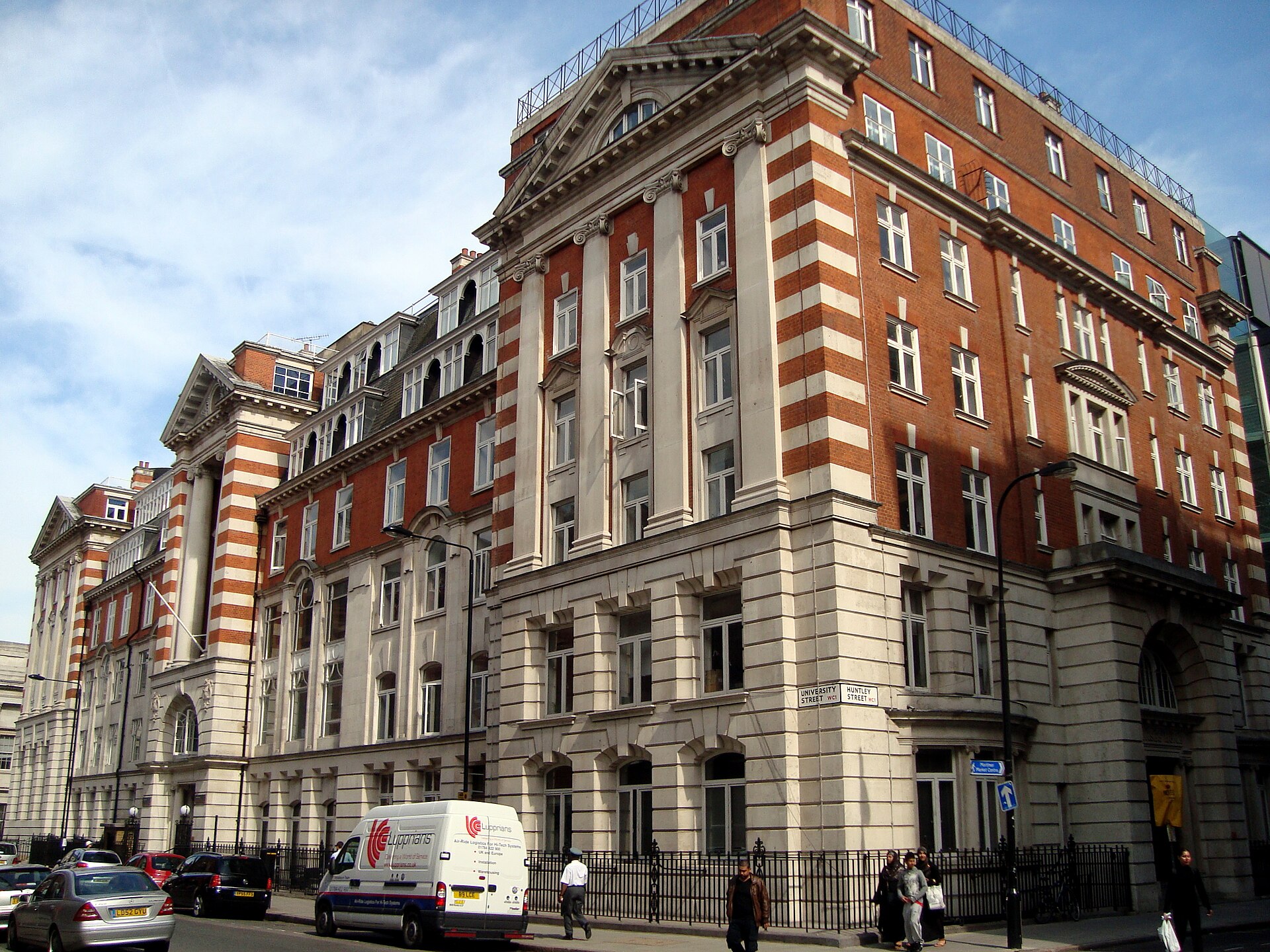

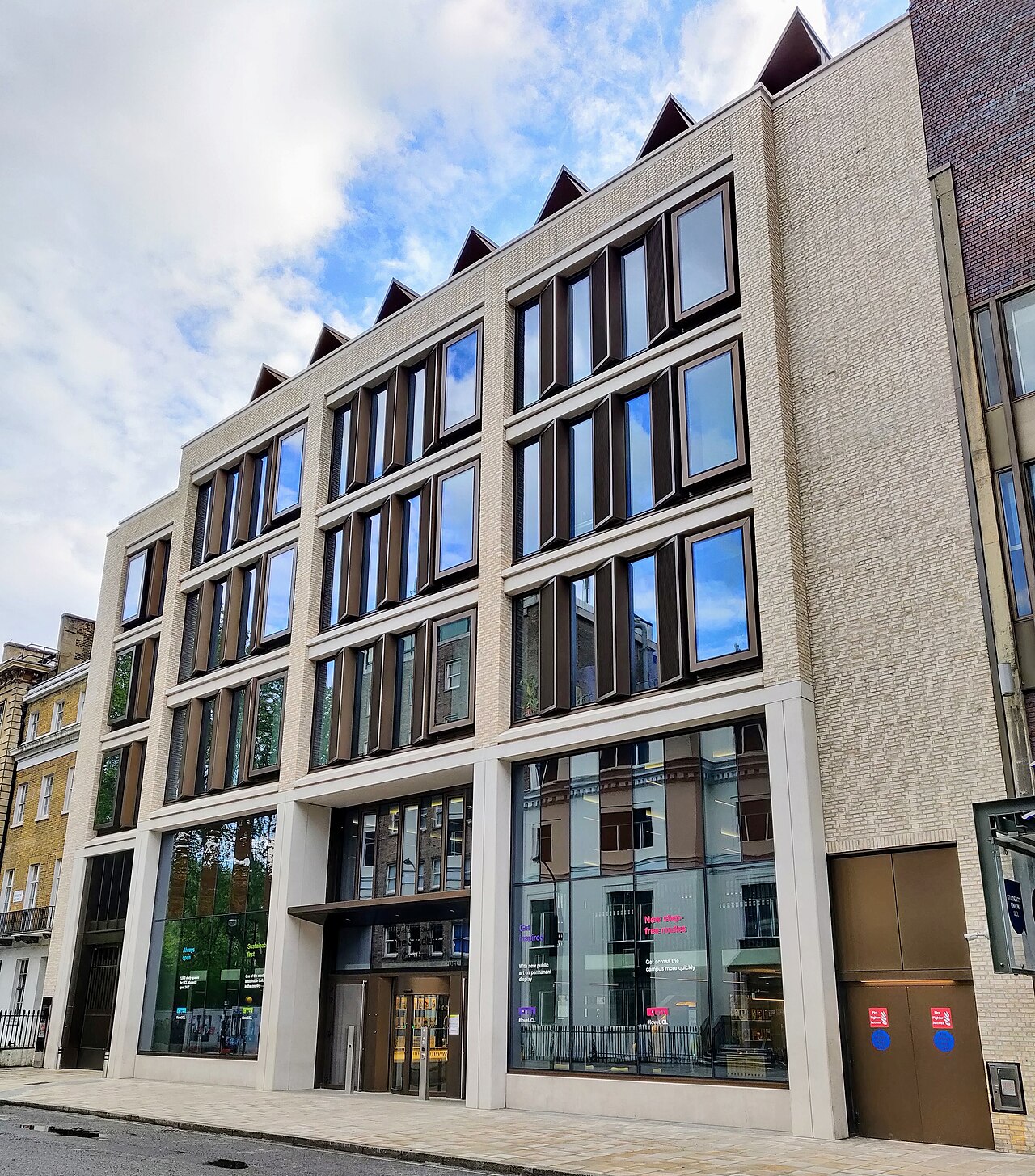
Why Choose UCL — Global Research, London, and a Truly International Campus
UCL is not a traditional, isolated campus university. It is woven into the fabric of one of the world's most important cities, and it draws the world to itself — more than half of its students are international. These are the reasons ambitious students from every country choose UCL.
UCL Selectivity — Acceptance Rate and Academic Profile
UCL is a selective institution, with an overall acceptance rate of 30%. Selectivity varies significantly by programme — Medicine and Law are far more competitive than the university average, while some programmes in the humanities and social sciences have higher intake rates. All programmes, however, require strong academic performance in relevant subjects.
Unlike US universities, which use holistic admissions across most programmes, UCL's admissions are primarily academic and subject-specific. Entry requirements are set per course, and offers are typically conditional on predicted or achieved A-Level or IB grades. Your personal statement and reference matter — but the academic offer is the foundation.
UCL at a Glance — Key Facts
UCL Application Components — UCAS, Personal Statement, Reference & More
UCL accepts applications exclusively through UCAS (Universities and Colleges Admissions Service) — the UK centralised application portal. There is no Common App or direct application route. Through UCAS, you can apply to up to five universities with one application.
What UCL Admissions Officers Look For — Academic Rigour, Subject Fit, and Genuine Motivation
UCL's admissions process is primarily academic. Unlike holistic US admissions, UCL evaluates applicants primarily on whether they meet or are predicted to meet the academic offer for their specific programme. Your personal statement and reference support — but cannot substitute for — the academic threshold.
That said, within the pool of academically qualified applicants, UCL does evaluate personal statements carefully for evidence of genuine intellectual engagement with the subject. An application that demonstrates independent reading, self-directed research, or real-world engagement with the field stands out from one that simply lists grades.
UCL Application Deadlines — UCAS Rounds, Medicine, and Key Dates
UCL receives applications exclusively through UCAS. There are no early decision or regular decision rounds as in the US system. UCL gives equal consideration to all applications received by the standard UCAS deadline for each course.
Dates below reflect the cycle for 2026 entry. Check ucas.com and ucl.ac.uk for exact deadlines for the cycle you are applying in, as UCAS deadlines shift by a day or two year to year.
| Course | Deadline | Notes |
|---|---|---|
| Medicine (MBBS, A100) | 15 October | All UCAS applications for Medicine must arrive by October deadline |
| Most undergraduate courses | 14–15 January | Standard UCAS equal-consideration deadline |
| Late applications (Extra / Clearing) | 30 June | UCL may consider after main deadline if spaces remain |
| UCAS application opens | Early September | Typically opens first week of September each year |
Student Life at UCL — London, Bloomsbury, and 300+ Societies
UCL's location in Bloomsbury — a neighbourhood famous for its literary, academic, and artistic heritage — means student life extends far beyond campus. The British Museum is a five-minute walk. The West End, the City, and countless cultural institutions are accessible by Tube from UCL's front door.
Students' Union UCL runs over 300 clubs and societies, from competitive sports clubs (with access to the Shenley 100-acre sports grounds) to theatre at the Bloomsbury Theatre, to student media, debating, and discipline-specific academic societies. The Union also operates bars, cafés, and organises events at London's most iconic venues.
Career Outcomes at UCL — Employment, London Advantage, and Alumni Network
90% of UCL graduates go into work or further study within six months of graduating — a figure consistent with UCL's status as one of the UK's most employer-respected universities. UCL's location in London is an integral part of this outcome: students have direct access to the largest concentration of global employers in Europe throughout their studies.
Average starting salaries for UCL graduates are approximately $40,000 USD equivalent, reflecting the range of disciplines and the mix of London-competitive and public-sector roles graduates enter. Finance, consulting, technology, medicine, law, architecture, and public policy are all well-represented UCL graduate destinations.
Stats
Cards
UCL Frequently Asked Questions
Does UCL consider SAT or ACT scores from international students?+
UCL is a UK university that uses A-Level and IB grades as its primary academic benchmark — not SAT or ACT. International students from US-style systems are evaluated on their GPA, AP scores, and course rigour. SAT/ACT scores may be submitted as supplementary evidence but are not required and are not a primary admissions factor at UCL.
Is UCL test-optional?+
For most programmes, UCL does not require standardised admissions tests such as SAT or ACT. However, some specific UCL programmes do require UK subject-specific admissions tests — including TMUA for Mathematics and related programmes, ESAT for Engineering and Sciences, and UCAT for Medicine. Always check your specific course page in the UCL Undergraduate Prospectus.
What is the new UCAS personal statement format for UCL?+
From 2026 entry, the UCAS personal statement has changed from a single free-form essay to three structured questions: (1) Why do you want to study this course or subject? (2) How have your qualifications and studies helped you prepare? (3) What else have you done outside education to prepare, and why is it useful? The total character limit is 4,000 with a minimum of 350 characters per question.
Can I apply to UCL without a UCAS application?+
No. UCL accepts applications exclusively through UCAS. There is no direct application route, no Common App, and no late-stage supplemental application. All international students must submit through ucas.com.
Does UCL interview all applicants?+
No — most UCL undergraduate programmes do not conduct interviews. Medicine (MBBS) and some Architecture programmes at the Bartlett are notable exceptions. A small number of other programmes may invite borderline applicants for interview. Check your specific programme page to confirm.
Does UCL offer financial aid or scholarships for international students?+
UCL offers the Global Undergraduate Scholarship (33 awards, covering full tuition for all recipients and maintenance allowance for 10), which is means-tested for students from low-income backgrounds (household income ≤£42,875). Merit-based scholarships and country-specific awards are also available. UCL does not offer need-blind international admissions or guarantee meeting full financial need in the way some US universities do.
What A-Level grades do I need for UCL?+
Entry requirements vary significantly by programme. The range is broadly from ABB (some humanities programmes) to A*A*A (Medicine, highly competitive Science programmes). Most competitive UCL programmes — Law, Computer Science, Economics — typically require A*AA to A*A*A. Always check your specific programme page in the UCL Undergraduate Prospectus, as offers are programme-specific.
What IB score do I need for UCL?+
UCL typically looks for 38–40 IB points for most competitive programmes, with a score of 39 as a common benchmark. Specific Higher Level subject requirements vary by programme. Medicine and Law require particularly strong HL scores. The facts on this page reflect a typical IB band of 39 points for UCL.
UCL ACADEMIC REQUIREMENTS
What UCL Expects Academically — The Honest Picture for International Students
UCL's admissions are predominantly academic. Unlike most competitive US universities, UCL makes offers primarily based on your grades or predicted grades in relevant subjects. Understanding how UK conditional offers work — and how IB, A-Levels, and international qualifications translate — is essential preparation.
UCL sets entry requirements per programme, not per university. This means that Computer Science at UCL may have different requirements than Economics, which may differ from Architecture. The first step for any international applicant is identifying the specific requirements on their programme's prospectus page.
UCL Academic Profile — Entry Benchmarks from the Facts
These are the sourced academic benchmarks for UCL admission. They represent typical offers and admitted student profiles — not the absolute minimum threshold, which is lower for less competitive programmes.
UCL Admissions Tests — TMUA, ESAT, UCAT, and the UK Testing Landscape
UCL's test policy is nuanced and programme-specific. The university does not require SAT or ACT from international applicants — these are US standardised tests with limited relevance to UK admissions. Instead, UCL requires subject-specific UK admissions tests for certain competitive programmes.
For most programmes, no admissions test beyond your A-Level or IB qualifications is required. However, failing to register for a required subject test (e.g., UCAT for Medicine) by the registration deadline will disqualify your application regardless of academic strength.
SAT, ACT, and AP at UCL — How US Qualifications Are Evaluated
UCL has considerable experience evaluating students from American, international, and non-UK curricula. If you are completing a US high school diploma or studying in an American system, UCL will assess your academic profile using your GPA, AP scores, and overall course rigour — not SAT or ACT.
UCL's minimum GPA equivalent is 3.5 for international qualifications. For competitive programmes, admitted students typically come from the top of their class with strong AP performance. Students with 4s and 5s across relevant AP subjects are the most competitive applicants from US-curriculum schools.
IB and A-Level Requirements at UCL — Programme-Specific Benchmarks
The IB Diploma and A-Levels are both well-understood by UCL's admissions tutors. UCL makes explicit conditional offers in both systems, and the requirements are programme-specific. Below are the typical benchmarks across UCL's major programme categories.
For IB students, UCL's offers typically specify a total point score, a required score in the relevant Higher Level subjects, and may specify particular HL subjects. A score of 39 is the typical benchmark for most competitive UCL programmes, but Medicine and Law may require higher HL scores within this band.
Subject Preparation UCL Expects — By Discipline
UCL admits students to specific programmes, not to a general college. The academic rigour expected varies substantially by discipline. These cards reflect the subject-level preparation that makes an application competitive in each area.
English Language Requirements at UCL — IELTS, TOEFL, and Duolingo Benchmarks
UCL sets English language requirements at five levels (Level 1 to Level 5), with most undergraduate programmes requiring Level 1 or Level 2. Your specific course page in the UCL Undergraduate Prospectus confirms which level applies. The minimum thresholds below are from UCL's official requirements pages.
IELTS Academic is UCL's preferred English qualification. Tests must be from approved providers and within the validity period (usually two years). For TOEFL, tests taken from January 2026 onwards are assessed on a new scoring format — check ucl.ac.uk for current TOEFL band conversions.
| Test | Minimum | Notes |
|---|---|---|
| IELTS Academic (Level 1 — most programmes) | 6.5 overall | Minimum 6.0 in each component |
| IELTS Academic (Level 2) | 7.0 overall | Minimum 6.5 in each component |
| IELTS Academic (Level 5 — most demanding) | 8.0 overall | Minimum 8.0 in each component |
| TOEFL iBT (Level 1) | 92 overall | Minimum 24 per section (old scoring); see UCL for new 2026 thresholds |
| Duolingo English Test | 125 | Accepted at some UCL programmes — confirm with your course page |
Building Your Profile for UCL — Year by Year Strategy
The path to a competitive UCL application begins long before the UCAS application window opens. This is the year-by-year roadmap for international students targeting UCL.
Academic Application Mistakes to Avoid — For UCL International Applicants
- Applying for a programme without checking whether your subject combination meets UCL's specific requirements — subject mismatches are a common and fatal error.
- Failing to register for required admissions tests (UCAT, TMUA, ESAT) before the registration deadline — missing the test deadline makes you ineligible regardless of grades.
- Submitting a personal statement that describes interest in UCL rather than passion for the subject — UCAS sends one personal statement to all five of your choices; it must be subject-focused, not institution-focused.
- Overestimating the weight of extracurricular activities — UCL's undergraduate admissions are primarily academic. Strong grades in relevant subjects carry more weight than extracurricular lists.
- Applying without verifying your English language requirements — different UCL programmes require different IELTS/TOEFL levels; assuming Level 1 (6.5) applies to all courses can result in issues at enrolment.
- Ignoring the GCSE/IGCSE component — while not the primary factor, strong GCSE/IGCSE results support the credibility of predicted A-Level grades, especially for competitive programmes.
- Applying too late — UCL gives equal consideration only to applications received by the standard January UCAS deadline. Late applications are considered only if places remain.
UCL COST AND FINANCIAL AID
Understanding the Cost of UCL — An Honest Breakdown for International Students
UCL is a world-class education in one of the world's most expensive cities. International students pay significantly higher tuition than UK home students, and London's living costs add substantially to the total. At the same time, UCL offers targeted scholarships and the city offers unmatched career access that can materially improve your post-graduation financial position.
The figures below are drawn from the facts file and represent estimated annual costs in USD. Actual costs depend on your programme, accommodation choices, and personal spending. UCL publishes cost estimates for each academic year — verify with ucl.ac.uk for current figures.
UCL Annual Cost Breakdown — International Student Estimates
All figures are annual estimates in USD. International tuition is set at the overseas fee rate, which is significantly higher than the UK home student fee.
| Item | Annual Cost | Notes |
|---|---|---|
| International Tuition (Overseas Rate) | $46,200 | Per academic year; varies by programme |
| Cost of Living (London estimate) | $24,000 | Accommodation, food, transport, personal |
| Total Estimated Cost of Attendance | $67,320 | Tuition + living + additional costs |
| UCAS Application Fee | $36 | One-time UCAS application fee (multiple choice) |
Financial Aid for International Students at UCL — What is Available and What is Not
UCL does not operate a need-blind admissions system or guarantee to meet the full financial need of international students in the way some US universities do. There is no published average aid percentage for international undergraduates. Financial support for international students at UCL primarily comes through specific scholarship programmes rather than institution-wide need-based aid.
The most significant aid available to international undergraduates is the UCL Global Undergraduate Scholarship, which is targeted at students from low-income backgrounds. Beyond this, UCL offers a range of country-specific and faculty-specific awards. International students should research all available funding sources before accepting an offer.
Since avgAidPct is not available in the facts file for UCL, no average aid figure is stated here. UCL does not publish a general international student aid percentage comparable to US universities.
UCL Scholarships for International Students — Named Awards You Can Apply For
These are verified, named scholarships available to international undergraduate students at UCL. Eligibility and deadlines change each year — verify current details at ucl.ac.uk/scholarships.
Is UCL Affordable for International Students? — The Honest Assessment
At approximately $67,320 per year total cost of attendance, UCL is a significant financial commitment. Unlike the most generous US universities (which may meet 100% of demonstrated financial need), UCL does not guarantee international student aid. Most international undergraduates at UCL are self-funded or supported by external scholarships.
That said, the UCL Global Undergraduate Scholarship provides meaningful full-tuition and maintenance support for students from low-income households. For students who qualify, this makes UCL genuinely accessible. For self-funded students, the four-year cost of a UCL degree in London is broadly comparable to three or four years at a comparable US private university.
UCL's undergraduate programmes are typically three years (four for some programmes including Medicine at six years), which moderates the total cost compared to four-year US programmes. The accelerated UK degree structure is a financial consideration in itself.
How to Fund Your UCL Education — Step by Step
UCL Cost and Funding FAQs
Does UCL offer need-blind admissions for international students?+
No. UCL does not operate need-blind admissions for international undergraduates. Financial circumstances are not part of the admissions evaluation, but UCL does not guarantee to meet any level of demonstrated financial need. Aid availability is limited and primarily through the Global Undergraduate Scholarship.
What is the application fee for UCL?+
UCL uses the UCAS application system. The UCAS fee is approximately $36 USD (the UCAS fee covers applying to up to five universities through a single application — it is not a UCL-specific fee).
How much does it cost to live in London as a UCL student?+
Estimated annual cost of living for a UCL student in London is approximately $24,000 USD (around £18,000–20,000). This is one of the higher living cost environments globally. Accommodation costs are the largest component — UCL-managed halls typically cost £8,000–£15,000 per year depending on room type.
Are there any UCL scholarships I don't need to be from a low-income household to receive?+
The UCL Global Undergraduate Scholarship is means-tested. However, country-specific awards and external scholarships (Chevening, Commonwealth) may have different eligibility criteria. The UCL scholarships database is the best place to search for awards with non-income eligibility criteria.
Is a UCL degree cheaper than a US university degree?+
For most programmes, UCL's three-year degree structure means a total cost of approximately $200,000 over three years at current rates — broadly comparable to two to three years at an equivalent US private university. The accelerated UK degree structure is a meaningful financial differentiator versus a four-year US programme.
UCL PERSONAL STATEMENT STRATEGY
The UCAS Personal Statement at UCL — Why It Matters More Than You Think
The UCAS personal statement is the only narrative element of your UCL application. There is no Harvard supplement, no Common App essays, no short answer questions — just your answers to three UCAS questions, read by your programme's admissions tutor alongside your grades and reference.
For UCL specifically, the personal statement is evaluated primarily for academic motivation and subject-specific preparation. An admissions tutor in the UCL Department of Economics or the Bartlett School of Architecture reads your statement asking: does this applicant genuinely understand what they are applying to study, and can I see evidence that they are prepared for it? A generic, enthusiasm-driven statement carries little weight.
UCAS Personal Statement Overview — The New Three-Question Format (2026 Entry Onwards)
From the 2026 entry cycle, UCAS replaced the single 4,000-character free-form personal statement with three structured questions. This change applies to all UK university applications, including UCL. The three questions are read together as a cohesive statement by admissions tutors.
The total character limit remains 4,000 characters across all three responses. Each response has a minimum of 350 characters and an approximate maximum of 1,000 characters per question, though the constraint is the total character count. Avoid repeating the same information across questions — each should introduce new evidence of your preparation and motivation.
The Three UCAS Personal Statement Questions — With UCL-Specific Strategy
These are the three official UCAS personal statement questions for 2026 entry onwards. All three are required and read together by UCL admissions tutors.
Writing the UCAS Personal Statement — The UCL-Specific Approach
Because the UCAS personal statement is sent to all five of your university choices (including those that are not UCL), it must be subject-focused rather than university-focused. You cannot write about UCL specifically — the statement goes equally to every university on your UCAS application. Write for the subject, not the institution.
This is a meaningful difference from US admissions essays. At Harvard, you write 'Why Harvard?' supplements. At UCL, the personal statement is entirely about why you want to study the subject, what preparation you have, and what you have done outside the classroom. UCL's admissions tutors are subject experts evaluating your academic fit — write to that audience, not to a generic admissions office.
The three-question format rewards economy and specificity. With a maximum of approximately 1,000 characters per question (roughly 150 words), every sentence must do real work. Draft at twice the length, then cut ruthlessly to the most precise and specific version.
Strategies for Each UCAS Question — Tactics for UCL Applicants
Choosing What to Write About — Selecting the Right Evidence for UCL
With only approximately 1,000 characters per question, every piece of evidence you include in the UCAS personal statement must earn its place. These are the principles for choosing what to include and what to cut.
Personal Statement Mistakes to Avoid — The UCL-Specific List
- Writing about why you want to go to UCL — the UCAS personal statement is sent to all five choices. It must be subject-focused, not institution-specific.
- Beginning with a quote — admissions tutors are familiar with this convention and it wastes characters. Begin with your most specific and compelling evidence.
- Describing extracurricular achievements without connecting them to academic preparation — at UCL, subject-relevant preparation carries far more weight than leadership or sport.
- Repeating the same information across all three questions — each question should introduce new evidence. If all three answers describe the same activity, you have wasted two-thirds of your characters.
- Using all your characters on Question 1 and running out of space for Questions 2 and 3 — plan your character allocation across all three questions before you start writing.
- Generic medicine motivation statements — describing medicine as a passion for helping people is not sufficient for UCL Medicine, which is one of the most competitive programmes in the UK. Specific clinical insight and scientific engagement are expected.
- Failing to proof-read for errors — UCAS character limits catch most formatting issues, but spelling and grammatical errors in a personal statement are visible signals of carelessness to an academic admissions tutor.
- Misrepresenting experiences or achievements — UK universities take academic honesty seriously; the UCAS personal statement is signed by the applicant and references must corroborate claims made.
UCAS Personal Statement FAQs
Does UCL read the personal statement carefully or just check grades?+
UCL's admissions tutors are subject experts who read personal statements within their disciplinary context. For competitive programmes where many applicants meet the academic threshold (Law, Medicine, Computer Science), the personal statement is a genuine differentiator. For less competitive programmes where few applicants meet the threshold, grades take more weight. In all cases, a weak personal statement can damage an otherwise strong application.
How important is the personal statement for Medicine at UCL?+
Very important. UCL Medicine (MBBS) uses both UCAT scores and the personal statement to shortlist applicants for interview. A strong personal statement is necessary but not sufficient — UCAT performance also matters significantly. Medicine applicants should expect their personal statement to be read word-for-word by experienced clinical academics.
Can I mention specific UCL professors or research in my personal statement?+
You can reference research areas or academic ideas that align with UCL's work, but be careful about naming specific staff members. UCAS personal statements are seen by all five of your chosen universities — references to UCL-specific content look odd to the other four institutions reading the same statement.
What is the new UCAS three-question format and when does it apply?+
From 2026 entry (applications submitted from September 2025), UCAS replaced the single personal statement essay with three structured questions: (1) Why this subject? (2) Academic preparation? (3) Outside-education preparation? Each has a minimum of 350 characters and the total limit is 4,000 characters. This applies to all UCAS applications including UCL.
Should I use all 4,000 characters?+
You should use as many characters as needed to make your strongest case — no more, no fewer. An 800-character answer that is specific and compelling is better than a 1,000-character answer padded with generalities. However, very short responses (below 600 characters per question) typically do not allow enough space to make a convincing academic case.
Does UCL require a supplemental essay or writing sample beyond the UCAS personal statement?+
No — UCL does not require any additional essay or writing sample as part of the standard UCAS application. Some programmes (Bartlett Architecture, Arts and Sciences BASc) may require a portfolio or additional submission — check your specific programme page.
Courses — schools, degrees & intake
72 degrees across 13 groupings.
Faculty of Arts and Humanities · 8 degrees
English BA
Comparative Literature BA
Fine Art BA
Arts and Sciences BASc
Classics and the Ancient World BA
Philosophy BA
History of Art BA
Creative Arts and Humanities BA
Faculty of Social and Historical Sciences · 8 degrees
Economics BSc (Econ)
History BA
Geography BSc
Geography BA
Anthropology BSc
Archaeology BA
Ancient History BA
Geography and Economics BSc
Faculty of Mathematical and Physical Sciences · 13 degrees
Mathematics BSc
Mathematics MSci
Physics BSc
Astrophysics BSc
Astrophysics MSci
Chemistry BSc
Chemistry MSci
Data Science BSc
Earth Sciences BSc
Geology BSc
Geophysics BSc
Environmental Geoscience BSc
Statistics BSc
Faculty of Engineering Sciences · 13 degrees
Computer Science BSc
Computer Science MEng
Electronic and Electrical Engineering BEng
Electronic and Electrical Engineering MEng
Civil Engineering BEng
Civil Engineering MEng
Chemical Engineering BEng
Chemical Engineering MEng
Biochemical Engineering BEng
Biochemical Engineering MEng
Biomedical Engineering BEng
Biomedical Engineering MEng
Crime and Security Science BSc
Faculty of Life Sciences · 5 degrees
Biochemistry BSc
Biochemistry MSci
Biological Sciences BSc
Biological Sciences MSci
Biomedical Sciences BSc
Faculty of Medical Sciences · 3 degrees
Medicine MBBS
Applied Medical Sciences BSc
Cancer Biomedicine BSc
Faculty of Brain Sciences · 3 degrees
Psychology BSc
Audiology BSc
Experimental Linguistics BSc
The Bartlett Faculty of the Built Environment · 5 degrees
Architecture BSc
Architecture MSci
Architectural and Interdisciplinary Studies BSc
Engineering and Architectural Design MEng
Construction Project Management MSci
Faculty of Laws · 1 degrees
Law LLB
Faculty of Population Health Sciences · 1 degrees
Business and Health BSc
UCL Institute of Education · 2 degrees
Early Childhood Education BA
Education, Society and Culture BA
School of Slavonic and East European Studies (SSEES) · 3 degrees
Russian and East European Studies BA
Polish BA
Czech BA
School of European Languages, Culture and Society (SELCS) · 7 degrees
French BA
German BA
Dutch BA
French and German BA
French and Spanish BA
Italian BA
Spanish BA
Want your real chances at University College London?
Create a free TYCHR account for your personalised admit-chance, a shortlist you can track, exact entry requirements, and essay + counselling help.