University of California, Berkeley
Berkeley, United States · Urban
TYCHR ADMISSIONS GUIDE
University of California, Berkeley — Admissions Guide for International Students
UC Berkeley is the premier public research university in the world — a place where intellectual firepower, activist tradition, and Silicon Valley proximity converge. As one of the original Public Ivies, Berkeley offers international students access to world-class faculty, Nobel Prize-winning research, and a Bay Area location that has launched some of the most transformative companies and careers in modern history.
Getting in requires understanding the UC Application ecosystem — separate from the Common App — the four Personal Insight Questions that stand in for traditional essays, and a holistic review process that evaluates every applicant without SAT or ACT scores. This guide covers everything an international student needs to build a competitive Berkeley application.
Campus
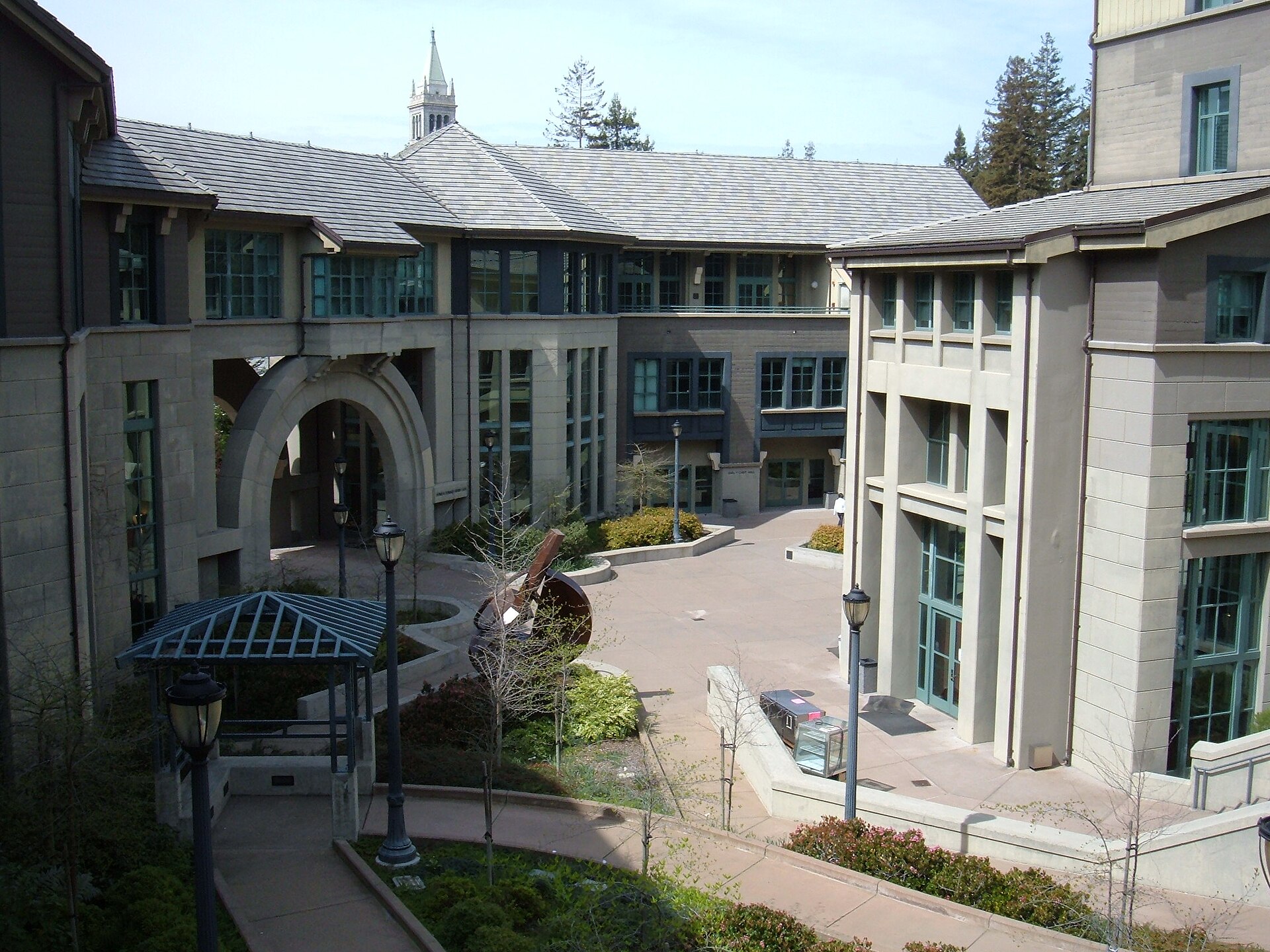
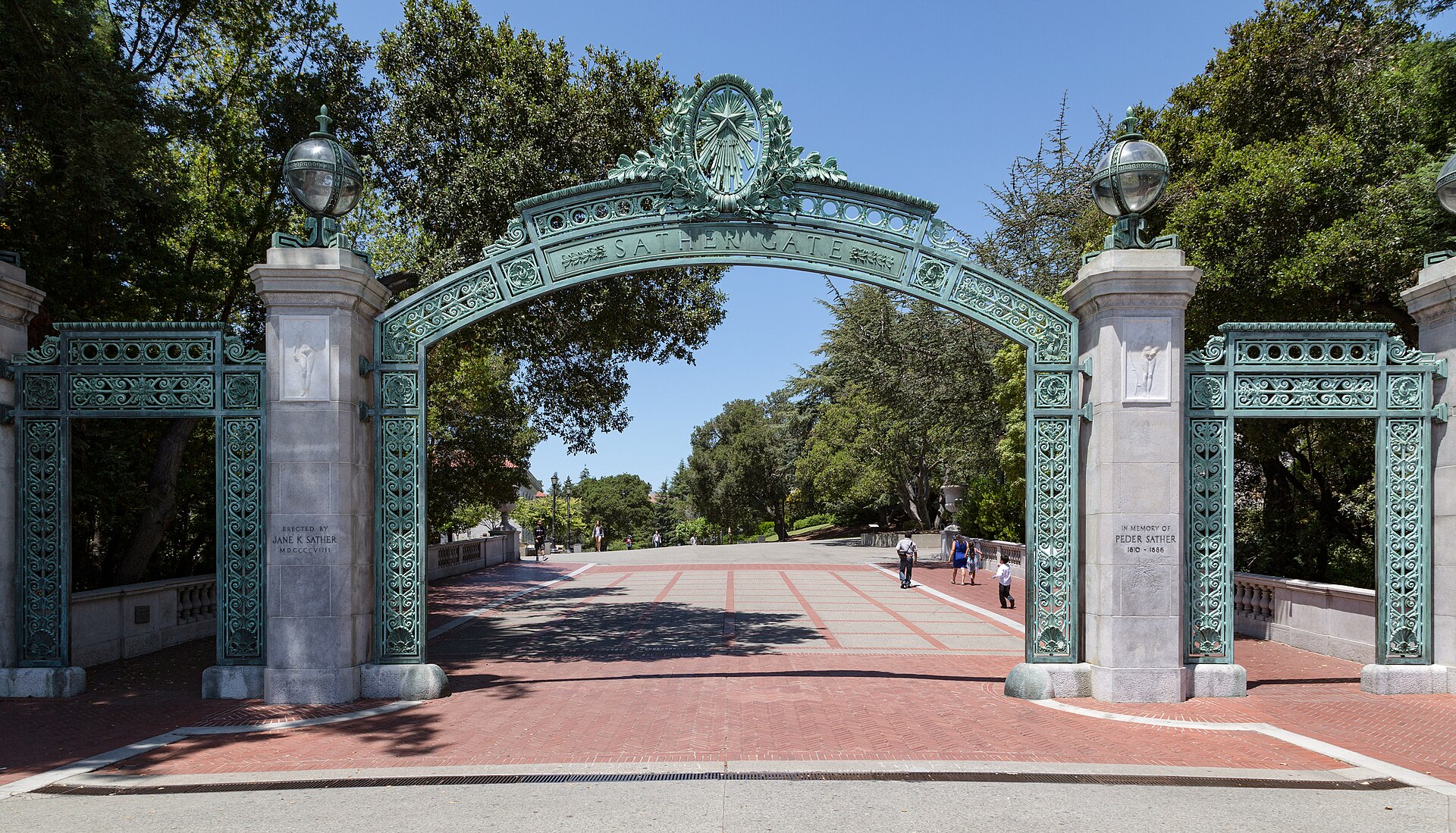
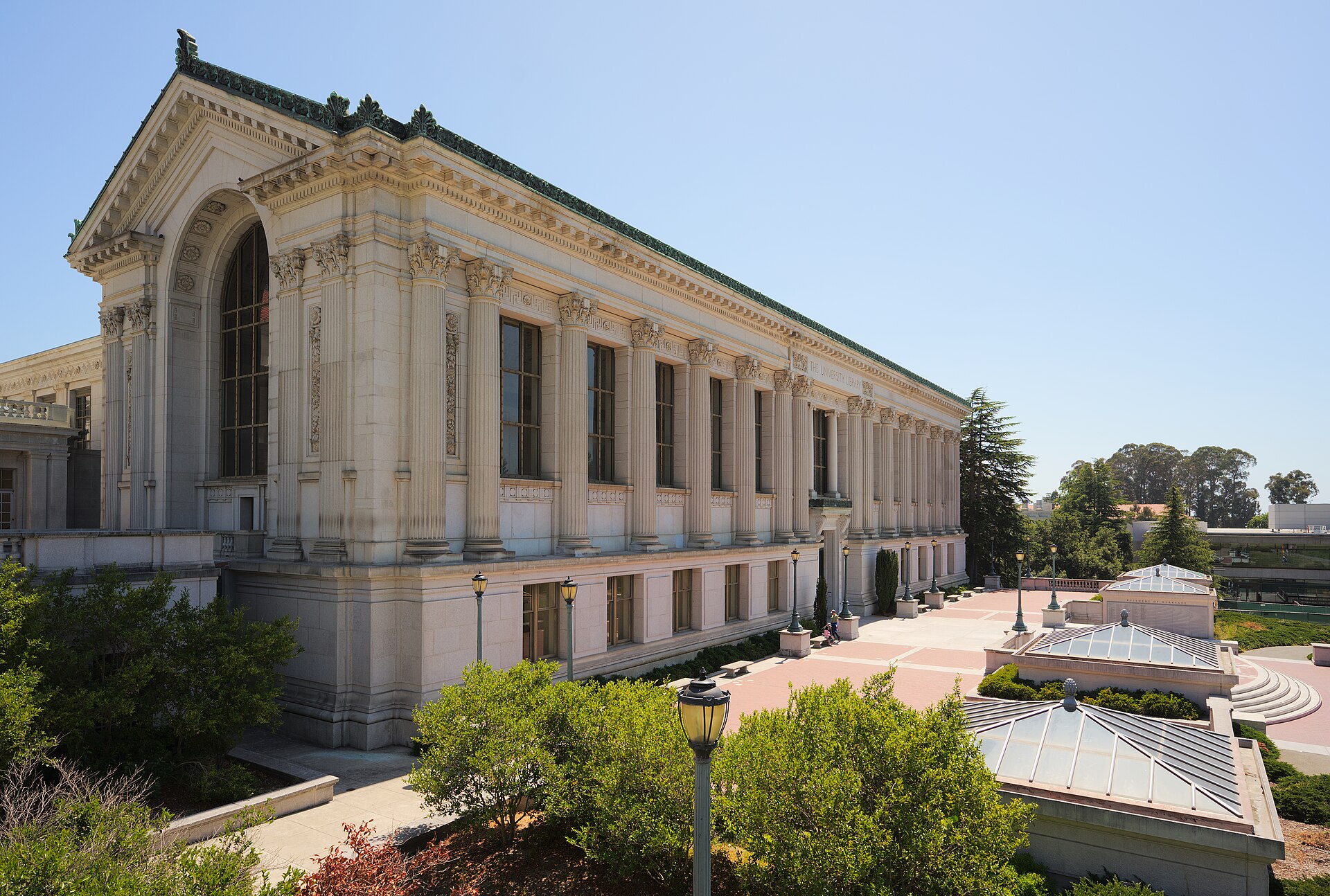
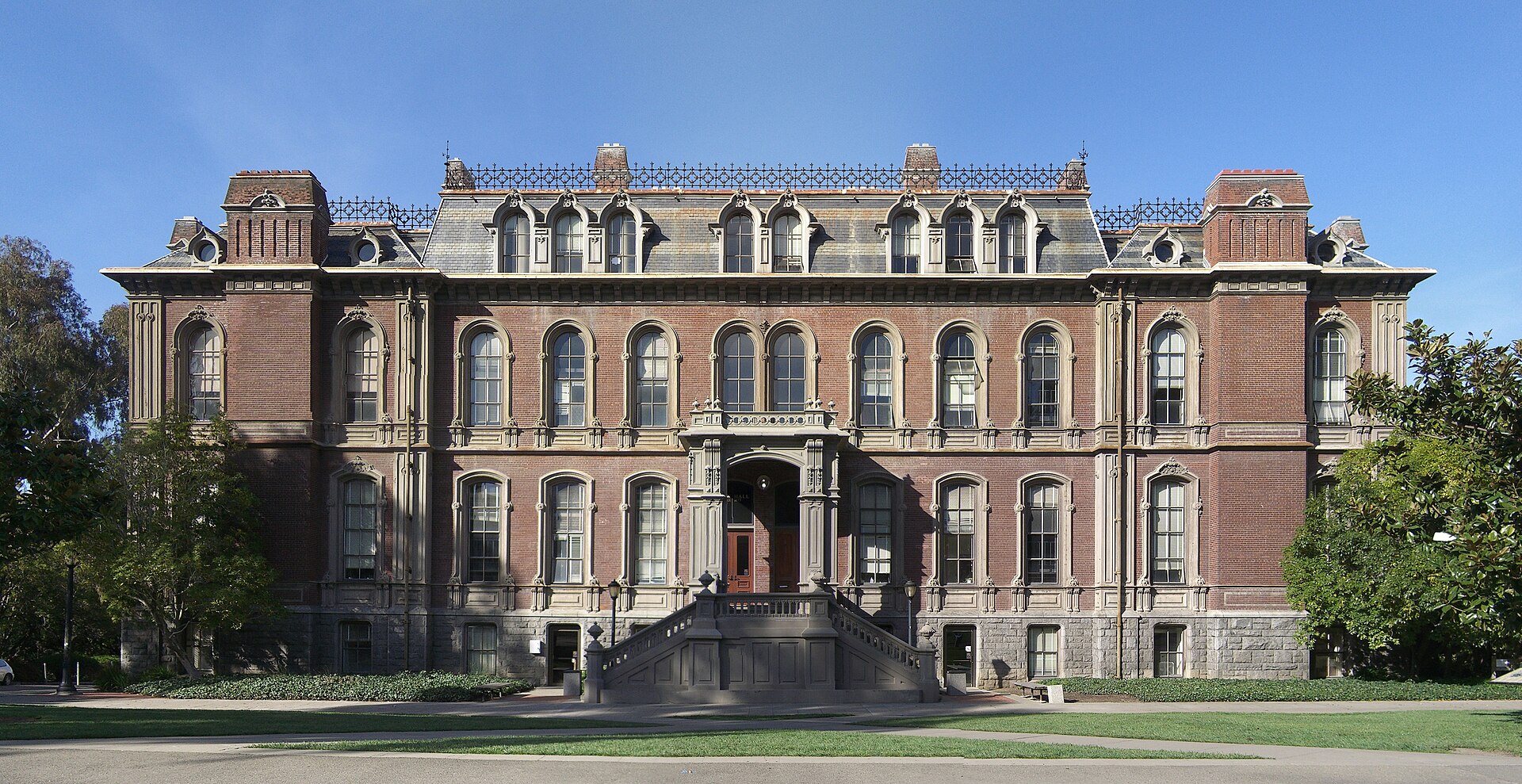
University of California, Berkeley — campus in pictures
Real, freely-licensed photographs of the campus (via Wikimedia Commons).


Why UC Berkeley — Public Prestige, Research Power & Bay Area Impact
Berkeley combines the academic rigour and faculty depth of an elite private university with the diversity, scale, and public mission of a world-class state institution. For international students, Berkeley is a gateway to Silicon Valley, global research, and a network that spans every continent.
SELECTIVITY
UC Berkeley Acceptance Rate & Admissions Profile
Berkeley's overall acceptance rate places it among the most selective public universities in the world — but acceptance rates vary significantly by college and intended major. EECS and the College of Engineering are considerably more selective than the College of Letters & Science. International students face a tighter admit rate than the overall average, making a strategic and well-crafted application essential.
Berkeley does not offer Early Action or Early Decision — all students apply in the same regular window (October–November). There is no strategic timing advantage; the entire competitive advantage comes from a stronger application, particularly in the Personal Insight Questions and academic profile.
FAST FACTS
UC Berkeley at a Glance
APPLICATION COMPONENTS
The UC Berkeley Application — What You Need to Submit
UC Berkeley uses the UC Application — not the Common App, Coalition App, or any other platform. One UC Application allows you to apply to all nine UC campuses simultaneously. The application has no traditional supplement; instead, Berkeley evaluates applicants through the UC's unique Personal Insight Questions and your academic record. No recommendation letters are accepted.
HOLISTIC REVIEW
What UC Berkeley Admissions Officers Are Looking For
Berkeley uses a comprehensive review process that evaluates 13 specific criteria — from academic achievement in context to demonstrated leadership and service. Because Berkeley receives no recommendation letters, your academic record and Personal Insight Questions do all the work.
Berkeley's holistic review is designed to find students who will excel academically and contribute to the campus community. Officers explicitly evaluate 'achievement in light of available opportunities' — a strong GPA from a school with limited course offerings is read differently from the same GPA at a resource-rich institution. Context matters at every stage.
DATES & DEADLINES
UC Berkeley Application Deadlines — One Window, No Early Options
Berkeley does not offer Early Decision, Early Action, or any early application advantage. Every freshman applicant competes in the same regular decision pool. The UC Application opens August 1 each year and must be submitted by November 30.
Unlike private US universities, there is no strategic benefit to applying 'early' — all Berkeley applicants are reviewed in the same pool with the same November 30 hard deadline. Use the August–October window to refine your Personal Insight Questions, not to rush submission.
| Event | Date | Notes |
|---|---|---|
| UC Application opens | August 1 | Available at apply.universityofcalifornia.edu |
| Submission window opens | October 1 | Can submit from this date onward |
| Application deadline | November 30 | Hard deadline — no late submissions accepted |
| Decision notifications | March (approx.) | Admissions decisions released by UC campuses |
| Statement of Intent to Register | May 1 | Enrollment confirmation deadline |
CAMPUS LIFE
Student Life at UC Berkeley — Bay Area, Bear Territory & 600+ Clubs
Life at Berkeley is intellectually intense, politically aware, and set against one of the most vibrant urban landscapes in the world. With Sproul Plaza at the heart of campus activism, Telegraph Avenue steps away, and San Francisco across the Bay, Berkeley offers an experience that is as much about the world outside the classroom as inside it.
Berkeley's residential community centres around the residence halls near campus, with eight theme programmes that unite students around shared identities and academic interests — each co-sponsored by an academic department. The Cal Band, the Big Game against Stanford, and traditions rooted in over 150 years of history create a distinctive spirit that is proudly Berkeley's own.
CAREER OUTCOMES
Career Outcomes at UC Berkeley — Silicon Valley, Finance & Global Impact
Berkeley graduates are among the most sought-after in the world, particularly in technology, engineering, and business. The Berkeley network — anchored in Silicon Valley but global in reach — is one of the most powerful professional communities any undergraduate degree can provide.
Stats
Cards
FREQUENTLY ASKED
UC Berkeley FAQs for International Students
Does Berkeley use the Common App?+
No. Berkeley uses the UC Application, a separate platform shared across all nine University of California campuses. You cannot apply to Berkeley through the Common App, Coalition App, or any other system. The UC Application is available at apply.universityofcalifornia.edu and opens each year on August 1.
Does Berkeley have Early Action or Early Decision?+
No. Berkeley does not offer any form of early application. All freshman applicants — domestic and international — compete in the same regular decision pool with a November 30 deadline. There is no strategic benefit to applying early at Berkeley; all applications are evaluated in the same review cycle.
Do I need to submit SAT or ACT scores?+
No. Berkeley is test-free, not just test-optional. SAT and ACT scores are not used in any part of the admissions process — not in holistic review, not for selection, and not for scholarships. Even if you submit scores, they will not be considered for admission. Berkeley confirmed this policy as current in June 2026.
Is financial aid available for international students?+
Need-based financial aid is not available to international undergraduate students at Berkeley. International students are ineligible for federal, state, and need-based university financial aid. Berkeley does offer a small number of merit and need-based scholarships for which all admitted international students are automatically considered, including the Regents' & Chancellor's Scholarship. Targeted programmes exist for students from Sub-Saharan Africa and developing nations.
How does Berkeley evaluate international GPAs?+
Berkeley converts international grades into the UC GPA system based on your school's curriculum and grading norms. Grades from IB, A-Level, CBSE, and other international systems are all recognised. Berkeley explicitly evaluates 'achievement in light of available opportunities', meaning your GPA is assessed relative to what courses were available at your school.
Is an IB Diploma an advantage at Berkeley?+
IB students are well-positioned at Berkeley. A competitive IB score for Berkeley admissions is typically 41 or above. HL scores in relevant subjects can also earn course credit, allowing admitted IB students to skip introductory courses and advance more quickly. Berkeley's admissions officers are experienced evaluating IB transcripts and Extended Essays.
Can I apply to multiple UC campuses at once?+
Yes — and you should. The UC Application lets you apply to multiple UC campuses for a separate fee per campus. Berkeley charges $95 per campus for international applicants. Given Berkeley's competitive international admit rate of approximately 5%, applying to multiple UC campuses as backups is strongly recommended.
What is the most selective programme at Berkeley?+
Electrical Engineering & Computer Sciences (EECS) in the College of Engineering is Berkeley's most selective undergraduate programme. Applicants to EECS and to the College of Engineering generally face a more competitive pool than applicants to the College of Letters & Science. Applying as undeclared or as an alternative major and pursuing internal transfer is one pathway, but internal transfers to EECS are also highly competitive.
ACADEMIC PROFILE
UC Berkeley Academic Requirements — The Honest Breakdown for International Students
Berkeley is test-free, so your academic profile rests entirely on your GPA, the rigour of your courses, your IB/A-Level/AP performance, and the narrative you build through your Personal Insight Questions. For international students, this means crafting a coherent academic identity — not just accumulating a strong grade average.
Berkeley receives tens of thousands of applications from students with near-perfect GPAs. What distinguishes admitted students is not just academic performance but the rigour of the curriculum they chose, the depth of their intellectual engagement, and how clearly they can articulate their thinking in 350 words.
BENCHMARKS
Academic Benchmarks for Berkeley Admission
Berkeley does not publish minimum score thresholds, but the following values represent competitive benchmarks for international applicants based on the university's official data profile. SAT and ACT scores are not used in Berkeley's admissions process and are omitted.
TEST POLICY
UC Berkeley is Test-Free — What This Actually Means
Berkeley is not test-optional — it is test-free. This is an important distinction. Test-optional universities still consider scores when submitted; Berkeley does not. SAT and ACT scores are not used in admissions review, campus selection, or scholarship consideration, regardless of whether or not you submit them.
This policy was confirmed as current in June 2026. Berkeley uses the term 'test-free' rather than 'test-blind' to signal the absolute nature of this commitment. Any scores you submit will only be used for course placement and subject credit purposes after admission — they play no role in the admissions decision itself.
For international students, this is a meaningful advantage: you compete entirely on your academic record, PIQ essays, and activities. There is no standardised test serving as a levelling variable. Students from strong IB or A-Level backgrounds often find this policy favourable, as their curriculum rigour becomes the primary academic signal.
WHAT COUNTS INSTEAD
What Replaces SAT/ACT at Berkeley — AP, IB, and Academic Rigour
Since SAT and ACT scores are not part of Berkeley's admissions process, the academic signals that carry weight are your GPA, the rigour of your course selection, and performance in IB or AP examinations — which do count toward course credit and signal academic capability.
INTERNATIONAL CURRICULA
IB, A-Levels & AP at UC Berkeley — Benchmarks & Credit
Berkeley has extensive experience evaluating international transcripts from IB, A-Level, CBSE, and other systems. The competitive benchmark for IB students aiming at Berkeley is 41 or above out of 45 total points.
SUBJECT PREPARATION
What Berkeley Expects by Subject Area
Berkeley does not publish official subject prerequisites for admission, but the academic profile of admitted students — particularly in competitive programmes like EECS and Haas — implies strong preparation in core disciplines. Course rigour relative to what your school offers is evaluated explicitly.
ENGLISH PROFICIENCY
English Language Requirements for International Applicants
International students whose primary language of instruction was not English must demonstrate English proficiency. Berkeley's official minimums apply to all international undergraduate applicants who cannot demonstrate sufficient English-medium instruction.
Exemptions apply if your primary language of instruction for the last three or more years was English, documented by your school. Students who attended an English-medium school and can document this may be exempt from English proficiency testing. The minimums are thresholds — not targets. Aim meaningfully above the minimum.
| Test | Minimum | Notes |
|---|---|---|
| IELTS Academic | 7.0 overall | Aim for 7.5+ for STEM programmes |
| TOEFL iBT | 80 total | Aim for 100+ for competitive programmes |
| Duolingo English Test | 120 | Aim for 135+ for EECS/Haas |
PROFILE STRATEGY
Building a Berkeley-Competitive Profile — Year 9 to Year 12
A competitive Berkeley application is built over four years of secondary school — not in the final semester. The steps below represent an ideal trajectory for an international student targeting Berkeley.
COMMON MISTAKES
Academic Mistakes That Cost Berkeley Applicants
These are the most common academic profile errors TYCHR sees in international Berkeley applications — many of which are entirely avoidable with earlier planning.
- Choosing easier IB or A-Level subjects to protect GPA — Berkeley officers notice curriculum choices and reward academic courage, not grade optimisation
- Preparing for SAT/ACT instead of investing in PIQ quality — at Berkeley, this is a direct misallocation of time and effort
- Submitting the UC Application before November 30 without thoroughly revising PIQ answers — early submission provides no admissions advantage; strong answers do
- Applying only to Berkeley and not to other UC campuses — Berkeley's international admit rate is highly competitive; a UC Application covering multiple campuses is strongly advised
- Listing 20 activities in the activities section without depth or genuine commitment — Berkeley values authentic impact over quantity
- Not researching how AP or IB credits transfer to Berkeley — strong exam results can accelerate degree completion and reduce four-year costs
- Underestimating English proficiency requirements — the 80 TOEFL or 7.0 IELTS minimums are thresholds, not targets; aim meaningfully above them
COST & AID
The Real Cost of UC Berkeley — An Honest Guide for International Students
Berkeley's cost of attendance as an international student exceeds $79,000 per year all-in — and need-based financial aid is not available to international undergraduates. This is one of the most important planning realities for any international family considering Berkeley. That said, Berkeley offers automatic scholarship consideration for all admitted international students, and the Bay Area employment market means that internship and on-campus work opportunities are among the most financially rewarding for any undergraduate in the world.
Plan finances conservatively: assume full cost of attendance without institutional aid, and identify external scholarship pathways before applying. Berkeley's education cost, weighed against Silicon Valley career outcomes and an average starting salary of $80,000, makes the return on investment one of the strongest available from any public university globally.
ANNUAL COSTS
UC Berkeley Cost of Attendance — International Undergraduates
The figures below are from the university's published cost data and represent estimated annual costs for international undergraduates. All figures are in USD.
These are annual estimates. Costs typically increase year-on-year. Students should plan for a four-year total cost of approximately $316,000–$340,000 at current rates, without aid.
| Component | Amount | Notes |
|---|---|---|
| Tuition & Fees (Non-Resident) | $49,283 | International undergraduate annual rate |
| Total Cost of Attendance | $79,177 | Annual all-in estimate including housing, meals, personal |
| Cost of Living (Berkeley area) | $22,000 | Annual estimate for personal expenses and local costs |
| Application Fee | $95 | Per UC campus for international applicants |
AID POLICY
Financial Aid for International Students at Berkeley — The Honest Picture
International undergraduate students at UC Berkeley are ineligible for federal, state, and need-based university financial aid. This is a firm UC system-wide policy that applies to all international undergraduates regardless of financial need.
Unlike some elite private universities that offer need-blind admission and robust grants to international students, Berkeley's public funding model means that need-based grants are reserved for California residents and eligible domestic students. International families should treat Berkeley as a full-pay institution and plan accordingly.
Berkeley does offer a small number of merit and targeted-need scholarships for which international students are automatically considered upon admission — particularly for students from Sub-Saharan Africa, developing nations, and Peru. These are meaningful opportunities for qualifying students but are not a substitute for comprehensive financial planning.
SCHOLARSHIPS
Scholarships Available to International Berkeley Students
All admitted international students are automatically considered for Berkeley scholarships — no separate application is required. The scholarships below are the primary merit and targeted-need awards available to international undergraduates.
AFFORDABILITY
Making Berkeley Affordable — External Strategies
For international students who do not qualify for Berkeley's targeted scholarships, affordability requires proactive external planning. Berkeley's Bay Area location, strong internship market, and $80,000 average starting salary make it among the highest-return public university investments in the world — but it requires financing the full cost of attendance.
External private scholarships from organisations in your home country, international scholarship programmes such as government-sponsored awards, and Berkeley's own external scholarship search portal are the primary supplementary funding pathways. Many TYCHR students have successfully offset Berkeley costs through competitive US-based fellowships and departmental awards identified during Year 12.
Berkeley students in good academic standing are eligible to work on-campus up to 20 hours per week. More significantly, the Bay Area internship market — especially in technology — provides some of the highest undergraduate intern compensation in the world. Many Berkeley undergraduates earn substantial income through paid summer internships at major tech firms by Year 2 or 3.
ACTION PLAN
How to Fund Your Berkeley Education — Step by Step
COST FAQs
Frequently Asked Questions — Berkeley Costs & Aid
Does Berkeley offer need-based aid to international students?+
No. International undergraduate students are ineligible for federal, state, and need-based university financial aid at UC Berkeley. This is a firm UC system policy. Berkeley should be treated as a full-pay institution by international families.
What scholarships can international students actually receive at Berkeley?+
All admitted international students are automatically considered for the Regents' & Chancellor's Scholarship (no separate application needed). Additional targeted scholarships exist for students from Sub-Saharan Africa and developing nations (Robinson Program, Swaniker Scholars, International Leaders Scholarship). Specific dollar amounts are not publicly stated but cover up to four years of study for qualifying recipients.
How much does Berkeley cost per year for international students?+
The estimated annual total cost of attendance for international undergraduates is $79,177, including tuition of $49,283, plus housing, meals, personal expenses, and transportation. These are annual figures — plan for a total four-year cost of approximately $316,000–$340,000 at current rates.
Can international students work in the US while at Berkeley?+
International students on F-1 visas can work on-campus up to 20 hours per week during the academic year and full-time during breaks. After one academic year, Curricular Practical Training (CPT) and Optional Practical Training (OPT) allow paid internships related to your field of study, with up to 12 months of OPT and a 24-month STEM OPT extension available in eligible degree programmes.
Is Berkeley worth the full cost for international students?+
This is a genuine planning question that every international family must weigh honestly. Berkeley's average starting salary is $80,000 and 92% of graduates are employed within six months. For EECS graduates entering Silicon Valley roles, the career return is among the strongest available from any undergraduate programme globally. Families must plan for the full cost of attendance without institutional aid — but the long-term return on a Berkeley degree, particularly in EECS, Haas, and the sciences, is well-documented.
ESSAYS & PIQs
UC Berkeley Personal Insight Questions — The Only Essays That Matter
Berkeley's application has no personal statement, no Common App essay, and no traditional supplement. Instead, applicants answer 4 of 8 Personal Insight Questions — each in a maximum of 350 words. These responses are the primary vehicle through which Berkeley sees your character, your initiative, and your intellectual identity. In a process with no recommendation letters and no test scores, your PIQs do all the work.
350 words is not a lot. The average PIQ is 2–3 paragraphs of tight, specific prose. The difference between a PIQ that strengthens your application and one that leaves an impression of vagueness comes down to specificity, authenticity, and concrete evidence. This guide breaks down every question, its intent, and the strategy that works at Berkeley.
OVERVIEW
UC Berkeley Essay System — What You Need to Know
Berkeley uses the UC Application's Personal Insight Questions — not the Common App, not a separate supplement. There are 8 questions total; you choose 4 to answer. Each response has a maximum of 350 words. All 8 questions are given equal weight; your choice of which 4 to write should be guided entirely by where you have the strongest and most specific material.
THE 8 PROMPTS
All 8 UC Personal Insight Questions — With Strategic Guidance
These are the official UC PIQ prompts. Choose 4 to answer. Each prompt below is followed by TYCHR's strategic guidance on when to select it and what Berkeley's readers are evaluating.
PIQ STRATEGY
How to Choose Your 4 PIQs — The TYCHR Framework
With 8 prompts and only 4 required, the biggest strategic decision in your Berkeley application is which 4 to write. The wrong approach is selecting prompts that 'sound impressive'. The right approach is selecting the 4 where you have the most specific, honest, and vivid material.
TOPIC SELECTION
What to Write About — Berkeley-Specific Guidance
Berkeley's culture rewards a specific type of thinker: intellectually independent, community-minded, and active. The best PIQs reflect this by grounding abstract qualities in concrete, specific moments that only the applicant could have experienced.
The Free Speech Movement spirit that defines Berkeley's identity shows up in what the admissions office values: students who question, act, and contribute. Your PIQs should show, not tell, that you are that kind of person. 'I am a leader' is a claim. Describing the afternoon you persuaded your school's administration to change a policy is evidence.
COMMON MISTAKES
Essay Mistakes That Cost Berkeley Applicants
These are the most consistent PIQ errors TYCHR sees across international Berkeley applications — each of which is fully avoidable.
- Writing about what you did rather than who you are and how you think — Berkeley wants insight, not a résumé in paragraph form
- Using overlapping material in two or more PIQ answers — each of your four responses must reveal something new and distinct
- Writing in a formal academic register — PIQs are personal and conversational; stiffness signals inauthenticity
- Beginning your PIQ with a generic opening sentence ('I have always been passionate about...') — every Berkeley reader has seen this hundreds of times; begin instead with a specific moment
- Selecting PIQ 8 (Candidacy) as a general summary of your application — it is the hardest to write well and should only be chosen if you have something specific to communicate that no other prompt captures
- Neglecting to proofread carefully — Berkeley explicitly evaluates grammar and spelling as part of overall presentation and readability
- Writing what you think Berkeley wants to read instead of what only you could write — admissions readers are experienced at identifying performed virtue within sentences
- Submitting the UC Application before your PIQs are genuinely finished — early submission provides no admissions advantage; polished answers are always worth the additional time before the November 30 deadline
ESSAY FAQs
UC Berkeley PIQ Frequently Asked Questions
How many Personal Insight Questions do I need to answer?+
You must answer exactly 4 of the 8 available PIQs. Each response has a maximum of 350 words. There is no minimum word count, but responses significantly below 300 words typically underutilise the space and leave evidence on the table.
Does Berkeley accept the Common App personal statement?+
No. Berkeley uses the UC Application exclusively, which has its own essay format — the Personal Insight Questions. The Common App personal statement is not submitted to or reviewed by Berkeley. Do not repurpose your Common App essay as a PIQ; they are different formats for different purposes.
Can I submit recommendation letters to Berkeley?+
No. The UC system does not accept recommendation letters from any applicant — domestic or international. Berkeley's process is designed to evaluate applicants entirely through their academic record, activities, and PIQ responses. This makes your four PIQ answers proportionally more important than essays at almost any other major US university.
Which of the 8 PIQs are most commonly chosen?+
PIQ 1 (Leadership), PIQ 5 (Challenge), PIQ 6 (Academic Subject), and PIQ 7 (Community) are the most commonly selected. This does not mean they are the best choices for you — it means you face more competition with these prompts. Only choose a prompt where you have genuinely strong and specific material to bring.
Should my four PIQ responses cover the same theme?+
No. Each of your four responses should reveal a distinct dimension of who you are. If multiple PIQs cover the same activity, interest, or period of your life, you are leaving important aspects of your candidacy unexplored. Diversify across your intellectual life, community engagement, personal challenges, and identity.
Can I write about the same activity that appears in my activities list?+
Yes — but you must add depth, not repetition. If you were editor of your school newspaper and list it in your activities, a PIQ about your journalism should reveal the creative tension, the specific story you fought to publish, or the leadership decision that defined your time in that role. Never use a PIQ simply to describe what you already listed.
Courses — schools, degrees & intake
87 degrees across 7 groupings.
College of Letters and Science · 54 degrees
African American Studies
American Studies
Ancient Greek and Roman Studies
Analytics
Anthropology
Art History
Art Practice
Asian American Studies
Astrophysics
Celtic Studies
Chicano Studies
Cognitive Science
Comparative Literature
Dutch Studies
Earth and Planetary Science
East Asian Languages and Cultures
Economics
Educational Sciences
English
Ethnic Studies
Film and Media
French
Gender and Women's Studies
Geography
German
Global Studies
History
Integrative Biology
Interdisciplinary Studies
Italian Studies
Legal Studies
Linguistics
Mathematics
Media Studies
Middle Eastern Languages and Culture
Molecular and Cell Biology
Music
Native American Studies
Near Eastern Civilizations
Neuroscience
Philosophy
Physics
Political Economy
Political Science
Psychology
Public Health
Rhetoric
Scandinavian
Slavic Languages and Literature
Social Welfare
Sociology
South and Southeast Asian Studies
Spanish and Portuguese
Theater, Dance, and Performance Studies
College of Engineering · 11 degrees
Aerospace Engineering
Bioengineering
Civil and Environmental Engineering
Electrical Engineering and Computer Sciences
Electrical and Computer Engineering
Engineering Science
Environmental Engineering
Industrial Engineering and Operations Research
Materials Science and Engineering
Mechanical Engineering
Nuclear Engineering
College of Chemistry · 3 degrees
Chemical Biology
Chemical Engineering
Chemistry
College of Computing, Data Science, and Society · 3 degrees
Computer Science
Data Science
Statistics
College of Environmental Design · 4 degrees
Architecture
Landscape Architecture
Sustainable Environmental Design
Urban Studies
Rausser College of Natural Resources · 8 degrees
Conservation and Resource Studies
Environmental Economics and Policy
Environmental Sciences
Genetics and Plant Biology
Microbial Biology
Molecular Environmental Biology
Nutrition and Metabolic Biology
Society and Environment
Haas School of Business · 4 degrees
Business Administration (Spieker Undergraduate Program)
Global Management Program
Management, Entrepreneurship, and Technology (M.E.T.)
Robinson Life Sciences, Business, and Entrepreneurship Program
Want your real chances at University of California, Berkeley?
Create a free TYCHR account for your personalised admit-chance, a shortlist you can track, exact entry requirements, and essay + counselling help.