← All universities

University of Chicago

Chicago, United States · Urban

AAUPrivateResearch
Acceptance
4.5%
QS World
#11
Tuition/yr
$73,266
Students
18,000
Founded
1890

UChicago is not for every student — it is for a specific kind of student: one who engages with ideas for their own sake, who sees intellectual discomfort as a signal to lean in, and who wants their undergraduate years to be genuinely transformative. If that is you, this guide is your blueprint to one of the world's most demanding and rewarding universities.

University of Chicago Admissions Guide for

Campus

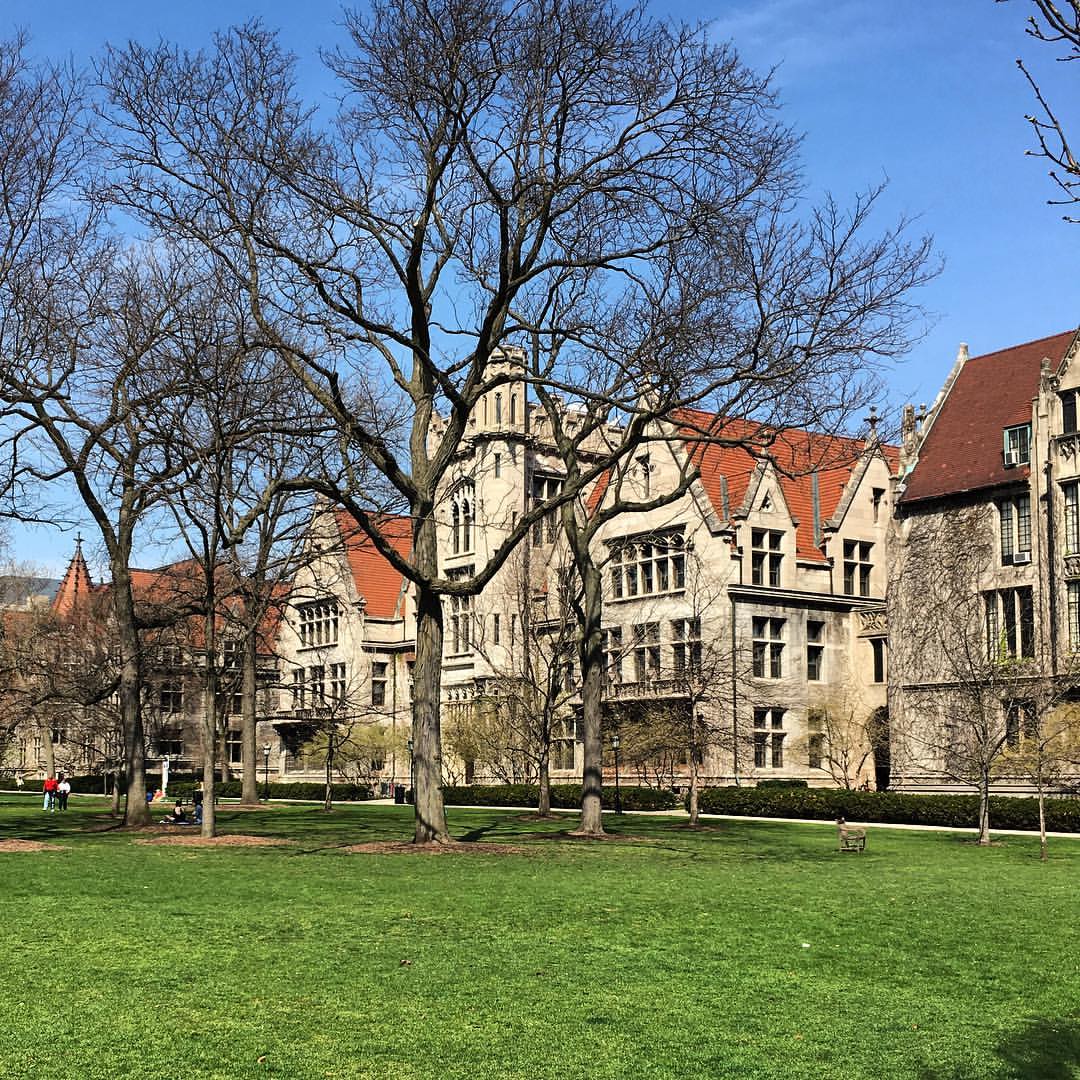
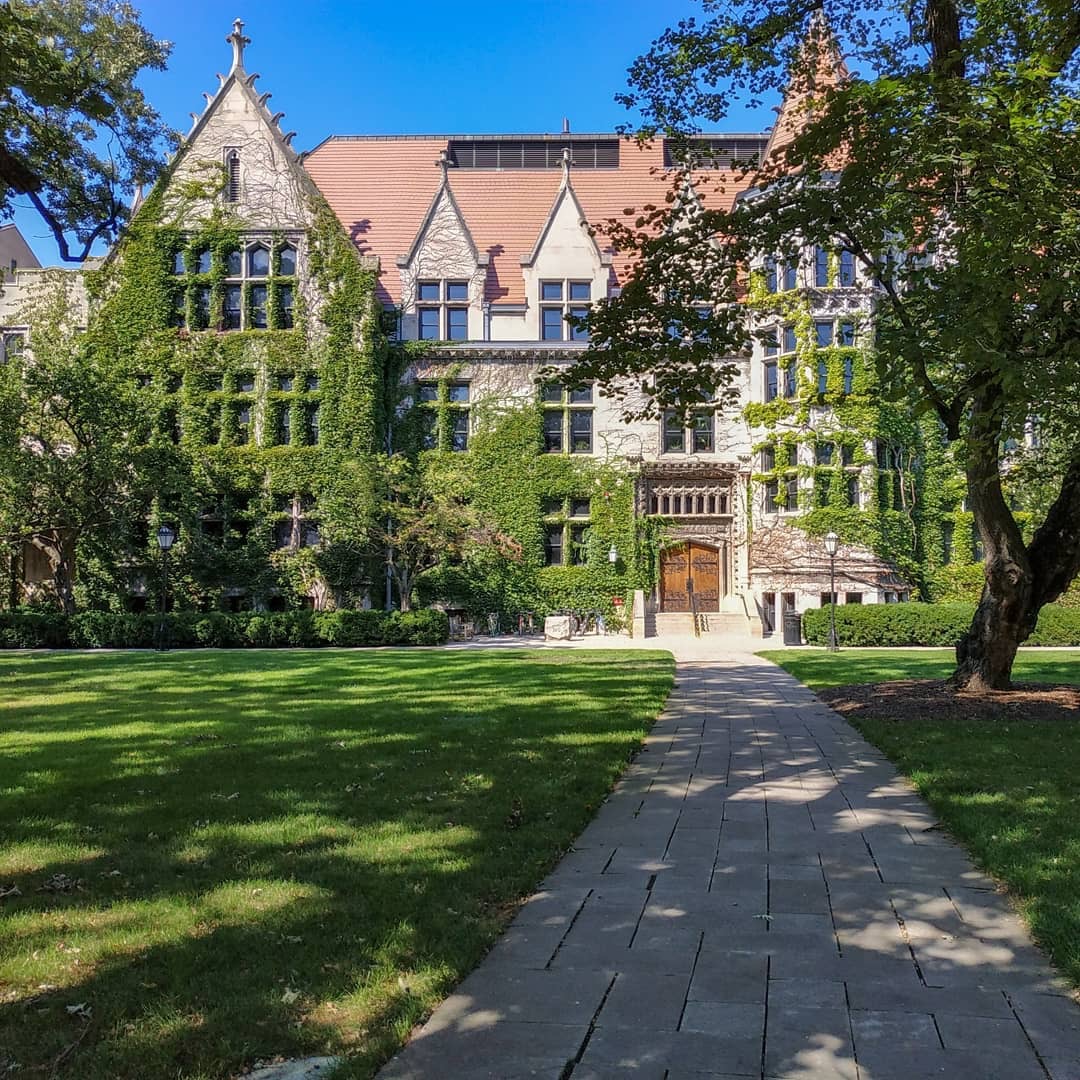
University of Chicago — campus in pictures

Real, freely-licensed photographs of the campus (via Wikimedia Commons).
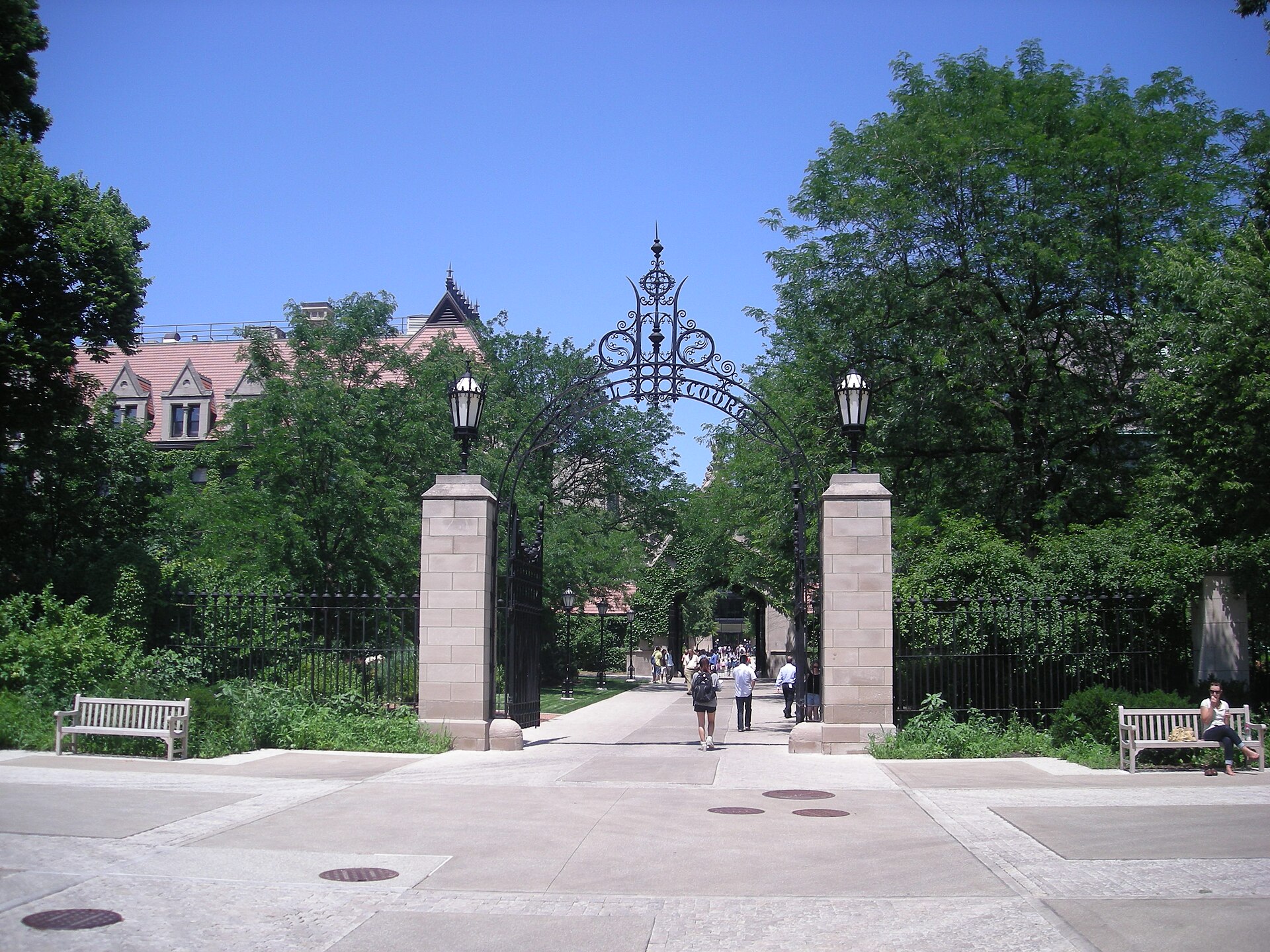
The Main Quadrangles area of the campus of the University of Chicago in Chicago, Illinois (United States).
The Main Quadrangles area of the campus of the University of Chicago in Chicago, Illinois (United States).Michael Barera · CC BY-SA 4.0 · via Wikimedia Commons
A panoramic photo of the larger campus of the University of Chicago. Photo taken from the top of w:Rockefeller Chapel.
A panoramic photo of the larger campus of the University of Chicago. Photo taken from the top of w:Rockefeller Chapel.Alfredo Perez. The original uploader was Kapooz at English Wikipedia. · CC BY 3.0 · via Wikimedia Commons
Interior of Harper Memorial Library at University of Chicago.
Interior of Harper Memorial Library at University of Chicago.Rick Seidel · CC BY 2.0 · via Wikimedia Commons
chicago #university #neogothique #quadrangle
chicago #university #neogothique #quadranglegrego1402 · CC BY 2.0 · via Wikimedia Commons
View of University of Chicago building from the Harper Quadrangle
View of University of Chicago building from the Harper QuadrangleNicomachian · CC BY-SA 4.0 · via Wikimedia Commons
Harper Library from the Midway Plaisance
Harper Library from the Midway PlaisanceIceUnshattered · CC BY-SA 4.0 · via Wikimedia Commons

Why UChicago — Life of the Mind, The Core, Nobel Laureates & Chicago

The University of Chicago is a deliberate choice — not a default one. Its culture is argument-forward, text-heavy, and genuinely intellectual in a way that is uncommon even among elite universities. Students who thrive here are those who chose the harder question, the stranger book, the less obvious answer. If that is you, there is no better place.

01Global Academic Prestige
Ranked #11 in the QS World Rankings, #14 by Times Higher Education, and #6 nationally. UChicago is among the most academically rigorous universities in the world — not merely by ranking, but by institutional culture.
02The Core Curriculum
Every UChicago undergraduate completes the Core — 15 interdisciplinary courses across humanities, social sciences, natural sciences, and language. No other elite research university commits so systematically to intellectual breadth as the foundation for every degree.
03Unmatched Research Access
A 5:1 student-to-faculty ratio and genuine research engagement from Year 1. UChicago's faculty have founded entire schools of thought — including the Chicago School of Economics, affiliated with more Nobel Prizes in Economics than any other institution.
04Nobel Laureate Density
UChicago's faculty and alumni hold more Nobel Prizes in Economics than any other institution on earth. The intellectual density of the campus is not a marketing claim — it is a lived reality of seminars, colloquia, and faculty who are actively reshaping their fields.
05Hyde Park & Chicago
Located in the historic Hyde Park neighbourhood on Chicago's South Side, with direct access to a world-class city. Architecture, jazz, world-class museums, major firm internships, and one of the most dynamic urban environments in North America — all within reach.
06Exceptional Career Outcomes
91% of graduates are employed or in graduate school within six months, with an average starting salary of $80,000. UChicago graduates disproportionately enter quantitative finance, consulting, research, and public policy relative to the school's size.

UChicago Acceptance Rate & Admitted Class Profile

Stats

4.5%
Overall acceptance rate
1510–1560
SAT middle 50%
34–35
ACT middle 50%
#11
QS World Rank

Profile Stats

1510–1560
SAT Middle 50%
34–35
ACT Middle 50%
43+
Typical IB Score
30%
International Students
Overall acceptance rate — among the most selective in the world

Rea Vs Rd

Ea Label: Early Action / ED I
Ea Value: Advantage
Rd Label: Regular Decision
Rd Value: ~4.5%

UChicago Admissions Requirements — Academics, SAT/ACT & International Curriculum

GPA & Coursework
Value: 3.9+ Unweighted
  • Near-perfect grades in the most rigorous curriculum available
  • IB, A-Level, AP, or national equivalents — all read holistically
  • Course rigour matters as much as raw grades
  • Grade trajectory is observed — upward trends are noted positively
UChicago expects exceptional academic performance across the most challenging curriculum available at your school. A 3.9 in full IB HL courses is read very differently from a 4.0 in standard classes — and UChicago knows the difference.
SAT / ACT
Value: 1510–1560 / 34–35
  • Test-optional: submitting is a strategic choice, not a requirement
  • SAT middle 50%: 1510–1560 (from facts file)
  • ACT middle 50%: 34–35 (from facts file)
  • TOEFL/IELTS/Duolingo required for non-native English speakers
UChicago is test-optional. For international students, Tychr generally recommends submitting strong scores within the middle 50% — they provide additional academic context to admissions officers evaluating an unfamiliar curriculum.
International Grades
Value: IB 43+
  • IB: 43+ total with 7s in Higher Level subjects
  • A-Levels: A*AA or better in relevant subjects
  • CBSE/ISC: 97%+ in relevant subjects
  • Competition achievements and original research strongly valued
IB students should aim for 43+ points with 7s in HL subjects relevant to their intended concentration. A-Level students should demonstrate A* performance. Intellectual depth of coursework — not just the grade — is what UChicago evaluates.

UChicago Application Components —

UChicago accepts applications through three platforms. Below is every component of a complete UChicago application, with strategic notes for international students at each step.

01RequiredCommon App / Coalition App / QuestBridge
UChicago accepts the Common Application, Coalition Application (powered by Scoir), and QuestBridge Application. All three platforms open each August. International students may use any of these three platforms.
02RequiredWhy UChicago Essay
300–600 words. Asks specifically how UChicago satisfies your desire for a particular kind of learning, community, and future. Generic answers about rankings or prestige fail this prompt entirely. Specificity about Core sequences, faculty, or programmes is required.
03RequiredExtended (Uncommon) Essay
500–700 words. Choose one of six creative, student-submitted prompts — or write your own question. This is UChicago's most distinctive requirement and the primary lens through which intellectual fit is evaluated.
04RequiredSchool Report & Official Transcripts
Official transcripts from all secondary schools attended. Your counsellor submits a school report providing institutional context essential for reading international transcripts fairly.
05RequiredTwo Teacher Evaluations
From two different academic subjects. UChicago asks teachers to evaluate intellectual engagement and curiosity — not just academic achievement. Choose teachers who have seen you think in real time.
06RequiredCounsellor Recommendation
Your school counsellor's letter provides the institutional context UChicago needs to read your academic record fairly. Brief your counsellor on your intellectual interests and journey — not just your transcript.
07OptionalSAT / ACT Scores
Test-optional. Submit if your score is at or above the middle 50% range (SAT 1510+, ACT 34+). Below this range, withholding is generally the better strategy. Strong scores provide a useful additional academic signal for international applicants.
08OptionalVideo Introduction
UChicago offers an optional video profile to introduce yourself informally. Not required, but broadly recommended — it gives admissions a three-dimensional sense of who you are beyond the written application.

UChicago Essays — The Uncommon Essay & Why UChicago Strategy

Tips

The Uncommon Essay is an intellectual test, not a creativity contest
UChicago is not looking for wit alone. They are looking for a mind that can follow an unexpected question into genuine intellectual territory. Your essay should reveal how you think — not just that you are clever.
The Why UChicago essay must be specific
The worst Why UChicago essays are about rankings, the city, or general prestige. The best ones name a specific Core sequence, a named faculty member's research, or a specific interdisciplinary programme that UChicago offers uniquely. Do your homework before writing a single word.
Do not perform intellectualism
UChicago students are genuinely intellectual — and experienced readers can tell when you are performing it. Write about ideas that genuinely excite you, not the ideas you imagine an admissions officer wants to see.
The Core is your essay hook
If any part of your intellectual identity has been shaped by crossing disciplinary boundaries — connecting history to economics, or literature to physics — UChicago's Core is where you explain why that matters to you specifically.

Prompts

Why UChicago (Required · 300–600 words)
How does the University of Chicago, as you know it now, satisfy your desire for a particular kind of learning, community, and future? Please address with some specificity your own wishes and how they relate to UChicago.
Extended Essay — The Uncommon Prompt (Required · 500–700 words)
Choose from six student-submitted creative prompts (or write your own question). 500–700 words. Prompts range from abstract philosophical questions to linguistic puzzles to hypothetical redesigns of everyday events.
The most common UChicago essay mistake. Treating the Uncommon Essay as a creative writing exercise rather than a window into how you think — and writing a Why UChicago essay that could have been submitted to any research university.
Writing Strategy — What Works at UChicago

What UChicago Admissions Officers Are Looking For

UChicago's holistic admissions process is designed to identify students who will flourish in — and actively contribute to — one of the world's most intellectually demanding undergraduate communities. Here is what that means in practice.

01Genuine Intellectual Curiosity
UChicago is looking for students who pursue ideas because they find them genuinely interesting — not because it makes a strong application. Academic excellence is necessary but not sufficient. The question is: do you love ideas for their own sake?
02Depth over Breadth
Unlike some universities that reward activity breadth, UChicago values depth of intellectual and extracurricular engagement. A student with one consuming, well-developed passion reads better than one with twelve thin commitments and twelve leadership titles.
03Academic Rigour
Near-perfect performance in the most challenging curriculum available. UChicago expects students who chose the hardest available courses — not the most grade-optimised ones. Admissions readers know the difference.
04Engagement with Ideas Beyond the Classroom
Evidence that you read beyond the syllabus, follow arguments across disciplines, and form opinions you can defend. Research, independent writing, debate, competitive mathematics — any form of genuine intellectual output counts more than titles.
05Cultural Fit with UChicago
UChicago is genuinely unusual: intense, discussion-heavy, and argument-forward. Students who thrive here actually enjoy intellectual difficulty. Demonstrating genuine awareness of and alignment with this specific culture — not just admiration for the ranking — matters in the application.
06Character and Intellectual Honesty
UChicago does not want students who perform achievement — it wants students who love learning and can handle demanding, rigorous academic environments. Personal character, integrity, resilience, and intellectual honesty are evaluated throughout the holistic file review.

UChicago Financial Aid for International Students

UChicago is need-aware for international students — meaning financial need may be considered in the admissions decision. However, for admitted international students who applied for aid, the university commits to meeting 100% of demonstrated financial need with a loan-free package. A recent $35 million gift dedicated specifically to international financial aid reflects genuine institutional commitment.

Financial aid details are subject to annual change. International students should apply for aid at the time of their admissions application and contact UChicago's financial aid office to confirm current forms and requirements.

100%
Of demonstrated need met for admitted students
Loan-free
Aid provided as grants — no repayment
$20M+
In need-based aid for international students (recent years)
$35M
Recent dedicated gift for international aid
No-Loan Policy — What This Means for International Students. UChicago meets 100% of demonstrated financial need through grants — money that does not need to be repaid. There are no loans in the financial aid package. For admitted families who qualify, the net cost of a UChicago education can be dramatically lower than the sticker price.
https://collegeadmissions.uchicago.edu/cost-aid/international-financial-aid

Key Dates

EA & ED I Application Deadline
Date: Nov 3
Financial Aid Deadline (EA & ED I)
Date: Nov 15
EA & ED I Decisions Released
Date: Mid-Dec
ED II & RD Application Deadline
Date: Jan 5
ED II Decisions Released
Date: Mid-Feb
RD Decisions Released
Date: Late Mar

Advantages

  • EA is non-binding — you preserve the ability to compare financial aid offers
  • ED I signals clear first-choice commitment and may provide an acceptance advantage
  • Earlier decision timeline — notification by mid-December for EA and ED I
  • Financial aid decision arrives alongside admissions decision if aid deadline is met
  • More holistic review earlier in the cycle — before the pool narrows further

Disadvantages

  • ED I and ED II are binding — if admitted, you must attend and withdraw all other applications
  • EA requires a complete application by November 3 — less time for senior year grades
  • Non-binding EA forfeits the first-choice signal that ED I provides
  • Binding ED limits ability to compare financial aid offers from multiple institutions
EA vs ED I vs ED II vs RD. UChicago offers four application pathways. The right choice depends on whether UChicago is your clear first choice, your financial aid situation, and whether your application is complete by November 3.
Tychr's Early Application Recommendation. Apply EA if UChicago is a top choice and you need to compare financial aid offers — non-binding Early Action gives you a mid-December decision without locking you in. Apply ED I if UChicago is your clear first choice and cost is manageable. ED II (January 5) is strong for students who need additional time. RD is available but offers the least favourable odds.
UChicago Application Rounds — EA, ED I, ED II & RD Strategy
https://admissionsight.com/uchicago-application-deadline/

UChicago Schools, Divisions & Notable Programmes

The College
Label: Undergraduate — All Students
  • {"label":"Total undergraduate enrolment","value":"~7,000"}
  • {"label":"Majors and concentrations","value":"50+"}
  • {"label":"Core curriculum courses required","value":"15"}
  • {"label":"Student-to-faculty ratio","value":"5:1"}
All UChicago undergraduates enrol in The College. Every student completes the Core — 15 interdisciplinary courses across humanities, social sciences, natural sciences, and language — before and alongside their chosen major concentration.
Booth School of Business
Label: Graduate (MBA & PhD)
  • {"label":"US business school ranking","value":"Top 5"}
  • {"label":"Flagship programme","value":"MBA"}
  • {"label":"Origin of","value":"Modern financial economics"}
  • {"label":"Location","value":"Hyde Park & Chicago Loop"}
Chicago Booth is the birthplace of modern financial economics and home to numerous Nobel Prize-winning economists on faculty. Undergraduates can cross-register for select Booth courses and benefit from proximity to faculty who have shaped global economic thought.
Law School
Label: Graduate (J.D.)
  • {"label":"US law school ranking","value":"Top 5"}
  • {"label":"Flagship programme","value":"J.D."}
  • {"label":"Movement originated here","value":"Law & economics"}
  • {"label":"Undergraduate pathway","value":"Pre-law advising"}
UChicago Law School originated the law and economics movement and consistently ranks among the top five law schools in the United States. Undergraduates interested in law benefit from proximity to faculty whose ideas have reshaped jurisprudence globally.
Division of the Social Sciences
Label: Graduate & Undergraduate
  • {"label":"Known for","value":"Chicago School of Economics"}
  • {"label":"Nobel Prizes in Economics","value":"More than any other institution"}
  • {"label":"Departments","value":"Economics, Sociology, Political Science, Psychology, Anthropology"}
The Chicago School of Economics produced more Nobel laureates in economics than any other institution. Students engaging with economics, political science, or sociology encounter foundational literature and active researchers who are continuing to build on that legacy.
Pritzker School of Molecular Engineering
Label: Graduate & Undergraduate Research
  • {"label":"Focus areas","value":"Quantum engineering, biosciences, nanoscience"}
  • {"label":"Research access","value":"From Year 1"}
  • {"label":"National lab partners","value":"Argonne, Fermilab"}
A pioneering molecular engineering school giving undergraduates direct access to cutting-edge research in quantum information, immunoengineering, and nanotechnology — alongside one of the world's premier national laboratory ecosystems at Argonne and Fermilab.

Research, Campus Life & Student Culture at UChicago

Undergraduate Research Access
Category: Research From Year 1
Through the College Research Fellows programme, direct faculty lab access, and the Metcalf Internship Programme, UChicago undergraduates engage in original research from the first year. Argonne National Laboratory and Fermilab offer unique research environments unavailable at most universities.
The Core Curriculum Seminars
Category: Academic Life
Core seminars are intentionally small — 12 to 15 students with a faculty member in Socratic dialogue. Every undergraduate, regardless of major, reads foundational texts, argues about ideas, and defends positions across disciplines. This is not a distribution requirement — it is the intellectual identity of the institution.
Student Organisations (500+)
Category: Campus Life
Over 500 registered student organisations span The Chicago Maroon (the student newspaper, one of the oldest in the US), Model UN, improv comedy, debate, cultural organisations, academic journals, sport clubs, and niche intellectual groups that could only exist at UChicago.
Metcalf Internship Programme
Category: Career Development
UChicago's flagship undergraduate internship programme connects students with employers across finance, consulting, non-profits, government, and research. Odyssey Scholars who complete full-time Metcalf internships receive a minimum stipend, ensuring career access for students of all economic backgrounds.
Scroll to explore research access, student life, and campus culture at the University of Chicago.

Career Outcomes & the UChicago Network

UChicago graduates are particularly well-positioned in quantitative finance, research, consulting, and policy. The 5:1 student-to-faculty ratio translates into recommendation letters, research opportunities, and direct faculty relationships that open specific doors unavailable to students at larger universities.

Stats

91%
Employed or in graduate school within 6 months
$80,000
Average starting salary
30%
International students in student body
#11
QS World Rank

Categories

Finance & Quantitative Fields
Goldman Sachs, Citadel, Jane Street, Two Sigma, and the leading quantitative hedge funds recruit heavily at UChicago. The economics and mathematics programmes produce graduates who dominate quant finance at a rate disproportionate to the school's size.
Research & Academia
An unusually high proportion of UChicago undergraduates pursue PhDs and academic careers. The research culture produces graduates who continue contributing to human knowledge — at universities, think tanks, national laboratories, and international research institutes worldwide.
Consulting & Public Policy
McKinsey, BCG, Bain, and the leading strategy consulting firms recruit at UChicago. The Harris School of Public Policy pipeline and Law School produce graduates who enter government, international organisations, and public service at every level globally.

Faqs

How selective is UChicago compared to Harvard or MIT?+

UChicago's 4.5% acceptance rate places it in the same tier as MIT, Columbia, and Penn. The admitted profile is similar to those institutions academically, but UChicago places a distinctive premium on demonstrated intellectual curiosity and genuine engagement with ideas — not just academic achievement.

What is the Core curriculum and is it a burden or a benefit?+

The Core requires all undergraduates to complete 15 interdisciplinary courses regardless of major. Students who find it burdensome are often not the right fit for UChicago. Students who flourish here consistently describe the Core as the best part of their education — the place where they learned to think across disciplines, not just within one.

Does UChicago offer financial aid to international students?+

Yes. UChicago is need-aware for international students (financial need may influence admission at the margin), but for admitted international students who applied for aid, the university commits to meeting 100% of demonstrated need with a loan-free grant package. Apply for aid at the same time as your admissions application.

Is UChicago test-optional for international students?+

Yes. UChicago is test-optional for all applicants including internationals. Tychr recommends submitting scores if your SAT is 1510+ or ACT is 34+ — within the middle 50% range. Scores within or above this range add a positive academic signal; scores below are generally better withheld.

What makes a strong Uncommon Essay?+

The strongest Uncommon Essays follow the prompt into genuinely unexpected intellectual territory — revealing how the student thinks, not just that they are creative. The essay should show UChicago something about your mind that no other part of the application reveals. Avoid surface-level wit; go deep into the argument.

Can I apply UChicago Early Action and also apply EA at other schools?+

UChicago's Early Action is non-restrictive — you can apply EA to UChicago and also apply EA or REA at other schools simultaneously. However, ED I and ED II at UChicago are binding — if admitted under these rounds, you must attend and withdraw all other applications.

What kind of extracurriculars does UChicago value?+

UChicago values intellectual depth over activity breadth. A student who has built a genuine research project, written original scholarship, or engaged deeply with a single competitive pursuit reads far better than a student with fifteen thin commitments. The question UChicago asks is not 'what did you do?' but 'what did you think about it?'

Is Hyde Park a safe neighbourhood and is Chicago a good city for students?+

Hyde Park is a self-contained, walkable university neighbourhood with its own restaurants, bookshops, cultural organisations, and active community. UChicago operates an extensive campus safety infrastructure. The broader city of Chicago offers world-class museums, architecture, music, and internship opportunities — it is one of the best cities in the world for an intellectually ambitious student.

Book a Free UChicago Admissions Strategy Session

In 60 minutes, our UChicago admissions specialists will evaluate your academic profile, assess your intellectual narrative, develop your Why UChicago and Uncommon Essay strategy, and determine which application round gives you the best odds of admission.

  • No commitment required
  • UChicago specialists with deep knowledge of the Uncommon Essay
  • Personalised strategy tailored to your academic and intellectual profile
Getting into UChicago is not about looking smart — it is about thinking in a way that is genuinely your own.

UChicago Academic Requirements

UChicago Academic Requirements: The Honest Breakdown for International Students

What GPA, test scores, and academic profile do UChicago's admitted students actually have? And what does holistic review mean for IB, A-Level, AP, and other international curricula?

3.9
Typical Minimum GPA
Unweighted — near-perfect expected
1510–1560
SAT Middle 50%
Test-optional — submission is strategic
34–35
ACT Middle 50%
Test-optional — submission is strategic
43+
IB Typical Score
7s in relevant HLs expected
5:1
Student:Faculty Ratio
Among the lowest of any research university
4.5%
Acceptance Rate
Highly selective

GPA & Class Rank

UChicago and GPA: What the Data Shows

UChicago does not publish a minimum GPA, but the admitted class profile is clear: the overwhelming majority of admitted students have a 3.9+ unweighted GPA and have taken the most rigorous curriculum available at their school.

A near-perfect GPA is a baseline expectation at UChicago, not a differentiating factor. What actually distinguishes admitted students is the combination of exceptional grades in genuinely rigorous courses, intellectual engagement outside the classroom, and the ability to write with real intellectual honesty.

3.9+
Typical minimum GPA for competitive applicants
Top 5%
Expected class rank position
What this means for international students. International students from systems without formal class rank — IB, A-Levels, many Asian curricula — are evaluated on their grades relative to their school's known academic context. Your counsellor's school profile submission gives UChicago the institutional context needed to read your record fairly and comparatively.
Grade trajectory matters. Grade trajectory is read carefully. A strong upward trend — moderate early performance followed by exceptional achievement in junior and senior years — signals capability and growth. UChicago's process is genuinely holistic; an early difficult period is context, not a disqualifier, if the trajectory is clear.

Academic Context

How UChicago Reads Academic Records from International Schools

UChicago evaluates every application within the context of the applicant's school, curriculum, and opportunity set. A student from a school without IB or AP access is not at a disadvantage if they have done everything available to them as well as it can be done.

How UChicago contextualises your academic record
UChicago's admissions office reviews each applicant's school profile — a document submitted by your counsellor explaining the grading scale, available courses, and school academic environment. This allows UChicago to read your transcript relative to your actual opportunity set, not an abstract universal standard.
What this means in practice
Taking the most rigorous courses available at your school is essential. A student who takes every available IB HL course and scores 7s communicates something qualitatively different from one who takes only Standard Level courses to optimise grades. Course selection is itself a form of intellectual communication.
For students at less well-known international schools. For international students at less well-known schools, the counsellor letter is particularly important. Tychr coaches counsellors on how to provide the institutional context UChicago needs to evaluate your application fairly — especially for students whose school's grading systems or curriculum may be unfamiliar to US admissions officers.

Standardised Testing

SAT Scores at UChicago: What You Need and Whether to Submit

UChicago SAT Data — Middle 50% of Admitted Students

LabelScorePercent
25th percentile151072
75th percentile156095
The Math subscore for STEM and economics applicants. For students intending to study mathematics, economics, computer science, or any quantitative field at UChicago, a Math subscore of 770–800 is particularly meaningful. UChicago's quantitative programmes are among the world's most demanding — a strong Math subscore signals the preparation needed to succeed from the first week.
SAT Preparation. Tychr's structured SAT preparation programme averages 150+ point improvement over 8–12 weeks. Students targeting UChicago should aim for 1510+ before deciding whether to submit. Preparation at this level requires targeted work on both Math and Evidence-Based Reading.
Submit vs. withhold — the strategic decision. UChicago is test-optional. Submit your SAT if it is at 1510 or above — within or above the middle 50%. Scores between 1480 and 1510 are borderline judgment calls; scores below 1480 are generally better withheld. For international students, submitting strong scores provides useful additional academic context for admissions officers evaluating an unfamiliar school system.

Standardised Testing

ACT Scores at UChicago: The Data and the Strategy

UChicago ACT Data — Middle 50% of Admitted Students

Metrics

25th percentile
Score: 34
75th percentile
Score: 35

Comparison Cards

Both tests accepted equally
UChicago does not prefer the SAT over the ACT. Choose the test that plays to your strengths — take diagnostic versions of both before committing to either.
SAT rewards
Careful analytical reading, precise mathematical reasoning, and sustained focus over a longer sitting format.
ACT rewards
Speed, data interpretation in the Science section, and comfort with high-paced question formats across four sections.
Superscore policy. UChicago superscores the SAT, using the highest section scores from multiple sittings. For the ACT, the highest composite from any single sitting is reported. If taking the SAT multiple times, plan your sitting strategy to maximise different strong sections — a superscore advantage is real.
Tychr's recommendation. Take a diagnostic of both tests before choosing. If your ACT diagnostic is 33 or above, the ACT is worth pursuing. If your ACT Science section is a consistent weakness, the SAT may be the more efficient path to reaching the UChicago middle 50%.

Testing Strategy

UChicago Test-Optional: The Strategic Decision Explained

UChicago was among the first major research universities to adopt a test-optional policy and has maintained it. Understanding what test-optional actually means — and when it works for or against you — is essential for international applicants.

Submit Items

Your SAT is 1510 or above — submit. This falls within the middle 50% and adds a positive academic data point.
Your ACT is 34 or above — submit.
You are an international student from a curriculum unfamiliar to US admissions officers — a strong score provides independent academic corroboration.

Withhold Items

Your score is below 1480 (SAT) or below 33 (ACT) — withholding is typically the better strategy.
Submitting would highlight a significantly weaker dimension of your academic profile compared to your grades and coursework.
Current policy. UChicago accepts applications with or without standardised test scores and does not formally penalise applicants who choose not to submit. Applications are reviewed holistically regardless of test score submission.
The misconception about test-optional. 'Test-optional' does not mean 'test-irrelevant.' Students who submit strong scores receive a positive academic data point. Students who don't submit remove that data point — meaning the rest of the academic file must carry more weight. It is a different evaluation context, not an equal playing field.

International Curricula

IB and A-Levels at UChicago: Specific Benchmarks for International Applicants

IB Diploma
Note: UChicago values the IB curriculum highly — its interdisciplinary structure mirrors the Core's own intellectual philosophy. The Extended Essay is treated as meaningful supplementary evidence of research initiative and capability. HL subject selection should reflect genuine intellectual ambition, not grade optimisation.
  • {"label":"Competitive range","value":"43+ total points"}
  • {"label":"HL expectations","value":"7,7,6 or better — 7s in subjects relevant to intended concentration"}
  • {"label":"Subject rigour","value":"HL Mathematics (Analysis & Approaches preferred for STEM and economics); HL humanities or sciences appropriate for intended field"}
  • {"label":"Extended Essay","value":"A or B grade — used as evidence of independent research capacity and intellectual initiative"}
A-Levels
Note: UChicago's admissions office understands A-Level predicted grade conventions. Strong predicted grades supported by strong GCSE/IGCSE performance constitute the expected academic profile. Subject depth over breadth: three well-chosen A-Levels in your area of focus reads better than four scattered subjects.
  • {"label":"Competitive range","value":"A*AA to A*A*A* in relevant subjects"}
  • {"label":"Subject rigour","value":"Mathematics + Further Mathematics for STEM and economics; History, English, Economics, Languages for humanities"}
  • {"label":"AS results","value":"Reviewed alongside predicted A-Level grades; strong AS results reinforce the credibility of predicted grades"}

Advanced Placement

AP Courses at UChicago: What Counts and What to Take

For students in AP-offering schools, Advanced Placement performance is a meaningful academic signal — both as evidence of rigour and as corroboration of school grades.

What UChicago is looking for
AP 5s across rigorous subjects — Calculus BC, Statistics, Physics C, Chemistry, Biology, Computer Science A, US or World History, English Language, English Literature. The pattern of AP subject choices reveals intellectual ambition: a student who chooses Calculus BC and Physics C together signals something different from one who chooses Environmental Science for an easy 5.
How many APs?
UChicago does not publish an expected number of AP exams. Competitive applicants typically present 5–8+ AP exams with predominantly 5s. Subject rigour and intellectual coherence of the AP selection matter more than raw count.
AP scores and grade credibility
Strong AP scores in subjects relevant to a student's intended concentration reinforce grade credibility — particularly for international students whose grading context may be less familiar to UChicago's admissions readers.
UChicago awards course credit for strong AP scores in many subjects, allowing students to skip introductory Core or concentration courses and pursue higher-level work from their first term.
International students at schools that don't offer AP should not artificially pursue AP exams. The IB or A-Level system is appropriate for their context and is evaluated accordingly. UChicago reads AP relative to what was accessible to each student.

The Core

The Core Curriculum: UChicago's Most Defining Academic Feature

Every University of Chicago undergraduate — regardless of major — completes the Core: 15 interdisciplinary courses taken in small seminars with faculty. The Core is not a distribution requirement. It is the deliberate philosophical commitment of an institution that believes you cannot think rigorously within your field until you have thought seriously across many fields.

For applicants: demonstrating in your Why UChicago essay that you understand what the Core actually is — and why the specific intellectual project it represents appeals to you — is one of the most effective ways to differentiate your application from students who are simply impressed by the ranking.

The Core is not what you do instead of your major — it is the foundation that makes your major more than technical training.

Area: Humanities Sequences
Multi-quarter seminars reading foundational literary and philosophical texts — from Homer and Plato to Woolf and Fanon — in small discussion groups. Students engage with primary texts and defend interpretations in class.
Area: Social Sciences Sequences
Three-quarter sequences examining the foundations of economics, sociology, political science, and anthropology through primary texts and original argumentation. The Chicago School's intellectual legacy is present throughout.
Area: Natural Sciences Sequences
Laboratory and lecture sequences in physical, biological, or earth sciences — designed to teach how science produces knowledge, not just what it has found. Physics, chemistry, and biology sequences each have distinct tracks.
Area: Mathematics
Required mathematical reasoning appropriate to each student's background — ensuring quantitative literacy as a universal intellectual foundation, even for humanities students.
Area: Language Competency
Competency in a language other than English — reflecting UChicago's commitment to global intellectual engagement and the recognition that great ideas are not only written in English.

English Language Proficiency

English Language Requirements for UChicago International Applicants

UChicago requires international applicants for whom English is not the primary language of instruction to demonstrate English proficiency through standardised testing.

The Uncommon Essay and the Why UChicago essay are demanding English writing exercises in their own right. Admissions officers read for nuance, precision, and intellectual depth — which requires genuine command of written English regardless of what test scores say.

Test: TOEFL iBT
Score: 100+
Test: IELTS
Score: 7.0+
Test: Duolingo English Test
Score: 120+
Practical guidance for international students. Students who have been educated in English-medium schools throughout their secondary education may be eligible for a waiver of the standardised English proficiency requirement. Contact the admissions office directly to clarify your situation. Essays that demonstrate fluent, precise, and intellectually engaged English writing reinforce your proficiency claim beyond any test score.

Subject Preparation

Subject Preparation: What UChicago Expects Across Disciplines

UChicago has no formal subject prerequisites for undergraduate admission. Students are admitted to The College broadly. In practice, however, competitive applicants in quantitative fields demonstrate mathematical preparation significantly above standard curricula.

Mathematics
HL Mathematics: Analysis & Approaches (IB) or A-Level Mathematics + Further Mathematics is the expected floor for quantitative fields. Competition mathematics experience — AMC/AIME qualification, national Olympiad selection, or equivalent — is a meaningful differentiator for mathematics, statistics, and economics applicants.
Economics
UChicago's economics programme is mathematically intensive from the very first course. Students should have strong calculus preparation as a minimum. HL Economics combined with HL Mathematics (IB) is the expected baseline; competition-level mathematical work or original econometric research is the strongest differentiator.
Natural Sciences
HL sciences at IB level with 6s or 7s, or A* performance in A-Level sciences. Research experience at a reputable institution — RSI, Regeneron STS, national science fairs with original work, national laboratory programmes — is a significant differentiator at UChicago.
Computer Science
A-Level or IB CS combined with strong mathematics. Original projects with real-world users, USACO Silver or above, and any competitive programming achievement or open-source contribution strengthen the application meaningfully.
Humanities & Social Sciences
Depth of reading and original argumentation. Published or award-winning writing, competitive debate achievement, independent research papers, or original humanities scholarship. Even STEM applicants benefit from demonstrating cross-disciplinary intellectual range — UChicago's Core means everyone reads the humanities.

Common Academic Mistakes

Academic Application Mistakes UChicago International Applicants Make

  • Optimising for GPA over course rigour — UChicago reads transcripts carefully enough to distinguish a 4.0 in easy courses from a 3.9 in the hardest available curriculum.
  • Treating test-optional as meaning 'I do not need to engage with this decision' — not doing the strategic analysis of whether your scores are above the middle 50% before deciding to withhold.
  • Not briefing your school counsellor on your intellectual journey before they write your recommendation — the counsellor letter is the primary vehicle for institutional context about an international school.
  • Applying to UChicago without specific knowledge of the Core curriculum — the admissions file reveals whether applicants understand what UChicago actually is, not just its ranking.
  • Writing a Why UChicago essay that mentions no specific Core sequences, faculty members, research programmes, or student organisations — generic admiration for research intensity fails this prompt.
  • Underestimating the English language demand of the supplemental essays — UChicago's essays require precise, intellectually nuanced written English, and weak writing weakens an otherwise strong application.

Cost & Financial Aid

UChicago Cost for International Students — The Honest Picture

UChicago's sticker price is among the highest of any university in the world. For international families who qualify for need-based aid, the actual net price can be dramatically lower — because UChicago commits to meeting 100% of demonstrated financial need with grants, not loans. But the aid process has important requirements and timing constraints for international applicants.

Understanding the full cost picture — and the aid available to international students — is essential before applying. This section uses verified numbers from UChicago's official data and describes the aid policy based on published institutional commitments.

Annual Costs

UChicago Annual Cost of Attendance

All figures below come from UChicago's official cost data. These are annual estimates for one full academic year.

ComponentAmountNote
Tuition$73,266Annual undergraduate tuition — all programmes
Estimated Total Cost of Attendance$98,301Includes tuition, mandatory fees, housing, food, books, and personal expenses
Estimated Cost of Living$18,000Room, board, and personal expenses — Hyde Park neighbourhood
Application Fee$75Waived for students applying for need-based financial aid

Financial Aid for International Students

Financial Aid Policy: International Students at UChicago

UChicago is need-aware for international students — your financial need may be considered as part of the admissions decision if you apply for aid. However, for admitted students who applied for aid, the university commits to meeting 100% of demonstrated need through a loan-free grant package.

International students must apply for financial aid simultaneously with their admissions application — not after receiving an offer. Financial aid materials are due November 15 for EA/ED I applicants, January 15 for ED II applicants, and February 15 for RD applicants. A $35 million gift dedicated specifically to international undergraduate financial aid reflects UChicago's genuine institutional commitment to global access.

Contact UChicago's financial aid office directly to confirm the specific forms required for international applicants — requirements may differ from those for domestic US students.

100%
Of demonstrated need met for admitted students
Loan-free grants
Aid format for all students
$35M
Recent gift dedicated to international financial aid
$20M+
Need-based aid to internationals in recent years
https://collegeadmissions.uchicago.edu/cost-aid/international-financial-aid

Scholarships

Scholarships and Aid Programmes at UChicago

UChicago's primary financial support mechanism is need-based grant aid. Named scholarship programmes are available but primarily designed around demonstrated financial need rather than merit alone.

NEED-BASEDOdyssey Scholarship Programme
For admitted students from lower-income backgrounds or first-generation college students. Odyssey Scholars receive a no-loan financial aid package, a $5,000 career development scholarship, and a minimum $5,000 Metcalf internship stipend. The loan-relief component applies to families with income under $90,000. Students must apply for need-based financial aid to be considered.
Source: https://college.uchicago.edu/odyssey
NEED-BASEDNeed-Based Grant Aid
The primary form of financial support at UChicago for all students including internationals. Grants are calculated on demonstrated family financial need and do not need to be repaid. International students apply through UChicago's own financial aid process rather than using the US federal FAFSA.
AUTOMATICApplication Fee Waiver
The $75 application fee is automatically waived for students who apply for need-based financial aid. Students with demonstrated financial need should indicate their intention to apply for aid when completing their application platform.

Affordability Reality

Is UChicago Affordable for International Students?

UChicago's estimated cost of attendance of $98,301 per year is among the highest of any university globally. However, UChicago's commitment to meeting 100% of demonstrated need with grants means the net price for qualifying families can be dramatically lower than the sticker price.

The key practical facts for international students are: (1) You must apply for aid simultaneously with your admissions application — it cannot be added after receiving an offer. (2) UChicago is need-aware for internationals, so requesting substantial aid may marginally affect your admissions odds. (3) For admitted students who applied for aid, the university meets 100% of demonstrated need — which means if you are admitted and your family qualifies, your grant package will cover your full demonstrated financial need without any loan component. (4) The $35 million gift dedicated to international financial aid means the fund is actively growing.

For families who qualify for significant aid, a UChicago education can have a net annual cost substantially lower than its published tuition — and comparable to or below many domestic universities. Run the Net Price Calculator on UChicago's financial aid website as an early estimate of your expected contribution.

How to Apply for Aid

Steps to Apply for Financial Aid at UChicago as an International Student

1Indicate Financial Aid Intent on Your Application
On your Common App, Coalition App, or QuestBridge application, clearly indicate that you intend to apply for financial aid. This flags your file for aid processing and triggers the application fee waiver.
2Complete UChicago's International Aid Forms
International students use UChicago's own financial aid application forms rather than the US federal CSS Profile or FAFSA. Contact UChicago's financial aid office to confirm which specific forms and documentation are required for your country of residence.
3Meet the Financial Aid Deadline
Financial aid materials are due November 15 for EA/ED I, January 15 for ED II, and February 15 for RD. Submitting by these dates ensures your aid offer arrives alongside your admissions decision. Late submission may delay your package.
4Gather Supporting Documentation
Tax returns, bank statements, employer letters, and documentation of family income and assets must be prepared well in advance. International income documentation requirements differ by country. Start gathering documents at least three months before your application deadline.
5Review Your Aid Offer and Appeal If Necessary
If your aid offer does not accurately reflect your family's actual financial situation, you have the right to appeal. Provide additional documentation and request a re-evaluation. UChicago's financial aid office engages with appeals seriously — bring supporting evidence for any unusual circumstances.

Cost & Aid FAQs

Frequently Asked Questions — UChicago Cost & Financial Aid

Does applying for financial aid significantly hurt my chances of admission at UChicago as an international student?+

UChicago is need-aware for international students, meaning substantial aid requests may marginally affect admission odds at the margin. This does not mean you should not apply for aid if you need it — it means the process matters. Apply honestly, document your family's financial situation completely, and apply for aid simultaneously with your admissions application.

Do international students use the CSS Profile for financial aid?+

Based on available information, international students at UChicago use the university's own financial aid application rather than the US federal CSS Profile or FAFSA. However, requirements can change — contact UChicago's financial aid office directly to confirm current international aid application requirements before your deadline.

What is the Odyssey Scholarship and can international students receive it?+

The Odyssey Scholarship is available to admitted students from lower-income or first-generation backgrounds. It provides a no-loan financial aid package, a $5,000 career development scholarship, and a minimum $5,000 Metcalf internship stipend. Students must apply for need-based aid to be considered — the scholarship is awarded to qualifying admitted students automatically.

Is there merit aid available at UChicago?+

UChicago's primary aid model is need-based, not merit-based. The university does not award significant merit scholarships independent of financial need for international applicants. Financial aid is awarded based on demonstrated family financial need for admitted students who applied for aid.

What is UChicago's total annual cost of attendance?+

UChicago's estimated annual cost of attendance is $98,301, including $73,266 in tuition plus mandatory fees, housing, meals, books, and personal expenses. Students who receive financial aid have their demonstrated financial need covered by grants, reducing the actual amount paid to their individual net price.

Can I apply for financial aid with a Regular Decision application?+

Yes — but you must submit your financial aid materials by February 15 (the RD financial aid deadline). Meeting this deadline ensures your aid offer is released alongside your admissions decision. Missing it may result in a delayed aid package, complicating your enrolment decision.

UChicago Essays

Why UChicago Essays Matter — More Than Almost Anywhere Else

The University of Chicago is famous for its essay prompts for a reason: they are the primary lens through which admissions officers evaluate intellectual fit. A perfect GPA and perfect test scores will not overcome a generic or superficial essay. The Uncommon Essay and the Why UChicago essay are, together, your intellectual audition for a community that takes ideas more seriously than almost anywhere else in the world.

This guide covers both required supplemental essays, the current 2026–27 prompts with verbatim text, the strategy that works at UChicago specifically, and the mistakes that sink otherwise strong applications.

Essay Requirements

UChicago Essay Requirements — What Is Actually Required

UChicago requires two supplemental essays in addition to the Common App personal statement. Both supplemental essays are required, both are evaluated with exceptional care, and together they constitute the most important writing task in the UChicago application.

Applications are submitted through the Common Application, Coalition Application (powered by Scoir), or QuestBridge Application. The Common App personal statement (650 words, choose from seven prompts) is submitted through the platform as standard. UChicago then requires two additional essays: the Why UChicago essay and the Extended (Uncommon) Essay.

Common App Personal Statement
650 words. Choose from seven Common App prompts or write your own topic. UChicago reads all seven prompt options equally — choose the one that generates your strongest response.
Why UChicago Essay (Required)
300–600 words. Asks how UChicago specifically satisfies your desire for a particular kind of learning, community, and future. The word 'specificity' in the prompt is the instructions.
Extended (Uncommon) Essay (Required)
500–700 words. Choose one of six creative, student-submitted prompts or write your own question. The most distinctively UChicago element of the entire application.
https://www.collegeessayguy.com/blog/university-chicago-supplemental-essays

2026–27 Prompts

UChicago 2026–27 Essay Prompts — Verbatim Official Text

UChicago updates its Uncommon Essay prompts each year, sourcing new options from submissions by current students. The Why UChicago prompt remains consistent across cycles. All prompts below are verified for the 2026–27 admissions cycle.

REQUIRED · 300–600 WORDSWhy UChicago Essay
Official Text: How does the University of Chicago, as you know it now, satisfy your desire for a particular kind of learning, community, and future? Please address with some specificity your own wishes and how they relate to UChicago.
Strategic Guide: This prompt has four parts embedded in it: your desire for a kind of learning, your desire for a kind of community, your desire for a kind of future, and how UChicago specifically satisfies each. Generic responses about intellectual rigour or Nobel laureates fail immediately. Name actual things: a specific Core sequence you want to take (e.g., 'Fundamentals: Issues and Texts', 'The Physics of Everyday Life'), a named faculty member whose published research connects to your own questions, a specific student organisation or research programme. Specificity that required genuine research into UChicago — not just its Wikipedia article — is the baseline for a strong essay.
Source: https://www.collegeessayguy.com/blog/university-chicago-supplemental-essays
CHOOSE ONE · 500–700 WORDSUncommon Essay — Option 1
Official Text: Food for thought: How do thoughts eat?
Strategic Guide: Inspired by Ernest Leong, Class of 2026. This six-word prompt is an invitation to follow a metaphor into philosophy, cognitive science, phenomenology, linguistics, or whatever disciplinary territory genuinely captivates you. The best responses do not stay at the surface of 'thoughts consume ideas' — they follow the question somewhere genuinely unexpected while maintaining internal argumentative rigour. Ask yourself: where does this prompt lead a mind that takes it completely seriously? Go there.
Source: https://www.collegeessayguy.com/blog/university-chicago-supplemental-essays
CHOOSE ONE · 500–700 WORDSUncommon Essay — Option 2
Official Text: The James Webb Space Telescope, launched in 2021, utilized origami-inspired techniques to compactly store and deploy its sunshield in space. Choose an artistic practice and use its principles to propose an elegant solution to a problem.
Strategic Guide: Inspired by Akhil Korra, Class of 2028. This prompt rewards genuinely cross-disciplinary thinking — the kind UChicago's Core is designed to cultivate. Choose an artistic practice you actually know deeply (not the most impressive-sounding one), apply its actual structural principles (not just its aesthetic vibe) to a real and meaningful problem, and show the underlying logical connection. The most effective responses use this as an opportunity to demonstrate how you naturally move between domains — which is exactly what UChicago wants to see.
Source: https://www.collegeessayguy.com/blog/university-chicago-supplemental-essays
CHOOSE ONE · 500–700 WORDSUncommon Essay — Option 3
Official Text: Sometimes metaphors get mixed up. For one reason or another, one could say, 'we'll burn that bridge when we get there' or 'the world is your china shop'. Make up your own mixed metaphor. Explain how it could make sense, be understood, or even applied.
Strategic Guide: Inspired by Julia Nieberg, Class of 2029. The trick is not to invent any nonsense phrase but to invent a mixed metaphor that, on reflection, turns out to contain an unexpected truth. The explanation should demonstrate linguistic playfulness combined with genuine intellectual seriousness — showing that you understand how language works, how meaning survives distortion, and how two incompatible images can reveal something neither would reveal alone. The best essays make the reader think: 'that is actually true.'
Source: https://www.collegeessayguy.com/blog/university-chicago-supplemental-essays
CHOOSE ONE · 500–700 WORDSUncommon Essay — Option 4
Official Text: The Olympics have long celebrated the pinnacle of human athletic achievement. But what if they expanded to honor the mundane? Imagine a new Olympic event built around an everyday activity like speed dishwashing or competitive grocery bagging. How is it scored, officiated, and judged? Why is it a worthy addition?
Strategic Guide: Inspired by Ewan Smith, Class of 2028. This prompt rewards the student who can be genuinely funny while also making a serious argument about human skill, effort, or community. Pick an everyday activity you actually know — not the most clever-sounding one. Build your scoring and judging systems with internal logical consistency. And make a real case for why this event matters, revealing something true about craft, attention, or the value of the ordinary. The best essays surprise with sincerity.
Source: https://www.collegeessayguy.com/blog/university-chicago-supplemental-essays
CHOOSE ONE · 500–700 WORDSUncommon Essay — Option 5
Official Text: AI: Allen Iverson. NASA, or the North American Saxophone Alliance. Share a potentially confounding, comedic, or captivating example of MIA (Mistaken Identity of Acronym) and tell us its backstory.
Strategic Guide: Inspired by Jeeho Byun, Class of 2030. The best responses here find an acronym collision that is both genuinely interesting and a vehicle for real storytelling. The word 'backstory' signals that this is not a list of amusing confusions — it is a narrative about how the confusion happened, what it revealed, and why it matters. Use the acronym collision as a jumping-off point for a broader reflection on language, meaning, identity, or miscommunication. The acronym is the door; what is behind the door is what matters.
Source: https://www.collegeessayguy.com/blog/university-chicago-supplemental-essays
CHOOSE ONE · 500–700 WORDSUncommon Essay — Option 6: Choose Your Own Adventure
Official Text: And, as always… the classic choose your own adventure option! In the spirit of adventurous inquiry, choose one of our past prompts (or create a question of your own). Be original, creative, thought provoking.
Strategic Guide: This option is for students who have a question they are genuinely burning to explore — one that does not fit neatly into any of the provided options. If choosing this option, resist the temptation to find a 'safe' past UChicago prompt. Write the question that most honestly represents your intellectual preoccupation, then write an essay that could not have been written by any other applicant. If no such question exists for you right now, you are better served by one of the provided options.
Source: https://www.collegeessayguy.com/blog/university-chicago-supplemental-essays
https://www.collegeessayguy.com/blog/university-chicago-supplemental-essays

Personal Statement Strategy

The Common App Personal Statement at UChicago

The Common App personal statement (650 words) is read by UChicago alongside both supplemental essays. It plays a distinct and complementary role from the UChicago-specific essays.

The personal statement should reveal who you are as a person — your character, your story, the experiences that shaped you. It should not duplicate the intellectual content of the Why UChicago or Uncommon essays. Think of the three essays as a complete portrait: the personal statement shows the human being, the Why UChicago essay shows the institutional fit, and the Uncommon Essay shows the mind at work.

Do not repeat the same dimension of yourself across all three essays
If your personal statement is about your passion for economics, your Why UChicago is also about economics, and your Uncommon Essay is a response to an economics-adjacent prompt — the admissions officer has seen one dimension of you three times. Use the three essays to show three genuinely different facets of who you are.
Specificity is rewarded everywhere, including the personal statement
A personal statement about 'my passion for mathematics' fails. A personal statement about the specific problem you got stuck on for six weeks — and what that obsession taught you — succeeds. UChicago's culture rewards precision of thought over breadth of aspiration.
UChicago reads the personal statement for intellectual curiosity too
Even in the Common App personal statement, UChicago's admissions readers are attentive to evidence of intellectual curiosity and genuine engagement with ideas. Students who demonstrate restless, authentic interest in the world around them stand out — regardless of which prompt they chose.

Writing Strategy

UChicago Supplement Writing Strategy — What Actually Works

The two required UChicago supplements constitute the most important writing task in the entire application. The strategic framework below produces consistently stronger results than instinct-driven drafting.

Why UChicago: The Four-Part Framework
Answer all four parts embedded in the prompt: (1) The kind of learning you want — be specific about the intellectual approach, not the subject. (2) The community you are seeking — name specific student organisations, academic groups, or residential communities. (3) The future you are building — what does a UChicago education enable that no other university's education would? (4) The UChicago-specific connection — name actual Core sequences, faculty members, research programmes. All four parts deserve attention.
Uncommon Essay: Follow the Question Seriously
The biggest mistake is treating the Uncommon Essay as a creative writing assignment. It is an intellectual exercise in a creative form. Pick the prompt you would most genuinely enjoy exploring — not the one that sounds most impressive — and follow it to a conclusion that genuinely surprises you. Your thinking process is visible in the essay; make sure it is interesting to read, not just well-constructed.
Word Count as Intentional Signal
The Why UChicago essay is 300–600 words. Hitting 300 reads as insufficient engagement with the question. Hitting 600 reads as someone who used every word intentionally. Aim for 500–580 for Why UChicago. Aim for 650–680 for the Uncommon Essay. Precise, not padded — but demonstrate that you took the word limit seriously by filling the available space with content.
Research Before You Write
Before writing the Why UChicago essay, spend time on UChicago's Core programme catalogue, faculty pages, the MAROON newspaper, and specific divisional programme descriptions. Write down five specific things you discovered that you could not have found by Googling 'why UChicago is good.' These specifics are the backbone of an essay that actually works.

Prompt Selection

How to Choose Your UChicago Uncommon Essay Prompt

With six options and a choose-your-own, the choice of Uncommon Essay prompt is itself a meaningful decision. Here is how to approach it without overthinking it.

Do not choose the prompt that sounds most impressive or most recognisably UChicago. Choose the prompt that, when you first read it, immediately generated a genuine idea you found yourself excited to explore. The best Uncommon Essays are written by students who spent days thinking and hours writing — not students who chose the safest option and produced the most technically proficient response they could.

1Read all six prompts without immediately reacting
Read through all the prompts once, set them aside for a full day, and notice which one kept appearing in your thoughts unprompted. That is almost certainly your prompt.
2Quick-draft 100 words on your top two choices
Spend 20 minutes drafting a rough 100-word response to each of your top two prompts. Which one surprised you with ideas you did not expect? Which one showed you something interesting about how you think? Use that prompt.
3Find the unexpected argument, not the obvious one
Once you have chosen your prompt, brainstorm five distinct possible responses. Cross out the first three — they are the ones any reasonably intelligent applicant would write. The fourth or fifth might be genuinely yours.
4Test your draft with someone who knows you
The Uncommon Essay should sound like you in a sustained intellectual state — not like a generic 'smart student' essay. If your trusted reader says 'this sounds like something you would actually say,' you are on the right track. If they say 'this sounds like an essay,' revise until it does not.

Common Essay Mistakes

Essay Mistakes That Sink Otherwise Strong UChicago Applications

  • Writing a Why UChicago essay that could have been submitted to any top research university — no specific Core sequences, faculty members, programmes, or student organisations named.
  • Treating the Uncommon Essay as a creative writing exercise rather than an intellectual one — producing something technically impressive but intellectually shallow, with no real argument following the prompt.
  • Choosing the Uncommon Essay prompt that sounds most clever rather than the one that generates your most genuine and interesting intellectual response.
  • Using the personal statement and the Uncommon Essay to show the same dimension of yourself — leaving the admissions officer with one portrait seen from two angles instead of three genuinely different views.
  • Performing 'UChicago-appropriate' intellectualism — citing Foucault or Wittgenstein to signal sophistication — rather than writing about ideas you actually think and care about in your own voice.
  • Writing a 300-word Why UChicago essay and treating it as complete — the lower bound of the word range signals minimum effort, not efficient prose.
  • Failing to research the Core curriculum before writing the Why UChicago essay — and therefore writing about UChicago as if it were generically strong rather than specifically distinctive.
  • Over-editing the Uncommon Essay until it sounds formally polished and impersonal rather than alive and distinctively voiced — the Uncommon Essay rewards genuine personality and argumentation, not grammatical perfection.

Essay FAQs

Frequently Asked Questions — UChicago Essays

How important are the essays at UChicago compared to grades and test scores?+

More important than at most universities. UChicago's admissions process is explicitly designed to identify intellectual fit — which grades and test scores cannot demonstrate on their own. A student with a 1560 SAT and a generic essay will regularly lose to a student with a 1520 SAT and a genuinely brilliant Uncommon Essay.

Should I choose the most unusual Uncommon Essay prompt?+

No. Choose the prompt that generates your most genuine and interesting intellectual response, regardless of how eccentric or straightforward the prompt itself appears. A deeply thoughtful, well-argued response to a simpler prompt outperforms a superficial, clever-sounding response to a stranger one every time.

How specific does the Why UChicago essay actually need to be?+

Extremely specific. Name a specific Core sequence you want to take. Name a faculty member whose published research connects to your own questions. Name a specific student organisation, research programme, or academic tradition that exists at UChicago and nowhere else. Specificity that required genuine research — not just a visit to UChicago's ranking page — is the floor for a competitive essay.

Can I write about the same intellectual interest in both the Why UChicago and Uncommon Essay?+

Cautiously yes, if that interest genuinely threads through your entire application. But the essays must show different dimensions of that interest — Why UChicago is about institutional fit, Uncommon Essay is about how your mind works. The same argument in two different forms is not the same as two essays that illuminate different aspects of who you are.

Do UChicago admissions officers actually read the Uncommon Essays carefully?+

Yes — consistently, and with genuine engagement. UChicago's admissions readers are known for taking intellectual quality seriously. They have read thousands of essays and can distinguish a genuine intellectual response from a performed one in a paragraph.

Is the choose-your-own-adventure prompt the safest option?+

No — it is actually the highest-risk option. It requires you to generate a question strong enough to justify the choice, and then write an essay strong enough to respond to it. If the question you invent is weak or generic, the entire essay premise collapses. Only choose this option if you have a question you are genuinely compelled to explore.

What should I do if English is not my first language and I am worried about essay quality?+

Start early and revise extensively. The Uncommon Essay rewards intellectual depth — but that depth must come through clearly in written English. Work with Tychr's essay coaches, who work with non-native English speakers specifically on writing intellectually precise, argumentatively strong essays in a second language. Fluency is not required; precision is.

Courses — schools, degrees & intake

60 degrees across 6 groupings.

Division of the Biological Sciences · 4 degrees

Biological Sciences

BachelorsEntry SAT 1510–1560 / ACT 34–35 / IB 43+ / GPA 3.9+ (test-optional)

Biological Chemistry

BachelorsEntry SAT 1510–1560 / ACT 34–35 / IB 43+ / GPA 3.9+ (test-optional)

Environmental Science

BachelorsEntry SAT 1510–1560 / ACT 34–35 / IB 43+ / GPA 3.9+ (test-optional)

Neuroscience

BachelorsEntry SAT 1510–1560 / ACT 34–35 / IB 43+ / GPA 3.9+ (test-optional)

Division of the Humanities · 26 degrees

Art History

BachelorsEntry SAT 1510–1560 / ACT 34–35 / IB 43+ / GPA 3.9+ (test-optional)

Cinema and Media Studies

BachelorsEntry SAT 1510–1560 / ACT 34–35 / IB 43+ / GPA 3.9+ (test-optional)

Classical Studies

BachelorsEntry SAT 1510–1560 / ACT 34–35 / IB 43+ / GPA 3.9+ (test-optional)

Comparative Literature

BachelorsEntry SAT 1510–1560 / ACT 34–35 / IB 43+ / GPA 3.9+ (test-optional)

Creative Writing

BachelorsEntry SAT 1510–1560 / ACT 34–35 / IB 43+ / GPA 3.9+ (test-optional)

East Asian Languages and Civilizations

BachelorsEntry SAT 1510–1560 / ACT 34–35 / IB 43+ / GPA 3.9+ (test-optional)

English Language and Literature

BachelorsEntry SAT 1510–1560 / ACT 34–35 / IB 43+ / GPA 3.9+ (test-optional)

Fundamentals: Issues and Texts

BachelorsEntry SAT 1510–1560 / ACT 34–35 / IB 43+ / GPA 3.9+ (test-optional)

Gender and Sexuality Studies

BachelorsEntry SAT 1510–1560 / ACT 34–35 / IB 43+ / GPA 3.9+ (test-optional)

Germanic Studies

BachelorsEntry SAT 1510–1560 / ACT 34–35 / IB 43+ / GPA 3.9+ (test-optional)

History

BachelorsEntry SAT 1510–1560 / ACT 34–35 / IB 43+ / GPA 3.9+ (test-optional)

Interdisciplinary Studies in the Humanities

BachelorsEntry SAT 1510–1560 / ACT 34–35 / IB 43+ / GPA 3.9+ (test-optional)

Jewish Studies

BachelorsEntry SAT 1510–1560 / ACT 34–35 / IB 43+ / GPA 3.9+ (test-optional)

Law, Letters, and Society

BachelorsEntry SAT 1510–1560 / ACT 34–35 / IB 43+ / GPA 3.9+ (test-optional)

Linguistics

BachelorsEntry SAT 1510–1560 / ACT 34–35 / IB 43+ / GPA 3.9+ (test-optional)

Medieval Studies

BachelorsEntry SAT 1510–1560 / ACT 34–35 / IB 43+ / GPA 3.9+ (test-optional)

Music

BachelorsEntry SAT 1510–1560 / ACT 34–35 / IB 43+ / GPA 3.9+ (test-optional)

Near Eastern Languages and Civilizations

BachelorsEntry SAT 1510–1560 / ACT 34–35 / IB 43+ / GPA 3.9+ (test-optional)

Philosophy

BachelorsEntry SAT 1510–1560 / ACT 34–35 / IB 43+ / GPA 3.9+ (test-optional)

Religious Studies

BachelorsEntry SAT 1510–1560 / ACT 34–35 / IB 43+ / GPA 3.9+ (test-optional)

Romance Languages and Literatures

BachelorsEntry SAT 1510–1560 / ACT 34–35 / IB 43+ / GPA 3.9+ (test-optional)

Russian and East European Studies

BachelorsEntry SAT 1510–1560 / ACT 34–35 / IB 43+ / GPA 3.9+ (test-optional)

South Asian Languages and Civilizations

BachelorsEntry SAT 1510–1560 / ACT 34–35 / IB 43+ / GPA 3.9+ (test-optional)

Theater and Performance Studies

BachelorsEntry SAT 1510–1560 / ACT 34–35 / IB 43+ / GPA 3.9+ (test-optional)

Tutorial Studies

BachelorsEntry SAT 1510–1560 / ACT 34–35 / IB 43+ / GPA 3.9+ (test-optional)

Visual Arts

BachelorsEntry SAT 1510–1560 / ACT 34–35 / IB 43+ / GPA 3.9+ (test-optional)

Division of the Physical Sciences · 10 degrees

Astronomy and Astrophysics

BachelorsEntry SAT 1510–1560 / ACT 34–35 / IB 43+ / GPA 3.9+ (test-optional)

Chemistry

BachelorsEntry SAT 1510–1560 / ACT 34–35 / IB 43+ / GPA 3.9+ (test-optional)

Computational and Applied Mathematics

BachelorsEntry SAT 1510–1560 / ACT 34–35 / IB 43+ / GPA 3.9+ (test-optional)

Computer Science

BachelorsEntry SAT 1510–1560 / ACT 34–35 / IB 43+ / GPA 3.9+ (test-optional)

Data Science

BachelorsEntry SAT 1510–1560 / ACT 34–35 / IB 43+ / GPA 3.9+ (test-optional)

Geophysical Sciences

BachelorsEntry SAT 1510–1560 / ACT 34–35 / IB 43+ / GPA 3.9+ (test-optional)

Mathematics

BachelorsEntry SAT 1510–1560 / ACT 34–35 / IB 43+ / GPA 3.9+ (test-optional)

Molecular Engineering

BachelorsEntry SAT 1510–1560 / ACT 34–35 / IB 43+ / GPA 3.9+ (test-optional)

Physics

BachelorsEntry SAT 1510–1560 / ACT 34–35 / IB 43+ / GPA 3.9+ (test-optional)

Statistics

BachelorsEntry SAT 1510–1560 / ACT 34–35 / IB 43+ / GPA 3.9+ (test-optional)

Division of the Social Sciences · 15 degrees

Anthropology

BachelorsEntry SAT 1510–1560 / ACT 34–35 / IB 43+ / GPA 3.9+ (test-optional)

Comparative Human Development

BachelorsEntry SAT 1510–1560 / ACT 34–35 / IB 43+ / GPA 3.9+ (test-optional)

Comparative Race and Ethnic Studies

BachelorsEntry SAT 1510–1560 / ACT 34–35 / IB 43+ / GPA 3.9+ (test-optional)

Computational Social Science

BachelorsEntry SAT 1510–1560 / ACT 34–35 / IB 43+ / GPA 3.9+ (test-optional)

Economics

BachelorsEntry SAT 1510–1560 / ACT 34–35 / IB 43+ / GPA 3.9+ (test-optional)

Environmental and Urban Studies

BachelorsEntry SAT 1510–1560 / ACT 34–35 / IB 43+ / GPA 3.9+ (test-optional)

Geographical Sciences

BachelorsEntry SAT 1510–1560 / ACT 34–35 / IB 43+ / GPA 3.9+ (test-optional)

Global Studies

BachelorsEntry SAT 1510–1560 / ACT 34–35 / IB 43+ / GPA 3.9+ (test-optional)

History, Philosophy, and Social Studies of Science and Medicine

BachelorsEntry SAT 1510–1560 / ACT 34–35 / IB 43+ / GPA 3.9+ (test-optional)

International Relations

BachelorsEntry SAT 1510–1560 / ACT 34–35 / IB 43+ / GPA 3.9+ (test-optional)

Latin American and Caribbean Studies

BachelorsEntry SAT 1510–1560 / ACT 34–35 / IB 43+ / GPA 3.9+ (test-optional)

Political Science

BachelorsEntry SAT 1510–1560 / ACT 34–35 / IB 43+ / GPA 3.9+ (test-optional)

Psychology

BachelorsEntry SAT 1510–1560 / ACT 34–35 / IB 43+ / GPA 3.9+ (test-optional)

Public Policy Studies

BachelorsEntry SAT 1510–1560 / ACT 34–35 / IB 43+ / GPA 3.9+ (test-optional)

Sociology

BachelorsEntry SAT 1510–1560 / ACT 34–35 / IB 43+ / GPA 3.9+ (test-optional)

New Collegiate Division · 4 degrees

Computational Analysis and Public Policy

BachelorsEntry SAT 1510–1560 / ACT 34–35 / IB 43+ / GPA 3.9+ (test-optional)

Digital Studies of Language, Culture, and History

BachelorsEntry SAT 1510–1560 / ACT 34–35 / IB 43+ / GPA 3.9+ (test-optional)

Education and Teaching Certification

BachelorsEntry SAT 1510–1560 / ACT 34–35 / IB 43+ / GPA 3.9+ (test-optional)

Middle Eastern Studies

BachelorsEntry SAT 1510–1560 / ACT 34–35 / IB 43+ / GPA 3.9+ (test-optional)

Crown Family School of Social Work, Policy, and Practice · 1 degrees

Social Work, Policy, and Practice

BachelorsEntry SAT 1510–1560 / ACT 34–35 / IB 43+ / GPA 3.9+ (test-optional)

Want your real chances at University of Chicago?

Create a free TYCHR account for your personalised admit-chance, a shortlist you can track, exact entry requirements, and essay + counselling help.