University of Hong Kong
Hong Kong, Hong Kong SAR · Urban
HONG KONG SAR · ASIA'S WORLD CITY
University of Hong Kong Admissions Guide for International Students
The University of Hong Kong (HKU) sits at QS #11 globally — Asia's top-ranked English-medium research university, positioned at the intersection of Eastern tradition and global capital. Founded in 1911, HKU combines over a century of academic rigour with Hong Kong's unique status as the world's third-largest financial centre and a gateway to Mainland China.
For international students, HKU offers something rare: a globally elite degree, conducted entirely in English, in one of the world's most dynamic cities — at a cost substantially below comparable programmes in the UK, US, or Australia. With 40% of its students coming from outside Hong Kong, HKU is a genuinely international campus where cultural fluency is built into the experience, not bolted on.
Campus
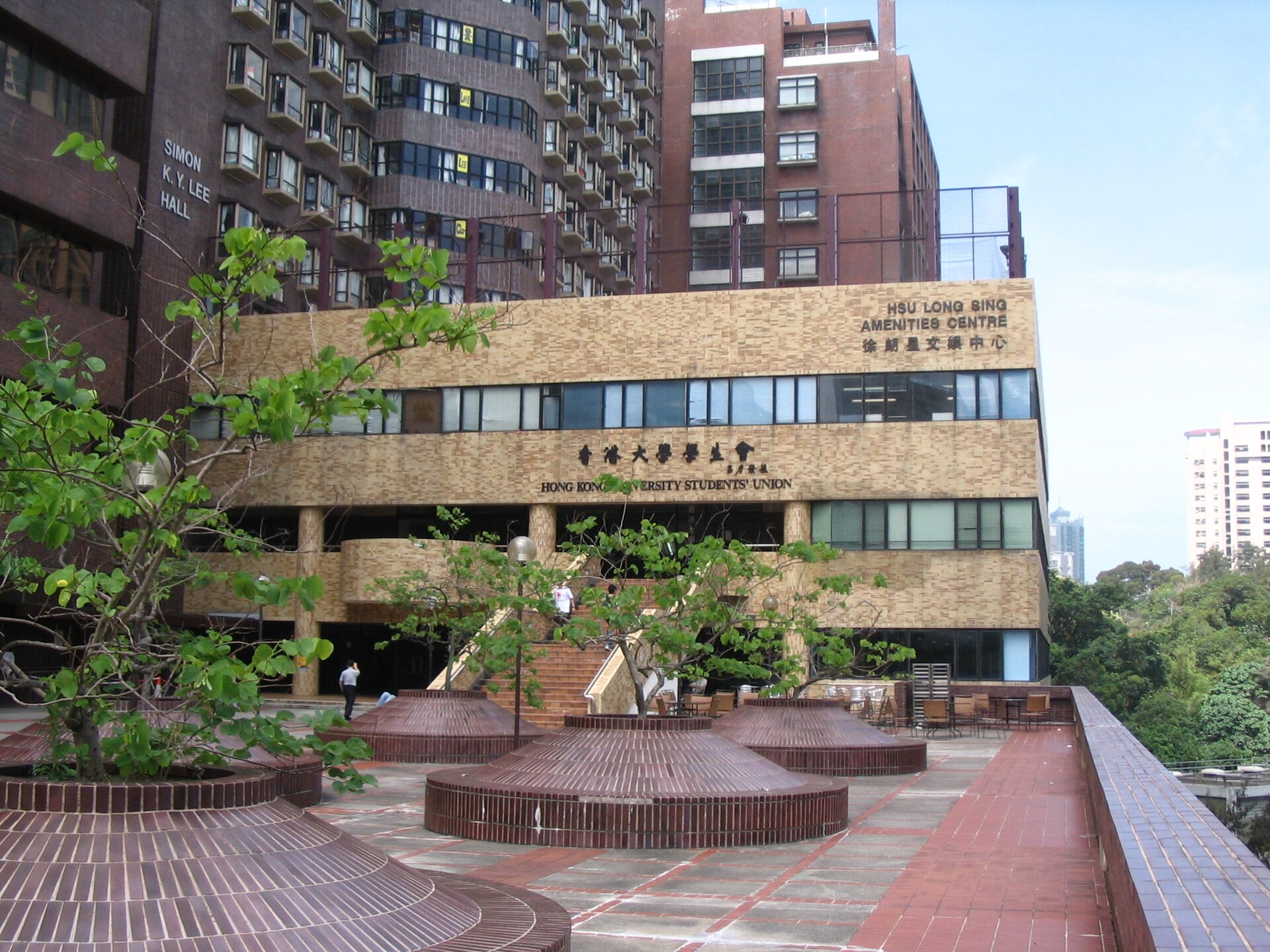
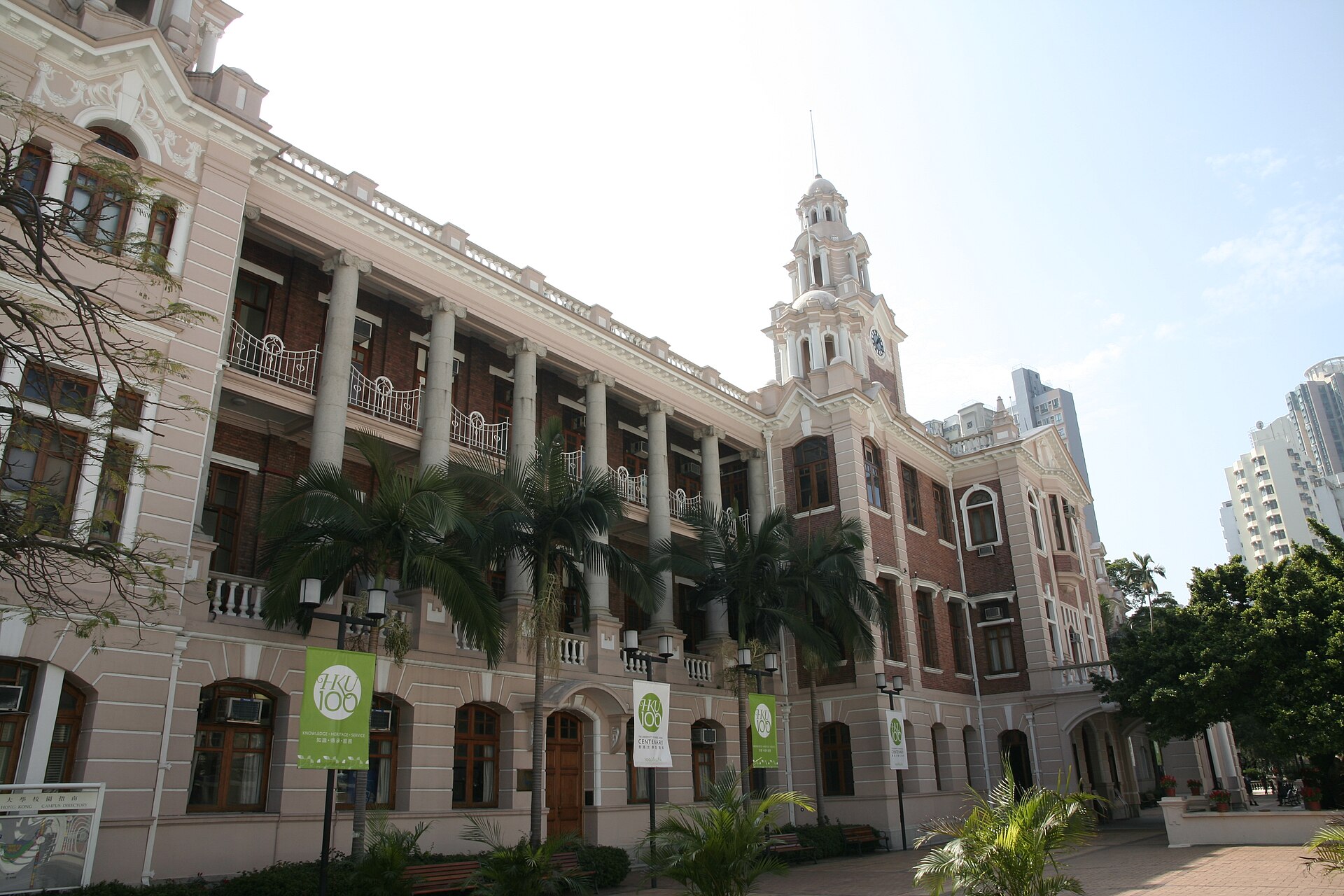
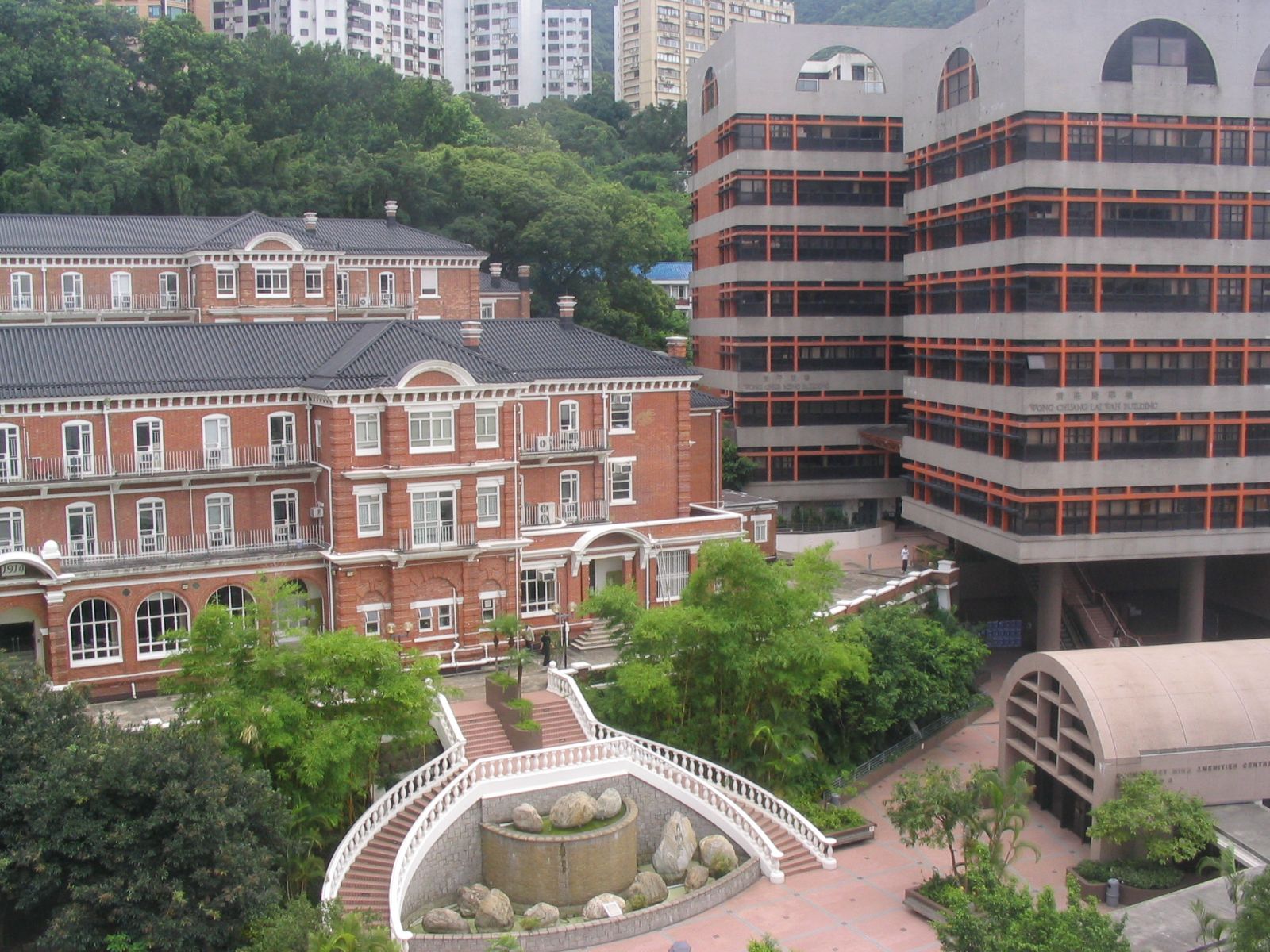
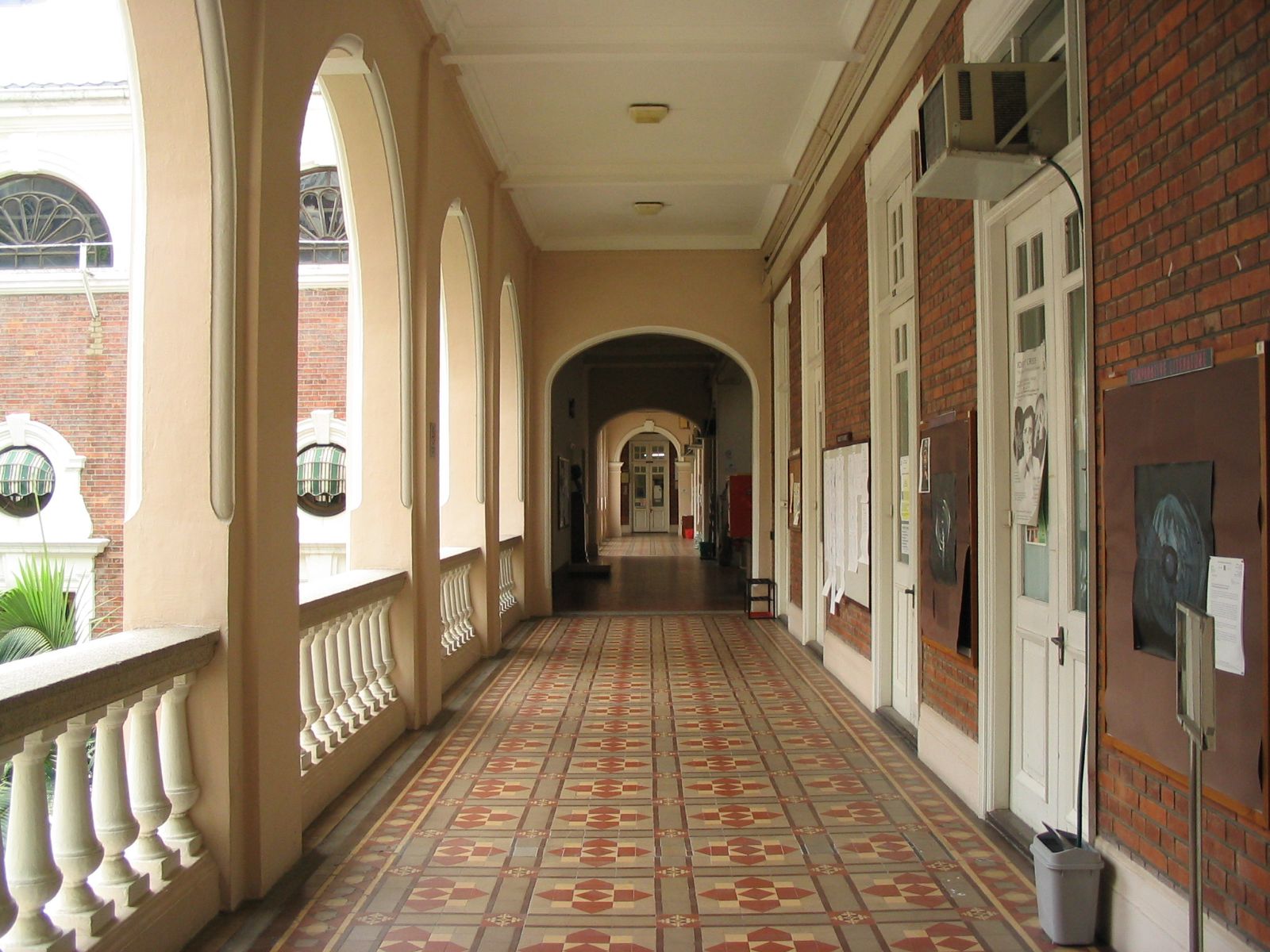
University of Hong Kong — campus in pictures
Real, freely-licensed photographs of the campus (via Wikimedia Commons).


Why HKU — Global Rankings, English-Medium, Asia's Financial Hub
HKU's position at QS #11 globally places it alongside Imperial College London and the University of Chicago. But its real distinction is what it offers that those universities cannot: a world-class education embedded in Asia's most internationally connected city, with a professional network that spans the most important markets on earth.
SELECTIVITY
How Selective Is HKU? Acceptance Rate & Admitted Profile
HKU is selective — and more transparent about academic benchmarks than most US or UK equivalents. Admission is primarily merit-based: your academic qualifications are the dominant factor, and strong grades in the right subjects are the non-negotiable foundation of any competitive application.
With an overall acceptance rate of approximately 12%, HKU is genuinely competitive — particularly for its high-demand programmes. Medicine (MBBS) and Dentistry are among the most competitive professional degree programmes in Asia; Law and select Business programmes are also highly sought-after. Most strong international candidates applying to Engineering, Science, or Social Sciences programmes face more moderate competition. Understanding which programme you are targeting — and what that programme's specific benchmarks are — is the strategic starting point.
AT A GLANCE
HKU Quick Facts
APPLICATION COMPONENTS
What an HKU Application Consists Of Direct Portal, Personal Statement & References
HKU uses a direct application system — not Common App, UCAS, or Coalition App. Applications are submitted through the HKU online portal (ug.hku.hk). The application is holistic in design: academic qualifications are the primary criterion, but the personal statement, references, and — for some programmes — interviews all contribute to the final decision.
WHAT HKU VALUES
What HKU Admissions Is Looking For
HKU evaluates international applicants on academic merit first — more so than most US or UK peer institutions. This is not a system where a strong extracurricular record compensates for weaker grades. The strongest applications combine outstanding academic qualifications with a clear, genuine motivation for the specific programme and an understanding of what Hong Kong means for that programme.
APPLICATION TIMELINE
HKU Application Deadlines — 2026 Entry Rounds, Rolling Admissions & Key Dates
HKU uses a direct online application system (ug.hku.hk) with a structured First Round evaluation followed by rolling admissions. For all competitive programmes, the November First Round deadline is the strategic target — it is when interviews are scheduled and the best-placed applicants receive decisions earliest.
Applicants who have not received an offer by March 31, 2026 should consider themselves waitlisted for later rounds. If no response by early September 2026, the application should be considered unsuccessful. Competitive programmes — Medicine, Dentistry, Law — have effectively depleted available places well before the August final deadline.
| Round | Deadline | Decision | Note |
|---|---|---|---|
| Applications Open | September 2025 | — | Portal opens for 2026 entry intake |
| First Round Evaluation | 26 Nov 2025, 12:00 noon HKT | 1 Dec 2025 – 31 Mar 2026 (rolling) | Strongly recommended; interviews scheduled in this round |
| Rolling Admissions | 26 Nov 2025 – 21 Aug 2026 | Rolling, after First Round offers | Applications accepted; space and competitiveness dependent |
| Final Deadline | 21 Aug 2026, 12:00 noon HKT | By early September 2026 | Last possible submission for 2026 intake year |
CAMPUS & CITY LIFE
Student Life at HKU — Campus, Halls of Residence, and Hong Kong
HKU's main campus occupies a distinctive hillside site in Pokfulam on Hong Kong Island, with a mix of colonial-era heritage buildings and modern research facilities looking out over the South China Sea. The campus is a short MTR (metro) ride from Central — Hong Kong's financial heart — placing it uniquely close to both the academic and commercial centres of the city.
Beyond campus, Hong Kong is the campus. The city offers unparalleled internship access in finance, law, arbitration, and technology; one of the world's safest urban environments; a world-class public transport network; and extraordinary proximity to both Mainland China and Southeast Asia. Students routinely spend weekends in Shenzhen, Macau, or across the Pearl River Delta — daily exposure to opportunities unique to Hong Kong's geographic and political position that no other top-15 university in the world can offer.
Residential life at HKU centres on Halls of Residence and Residential Colleges — on-campus communities that provide housing, dining, mentorship, and an active extracurricular life. These halls are genuine communities: they organise academic and social programming, and residential experience is central to the HKU student identity. Most rooms accommodate two students; single rooms are not typically available for undergraduate exchange students. Competition for hall places is real, and placement in later years is not guaranteed.
GRADUATE OUTCOMES
HKU Graduate Outcomes — Employment, Salary & Industry Reach
HKU graduates consistently achieve among the highest employment rates and starting salaries of any university in Hong Kong. Employer confidence is sustained by HKU's research standing, its professional faculties (Medicine, Law, Business), and its location in one of Asia's leading commercial hubs.
Stats
Cards
FREQUENTLY ASKED QUESTIONS
HKU International Admissions — FAQs
Do I need to speak Cantonese to study at HKU?+
No. All undergraduate teaching at HKU is in English, and the campus is fully navigable in English. That said, Medicine (MBBS) requires demonstrating basic Cantonese communication skills within two years of enrolment — clinical training involves Cantonese-speaking patients. For all other programmes, Cantonese is not an academic requirement, though learning basic conversational Cantonese enriches life in Hong Kong significantly.
Will an HKU degree be recognised if I want to work in the US, UK, or Europe?+
HKU's QS #11 ranking is globally recognised. For careers in international finance, law, and consulting, an HKU degree carries substantial weight — particularly in Asia and among firms with Asia-Pacific operations. For academic careers, the degree is respected. For technology and other sectors in the US or Europe specifically, the degree is well-understood at leading firms but regional context matters. Your field matters more than the name alone.
Is HKU suitable for international students who have never lived in Asia?+
Absolutely — and this is a common pathway. HKU's 40% international student population means you are part of a large, active international community from day one. The university's Global Affairs Office provides structured support. English is fully sufficient on campus and widely used in Hong Kong's professional and hospitality sectors. Hong Kong is consistently rated one of the easiest Asian cities for English-speaking international residents.
What happens if I miss the November First Round deadline?+
Applications are accepted on a rolling basis until August 21, 2026. However, rolling applications compete for places after all First Round applicants are evaluated and offered. For high-demand programmes — Medicine, Dentistry, Law — available places are functionally depleted well before August. For most other programmes, rolling applications receive genuine consideration but earlier applicants have a structural advantage.
Is the interview compulsory for all international applicants?+
No. Interviews are conducted on a selective basis for most programmes — only shortlisted candidates are called. The exception is Medicine (MBBS) and Dentistry, where the Multi-Mini Interview (MMI) is a compulsory, heavily-weighted component of the admissions process for all shortlisted applicants. Some other competitive programmes may conduct selective interviews.
Can I apply to multiple programmes at HKU?+
Yes, the HKU application allows you to list programme preferences. List your genuine first-choice programme first — this affects how your application is prioritised. Research each programme's specific requirements separately; a strong application to Business may not be a strong application to Medicine.
How does HKU compare to HKUST and CUHK?+
All three are excellent, government-funded institutions. HKU is the oldest, highest-ranked globally, and strongest in Medicine, Law, Arts, and Humanities. HKUST is stronger in Science, Engineering, and Technology (particularly in Computer Science and Business Analytics). CUHK has a strong residential college system and a more liberal arts-influenced undergraduate culture. For professional programmes in Medicine and Law, HKU has no domestic peer.
What is the real cost of living in Hong Kong as an HKU student?+
Hong Kong is one of Asia's most expensive cities, but student life can be managed meaningfully below the general cost of living. On-campus hall accommodation is substantially cheaper than private rentals. The MTR public transport network is efficient and inexpensive. Eating in Hong Kong's excellent local restaurants and markets is affordable. The total cost of student living — outside tuition — typically runs US$12,000–18,000 annually depending on accommodation type and lifestyle.
HKU ACADEMIC REQUIREMENTS
HKU Academic Requirements — The Honest Breakdown for International Students
HKU uses a merit-transparent admissions model: academic qualifications are the dominant factor, and its benchmarks are more clearly signalled than most top-20 institutions globally. Understanding what each major qualification framework means for HKU admission — IB, A-Level, SAT/AP — and what programme-specific requirements apply is the foundation of a competitive strategy.
Unlike holistic US universities where a strong extracurricular profile can compensate for academic gaps, HKU leads with academic merit. The personal statement and references add context and can differentiate candidates at the margins — but they do not substitute for the academic record. Get the grades right first. Everything else is secondary.
ADMITTED STUDENT PROFILE
HKU Admitted Student Academic Benchmarks
HKU's indicative benchmarks by major qualification. Note that programme-specific requirements vary significantly — Medicine, Dentistry, and Law are substantially more competitive than university-wide averages suggest. Always research your target programme's specific requirements on the HKU admissions portal.
HKU does not publish SAT or ACT middle-50% bands for admitted students. SAT is accepted as a qualification pathway — competitive applicants typically present 1450+ overall, supplemented with AP scores. See the Standardised Tests section for detailed SAT/ACT guidance.
QUALIFICATION POLICY
HKU's Qualification Policy — Flexible, Not Test-Optional
HKU does not require the SAT or ACT specifically. This is not 'test-optional' in the US sense — it is qualification-flexible: you may apply via IB Diploma, GCE A-Levels, SAT/ACT/AP, national examinations, or combinations thereof. The right framework is whichever you completed in your secondary school context.
HKU's admissions office has extensive experience evaluating transcripts from a wide variety of national education systems — Indian CBSE, Chinese national qualifications, Malaysian UEC, and more. If your qualification falls outside IB, A-Level, or SAT, contact the HKU admissions office (counsellors@hku.hk) to confirm how your qualifications will be evaluated for your target programme.
Most international applicants to HKU apply through either the IB Diploma or GCE A-Levels — the two most commonly accepted and experienced-evaluated frameworks. SAT/ACT is accepted but functions as one input among many; because the SAT alone does not provide subject-depth evidence comparable to IB or A-Level, SAT applicants typically supplement with AP subject scores.
SAT & ACT AT HKU
SAT and ACT at HKU — What the Scores Actually Mean
SAT and ACT are accepted at HKU but function differently than in the US. HKU does not publish SAT or ACT middle-50% bands, and these tests are assessed as supplementary academic evidence rather than the primary qualification credential — they carry less inherent subject-depth signal than an IB Diploma or A-Level result.
The ACT is accepted with equivalent weight to the SAT. No specific ACT benchmarks are published for HKU admission. Strong ACT applicants should similarly supplement with AP scores where possible. For students whose primary qualification is IB or A-Level, there is no particular advantage to additionally submitting SAT or ACT scores — your existing qualification framework is well-understood and evaluated.
For students applying via SAT, the competitive benchmark is typically 1450+ overall (1500+ for high-demand programmes such as Business and Law). The SAT Evidence-Based Reading and Writing score of 610+ satisfies HKU's English language proficiency requirement when achieved in the same sitting. Supplementing SAT with strong AP subject scores (5s in subjects relevant to your programme) significantly strengthens an SAT-based application — it is the closest SAT applicants can get to the subject-depth evidence that IB and A-Level provide intrinsically.
IB · A-LEVEL · AP
IB Diploma, A-Levels, and AP at HKU — Benchmarks and Strategy
The IB Diploma and GCE A-Levels are the two frameworks HKU is most experienced in evaluating. Each has specific implications for your subject choices, score targets, and programme eligibility.
SUBJECT REQUIREMENTS BY PROGRAMME
Subject-Level Preparation — HKU by Programme
HKU's competitive programmes have specific subject requirements that cannot be substituted. Understanding these before finalising your IB HL subjects or A-Level options — ideally in Grade 10 or early Grade 11 — is essential for keeping your options open.
ENGLISH PROFICIENCY
HKU English Language Requirements for International Students
HKU requires demonstrated English proficiency for all undergraduate international applicants. Most students satisfy this requirement through their qualification itself — IB English grades, IGCSE/GCSE English results, or equivalent. Standardised English tests are required only if your qualification does not include a recognised English component.
Students who have completed at least one year of a bachelor's degree at a recognised English-medium university may satisfy the English requirement without a separate language test. Certain faculties — particularly Medicine — may impose English requirements above the general university minimum. Duolingo is listed in the facts file (minimum 120); confirm acceptance on the current HKU admissions portal as it was not listed on the official English requirement page at time of authoring.
| Test | Minimum | Notes |
|---|---|---|
| IELTS Academic | 6.5 overall | Same-attempt score required; no home/online edition; valid within 2 years of September 1 of intake year |
| TOEFL iBT | 80 (facts file) | Official HKU undergraduate page indicates 93 iBT; confirm current requirement on admissions portal; home edition not accepted |
| SAT (Evidence-Based R&W) | 610 (same attempt) | Section score satisfies English proficiency requirement when achieved in the same test sitting |
| PTE Academic | 64 | Pearson Test of English Academic module |
| Cambridge Certificate | C1 / 180 overall | CPE at Level C1 or CAE Grade C with overall score of 180 or above |
| IB English | Grade 4+ HL/SL English A; Grade 5+ SL English B | Satisfies English requirement within IB Diploma — no separate test needed if achieved |
GRADE 9 TO APPLICATION
Building Your HKU Profile — A Year-by-Year Roadmap
HKU's admissions model rewards consistent academic excellence across the full secondary school record. There is no single moment to build a competitive application — it compounds from Grade 9 onward. The decisions you make in Grade 10 about subject choices directly constrain or open your options in Grade 12.
COMMON MISTAKES
Academic Application Mistakes to Avoid at HKU
Items
- Choosing IB HL subjects for grade-optimisation rather than programme alignment. Dropping Chemistry HL because it is harder than another HL is disqualifying for Medicine and Dentistry — regardless of your total IB score.
- Underestimating how competitive Medicine and Dentistry are. The university-wide IB benchmark of 40 is not the Medicine benchmark. MBBS competitive applicants typically present 42–44+ with Chemistry HL 7 and multiple further 7s.
- Applying via SAT alone without AP scores. The SAT does not provide subject-depth evidence. Supplement with at least 2–3 AP 5s in subjects relevant to your intended programme.
- Applying after November for competitive programmes. Rolling admissions is real, but Medicine, Dentistry, and Law places are functionally filled through First Round evaluation. For any competitive programme, apply by November 26.
- Not addressing the English language requirement in advance. If your qualification does not automatically satisfy the English requirement, arrange IELTS or the relevant test early — scores must be achieved within 2 years of your intended September intake date.
- For A-Level Medicine applicants: not sitting the UCAT. The UCAT is a required component for A-Level-qualified MBBS applicants — top 20% UCAT scorers receive interview priority. This requires separate preparation beyond your A-Level subjects.
- Expecting HKU to weight extracurriculars like a US university. Academic qualifications dominate. A strong IB score with a limited extracurricular record is significantly more competitive than a modest IB score with an impressive activities list.
Faqs
Will HKU accept a predicted IB score, or do I need final results?+
HKU accepts applications based on predicted grades. You can — and should — apply before your final IB results, particularly to make the November First Round deadline. Conditional offers are made based on predicted grades and confirmed upon receipt of final results.
Does HKU consider the IB Extended Essay?+
Yes. The EE grade and subject are reviewed as supplementary academic evidence. An EE grade of A or B in a subject relevant to your intended programme adds positive academic context — it signals research capability and intellectual engagement beyond the standard curriculum. A C or below is not typically disqualifying but adds nothing.
COST & AID
The True Cost of an HKU Education for International Students
HKU is meaningfully less expensive than comparably ranked universities in the UK, US, or Australia — and dramatically so when you factor in HKU's merit scholarship programme. For a QS #11 institution in one of Asia's great cities, HKU offers value that few equivalently ranked universities anywhere in the world can match.
Annual tuition for non-local undergraduate students is approximately US$30,000, with a total cost of attendance — including accommodation and living — of approximately US$40,000 per year. Hong Kong is a high-cost city, but student life, particularly with on-campus accommodation and disciplined spending, can be managed significantly below the city's general cost profile. And for students qualifying for HKU's IB Scholarship, the equation improves substantially.
ANNUAL COST ESTIMATE
HKU Cost Breakdown — International Students (Annual)
Costs below are annual estimates in USD using facts file values. Official HKU fee schedule figures in HKD are noted for reference. All figures are indicative estimates subject to annual review.
Official fee schedule at calendar.hku.hk differentiates between STEM and non-STEM programmes. For 2025-26, non-local students pay HK$218,000/yr for STEM programmes and HK$198,000/yr for non-STEM. Medicine and other professional programmes may differ. Confirm fees for your specific programme and intake year on the official HKU fee schedule.
| Component | Amount | Notes |
|---|---|---|
| Tuition (non-local undergraduate) | ~US$30,000 | Approx. HK$198,000–218,000/yr; STEM programmes charged at higher rate |
| Total cost of attendance | ~US$40,000 | Tuition + accommodation + living + personal (annual estimate) |
| Cost of living (student estimate) | ~US$18,000 | Accommodation, food, transport, personal expenses; on-campus living reduces this |
| Application fee | ~US$58 | Approximately HK$450 for non-JUPAS (international) applicants |
| Additional fees | Variable | Student Activity Fee ~HK$100/yr; caution money HK$350 (one-off); graduation fee HK$350 |
FINANCIAL AID
Financial Aid at HKU — What International Students Can Access
HKU does not operate a large-scale need-based financial aid programme for international undergraduate students equivalent to the US Ivy League model. There is no published average aid percentage for international students. The primary financial support mechanism for international applicants is HKU's merit scholarship system, which is substantial and — for IB students — automatic.
Students with financial need who do not qualify for named scholarships should carefully assess affordability before applying. Limited bursary support exists for students with demonstrated exceptional financial hardship, but these are not guaranteed and are modest in scale compared to US need-based aid programmes. The realistic planning assumption for most international applicants is full tuition cost unless a named scholarship is secured.
Students from countries participating in the Belt and Road Initiative or from less-developed countries should research the Belt and Road Scholarship and HeForShe IMPACT Champion Scholarship — these programmes provide more comprehensive support packages (including living allowances) that meaningfully change the affordability picture.
NAMED SCHOLARSHIPS
HKU Entrance Scholarships for International Students
HKU offers several named entrance scholarship programmes for outstanding international students. The most significant are detailed below — ranging from the fully automatic IB Scholarship to targeted application-based awards.
THE NET PRICE REALITY
HKU Affordability — The Net Price for International Students
At the standard non-local tuition rate, HKU costs approximately US$30,000/year in tuition — comparable to mid-tier UK universities and substantially less than US peers of equivalent rank. Total cost of attendance is approximately US$40,000/year.
For students not qualifying for scholarships, HKU's cost profile is still favourable relative to peers. A year at HKU with total cost of attendance around US$40,000 compares favourably with UCL, Imperial College, or equivalent Australian Group of Eight universities — all at similar or higher total cost for international students and lower QS rankings.
For students eligible for the automatic IB Scholarship — achieved by scoring 44 or 45 IB Diploma points — the effective tuition cost drops to US$15,000 or US$0 respectively. This makes HKU's total cost of attendance more competitive than virtually any similarly-ranked institution in the English-speaking world for these high-achieving applicants.
HKU does not operate a no-loan aid policy. Students for whom the full cost is unmanageable without scholarship support should factor this carefully into their application strategy. External scholarships from home governments and foundations that recognise globally-ranked universities are worth researching as supplementary funding sources.
HOW TO SECURE FUNDING
Step-by-Step: Applying for Financial Support at HKU
LIVING IN HONG KONG
Cost of Living in Hong Kong — Student Budget Guide
Hong Kong is consistently ranked among Asia's most expensive cities. However, student life at HKU can be managed significantly below the city's general cost profile through strategic choices about accommodation, food, and transport.
Hong Kong's MTR public transport network is one of the world's most efficient and is inexpensive by global city standards. The primary variable in student living costs is accommodation — students who secure on-campus housing spend considerably less than those in the private rental market. The US$18,000 annual cost-of-living estimate in the facts file is a realistic working budget for a student with on-campus accommodation and disciplined spending.
On-campus hall accommodation is the single most important cost-management decision. Hall fees at HKU are substantially lower than private rental in Hong Kong's residential market — and living on campus eliminates daily commuting costs. The HKU campus canteens and surrounding Pokfulam restaurants offer affordable daily meals; Hong Kong's local dining culture (cha chaan teng, dai pai dong, food courts) provides excellent food at low cost for students willing to engage with local eating habits.
COST FAQs
HKU Cost & Financial Aid — FAQs
If I score 45 on the IB, does HKU really cover full tuition?+
Yes — automatically, with no separate application. HKU's IB Diploma Scholarship covers full tuition fees for non-local students admitted with 45 IB points. At current tuition rates, this is approximately US$30,000/year in tuition covered for the duration of your degree. Living costs remain your responsibility.
Are there scholarships for students without an IB Diploma?+
Yes. The Belt and Road Scholarship is open to students from participating countries regardless of qualification type. The HeForShe Scholarship is open to applicants from diverse backgrounds and frameworks. The FLY Scholarship is open to all admitted students with entrepreneurial ambitions. None of these require an IB Diploma.
Does HKU offer need-based financial aid for international students?+
HKU does not operate a large-scale need-based aid programme for international undergraduates comparable to US Ivy League universities. Named merit scholarships are the primary route to financial support. Limited bursary provisions exist for students with exceptional financial hardship but are modest in scale. Students who require significant need-based support to afford the full cost should assess this carefully before applying.
Can international students work part-time in Hong Kong?+
International students on a student visa in Hong Kong are generally permitted to work part-time. Work opportunities exist on campus and in Hong Kong's service, retail, and professional sectors. Confirm current student visa work conditions with the Hong Kong Immigration Department before making financial plans that depend on part-time income.
Are programme tuition fees all the same at HKU?+
No. The official HKU fee schedule differentiates between STEM and non-STEM programmes. For 2025-26, non-local students in STEM programmes pay approximately HK$218,000/year; non-STEM students pay approximately HK$198,000/year. Medicine, Dentistry, and other professional programmes may have separate fee structures. Check calendar.hku.hk for the Schedule of Fees for your specific programme and intake year.
How does HKU's total cost compare to UK universities of similar rank?+
Favourably. UCL, Imperial College, and other UK universities in a similar global ranking band charge international tuition of approximately £30,000–40,000/year (US$38,000–51,000) before London living costs. HKU's total cost of attendance at approximately US$40,000/year is competitive — and significantly lower for IB Scholarship recipients. For high-achieving IB students, HKU offers a considerably better financial proposition than most UK peer institutions.
THE PERSONAL STATEMENT
HKU Personal Statement — The Guide for International Applicants
HKU's application is not essay-heavy in the way US universities are. There are no supplemental essays, no roommate letters, no short-answer activities paragraphs. The personal statement is the singular narrative document — and it carries corresponding weight as the only piece of writing the admissions office receives directly from you.
For international students applying to HKU, the personal statement does three things simultaneously: it demonstrates genuine academic passion for your chosen subject; it explains why you chose HKU and its specific academic environment; and it shows that you have thought meaningfully about what Hong Kong — as a city, a legal system, a financial market, a research environment — means for your study and career. A well-crafted personal statement distinguishes applications at the margins. A generic one disappears in a competitive pool.
APPLICATION FORMAT
HKU Application Format — How the Personal Statement Works
HKU uses a direct application system (ug.hku.hk), not Common App or UCAS. The personal statement is a required component of the HKU online application for all international students.
Unlike the US Common Application (with standardised prompts and strict 650-word limits), HKU's personal statement is an open-format document. You are expected to address your academic motivations, relevant experiences, and reasons for choosing HKU and your programme. Specific word limits and any required questions may vary by programme and application cycle — check the current portal for the exact prompt format when you apply. As a practical working target, aim for 600–800 words.
Medicine (MBBS) and Dentistry (BDS) applicants may be required to submit additional programme-specific materials alongside the main personal statement — including information related to the MMI process and, for A-Level applicants, UCAT registration. Check the specific programme page on the HKU admissions site for additional requirements.
WHAT TO ADDRESS
What Your HKU Personal Statement Must Address
HKU does not publish fixed, numbered essay prompts in the way US universities do. The personal statement is guided by the themes every strong HKU application addresses. Treat these as the implicit questions your statement must convincingly answer.
WRITING STRATEGY
How to Write an HKU Personal Statement That Stands Out
The HKU personal statement is a structured argument for why you are the right student for this programme at this institution. It is not a life story, an achievement catalogue, or a statement of ambition. The strongest personal statements are academically grounded, programme-specific, and distinctively individual.
Structurally, the most effective HKU personal statements move from specific to general: begin with a precise intellectual moment — a question that you couldn't stop thinking about, a clinical observation that stayed with you, a financial problem you tried to model — then move outward to explain how that encounter crystallised your programme choice, and why HKU is specifically where you want to pursue it. End with Hong Kong: not as an afterthought, but as a considered choice. An applicant who can articulate why Hong Kong specifically is the right context for their development is instantly more credible than one who treats Hong Kong as interchangeable with any other ranked location.
The most damaging mistake international applicants make is submitting a personal statement designed to work for multiple universities simultaneously. Generic documents are visible to experienced readers immediately. For HKU, write a statement that would only fully make sense for HKU. Reference something specific to HKU's academic environment — its research centres, teaching hospitals, faculty publications, or programme architecture. The difference between a personalised and a generic statement is often the difference between being shortlisted and being declined.
On length: HKU does not universally publish a word limit for personal statements across all programmes. As a practical working target, 600–800 words is appropriate. A concise, dense, specific statement outperforms a long generic one at every length. Adjust to the specific word limit shown in the current application portal for your programme.
MEDICINE & PROFESSIONAL PROGRAMMES
Additional Materials for Medicine, Dentistry & Law
Applicants to Medicine (MBBS), Dentistry (BDS), and Law face additional evaluation components beyond the standard personal statement. These are programme-specific and require separate, deliberate preparation.
TOPIC SELECTION
Choosing What to Write About — Topic Selection for HKU
Topic selection comes down to one question: what single experience, intellectual question, or sustained engagement most directly and authentically connects to why you are applying to this programme at HKU?
What consistently fails: chronological autobiography ('since childhood I have always...'), achievement catalogues without analytical depth, vague inspiration language, and generic enthusiasm for Hong Kong without substantive engagement with what the city specifically offers the applicant's field. What consistently works: intellectual honesty about a real question or observation, analytical engagement with the academic discipline, and evidence of having thought carefully about why HKU and Hong Kong specifically.
The answer is almost never 'everything'. The strongest personal statements are focused — they make a clear argument through a specific lens. A student applying to Law might build the entire statement around one legal problem they investigated; a student applying to Medicine might structure everything around a single clinical encounter that transformed how they understand the relationship between science and patient care; a student applying to Business might begin with a specific market observation they couldn't explain at the time but then pursued.
WHAT TO AVOID
Personal Statement Mistakes That Hurt HKU Applications
- Writing a personal statement designed for multiple universities simultaneously. Generic statements are immediately recognisable to experienced readers. Write specifically for HKU — if the statement could be submitted unchanged to UCL, it is not a strong HKU application.
- Not addressing the Hong Kong dimension. This is the single most common missed opportunity in HKU international applications. Applicants who cannot articulate why Hong Kong specifically matters for their intended programme read as applicants who applied to HKU because of the ranking, not because of the institution or the city.
- Leading with achievements and awards rather than intellectual engagement. Your transcript already shows your grades and activities. The personal statement should add something the transcript cannot: your thinking, your questions, your intellectual development. Opening with 'I have achieved the following...' wastes your most valuable opening paragraph.
- Using vague motivational language: 'I have always been passionate about Medicine' or 'I want to make a difference in the world.' These are placeholders that every applicant writes. Replace them with specific observations, precise questions, and honest intellectual encounters.
- For Medicine applicants: describing clinical experience without analytical reflection. The value of clinical shadowing is not the hours — it is what you observed and what it taught you about medicine as a profession and a practice. Write about the observation and its implications, not just that the placement occurred.
- Submitting a first or second draft without revision. Personal statements almost universally improve substantially through revision — typically 3–5 drafts. Get feedback from someone who can read critically, not just supportively. Counsellors, teachers, or peers with strong academic writing skills all provide better feedback than friends who want to be encouraging.
- For A-Level Medicine applicants: treating the UCAT and MMI as afterthoughts to the personal statement. These components collectively carry more weight than the personal statement for MBBS admission. Allocate preparation effort accordingly.
ESSAY FAQs
HKU Personal Statement — FAQs
Does HKU require a personal statement, or is it optional?+
The personal statement is a required component of the HKU international application. It is evaluated alongside academic qualifications, references, and (where applicable) interview performance. Treat it as required and substantive — not as a formality.
Can I use my UCAS personal statement for my HKU application?+
Not directly. UCAS personal statements are formatted for UK university admissions — they are not addressed to HKU specifically, and the UCAS format (open-ended, covering multiple universities) works differently from an HKU-specific statement. You can draw on themes and experiences from your UCAS personal statement, but the framing, the 'why HKU', and the Hong Kong dimension must be freshly written for the HKU context.
What word limit should I write to?+
Check the current HKU application portal for the specific word limit for your programme and cycle — this can change. As a practical working target, 600–800 words is appropriate for most programmes. A concise, specific, dense statement consistently outperforms a longer generic one. Write to the portal's stated limit if it differs from this guidance.
Should I mention specific HKU professors or courses in my personal statement?+
Yes — if you can do so authentically. Naming a specific faculty member whose research interests connect to your own, or a specific HKU programme structure or course that does not exist elsewhere, demonstrates genuine research and genuine motivation. Only mention what you have actually investigated — fabricated or superficial references are transparent to readers who know their own faculty.
Is the personal statement more important for some programmes than others at HKU?+
Yes. For Medicine and Law — where multiple candidates meet the academic benchmark and interviews or reasoning tests are key differentiators — the personal statement still matters but operates alongside other evaluation components. For Engineering and Science programmes with clear quantitative benchmarks, the personal statement carries relatively less differentiating weight. Invest effort proportional to the programme's selectivity and the weight its evaluation process places on non-academic materials.
How important is the 'Why Hong Kong' element really?+
More important than most applicants realise. HKU admissions officers have seen many applications from students who chose HKU primarily because of its ranking and treat Hong Kong as incidental. Students who have genuinely thought about what Hong Kong's specific environment — its legal infrastructure, its financial markets, its research history, its geographic position — means for their education are immediately more compelling. This is not about manufactured enthusiasm. It is about demonstrating that you chose HKU specifically, not just a highly-ranked English-medium institution.
Does HKU conduct a writing test as part of admissions, or is the personal statement the only piece of writing evaluated?+
For most programmes, the personal statement is the only piece of writing directly evaluated. For Medicine and Dentistry, the MMI (Multi-Mini Interview) assesses communication and reasoning under time pressure — this is not a written exercise, but verbal communication is tested analogously. There is no general writing test or aptitude examination for most HKU undergraduate programmes.
Courses — schools, degrees & intake
93 degrees across 13 groupings.
Faculty of Architecture · 5 degrees
Bachelor of Arts in Architectural Studies
Bachelor of Science in Surveying
Bachelor of Arts in Landscape Studies
Bachelor of Arts in Urban Studies
Bachelor of Arts and Sciences in Design+
Faculty of Arts · 11 degrees
Bachelor of Arts (Major in Art History)
Bachelor of Arts (Major in Chinese History and Culture)
Bachelor of Arts (Major in Chinese Language and Literature)
Bachelor of Arts (Major in Comparative Literature)
Bachelor of Arts (Major in English Studies)
Bachelor of Arts (Major in Gender Studies)
Bachelor of Arts in Humanities and Digital Technologies
Bachelor of Arts and Bachelor of Engineering in Artificial Intelligence and Data Science
Bachelor of Arts and Bachelor of Laws
Bachelor of Arts and Bachelor of Education in Language Education - English
Bachelor of Arts and Bachelor of Education in Language Education - Chinese
HKU Business School · 14 degrees
Bachelor of Business Administration (Major in Entrepreneurship, Design and Innovation)
Bachelor of Business Administration (Major in Finance)
Bachelor of Business Administration (Major in Human Resource Management)
Bachelor of Business Administration (Major in Information Systems and Analytics)
Bachelor of Business Administration (Major in Marketing)
Bachelor of Business Administration (Major in Business Analytics)
Bachelor of Business Administration in Accounting and Finance / Accounting Data Analytics
Bachelor of Economics / Bachelor of Economics and Finance
Bachelor of Finance in Asset Management and Private Banking
Bachelor of Science in Quantitative Finance
Bachelor of Science in Marketing Analytics and Technology
Bachelor of Business Administration in International Business and Global Management
Bachelor of Global Leadership, Innovation and Society
Bachelor of Business Administration (Law) and Bachelor of Laws
Faculty of Dentistry · 1 degrees
Bachelor of Dental Surgery
Faculty of Education · 3 degrees
Bachelor of Education in Early Childhood Education and Special Education
Bachelor of Education and Bachelor of Science
Bachelor of Science in Speech-Language Pathology
Faculty of Engineering · 6 degrees
Bachelor of Engineering in Civil Engineering
Bachelor of Engineering in Computer Engineering
Bachelor of Engineering in Data and Systems Engineering
Bachelor of Engineering in Mechanical Engineering
Bachelor of Engineering Elite Programme
Bachelor of Engineering and Master of Science in Engineering in Artificial Intelligence in Engineering
Faculty of Law · 3 degrees
Bachelor of Laws
Bachelor of Science and Bachelor of Laws
Bachelor of Social Sciences (Government and Laws) and Bachelor of Laws
Li Ka Shing Faculty of Medicine · 8 degrees
Bachelor of Medicine and Bachelor of Surgery (MBBS)
Bachelor of Medicine and Bachelor of Surgery (Distinguished MedScholar)
Bachelor of Nursing
Bachelor of Nursing Advanced Leadership Track
Bachelor of Chinese Medicine
Bachelor of Pharmacy
Bachelor of Biomedical Sciences
Bachelor of Arts and Sciences in Global Health and Development
Faculty of Science · 18 degrees
Bachelor of Science (Major in Biochemistry)
Bachelor of Science (Major in Biological Sciences)
Bachelor of Science (Major in Chemistry)
Bachelor of Science (Major in Earth System Science)
Bachelor of Science (Major in Ecology and Biodiversity)
Bachelor of Science (Major in Environmental Science)
Bachelor of Science (Major in Food and Nutritional Science)
Bachelor of Science (Major in Geology)
Bachelor of Science (Major in Mathematics)
Bachelor of Science (Major in Molecular Biology and Biotechnology)
Bachelor of Science (Major in Physics)
Science Master Class (Major in Biological Sciences)
Science Master Class (Major in Chemistry)
Science Master Class (Major in Ecology and Biodiversity)
Science Master Class (Major in Geology)
Science Master Class (Major in Mathematics)
Science Master Class (Major in Molecular Biology and Biotechnology)
Science Master Class (Major in Physics)
Faculty of Social Sciences · 16 degrees
Bachelor of Psychology
Bachelor of Social Sciences (Major in Cognitive Science)
Bachelor of Social Sciences (Major in Computational Social Science)
Bachelor of Social Sciences (Major in Counselling)
Bachelor of Social Sciences (Major in Criminology)
Bachelor of Social Sciences (Major in Geography)
Bachelor of Social Sciences (Major in Media and Cultural Studies)
Bachelor of Social Sciences (Major in Neuroscience)
Bachelor of Social Sciences (Major in Politics and Public Administration)
Bachelor of Social Sciences (Major in Psychology)
Bachelor of Social Sciences (Major in Social Policy and Social Development)
Bachelor of Social Sciences (Major in Sociology)
Bachelor of Social Sciences (Major in Urban Governance)
Bachelor of Social Work
Bachelor of Arts in Global Creative Industries
Bachelor of Journalism, Media and Artificial Intelligence
School of Biomedical Engineering · 1 degrees
Bachelor of Engineering in Biomedical Engineering
School of Computing and Data Science · 6 degrees
Bachelor of Arts and Sciences in Applied Artificial Intelligence
Bachelor of Arts and Sciences in Financial Technology
Bachelor of Science in Actuarial Science
Statistical Decision Sciences
Computing and Data Science
Computing and Data Science (Delta+)
School of Innovation · 1 degrees
Bachelor of Science in Innovation and Technology
Want your real chances at University of Hong Kong?
Create a free TYCHR account for your personalised admit-chance, a shortlist you can track, exact entry requirements, and essay + counselling help.