UNSW Sydney
Sydney, Australia · Urban
TYCHR ADMISSIONS GUIDE
UNSW Sydney — Guide for International Students
UNSW Sydney (University of New South Wales), founded in 1949, is Australia's #1-ranked university by QS and a global powerhouse in engineering, technology, business, and research. Situated on a 38-hectare campus in Kensington, seven kilometres from the Sydney CBD, UNSW attracts a third of its 60,000 students from abroad, making it one of the most internationally diverse campuses in the Asia-Pacific. If you are an ambitious international student who wants to graduate employment-ready in one of the world's great cities, UNSW is in a class of its own in Australia.
This guide is written for international students applying to UNSW Sydney's undergraduate programmes. Australian university admission is grades-based — there are no personal essays required for general entry. Selection is based on academic merit via your International ATAR equivalent (converted from IB, A-Levels, CBSE, Gaokao, or other recognised qualifications). Understanding how UNSW reads your academic profile, which scholarships to target, and how the trimester system works is the foundation of a successful application strategy.
Campus
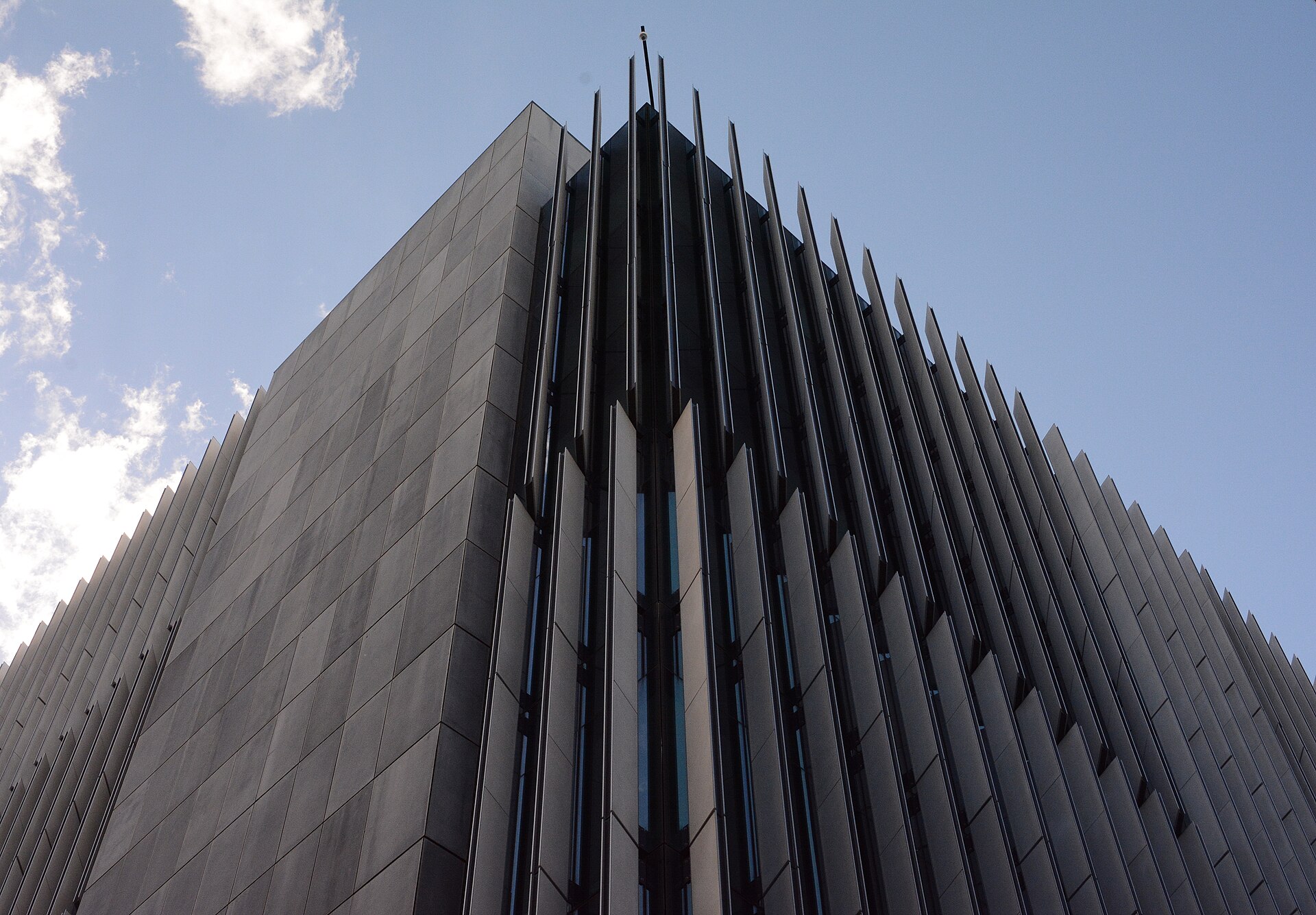
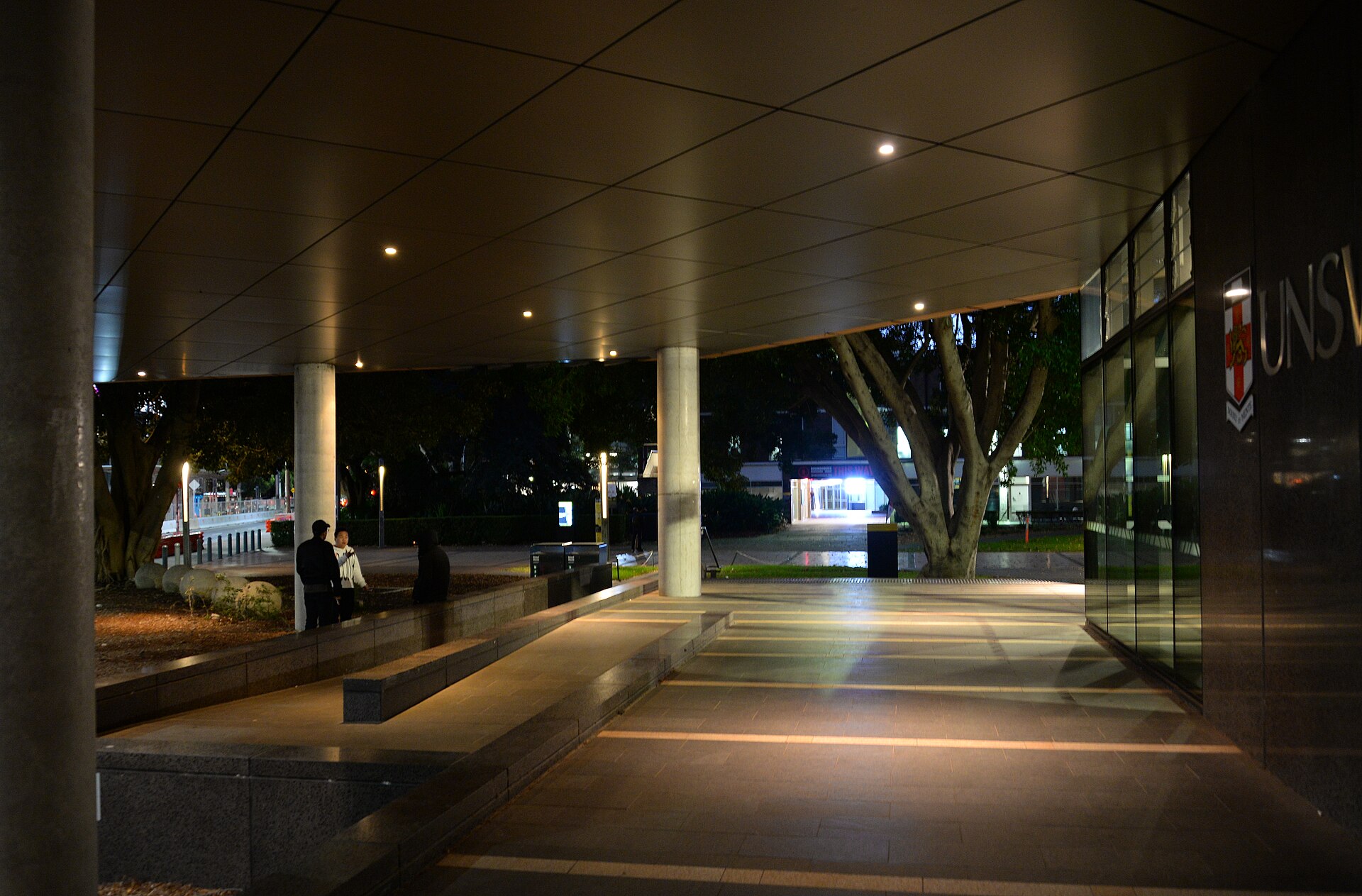
UNSW Sydney — campus in pictures
Real, freely-licensed photographs of the campus (via Wikimedia Commons).
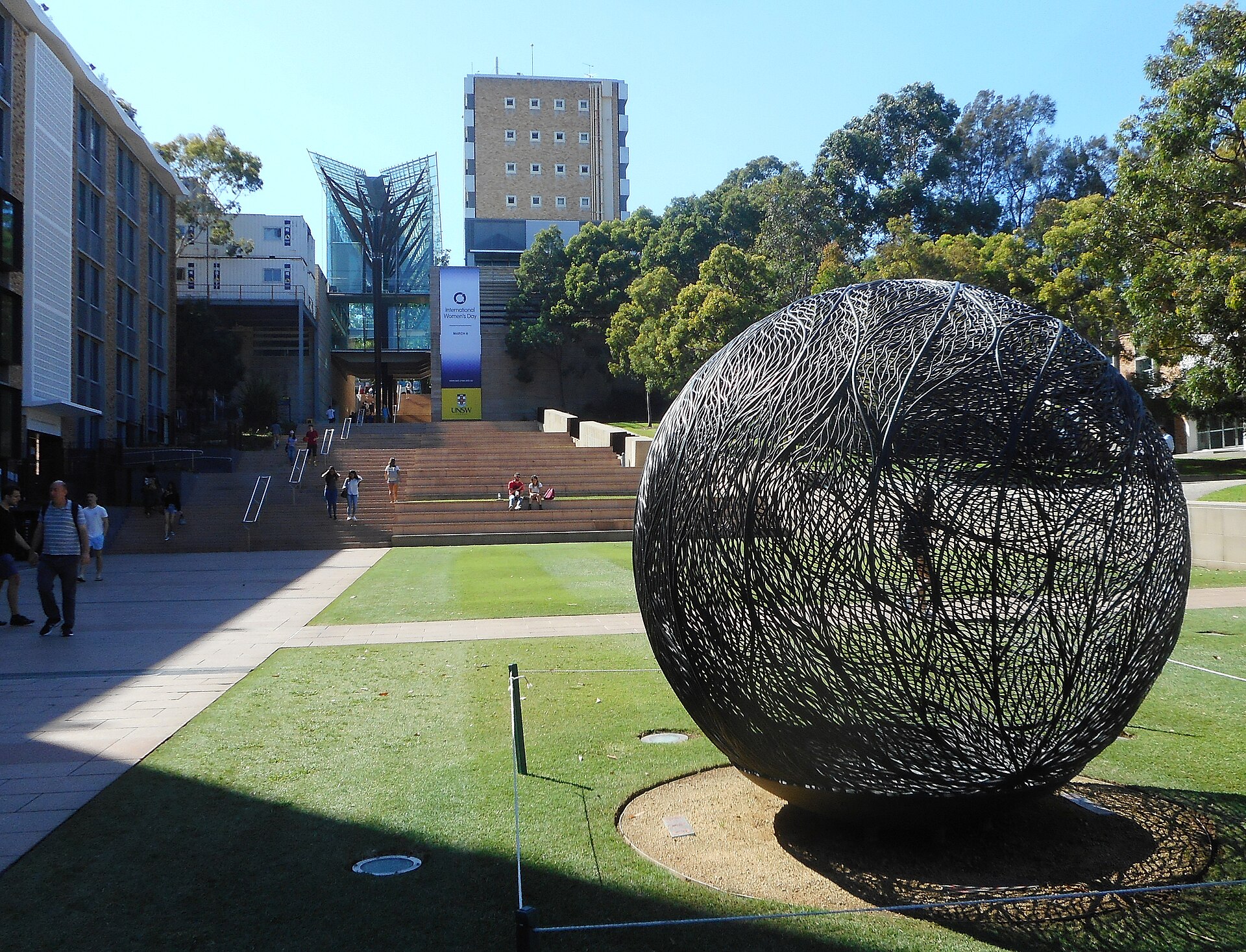
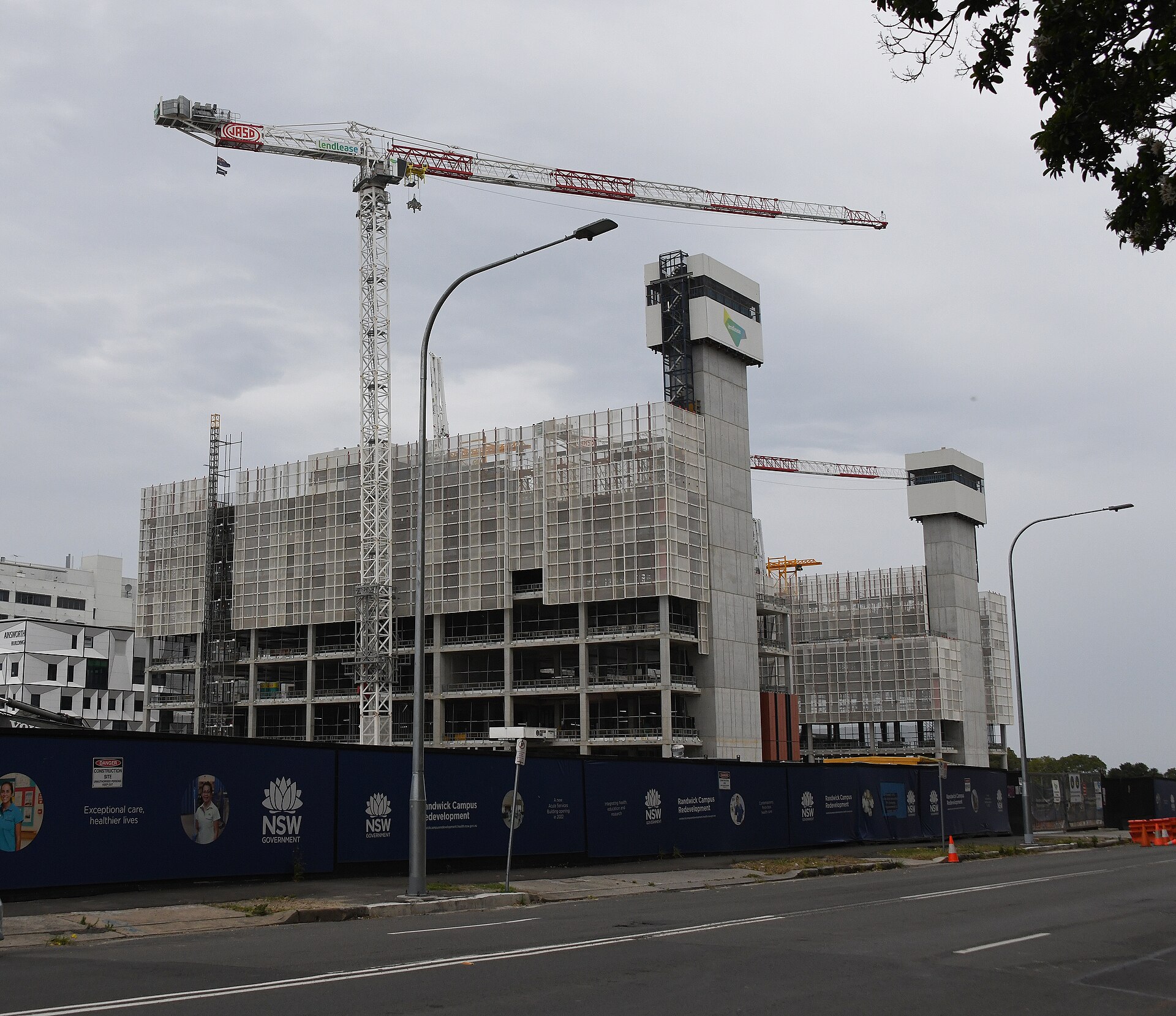
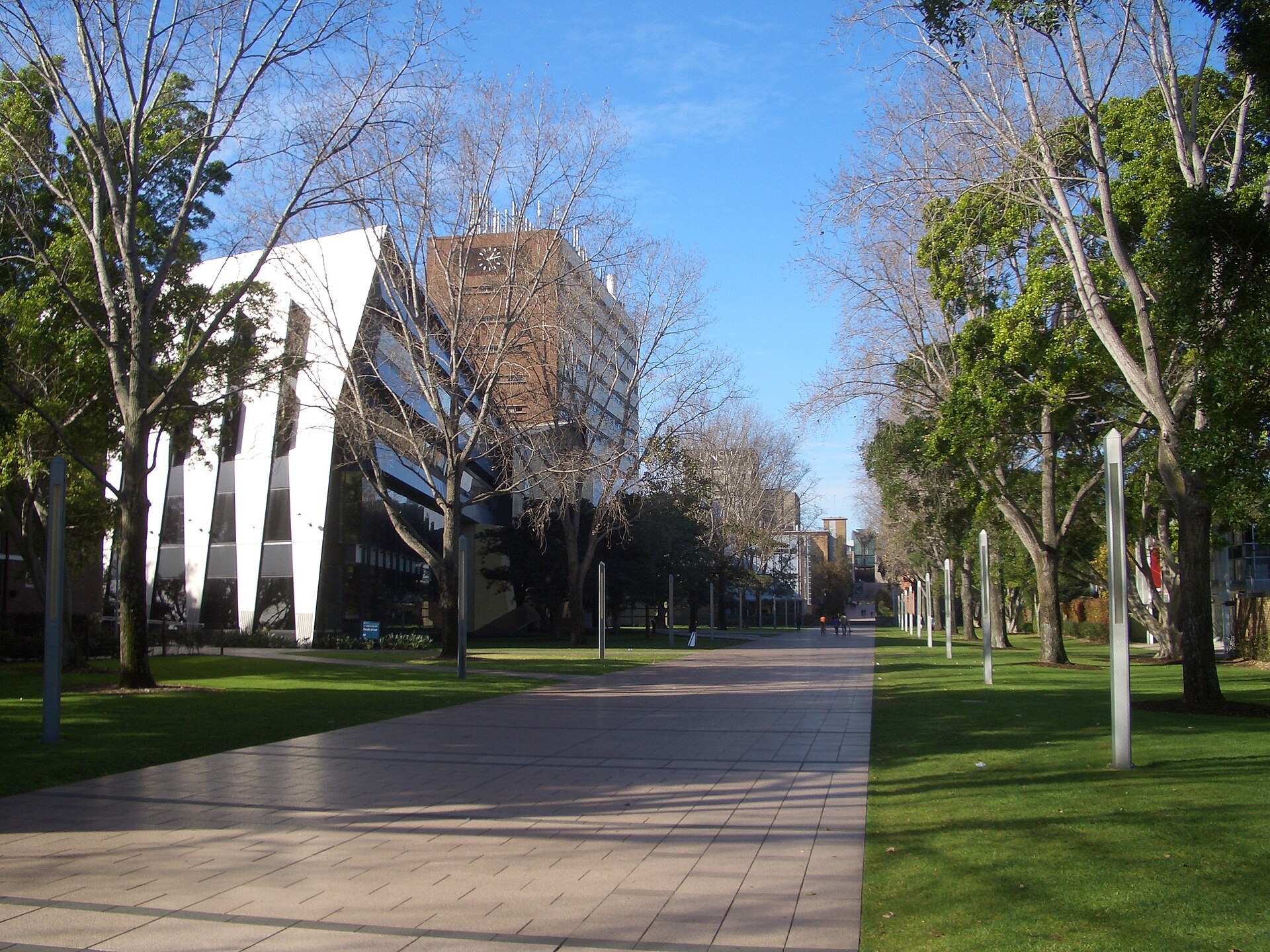
WHY UNSW SYDNEY
Why UNSW Sydney — Rankings, Employability & Sydney Advantage
UNSW is Australia's highest-ranked university by QS and has held the AFR Most Employable University Award for seven consecutive years (2020–2026). For an international student who wants rigorous academics, industry connections, and a degree that opens doors globally — UNSW delivers.
SELECTIVITY
UNSW Acceptance Rate — What the Numbers Mean for International Students
UNSW's overall acceptance rate of 30% reflects the fundamentally different admissions model Australian universities use compared to US or UK institutions. There are no holistic essays, no interviews, and no extracurricular scoring for most undergraduate programmes. Admission is merit-based: your academic results are converted to an International ATAR equivalent, and offers are made by ranking all applicants for each programme's available places. This means selectivity varies dramatically by programme — Commerce/Finance requires an International ATAR above 90, while programmes like Arts or Social Science are significantly more accessible. The 30% figure is an average across all courses; for the most competitive degrees, the effective acceptance rate among qualified international applicants is much lower.
For international students: your IB, A-Level, CBSE, Gaokao, or other secondary qualification is converted to an equivalent Australian ranking via a standardised formula. The result is treated identically to a domestic ATAR. UNSW also offers an International Admissions Diversity Pathway (IADP) that adds 5 bonus points to the International ATAR for students from eligible countries applying to most undergraduate programmes (excluding Medicine).
AT A GLANCE
UNSW Sydney Quick Facts
APPLICATION COMPONENTS
What a Complete UNSW Application Looks Like
Unlike US or UK universities, UNSW does not require personal essays, teacher recommendations, or extracurricular portfolios for most undergraduate programmes. Admission is based on academic merit. The application is straightforward and direct — but that makes getting your academic results right the entire game.
WHAT UNSW LOOKS FOR
What UNSW Admissions Officers Look For — Academic Merit, Programme Fit & English Proficiency
UNSW uses a merit-based selection model. There is no holistic review, no committee reading your personal story, and no consideration of extracurricular achievements for standard undergraduate admission. The selection criteria are transparent, competitive, and academic. Here is exactly how UNSW evaluates international applicants.
DEADLINES & INTAKES
UNSW Application Deadlines — Three Annual Intakes
UNSW's trimester calendar means three intake points per year — far more flexible than most Australian universities. Applications are assessed in grouped offer rounds rather than a single rolling cycle. Popular programmes close early when capacity is reached; apply as early as possible for Term 1 entry.
UNSW processes applications in grouped offer rounds. An application submitted before the round deadline will be ranked by academic merit for that round. If a programme reaches capacity before your round, you may be deferred to the next intake. Always apply to your first-choice intake at least 3–4 months in advance.
| Intake | Start | App Deadline | Notes |
|---|---|---|---|
| Term 1 2027 | February 2027 | Apply by Oct–Nov 2026 (recommended) | Primary intake; most programmes available |
| Term 2 2027 | June 2027 | Apply by Mar–Apr 2027 (recommended) | Most undergraduate programmes; fewer double degrees |
| Term 3 2027 | September 2027 | Apply by June–July 2027 (recommended) | Select programmes only; verify degree availability |
CAMPUS & CITY LIFE
Student Life at UNSW Sydney — Kensington, Sydney & 300+ Clubs
UNSW's Kensington campus is 38 hectares of green space, modern research facilities, and a genuinely active student community — sitting between the beaches of Sydney's Eastern Suburbs and the energy of the CBD. Student life at UNSW is shaped by the city as much as the campus itself.
CAREER OUTCOMES
Graduate Outcomes at UNSW — Australia's Most Employable University
UNSW is ranked #1 in Australia for graduate employability and #46 globally (QS Graduate Employability Rankings). The university's reputation with Australian and international employers is based on the depth of its industry partnerships, the calibre of its Co-op Scholarship programme, and UNSW's consistent graduate performance in competitive fields.
88% of UNSW graduates are employed within four months of graduation. The average starting salary for UNSW graduates is $45,000 USD annually — competitive across all major industries. UNSW's strongest employment outcomes are in engineering and technology (resources, construction, and digital), financial services and consulting (Big Four firms, investment banks, global consulting firms), and healthcare. UNSW's Law graduates compete at the highest levels of Australia's legal market, and the UNSW Business School is consistently rated among the top five business schools in the Asia-Pacific.
UNSW's Co-op Scholarship programme places high-performing students in paid industry work terms throughout their degree — integrating full-time employment with academic study. Co-op scholars graduate with up to two years of professional experience and are typically offered full-time roles by their host companies before finishing their degree.
FREQUENTLY ASKED QUESTIONS
UNSW Sydney — International Student FAQs
Does UNSW require essays or recommendation letters for undergraduate admission?+
No. For standard undergraduate programmes, UNSW does not require essays, personal statements, or recommendation letters. Admission is based entirely on academic merit — your secondary school results converted to an International ATAR equivalent. The only exceptions are Medicine (UCAT + interview) and Architecture (portfolio).
I am completing the IB Diploma — do I apply directly to UNSW or through UAC?+
IB Diploma students must apply through the Universities Admissions Centre (UAC), not directly through UNSW's own portal. UAC converts your IB results to an Australian Tertiary Admission Rank (ATAR), which UNSW then uses for selection. Create your UAC account early — the platform opens in mid-year for the following February intake.
What IB score do I need to get into UNSW?+
Requirements vary significantly by programme. The typical minimum IB for UNSW admission is around 34 points. For competitive programmes: Commerce/Finance typically requires 36–38 IB; Computer Science and Actuarial Studies require 38–40+; Medicine's entry is primarily via UCAT and a separate process. The indicative entry table published on UNSW's website (updated annually) is the authoritative source for programme-specific requirements.
What is the UNSW 3+ trimester system and how does it work for international students?+
UNSW runs three 10-week teaching terms per year (Term 1: February, Term 2: June, Term 3: September) plus an optional January summer term. You can start in any term for most programmes. This means you can accelerate your degree by studying across three terms annually, or take one lighter term if you have an internship or exchange placement — without delaying your graduation date. Most international students enter in Term 1 (February).
Is there financial aid for international students at UNSW?+
UNSW does not offer need-based financial aid for international students in the way US universities do. However, several merit scholarships are available: the International Scientia Coursework Scholarship covers full tuition or provides $20,000 AUD annually; the International Student Award (ISA) automatically reduces tuition by 20% for eligible country students; and the Australia's Global University Award provides a $10,000 AUD one-year credit. These are competitive, merit-based awards — not needs-based grants.
Can I work while studying at UNSW on a student visa?+
Yes. Australian student visas allow you to work up to 48 hours per fortnight during teaching periods and unlimited hours during scheduled breaks. Sydney's job market for students is strong — on-campus tutoring, hospitality, retail, and professional internships are all accessible options that can materially reduce your cost of living.
What are the chances of permanent residency in Australia after graduating from UNSW?+
Australia's post-study work visa (Temporary Graduate visa, subclass 485) allows UNSW graduates to work in Australia for 2–4 years after completing their degree (duration depends on qualification and location). Many UNSW graduates transition to skilled migration pathways through Australia's points-tested General Skilled Migration system. UNSW's career and migration advisory services actively support graduates through this process.
Does UNSW recognise AP, SAT, or ACT scores?+
Yes — UNSW now accepts SAT, AP, and ACT results to support full offers, provided you also submit proof of high school completion. This is a relatively recent change and is not the primary admission pathway for most students. International secondary school qualifications (IB, A-Levels, CBSE, etc.) converted to an International ATAR remain the standard route.
ACADEMICS
UNSW Academic Expectations — What International Students Need to Know
UNSW is not a tick-box-and-apply university. Academic excellence is the only criterion that matters for entry, and maintaining it matters equally during your degree. As a Group of Eight research-intensive institution, UNSW operates at a standard that prepares graduates for leadership roles in industry and research — not just employment.
For international students, understanding how UNSW evaluates your qualifications is critical. Your secondary school results are converted to an International ATAR using a standardised national formula. This number is then compared to the indicative entry rank for your chosen programme. There is no holistic review — your number either meets the threshold or it does not. Preparing strategically in Years 11 and 12 to maximise your IB, A-Level, or national qualification results is the only lever you can pull for admission.
ENTRY STANDARDS
UNSW Academic Entry Profile
UNSW's entry requirements are programme-specific and reflect competitive ranking among applicants. The minimum IB score of 34 is a baseline for general admission — most competitive programmes require significantly higher scores, and offers for popular programmes in Engineering and Commerce go to students well above the floor.
STANDARDISED TESTS
UNSW Test Policy — Grades-Based, Not Test-Driven
UNSW's admissions are classified as test-optional in the sense that SAT/ACT scores are not the primary selection criterion and were not historically used in international admissions. Entry is determined by your secondary school academic results converted to an International ATAR. UNSW now accepts SAT, AP, and ACT scores to support full offers alongside proof of high school completion — but for the overwhelming majority of international applicants, your IB, A-Level, CBSE, or national qualification results are the determinative factors.
Unlike US universities, UNSW does not use SAT or ACT scores as primary selection tools. There is no 'submit or not submit' strategic decision to make. Focus your preparation entirely on maximising your secondary school academic results.
SAT / ACT AT UNSW
SAT, ACT & AP at UNSW — A Supporting Role, Not the Lead
UNSW now accepts SAT, ACT, and AP results as supporting documentation for international full offers. This is primarily useful for students from curricula without a direct ATAR conversion (for example, certain US high school students completing the American curriculum without AP courses). For the vast majority of international applicants — IB, A-Level, CBSE, Gaokao — your existing curriculum results are converted directly and SAT/ACT scores add limited value.
IB & A-LEVELS
IB Diploma & A-Levels at UNSW — How Your Results Are Evaluated
UNSW converts IB and A-Level results to an equivalent Australian ranking. Understanding how this conversion works — and what scores the most competitive UNSW programmes expect — is the core of academic preparation for any international student.
For IB Diploma students, UNSW uses a published conversion formula where your IB total converts to an approximate International ATAR. The indicative minimum IB score for UNSW entry is 34 — but this is a floor, not a target. Competitive programmes require scores well above this level. A-Level students are evaluated using a similar ATAR conversion based on your A-Level grade combination and subject choices.
SUBJECT PREPARATION
Which Subjects Matter for UNSW Admission
While UNSW does not specify mandatory prerequisite subjects for most programmes (unlike UK universities), your subject choices in IB or A-Levels strongly affect both your ATAR conversion outcome and your preparation for first-year content.
ENGLISH LANGUAGE
English Language Requirements at UNSW
English proficiency is a hard requirement for all international undergraduate applicants. UNSW does not waive English testing for students who attended English-medium secondary schools in most cases. Test results must be from within the last two years before your intended start date.
UNSW accepts only IELTS Academic (not General Training, not IELTS Online). For TOEFL, students must register specifically selecting 'Australia' as the destination — the new TOEFL format is currently under review and not accepted. Predicted scores and conditional offers are available while you complete your test.
| Test | Standard | Business_law | Notes |
|---|---|---|---|
| IELTS Academic | 6.5 overall (6.0 each band) | 7.0 overall (6.0 each band) | No sub-band below 6.0 accepted |
| TOEFL iBT | 90 overall | 100+ overall | Register for 'Australia' version only |
| PTE Academic | 64 overall | 72 overall | Component minimums apply |
| Cambridge C1 Advanced | Accepted | Higher grade required | C1 or C2 level required |
ACADEMIC ROADMAP
The Year-by-Year Academic Ladder to UNSW
Because UNSW selects purely on academic merit, your preparation strategy is simple in concept and demanding in execution: maximise your secondary school results. Here is the timeline that gives you the strongest possible academic candidacy.
COMMON MISTAKES
Academic Mistakes That Cost UNSW Offers
Items
- Choosing IB Mathematics: Applications & Interpretation (AI) HL instead of Analysis & Approaches (AA) HL when targeting Engineering, Computer Science, or Actuarial Studies — AI HL does not adequately prepare you for UNSW's quantitative first-year content and may result in a lower ATAR conversion.
- Applying with predicted grades that are unrealistically optimistic and then failing to meet them in final examinations — conditional offers at UNSW are real commitments with real consequences if unmet.
- Applying through the wrong channel — IB students must apply through UAC, not UNSW's direct portal. Submitting to the wrong system wastes time and can miss offer round deadlines.
- Waiting until final results are released to apply — UNSW issues offers in grouped rounds and popular programmes fill early. Applying with predicted grades in October–November significantly increases your chance of a Term 1 offer.
- Choosing IELTS General Training instead of IELTS Academic — UNSW only accepts the Academic version. A score on the wrong test format has zero value for your application.
- Assuming extracurricular achievements, recommendation letters, or volunteer work will compensate for weak academic results — UNSW's undergraduate selection is purely academic. These factors do not influence the standard admission outcome.
- Applying to a single programme without a backup — if your programme is at capacity for your offer round, having a realistic second preference in your application avoids being waitlisted with no path to acceptance.
Faqs
Does UNSW consider extracurricular activities for undergraduate admission?+
No. Standard UNSW undergraduate admission for international students is based entirely on academic merit. Extracurricular activities, leadership positions, and volunteer work are not evaluated and cannot compensate for weaker academic results. The only partial exception is the Co-op Scholarship programme, which has its own competitive selection process that includes an interview component.
I am currently completing Year 12 — can I apply to UNSW before my final results?+
Yes, and you should. UNSW issues conditional offers based on predicted grades. Submit your application by October–November for Term 1 entry, with your teacher-certified predicted IB total or predicted A-Level grades. Your conditional offer will convert to a full offer when your final results are confirmed.
COST & SCHOLARSHIPS
The True Cost of UNSW Sydney — Honest Numbers for International Families
UNSW is a world-class research university in one of the world's most expensive cities. Understanding the true cost — and the scholarships available — before you apply is essential. The numbers are significant, but UNSW's employment outcomes and post-study work pathways make the return on investment among the strongest of any university in Australia.
Unlike US universities, UNSW does not offer need-based financial aid to international students. All financial support comes through merit scholarships, which are competitive and limited. Families should plan for international tuition plus Sydney living costs, with scholarships treated as a possibility, not a financial plan. The post-study work pathway in Australia — up to four years of work rights after graduation — is a meaningful long-term financial consideration.
COST BREAKDOWN
UNSW Annual Cost Estimate for International Students
All figures are annual estimates in USD. Actual costs are denominated in Australian dollars (AUD); the USD conversion depends on exchange rates at time of payment. The figures below are drawn from UNSW's published data via the university's facts profile.
UNSW tuition varies by faculty — Engineering and Medicine typically carry higher fees than Arts or Social Science. The figures below are indicative averages for undergraduate programmes.
| Component | Estimate U S D | Notes |
|---|---|---|
| Annual Tuition (International) | $35,000 | Varies by programme and faculty; facts file figure |
| Total Cost of Attendance | $55,000 | Tuition + living; annual estimate |
| Cost of Living (Sydney) | $20,000 | Housing, food, transport, personal; annual estimate |
| Application Fee | $100 | Paid once at application |
| Health Cover (OSHC) | ~$600–900 | Overseas Student Health Cover; mandatory for student visa |
FINANCIAL AID
Financial Aid for International Students at UNSW
UNSW does not offer need-based financial aid to international students. There is no equivalent to the US or UK needs-analysis financial aid model. All international financial support comes through merit-based scholarships, which are competitive and limited in number. Families planning their financial commitment should budget for the full cost of attendance and treat scholarships as a potential bonus, not a financial plan.
The Australian government does not provide domestic-equivalent funding to international students. However, Australia's post-study work rights are a meaningful economic benefit: UNSW graduates can work in Australia for 2–4 years after completing their undergraduate degree (Temporary Graduate Visa, subclass 485), earning Australian wages and building savings that partially offset study costs. Many UNSW graduates use this period to gain experience, build savings, and apply for permanent residency.
SCHOLARSHIPS
UNSW Scholarships for International Students
UNSW offers four primary scholarship programmes for international undergraduate students. All are merit-based. Families should not rely on scholarship funding as part of their core financial plan, but competitive candidates should apply to all eligible awards.
AFFORDABILITY
Net Cost Reality at UNSW Sydney
Even with the ISA scholarship (20% tuition reduction), the annual out-of-pocket cost for most international UNSW students is substantial. Sydney is among the most expensive cities for student accommodation in Australia — on-campus housing runs approximately AUD 15,000–22,000 per year depending on the college and meal plan. Off-campus shared housing in the Eastern Suburbs (closest to campus) costs AUD 1,200–2,000 per month.
Families should plan for a total four-year cost (for a standard three-year bachelor degree; some programmes run four years) in the range of AUD 200,000–270,000 (approximately USD 130,000–175,000 at current exchange rates). The ISA scholarship, where applicable, reduces this by approximately AUD 28,000–42,000 across three years. Work rights during study (up to 48 hours per fortnight) allow students to meaningfully offset living costs.
UNSW's post-study work visa pathway and Australia's skilled migration system represent a significant financial return on a UNSW degree for international students who plan to work in Australia after graduation. Students who secure employment through UNSW's industry connections and WIL programmes often transition directly from study to graduate employment without the typical search period.
HOW TO APPLY FOR SUPPORT
Steps to Secure Financial Support at UNSW
COST FAQS
Cost & Scholarships — Frequently Asked Questions
Does UNSW offer need-based financial aid for international students?+
No. UNSW does not offer need-based financial aid equivalent to the US model. All financial support for international students is merit-based. Families should budget for the full cost of attendance and treat scholarships as competitive extras rather than financial planning assumptions.
Is the International Student Award (ISA) available to students from my country?+
The ISA is available to international students from eligible countries commencing in 2026 or 2027. Eligibility is confirmed on UNSW's scholarship page. If your country qualifies, the 20% tuition reduction is applied automatically — no separate application is needed.
Can I work to help fund my studies in Australia?+
Yes. Australian student visas allow 48 hours of paid work per fortnight during teaching terms, and unlimited hours during scheduled breaks (winter recess, summer). Sydney's employment market for students in hospitality, tutoring, and professional internships is strong. Many students earn AUD 12,000–20,000 annually in part-time work.
What is the application fee and is it refundable?+
The UNSW application fee is $100 USD (equivalent). It is generally non-refundable. There is no separate scholarship application fee.
How does the cost compare to studying in the US or UK?+
UNSW's annual international tuition ($35,000 USD equivalent) is broadly comparable to UK university fees and somewhat lower than top US private universities. Living costs in Sydney are high but comparable to London or New York. The key difference is Australia's post-study work rights — up to four years of work authorisation after graduation — which the UK and US do not match at equivalent levels, providing a meaningful financial return that partially offsets the upfront cost.
ESSAYS & PERSONAL STATEMENTS
Writing for UNSW Sydney — Grades First, Writing Second
UNSW undergraduate admission does not require essays for standard entry. Selection is based entirely on academic merit — your IB, A-Level, CBSE, or other secondary qualification results, converted to an International ATAR and ranked against other applicants. Essays matter only for a small number of scholarships and for UNSW's most competitive special entry pathways.
This section of the guide covers: why personal writing still matters at UNSW (even though essays are not required for regular admission); what the Scientia Scholarship personal statement requires; and how to approach any supporting statements for programmes with supplementary selection criteria. If you are a strong academic candidate also targeting UNSW's top scholarships, the guidance here is directly relevant.
ESSAY REQUIREMENTS
Does UNSW Require Essays? — The Honest Answer
For the vast majority of international undergraduate applicants, the answer is no. UNSW's standard undergraduate admission process is grades-based, with no personal statement, no recommendation letters, and no essays. This is fundamentally different from US universities and from Oxbridge in the UK.
SCHOLARSHIP PROMPTS
Scientia Scholarship Personal Statement — What to Write and How
The International Scientia Coursework Scholarship is the one circumstance at UNSW where your personal writing is evaluated. While UNSW does not publish a fixed set of prompts (and the scholarship criteria may vary by year), the statement typically asks you to demonstrate academic excellence, leadership, and your aspirations for your time at UNSW and beyond.
UNSW does not publish fixed essay prompts for the Scientia Scholarship in the same way US universities publish Common App prompts. The statement parameters are confirmed on the scholarship application portal each cycle. The guidance below is based on the scholarship's stated criteria of 'high academic achievement and leadership skills who are engaged in extracurricular work.'
PERSONAL STATEMENT STRATEGY
Writing a Scientia-Winning Personal Statement
The Scientia Scholarship personal statement is not an extended essay — it is a structured argument for why you, specifically, deserve UNSW's most competitive merit award. The tone should be confident, precise, and anchored in evidence.
Australian academic culture values directness. Avoid the narrative arc style common to US Common App essays — UNSW readers respond better to clear, evidence-based arguments. Lead with your strongest academic achievement or intellectual experience, connect it to a specific academic goal, and show that you have done the research to understand exactly what UNSW offers that will help you pursue that goal.
The Scientia personal statement is often the first substantial piece of academic writing international students do in English for a high-stakes purpose. Give it the same preparation time you would give a difficult IB extended essay. Draft early, get feedback from your IB supervisor or English teacher, and revise based on whether each paragraph adds a specific, unique piece of evidence.
SUPPLEMENTARY MATERIAL
Supplementary Material — Architecture Portfolio
For Bachelor of Architecture applicants, the portfolio is the primary supplementary selection tool. Unlike the US where portfolios supplement holistic review, at UNSW the portfolio is evaluated alongside your academic results as a combined indicator of creative and technical ability.
TOPIC SELECTION
Choosing What to Write About
For the Scientia Scholarship personal statement, topic selection is the most consequential single decision you make. Australian academic culture rewards clarity and specificity — a tight, well-evidenced argument on a focused topic outperforms a broad, impressive-sounding narrative every time.
ESSAY PITFALLS
Common Mistakes in UNSW Scholarship Applications
- Treating the Scientia personal statement as an afterthought because UNSW does not require essays for regular admission — the scholarship application is a genuinely competitive process and weak statements are screened immediately.
- Writing about UNSW in generic terms ('world-class university', 'vibrant campus') rather than naming specific programmes, research groups, or opportunities you have actually researched.
- Describing extracurricular activities by title rather than by impact — listing that you were 'Head Prefect' or 'President of Debate Club' without explaining what changed or was achieved tells the reviewer nothing.
- Writing in a formal, elevated register that avoids specific claims — Scientia reviewers respond to confident, evidence-based, direct statements, not academic-sounding prose that obscures rather than reveals.
- Copying a personal statement written for US or UK universities — the tone and framing that works for the US Common App (narrative arc, emotional journey) is often the wrong register for an Australian merit scholarship statement.
- Failing to connect your academic ambitions to the specific trimester/WIL/research structure UNSW offers — statements that do not engage with what is distinctive about a UNSW education are easier to deprioritise.
- Submitting a first draft without getting feedback — UNSW scholarship reviewers have read thousands of personal statements; the gap between a first draft and a fourth draft is often the difference between an award and a rejection.
ESSAY FAQS
Essays & Personal Statements — Frequently Asked Questions
I am applying to UNSW for a standard undergraduate degree. Do I need to write any essays?+
No. Standard undergraduate admission at UNSW is purely based on academic merit — your converted International ATAR from your IB, A-Level, CBSE, or other qualification. No personal statement, recommendation letter, or essay is required or accepted for regular admission.
What does the Scientia Scholarship personal statement actually ask for?+
The Scientia application asks you to demonstrate high academic achievement, leadership engagement, and a clear connection between your ambitions and UNSW's specific programmes and opportunities. UNSW does not publish fixed prompts in the same way US universities do — the specific questions are confirmed in the scholarship portal each cycle. Follow the latest instructions on UNSW's scholarship page.
How long should the Scientia personal statement be?+
Word limits are specified in the scholarship application portal and should be followed precisely. Exceeding a word limit signals poor editing discipline — a problematic signal for a scholarship that is explicitly about high academic achievement. Aim to use the full word limit purposefully, not to pad, and not to cut content that belongs.
Can I reuse a personal statement I wrote for US or UK universities?+
Not directly. The narrative arc and emotional framing of a US Common App essay is often the wrong register for a UNSW scholarship statement. Australian academic culture responds better to direct, evidence-based arguments. You can draw on the same raw material and experiences, but the framing, tone, and structure should be adapted significantly.
Do UNSW tutors or teachers read my Scientia application?+
No. The Scientia Scholarship is evaluated by UNSW's scholarships team, not by academic tutors or your secondary school teachers. Recommendation letters are not part of the Scientia application. The personal statement and your academic results are the primary evaluation materials.
What is the UCAT and how do I prepare for Medicine at UNSW?+
The UCAT ANZ (University Clinical Aptitude Test) is a computer-based aptitude test required for Medicine applicants at UNSW and most other Australian medical schools. It tests verbal reasoning, quantitative reasoning, abstract reasoning, decision making, and situational judgement. Dedicated UCAT preparation (books, practice tests, and coaching programmes) is strongly recommended — most competitive Medicine applicants prepare for 6–12 weeks specifically for the UCAT in addition to their regular secondary school study.
If UNSW does not require essays, why should I care about this section?+
Because the Scientia Scholarship is worth either full tuition fees or $20,000 AUD per year — and only a personal statement stands between you and that award. Strong academic candidates who ignore the scholarship application and focus only on getting an offer leave significant money on the table. Apply for every scholarship you are eligible for.
Courses — schools, degrees & intake
46 degrees across 7 groupings.
Faculty of Engineering · 8 degrees
Bachelor of Engineering (Honours) — Biomedical Engineering
Bachelor of Engineering (Honours) — Chemical Engineering
Bachelor of Engineering (Honours) — Civil and Environmental Engineering
Bachelor of Engineering (Honours) — Computer Science and Engineering
Bachelor of Engineering (Honours) — Electrical Engineering and Telecommunications
Bachelor of Engineering (Honours) — Mechanical and Manufacturing Engineering
Bachelor of Engineering (Honours) — Minerals and Energy Resources Engineering
Bachelor of Engineering (Honours) — Photovoltaic and Renewable Energy Engineering
UNSW Business School · 2 degrees
Bachelor of Commerce
Bachelor of Actuarial Studies
Faculty of Science · 5 degrees
Bachelor of Science
Bachelor of Advanced Science (Honours)
Bachelor of Advanced Mathematics (Honours)
Bachelor of Computer Science
Bachelor of Medical Science
Faculty of Medicine and Health · 7 degrees
Bachelor of Medical Studies / Doctor of Medicine
Bachelor of Exercise Physiology
Bachelor of Exercise Science
Bachelor of Physiotherapy
Bachelor of Pharmacy
Bachelor of Dietetics and Food Innovation
Bachelor of Vision Science / Master of Clinical Optometry
Faculty of Arts, Design and Architecture · 14 degrees
Bachelor of Fine Arts (Animation and Moving Image)
Bachelor of Fine Arts (Art Theory)
Bachelor of Design (Integrated Design)
Bachelor of Fine Arts (Visual Arts)
Bachelor of Arts
Bachelor of Music
Bachelor of Architecture
Bachelor of Construction Management and Property
Bachelor of Urban Development (Planning)
Bachelor of Interior Architecture
Bachelor of Landscape Architecture
Bachelor of Social Sciences
Bachelor of Education (Primary)
Bachelor of Design Education (Secondary)
Faculty of Law and Justice · 2 degrees
Bachelor of Laws (LLB)
Bachelor of Criminology and Criminal Justice
UNSW Canberra · 8 degrees
Bachelor of Aeronautical Engineering (Honours)
Bachelor of Civil Engineering (Honours)
Bachelor of Electrical Engineering (Honours)
Bachelor of Mechanical Engineering (Honours)
Bachelor of Naval Architecture Engineering (Honours)
Bachelor of Computing and Cyber Security (Honours)
Bachelor of War Studies
Bachelor of Business
Want your real chances at UNSW Sydney?
Create a free TYCHR account for your personalised admit-chance, a shortlist you can track, exact entry requirements, and essay + counselling help.